ABSOLUTE BLACK AND WHITE
About the process
In terms of permanence, the platinum-palladium process is the most stable photographic printing technique in existence today. Precious metals are impregnated directly into the paper fibres, offering an extended tonal range and durability measured in centuries.
History
The platinotype was invented in 1873 by the British engineer William Willis, who patented the process that same year under the name Platinotype Process. In 1879 Willis founded the Platinotype Company, which sold platinum-sensitised papers across Europe for several decades. Palladium was introduced in the early twentieth century as an economical variant, giving nothing away on tonal quality.
Platinum-palladium quickly became the process of choice for the masters of fine-art photography. Alfred Stieglitz, Edward Weston, Alvin Langdon Coburn and Frederick H. Evans made it their signature process, and their original prints held at the Royal Photographic Society in London, at George Eastman House in Rochester and at the Metropolitan Museum of Art in New York still testify to platinum's tonal perfection. Stieglitz wrote that platinum offered a wider scale of greys than any other process.
Technically, platinum and palladium salts are brushed onto cotton paper, exposed to UV through a negative at final size (a contact process), then developed in hot potassium oxalate. The final image is no longer made of silver but of inert noble metals, embedded in the very fibre of the paper. The resulting warm tonality and extended tonal scale remain strictly impossible to reproduce digitally.
Platinum-palladium has enjoyed a continuous contemporary revival since the 1970s, driven by studios such as Bostick & Sullivan in the United States, which still supply the chemistry to practitioners worldwide. Contemporary photographers including Sally Mann, Irving Penn and Dick Arentz have made it their reference process for works destined for the international art market.
Maison Picturale offers platinum-palladium in very limited editions for serious collectors. The high cost of the noble metals makes this the absolute top of our catalogue — regarded in fine-art photography circles as the Rolls-Royce of prints.
At Maison Picturale
Every platinum-palladium print made at the studio at 1 passage Dagorno is a unique piece in a very limited edition, intended for serious collectors and institutions. The cost of platinum and palladium salts — noble metals whose prices follow the financial markets — makes this our premium process. Each print is prepared, sensitised and developed by hand by our master printers.
Our 640 gsm 100% cotton satin watercolour paper suits platinum-palladium particularly well: its pure cotton fibre, free of optical brighteners and alkaline additives, lets the metal salts embed deep in the paper, and its satin surface fully reveals the process's unique warm tonality and exceptional tonal scale.
The formats available for platinum-palladium are Jésus (56 × 76 cm) and Grand Aigle (76 × 112 cm). As this is a direct-contact process, each format requires a digital negative at the exact dimensions of the final print, prepared in advance by our printers. Beyond Grand Aigle, the technical complexity and the cost of the noble metals make the process hard to justify for standard hanging.
For a commissioned print, send us your high-resolution file through the contact form. Our printers prepare a digital negative calibrated for platinum-palladium's extended tonal curve, which is particularly demanding in the separation of mid-greys. You approve a test print before the final one. Allow four to six weeks: the process permits no haste.
Sizes & Pricing
Coquille
44 × 56 cm
Jésus
56 × 76 cm
Grand Aigle
76 × 112 cm
Univers
100 × 140 cm
Reproducibility
Calibrate your Platinum Black
HD test chart → scan → .acv curve in 3 steps. Calibration Flow generates the exact correction for your process.
Calibrate this processFrequently asked questions
Who invented platinum-palladium, and where are the reference prints held?
Platinum-palladium was invented in 1873 in the United Kingdom by William Willis, who patented the process and in 1879 founded the Platinotype Company of London to sell it. Nicknamed the Rolls-Royce of photographic prints, it became the process of choice for the Pictorialist and modernist photographers of the golden age: Alfred Stieglitz, Edward Weston, Alvin Langdon Coburn, Paul Strand, Frederick Evans, Edward Steichen. The reference prints are held in the Royal Photographic Society Collection in Bradford, at the Metropolitan Museum of Art in New York, at the George Eastman Museum in Rochester and at the Bibliothèque nationale de France. Its visual signature — an extended tonal scale impossible to reproduce digitally, warm tonality, deep matte, permanence measured in millennia — makes platinum-palladium the absolute standard for the museum-grade photographic print.
How does Maison Picturale make a platinum-palladium print?
At Maison Picturale, platinum-palladium is printed by hand in the studio at 1 passage Dagorno, Paris 20e, by master printers Tristan Sidem and Raphaël Lebas de Lacour, using the process's historical chemistry — platinum and palladium salts dissolved in a ferric-oxalate sensitiser — which has not been reformulated, because the noble metals involved are chemically inert and of low toxicity. The 640 gsm satin cotton paper is brush sensitised, exposed under UV in direct contact with a digital negative calibrated for platinum's extended tonal curve, then developed in hot potassium oxalate. The platinum-to-palladium ratio determines the final tonality, neutral or warm. Formats: Coquille, Jésus, Grand Aigle, Univers. Very limited signed and numbered edition, supplied with a certificate of authenticity stating the exact metal ratio.
How long does a platinum-palladium print last, and how stable is it?
Platinum-palladium is recognised as the most stable photographic process ever invented. Platinum and palladium salts — chemically inert noble metals — are embedded in the very fibre of the cotton paper and are sensitive neither to light, nor to atmospheric pollutant gases, nor to reasonable humidity. Prints by Alfred Stieglitz and Frederick Evans from the 1900s, held at the Metropolitan Museum and at the Royal Photographic Society in Bradford, are today, more than 120 years on, strictly identical to their original state. Permanence is theoretically measured in millennia — greater than that of medieval manuscripts held in national libraries. At Maison Picturale, every print is supplied with a certificate of authenticity detailing the conservation conditions and the exact proportion of platinum and palladium used for that specific print.
How do I commission a platinum-palladium print?
To commission a platinum-palladium print from Maison Picturale, send your file as a 16-bit TIFF (360 dpi minimum for Grand Aigle) through the contact form, specifying the tonality you want (neutral or warm, set by the platinum-to-palladium ratio) and the format. As this is a direct-contact process, our master printers prepare a digital negative at the exact dimensions of the final print, calibrated for the specific extended tonal curve. A proof is approved before the final print. Platinum lends itself particularly well to portraits, nudes, tonal landscapes and heritage works. The standard lead time is six to eight weeks, given the calibration of the precious salts. Prices start at €200 for the Coquille format (44 × 56 cm) and reach €1,200 for Univers (100 × 140 cm), varying with the price of the noble metals. Signed and numbered.
How should a platinum-palladium print be framed?
A Maison Picturale platinum-palladium print is framed under standard museum conservation conditions; its extreme chemical stability makes it the easiest of all the alternative processes to conserve. Maison Picturale nonetheless recommends quality UV-protective glass (Artglass or Mirogard) to protect the cotton paper itself, a 100% cotton pH-8 neutral conservation mount board, and float mounting with Japanese paper hinges along the top edge only. For the large formats (Grand Aigle 76 × 112 cm and Univers 100 × 140 cm) a rigid support panel is recommended to prevent the paper from warping. The studio works with several professional Parisian framers who specialise in collectible photographic works and are used to the requirements of platinum prints destined for the international art market.
What is the difference between commissioning a platinum-palladium print and making one yourself with a kit?
Maison Picturale and Vision Picturale cover two complementary intentions around platinum-palladium. At Maison Picturale you commission a fine-art print made by hand by the master printers on 640 gsm museum-grade cotton paper, with noble salts embedded in the fibre, in a very limited signed and numbered edition, with a certificate of authenticity stating the platinum-to-palladium ratio — a collector's object at international art-market standard, archivally stable for millennia. With the Vision Picturale platinum-palladium kit you practise the process yourself, from the historical chemistry (the noble salts being of low toxicity in themselves), on more affordable papers, with your own image — a demanding making experience, not a collector's work. NOEME Picturale Academy offers online courses for mastering platinum's tonal calibration.
Is Maison Picturale's platinum-palladium non-toxic?
Unlike Maison Picturale's other processes (cyanotype, gum bichromate, carbon, bromoil, resinotype, sanguine, gumoil), whose chemistry has been reformulated by Vision Picturale to eliminate carcinogenic potassium dichromate, platinum-palladium is printed with its original historical chemistry. This exception is justified by the nature of the materials: platinum and palladium salts are chemically inert noble metals, not classified as carcinogenic or mutagenic, and of low acute toxicity under professional conditions of use. The hot potassium oxalate developer nonetheless calls for careful handling with nitrile gloves, safety goggles and dedicated local ventilation. The master printers of the Paris 20e studio follow these protocols. Platinum-palladium remains one of the safest alternative processes to practise; its difficulty lies elsewhere — in the cost of the noble metals and in tonal control.
See also
Related processes
Pictorialist masters
- Frederick H. Evans
1853-1943
- Alfred Stieglitz
1864-1946
- Heinrich Kühn
1866-1944
- Adolphe Braun
1812-1877
- Julia Margaret Cameron
1815-1879
- Gertrude Käsebier
1852-1934
- Charles Marville
1813-1879
- Frank Eugene
1865-1936
- F. Holland Day
1864-1933
- Clarence H. White
1871-1925
ABSOLUTE BLACK AND WHITE
About the process
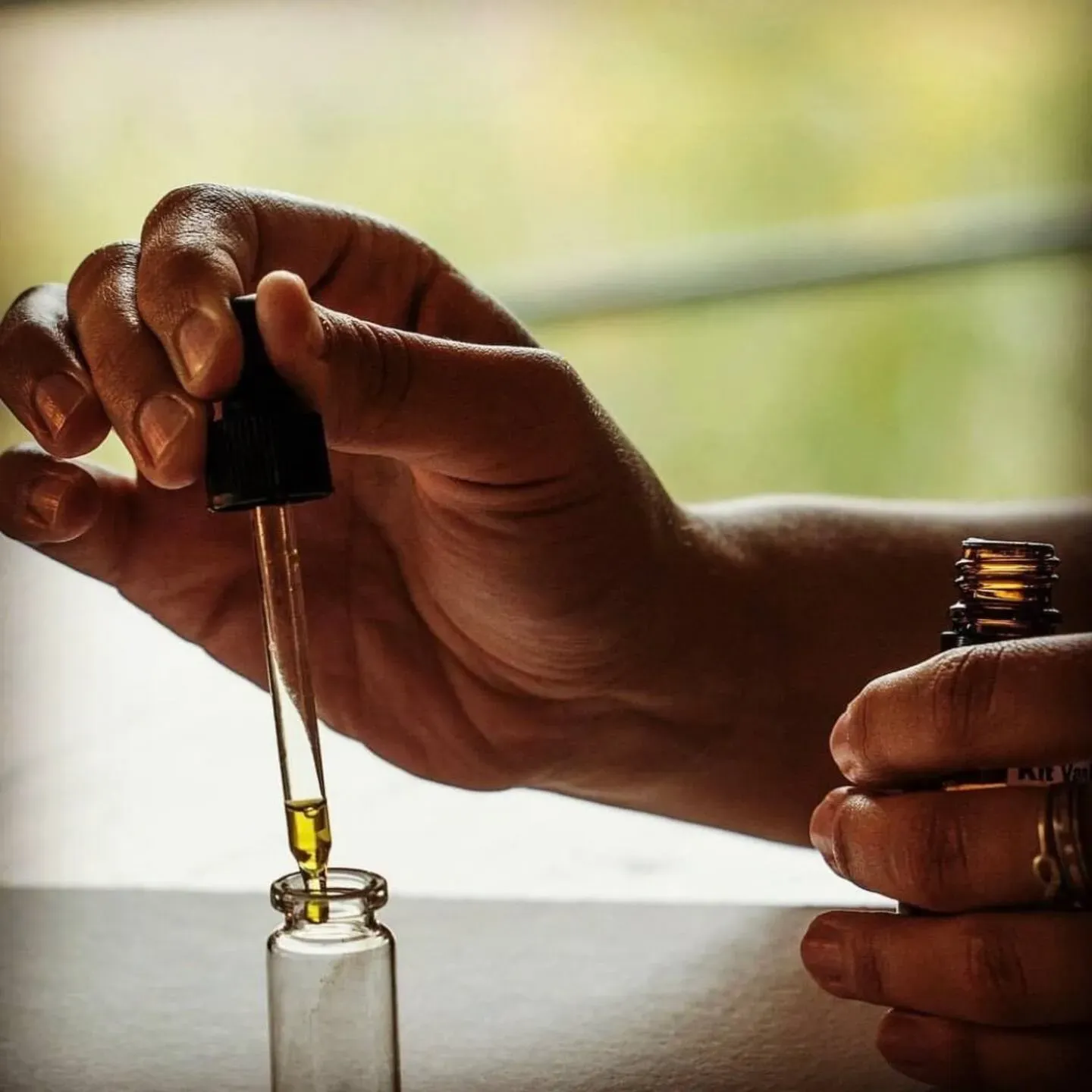
The look and feel are close to what an engraving can offer. The warm, nuanced and matte rendering of the image — embedded in the body of the paper — gives it a unique and timeless character.
In terms of permanence, the platinum-palladium process is the most stable photographic printing technique in existence today. Precious metals are impregnated directly into the paper fibres, offering an extended tonal range and durability measured in centuries.
Recommended files: High-definition TIFF or JPEG (300 dpi). We create the digital negative.
Need advice?
Our team can help you choose the right paper, format and finish for your project.
History
The platinotype was invented in 1873 by the British engineer William Willis, who patented the process that same year under the name Platinotype Process. In 1879 Willis founded the Platinotype Company, which sold platinum-sensitised papers across Europe for several decades. Palladium was introduced in the early twentieth century as an economical variant, giving nothing away on tonal quality.
Platinum-palladium quickly became the process of choice for the masters of fine-art photography. Alfred Stieglitz, Edward Weston, Alvin Langdon Coburn and Frederick H. Evans made it their signature process, and their original prints held at the Royal Photographic Society in London, at George Eastman House in Rochester and at the Metropolitan Museum of Art in New York still testify to platinum's tonal perfection. Stieglitz wrote that platinum offered a wider scale of greys than any other process.
Technically, platinum and palladium salts are brushed onto cotton paper, exposed to UV through a negative at final size (a contact process), then developed in hot potassium oxalate. The final image is no longer made of silver but of inert noble metals, embedded in the very fibre of the paper. The resulting warm tonality and extended tonal scale remain strictly impossible to reproduce digitally.
Platinum-palladium has enjoyed a continuous contemporary revival since the 1970s, driven by studios such as Bostick & Sullivan in the United States, which still supply the chemistry to practitioners worldwide. Contemporary photographers including Sally Mann, Irving Penn and Dick Arentz have made it their reference process for works destined for the international art market.
Maison Picturale offers platinum-palladium in very limited editions for serious collectors. The high cost of the noble metals makes this the absolute top of our catalogue — regarded in fine-art photography circles as the Rolls-Royce of prints.
At Maison Picturale
Every platinum-palladium print made at the studio at 1 passage Dagorno is a unique piece in a very limited edition, intended for serious collectors and institutions. The cost of platinum and palladium salts — noble metals whose prices follow the financial markets — makes this our premium process. Each print is prepared, sensitised and developed by hand by our master printers.
Our 640 gsm 100% cotton satin watercolour paper suits platinum-palladium particularly well: its pure cotton fibre, free of optical brighteners and alkaline additives, lets the metal salts embed deep in the paper, and its satin surface fully reveals the process's unique warm tonality and exceptional tonal scale.
The formats available for platinum-palladium are Jésus (56 × 76 cm) and Grand Aigle (76 × 112 cm). As this is a direct-contact process, each format requires a digital negative at the exact dimensions of the final print, prepared in advance by our printers. Beyond Grand Aigle, the technical complexity and the cost of the noble metals make the process hard to justify for standard hanging.
For a commissioned print, send us your high-resolution file through the contact form. Our printers prepare a digital negative calibrated for platinum-palladium's extended tonal curve, which is particularly demanding in the separation of mid-greys. You approve a test print before the final one. Allow four to six weeks: the process permits no haste.
Frequently asked questions
Who invented platinum-palladium, and where are the reference prints held?
Platinum-palladium was invented in 1873 in the United Kingdom by William Willis, who patented the process and in 1879 founded the Platinotype Company of London to sell it. Nicknamed the Rolls-Royce of photographic prints, it became the process of choice for the Pictorialist and modernist photographers of the golden age: Alfred Stieglitz, Edward Weston, Alvin Langdon Coburn, Paul Strand, Frederick Evans, Edward Steichen. The reference prints are held in the Royal Photographic Society Collection in Bradford, at the Metropolitan Museum of Art in New York, at the George Eastman Museum in Rochester and at the Bibliothèque nationale de France. Its visual signature — an extended tonal scale impossible to reproduce digitally, warm tonality, deep matte, permanence measured in millennia — makes platinum-palladium the absolute standard for the museum-grade photographic print.
How does Maison Picturale make a platinum-palladium print?
At Maison Picturale, platinum-palladium is printed by hand in the studio at 1 passage Dagorno, Paris 20e, by master printers Tristan Sidem and Raphaël Lebas de Lacour, using the process's historical chemistry — platinum and palladium salts dissolved in a ferric-oxalate sensitiser — which has not been reformulated, because the noble metals involved are chemically inert and of low toxicity. The 640 gsm satin cotton paper is brush sensitised, exposed under UV in direct contact with a digital negative calibrated for platinum's extended tonal curve, then developed in hot potassium oxalate. The platinum-to-palladium ratio determines the final tonality, neutral or warm. Formats: Coquille, Jésus, Grand Aigle, Univers. Very limited signed and numbered edition, supplied with a certificate of authenticity stating the exact metal ratio.
How long does a platinum-palladium print last, and how stable is it?
Platinum-palladium is recognised as the most stable photographic process ever invented. Platinum and palladium salts — chemically inert noble metals — are embedded in the very fibre of the cotton paper and are sensitive neither to light, nor to atmospheric pollutant gases, nor to reasonable humidity. Prints by Alfred Stieglitz and Frederick Evans from the 1900s, held at the Metropolitan Museum and at the Royal Photographic Society in Bradford, are today, more than 120 years on, strictly identical to their original state. Permanence is theoretically measured in millennia — greater than that of medieval manuscripts held in national libraries. At Maison Picturale, every print is supplied with a certificate of authenticity detailing the conservation conditions and the exact proportion of platinum and palladium used for that specific print.
How do I commission a platinum-palladium print?
To commission a platinum-palladium print from Maison Picturale, send your file as a 16-bit TIFF (360 dpi minimum for Grand Aigle) through the contact form, specifying the tonality you want (neutral or warm, set by the platinum-to-palladium ratio) and the format. As this is a direct-contact process, our master printers prepare a digital negative at the exact dimensions of the final print, calibrated for the specific extended tonal curve. A proof is approved before the final print. Platinum lends itself particularly well to portraits, nudes, tonal landscapes and heritage works. The standard lead time is six to eight weeks, given the calibration of the precious salts. Prices start at €200 for the Coquille format (44 × 56 cm) and reach €1,200 for Univers (100 × 140 cm), varying with the price of the noble metals. Signed and numbered.
How should a platinum-palladium print be framed?
A Maison Picturale platinum-palladium print is framed under standard museum conservation conditions; its extreme chemical stability makes it the easiest of all the alternative processes to conserve. Maison Picturale nonetheless recommends quality UV-protective glass (Artglass or Mirogard) to protect the cotton paper itself, a 100% cotton pH-8 neutral conservation mount board, and float mounting with Japanese paper hinges along the top edge only. For the large formats (Grand Aigle 76 × 112 cm and Univers 100 × 140 cm) a rigid support panel is recommended to prevent the paper from warping. The studio works with several professional Parisian framers who specialise in collectible photographic works and are used to the requirements of platinum prints destined for the international art market.
What is the difference between commissioning a platinum-palladium print and making one yourself with a kit?
Maison Picturale and Vision Picturale cover two complementary intentions around platinum-palladium. At Maison Picturale you commission a fine-art print made by hand by the master printers on 640 gsm museum-grade cotton paper, with noble salts embedded in the fibre, in a very limited signed and numbered edition, with a certificate of authenticity stating the platinum-to-palladium ratio — a collector's object at international art-market standard, archivally stable for millennia. With the Vision Picturale platinum-palladium kit you practise the process yourself, from the historical chemistry (the noble salts being of low toxicity in themselves), on more affordable papers, with your own image — a demanding making experience, not a collector's work. NOEME Picturale Academy offers online courses for mastering platinum's tonal calibration.
Is Maison Picturale's platinum-palladium non-toxic?
Unlike Maison Picturale's other processes (cyanotype, gum bichromate, carbon, bromoil, resinotype, sanguine, gumoil), whose chemistry has been reformulated by Vision Picturale to eliminate carcinogenic potassium dichromate, platinum-palladium is printed with its original historical chemistry. This exception is justified by the nature of the materials: platinum and palladium salts are chemically inert noble metals, not classified as carcinogenic or mutagenic, and of low acute toxicity under professional conditions of use. The hot potassium oxalate developer nonetheless calls for careful handling with nitrile gloves, safety goggles and dedicated local ventilation. The master printers of the Paris 20e studio follow these protocols. Platinum-palladium remains one of the safest alternative processes to practise; its difficulty lies elsewhere — in the cost of the noble metals and in tonal control.
See also
Related processes
Reproducibility
Calibrate your Platinum Black
HD test chart → scan → .acv curve in 3 steps. Calibration Flow generates the exact correction for your process.
Calibrate this processPlatinum Black
From €200