Ce site utilise des cookies d'analyse pour améliorer votre expérience. En savoir plus

Skip to main content
Julia Margaret Cameron
Library

1815-1879 · British

Julia Margaret Cameron

Julia Margaret Cameron (1815-1879) is the British photographer who reinvented portraiture as a fine art. Working in albumen prints from large wet-collodion glass negatives at her Dimbola Lodge on the Isle of Wight, she photographed Tennyson, Darwin, Herschel and Carlyle, alongside Pre-Raphaelite-inspired allegories that anticipated Pictorialism by three decades.

Public domain since 1950 · CPI L.123-1

Held at

  • Victoria & Albert Museum, London
  • Metropolitan Museum of Art
  • J. Paul Getty Museum
  • Royal Photographic Society / Science Museum Group (Bradford)
  • National Portrait Gallery, London
  • Princeton University Art Museum
  • George Eastman Museum, Rochester
  • National Media Museum, Bradford

Reference writings

  • Annals of My Glass House (autobiographical fragment, 1874; first published 1889 in The Photographic Journal)
  • Illustrations to Tennyson's 'Idylls of the King and Other Poems' (Henry S. King & Co., London, 1875) — two volumes with 24 albumen prints

Born Julia Margaret Pattle in Calcutta in 1815 — the sixth of seven Pattle sisters who would shape Victorian artistic society — Cameron received her first camera as a gift from her daughter and son-in-law in December 1863, at the age of 48. Within months she had converted a chicken coop at Dimbola Lodge (Freshwater, Isle of Wight) into a glass-house studio and a coal cellar into a darkroom. Her method broke every contemporary convention: long exposures of three to seven minutes, close-cropped framing, deliberate soft focus, and printing from large 12 × 15-inch wet-collodion negatives. Critics derided the smudged prints and visible scratches; Cameron defended them as the trace of "feeling and life" rather than mechanical reproduction. She photographed Alfred, Lord Tennyson (her Isle of Wight neighbour), Sir John Herschel (her mentor in the chemistry of photography), Charles Darwin, Thomas Carlyle, Robert Browning, G. F. Watts, Ellen Terry, and Alice Liddell — the model of Lewis Carroll's Alice. Beyond portraits, her allegorical and Arthurian compositions (Vivien and Merlin, The Mountain Nymph Sweet Liberty, Pomona) translated Pre-Raphaelite painting into photographic chiaroscuro. She illustrated Tennyson's Idylls of the King in 1875 with twelve large albumen prints — the first major photographic book to illustrate a literary masterwork. Her brief active career lasted barely twelve years; she sailed to Ceylon with her family in 1875 and died there in January 1879. The Victoria & Albert Museum holds the largest single collection of her work; the MET, the Getty, the National Portrait Gallery London, the Royal Photographic Society (Bradford), and Princeton hold the other major repositories. Cameron entered the public domain in France on 1 January 1950 (CPI L.123-1, 70 years post-mortem). At Maison Picturale, her chiaroscuro portraits and allegorical compositions can be reinterpreted in platine-palladium tirages on cotton paper 640 gsm — the non-toxic monochrome heir to her albumen tradition, signed by our master printers.

Signature processes

The alternative processes practised by Julia Margaret Cameron, printed today at Maison Picturale using Vision Picturale's non-toxic reformulated chemistry.

Essential works

A curated selection of public-domain works by Julia Margaret Cameron, reinterpretable as contemporary prints by Maison Picturale's master printers. Each artwork page details the original process and its atelier equivalent.

Print after — systematic mention on the certificate of authenticity.

1872 · Albumen silver print from wet-collodion glass negative

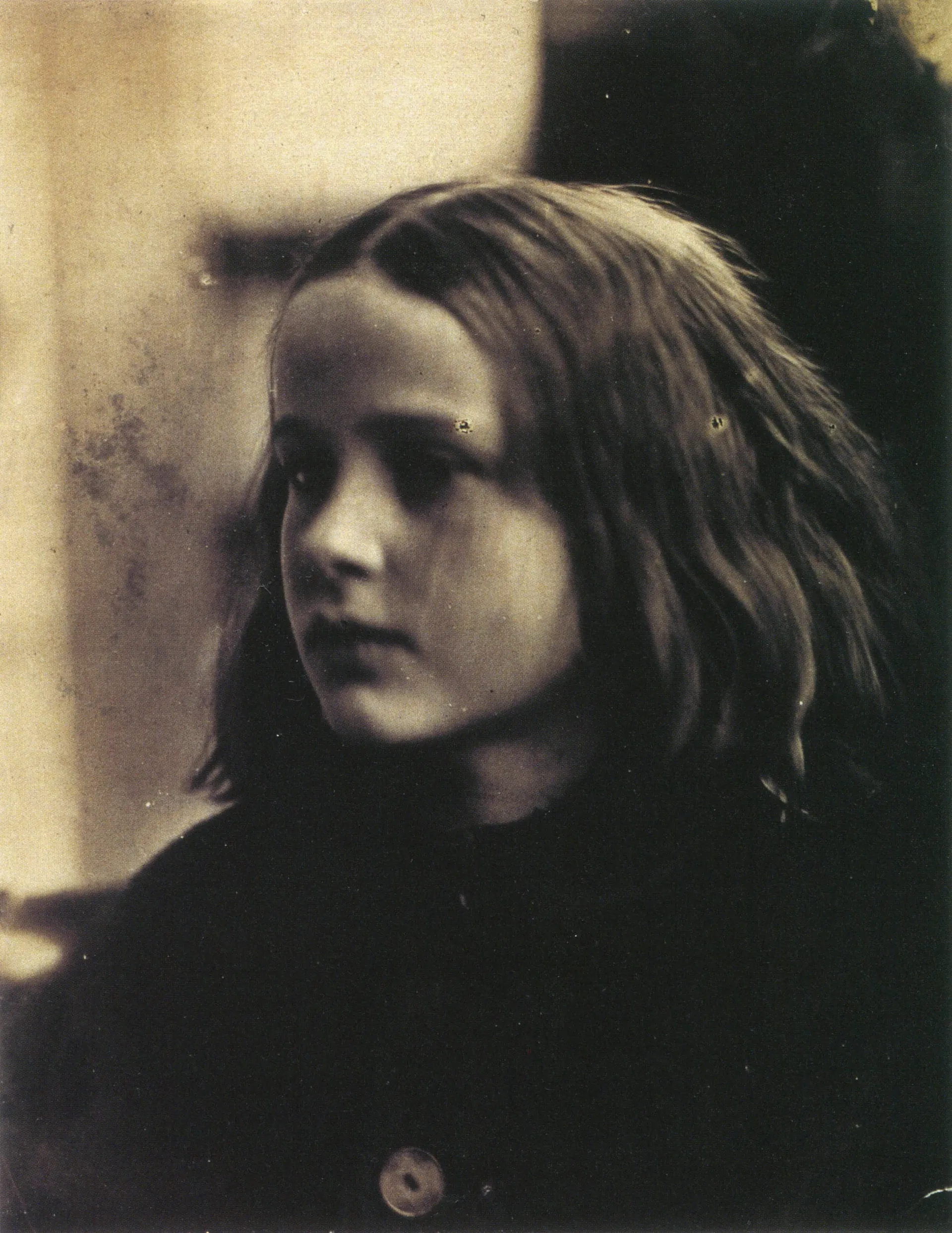
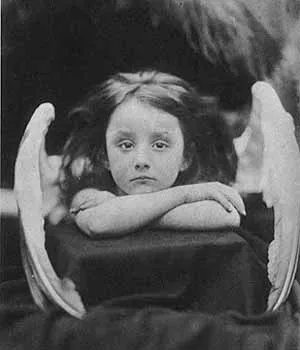
I Wait

Portrait of Rachel Gurney as a winged child — one of Cameron's most reproduced allegorical compositions. The four-year-old model, daughter of Cameron's friends, holds her gaze with disarming directness; the soft-focus rendering and chiaroscuro lighting collapse the distance between Renaissance putto and Victorian child.

Original held at : Victoria & Albert Museum, London · Metropolitan Museum of Art · J. Paul Getty Museum

Reference file source : Wikimedia Commons (Public Domain)
1867 · Albumen silver print from wet-collodion glass negative

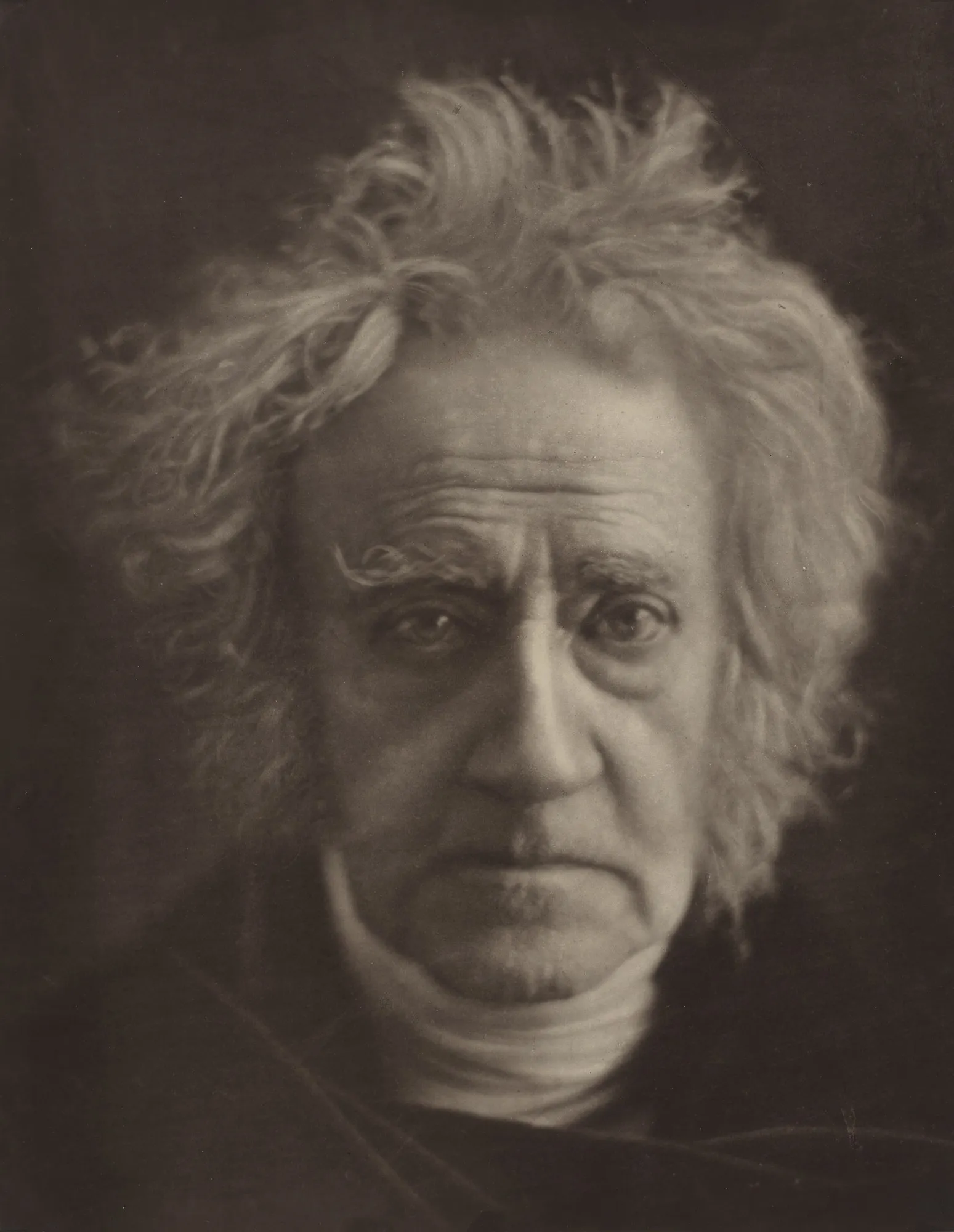
Sir John Herschel

Cameron's portrait of her old friend and mentor — the astronomer who coined the words 'photography', 'positive' and 'negative'. She washed his white hair into a halo of light before the sitting; Herschel was seventy-five. Often called the greatest portrait of a scientist ever made.

Original held at : Victoria & Albert Museum, London · National Portrait Gallery, London · Metropolitan Museum of Art

Reference file source : Wikimedia Commons (Public Domain)

1865 · Albumen silver print from wet-collodion glass negative

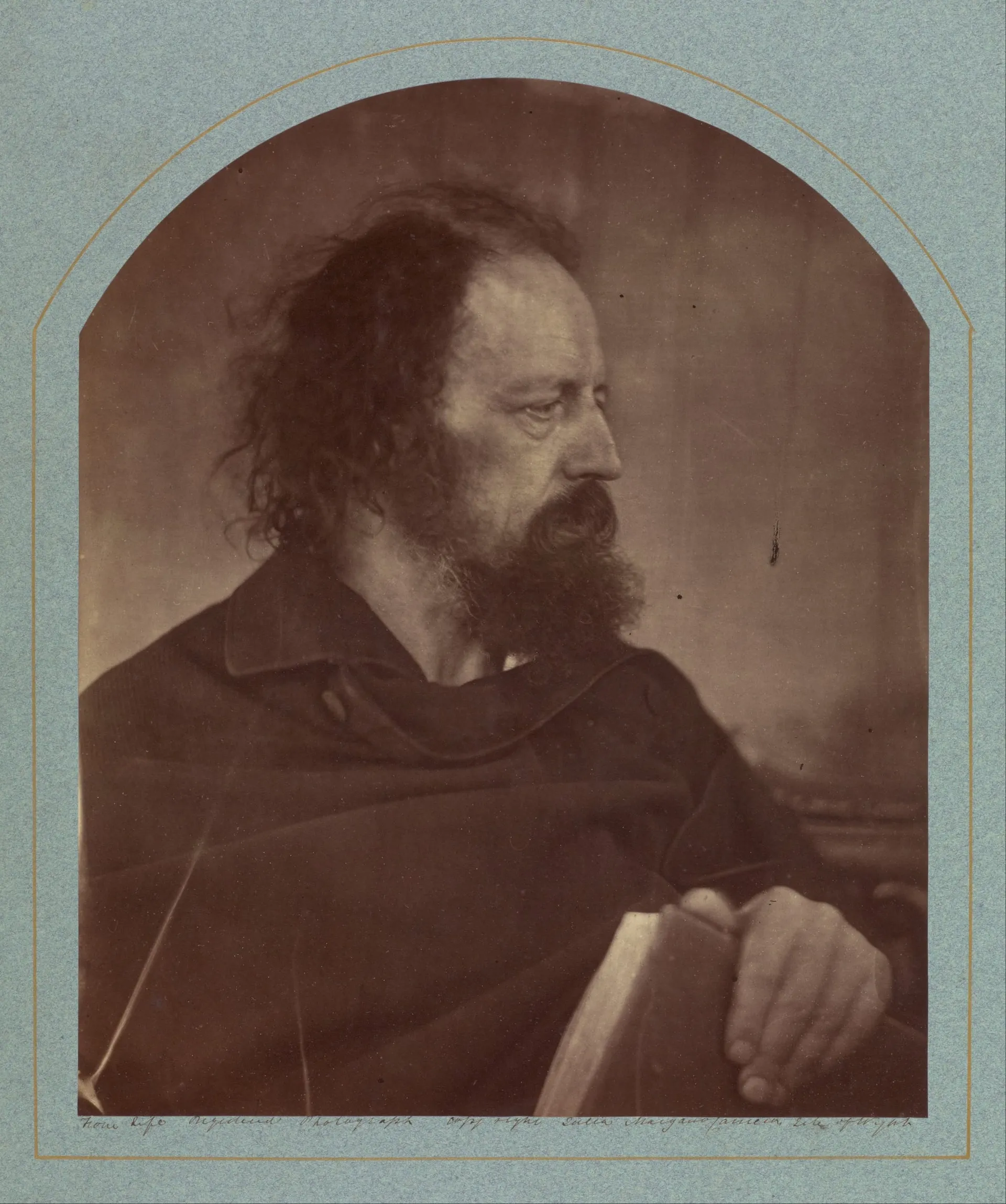
Alfred, Lord Tennyson ("The Dirty Monk")

The Poet Laureate as he saw himself — Tennyson nicknamed this portrait "The Dirty Monk" and chose it as the frontispiece for his Cabinet Edition. Cameron and Tennyson were Isle of Wight neighbours; this image cemented her as the portraitist of choice for the literary Establishment.

Original held at : Victoria & Albert Museum, London · National Portrait Gallery, London · Metropolitan Museum of Art

Reference file source : Google Art Project / Wikimedia Commons (Public Domain)

c. 1868 · Albumen silver print from wet-collodion glass negative

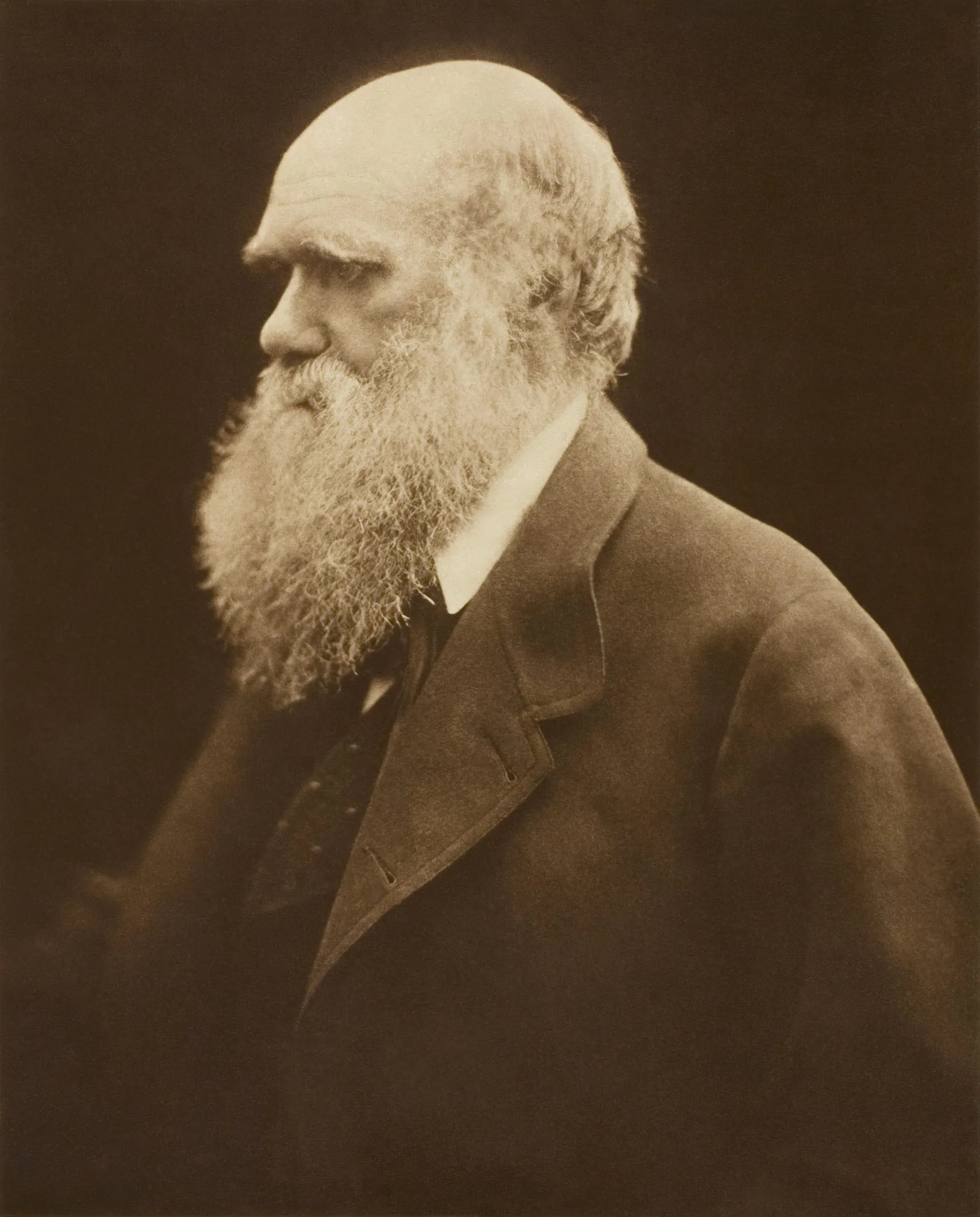
Charles Darwin

Darwin sat for Cameron in 1868 during a family visit to the Isle of Wight, nine years after On the Origin of Species. The portrait — heavy brow, deep-set eyes, untrimmed beard — became the canonical image of the naturalist and was used to illustrate his obituaries fourteen years later.

Original held at : Metropolitan Museum of Art · National Portrait Gallery, London · Royal Photographic Society / Bradford

Reference file source : Wikimedia Commons (Public Domain)

1872 · Albumen silver print from wet-collodion glass negative

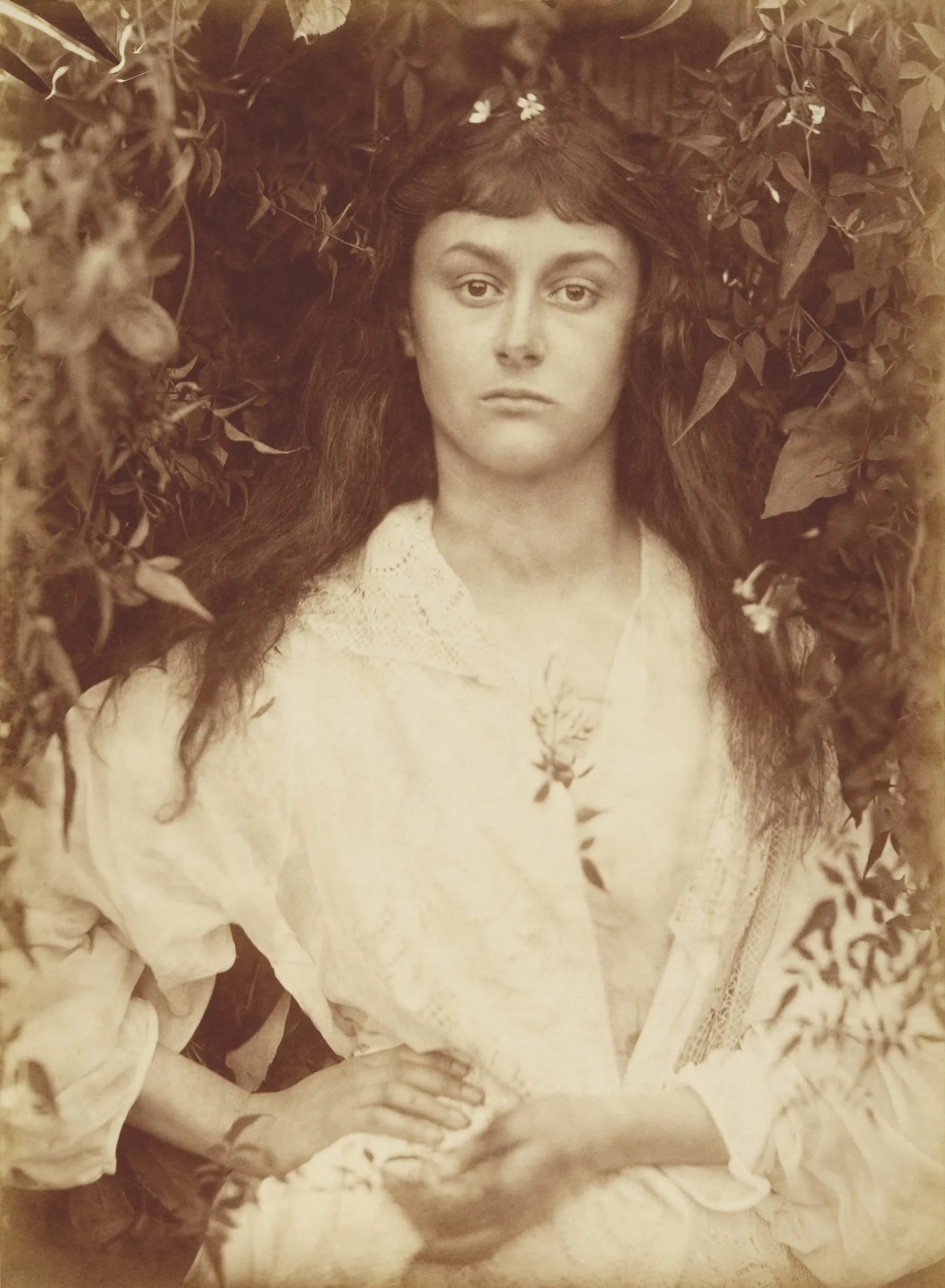
Pomona (Alice Liddell)

Alice Liddell — the original Alice of Lewis Carroll's Wonderland — at twenty, posed as the Roman goddess of fruit trees. Cameron photographed her three times in 1872 in the persona of mythological figures; this Pomona is the most reproduced of the series.

Original held at : Victoria & Albert Museum, London · Metropolitan Museum of Art · J. Paul Getty Museum

Reference file source : Wikimedia Commons (Public Domain)
1874 · Albumen silver print from wet-collodion glass negative

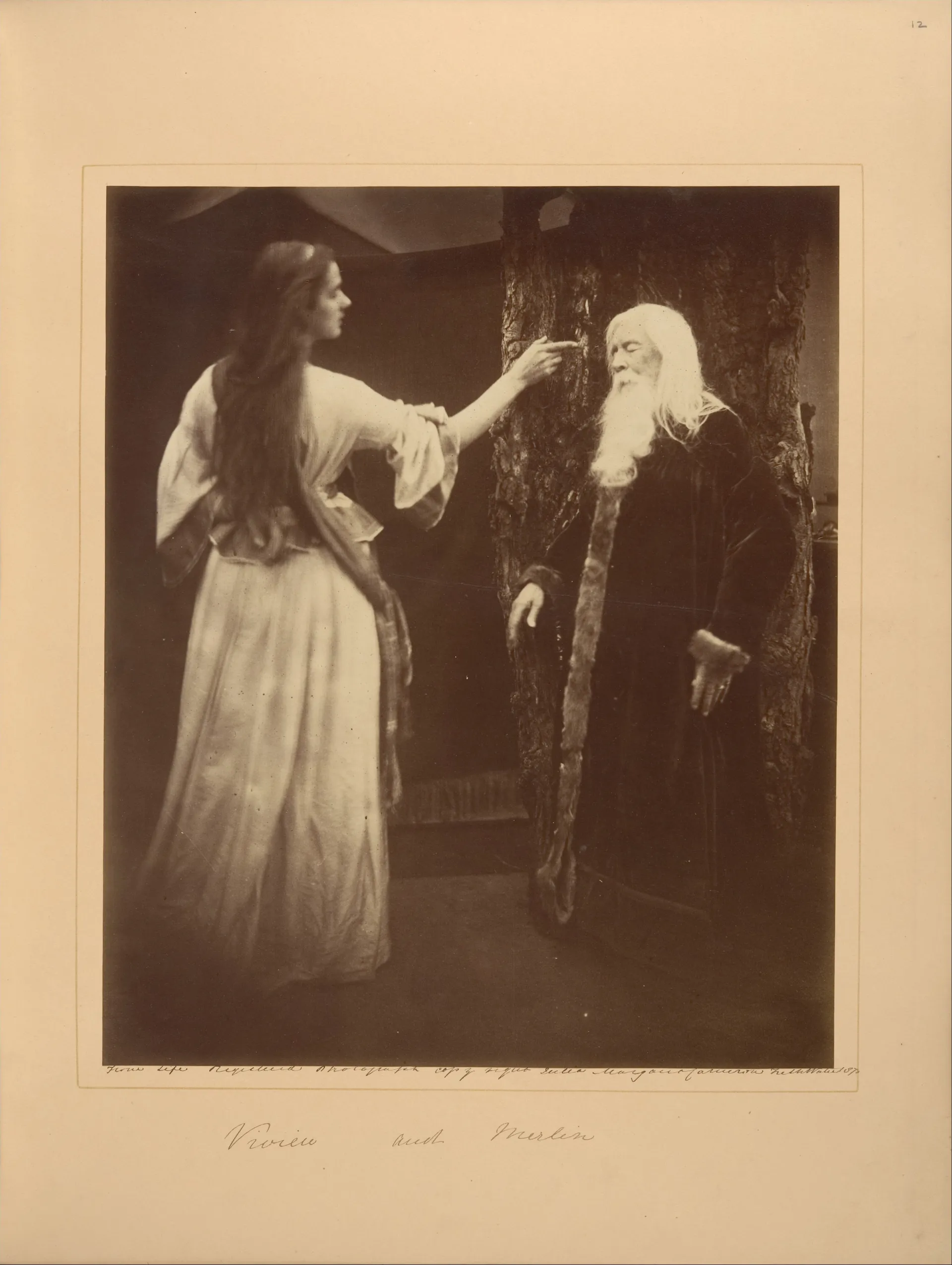
Vivien and Merlin

From the Idylls of the King series — Cameron's illustrations for Tennyson's Arthurian cycle, published in 1875. Vivien (Agnes Mangles) bewitches the wizard Merlin (Cameron's husband Charles Hay Cameron, posed as the bearded sage) into eternal imprisonment. A staged tableau that anticipates cinema.

Original held at : Metropolitan Museum of Art · Victoria & Albert Museum, London · Royal Photographic Society / Bradford

Reference file source : Wikimedia Commons (Public Domain)
1867 · Albumen silver print from wet-collodion glass negative

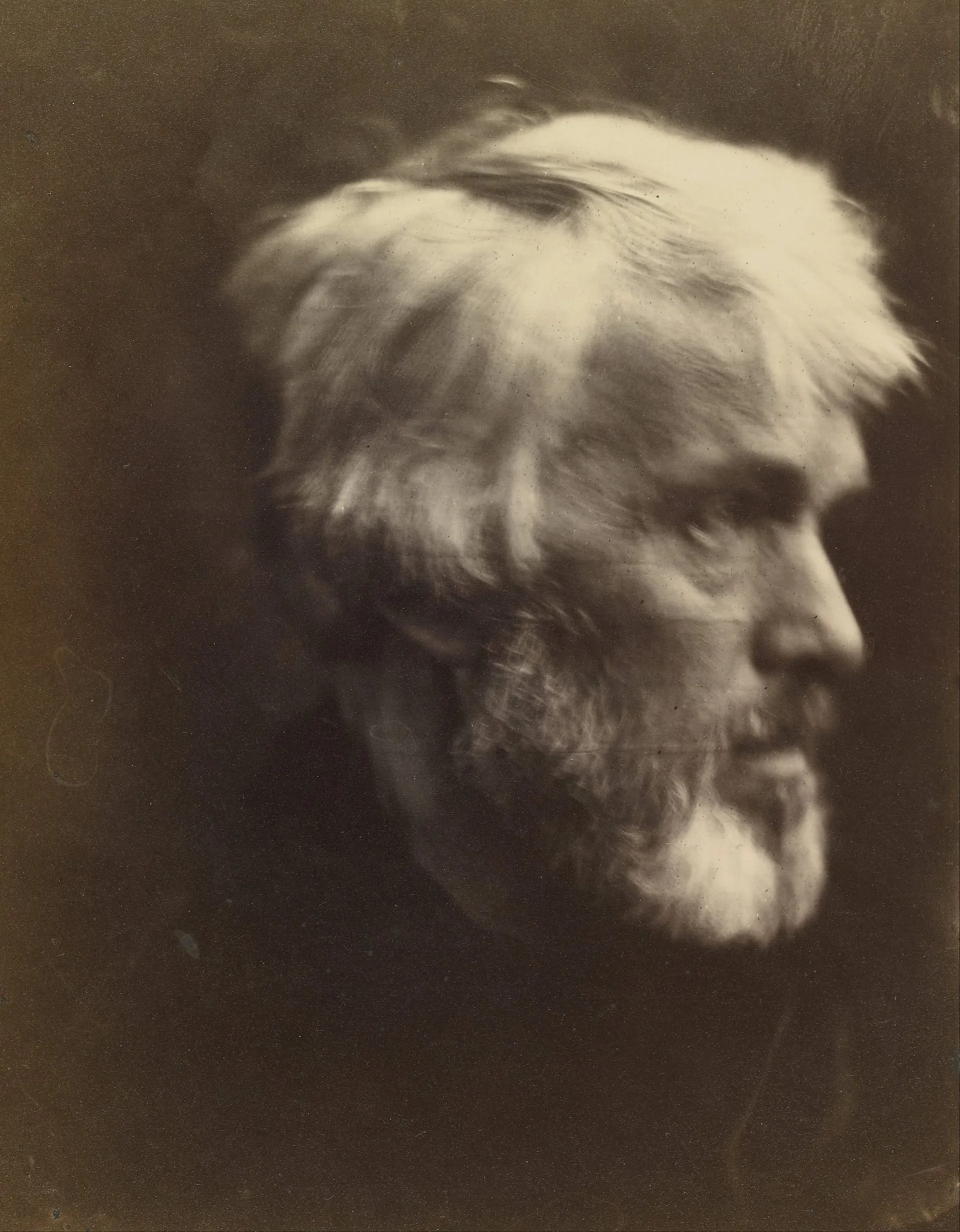
Thomas Carlyle

The Victorian sage as a granite block — Carlyle's craggy face emerging from absolute darkness. Cameron called this image 'like a rough block of Michelangelo's sculpture' and the description stuck. Hugely influential on later expressionist portraiture.

Original held at : Victoria & Albert Museum, London · National Portrait Gallery, London · J. Paul Getty Museum

Reference file source : Google Art Project / Wikimedia Commons (Public Domain)

1866 · Albumen silver print from wet-collodion glass negative

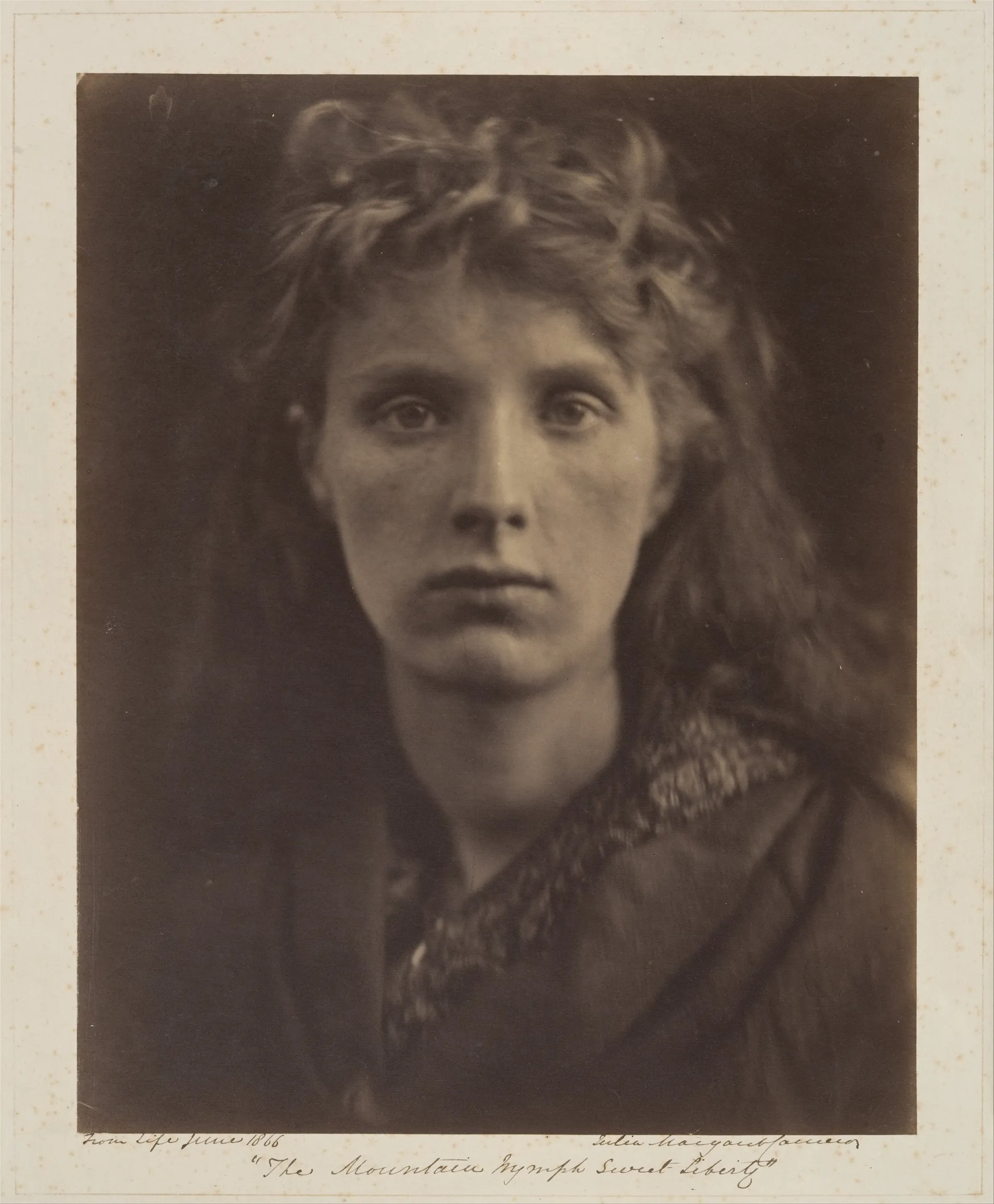
The Mountain Nymph, Sweet Liberty

A direct gaze into the lens — title borrowed from Milton's L'Allegro. Cameron's most modern-feeling portrait: an unidentified woman (likely Mary Hillier, Cameron's favourite model and Dimbola housemaid) framed without props, the soft focus pulling her face into the foreground like a Vermeer.

Original held at : Metropolitan Museum of Art · Victoria & Albert Museum, London · J. Paul Getty Museum

Reference file source : Metropolitan Museum of Art Open Access / Wikimedia Commons (Public Domain)

1866 · Albumen silver print from wet-collodion glass negative

Beatrice (May Prinsep)

May Prinsep — Cameron's niece and frequent model — as Beatrice Cenci, the Renaissance noblewoman executed in 1599 whose Guido Reni portrait Cameron was directly quoting. Half-turn over the shoulder, white drapery, eyes brimming. A keystone of Cameron's 'after the manner of the Old Masters' practice.

Original held at : Metropolitan Museum of Art · Victoria & Albert Museum, London

Reference file source : Wikimedia Commons (Public Domain)
The documented corpus

The rest of Julia Margaret Cameron's public-domain corpus: plates kept in our editorial archives. Reproducible on request, without dedicated editorial study.

3 archived plates

1869

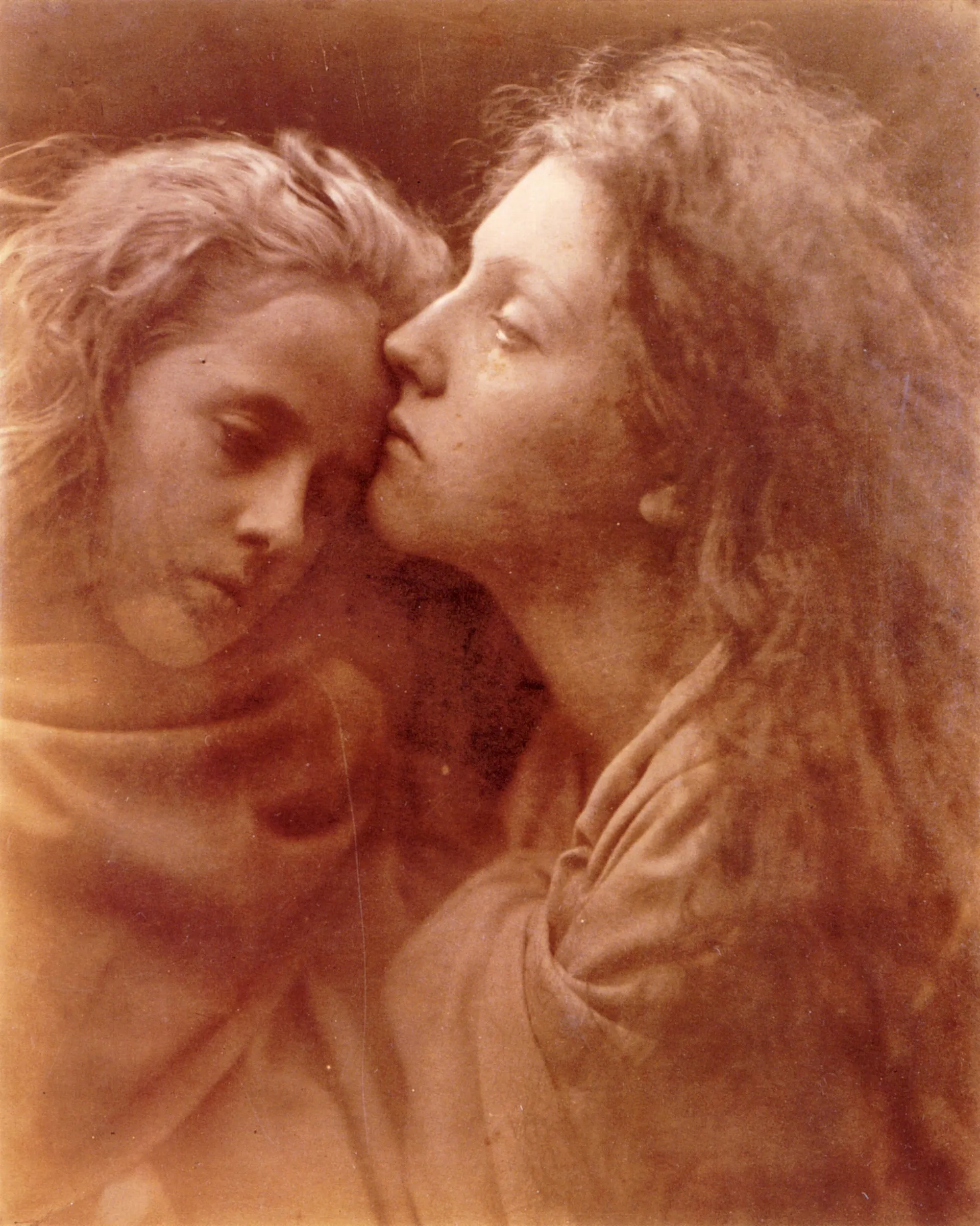
The Kiss of Peace

Albumen silver print from wet-collodion glass negative

1864

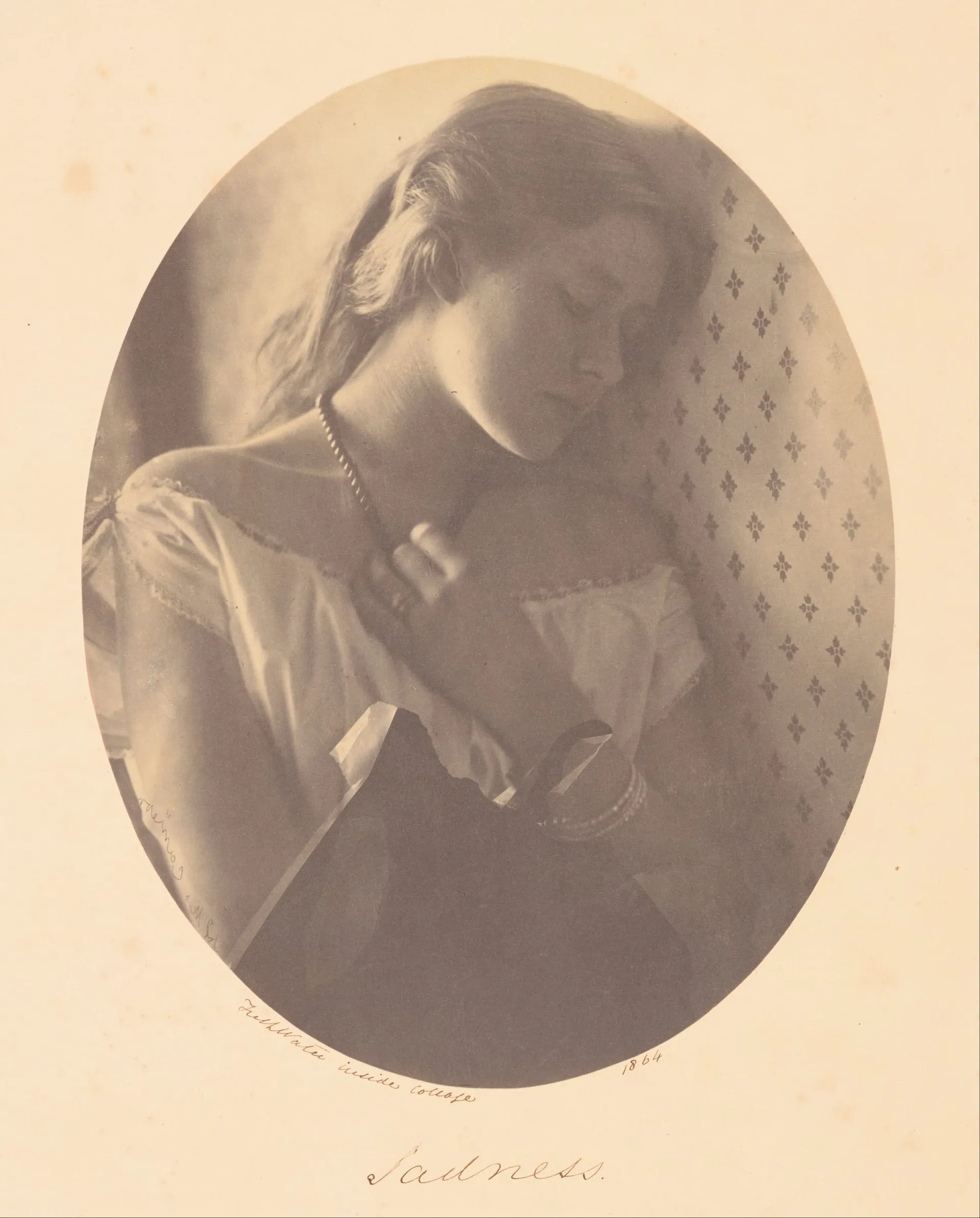
Sadness (Ellen Terry)

Albumen silver print from wet-collodion glass negative

1865

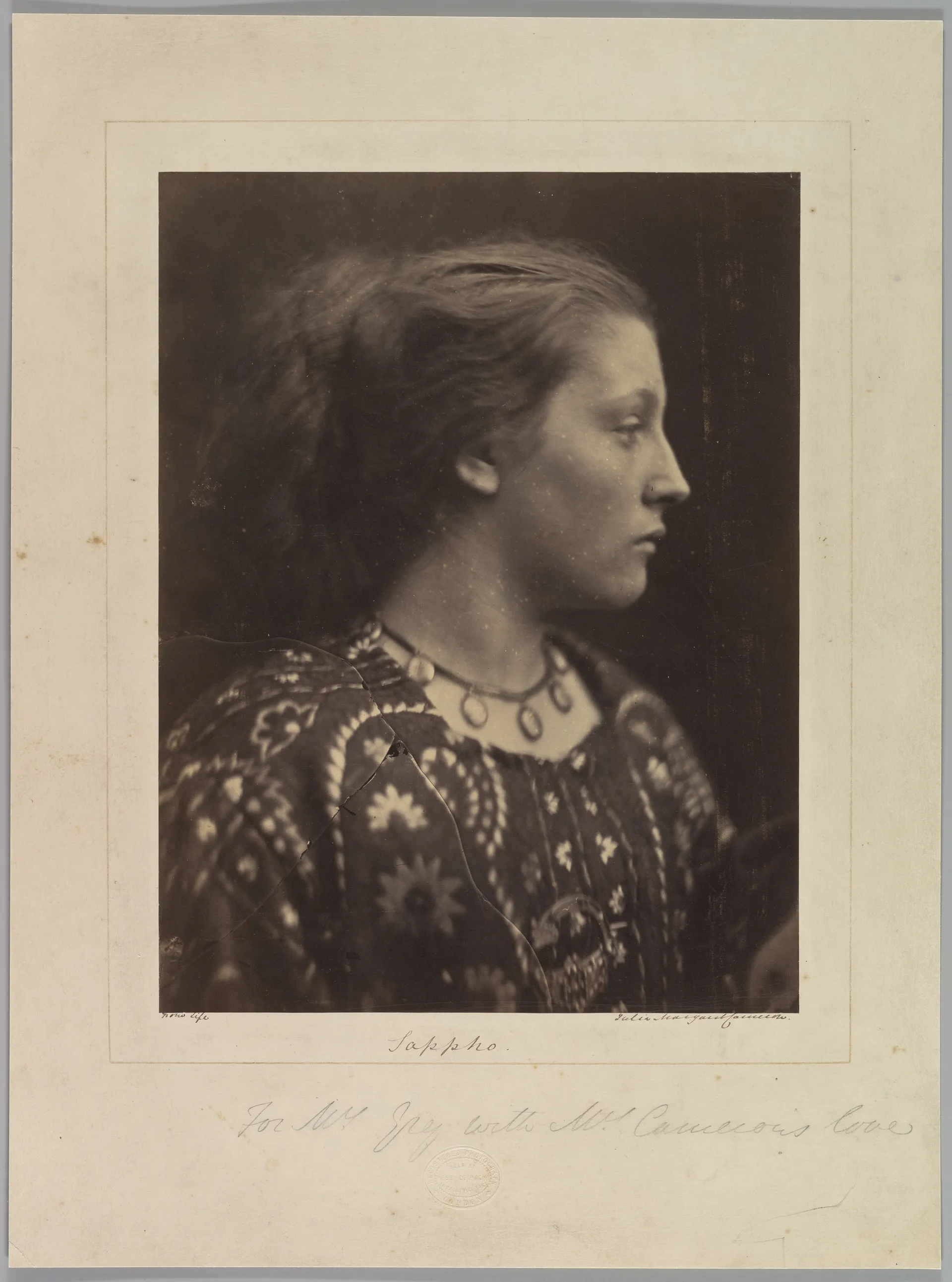
Sappho

Albumen silver print from wet-collodion glass negative

Commission a print after Julia Margaret Cameron

Maison Picturale produces on commission contemporary prints after works by Julia Margaret Cameron that have entered the public domain. Hand-printed by master printers Tristan Sidem and Raphaël Lebas de Lacour on 640 gsm cotton paper, signed and numbered in limited edition, with a certificate of authenticity explicitly mentioning the "after" nature of the reinterpretation.

Start a commission