Ce site utilise des cookies d'analyse pour améliorer votre expérience. En savoir plus

Skip to main content
F. Holland Day
Library

1864-1933 · American

F. Holland Day

F. Holland Day (Fred Holland Day, 1864-1933) is the Boston pictorialist, publisher and bibliophile who treated the platinum print as devotional matter — staging "The Seven Last Words" (1898) with himself as Christ, and producing the celebrated Nubian Series (1896-1897) of African-American models posed as Ethiopian royalty. Co-founder of Copeland & Day, publishers of Oscar Wilde and Aubrey Beardsley, he was invited to join the Photo-Secession but declined, preserving his radical independence.

Public domain since 2004 · CPI L.123-1

Held at

  • Library of Congress
  • Metropolitan Museum of Art
  • Museum of Fine Arts, Boston
  • J. Paul Getty Museum
  • National Gallery of Art
  • Royal Photographic Society / Science Museum Group
  • Art Institute of Chicago
  • Norwood Historical Society

Born to a wealthy Norwood, Massachusetts family, Fred Holland Day was a bibliophile and aesthete who co-founded the Boston publishing house Copeland & Day (1893-1899), bringing out the first American edition of Oscar Wilde's Salomé with Aubrey Beardsley's illustrations and the inaugural issue of The Yellow Book. Turning to photography in the early 1890s, he was elected to the Linked Ring in 1895 and became, with Alfred Stieglitz and Gertrude Käsebier, one of the three pillars of American pictorialism. His 1898 Seven Last Words — seven platinum self-portraits as the crucified Christ, photographed in Norwood with crosses he commissioned and a crown of thorns shipped from Syria — provoked scandal and admiration in equal measure. His 1896-1897 Nubian Series (An Ethiopian Chief, Menelek, The Smoker, Ebony and Ivory) photographed J. Alexander Skeete and other African-American models with a gravity and tonal beauty unprecedented in American photography of Black subjects. Day organized The New School of American Photography exhibition at the Royal Photographic Society (London, 1900), showing 375 prints — but Stieglitz, threatened by Day's autonomy, opposed it. Invited to join the Photo-Secession (1902), Day declined and refused to publish in Camera Work. A devastating 1904 studio fire destroyed some 2,000 prints and negatives. Day retired to Norwood, made platinum and gum-bichromate prints of his protégé Khalil Gibran (whose career he launched), and abandoned photography entirely after platinum salts became unavailable following the 1917 Russian Revolution. His estate gave 690 prints to the Library of Congress. Public domain since 2004. His mastery of platinum and gum bichromate — two non-toxic noble processes practised at Maison Picturale — makes him a foundational reference for the atelier.

Essential works

A curated selection of public-domain works by F. Holland Day, reinterpretable as contemporary prints by Maison Picturale's master printers. Each artwork page details the original process and its atelier equivalent.

Print after — systematic mention on the certificate of authenticity.

1898 · Platinum print

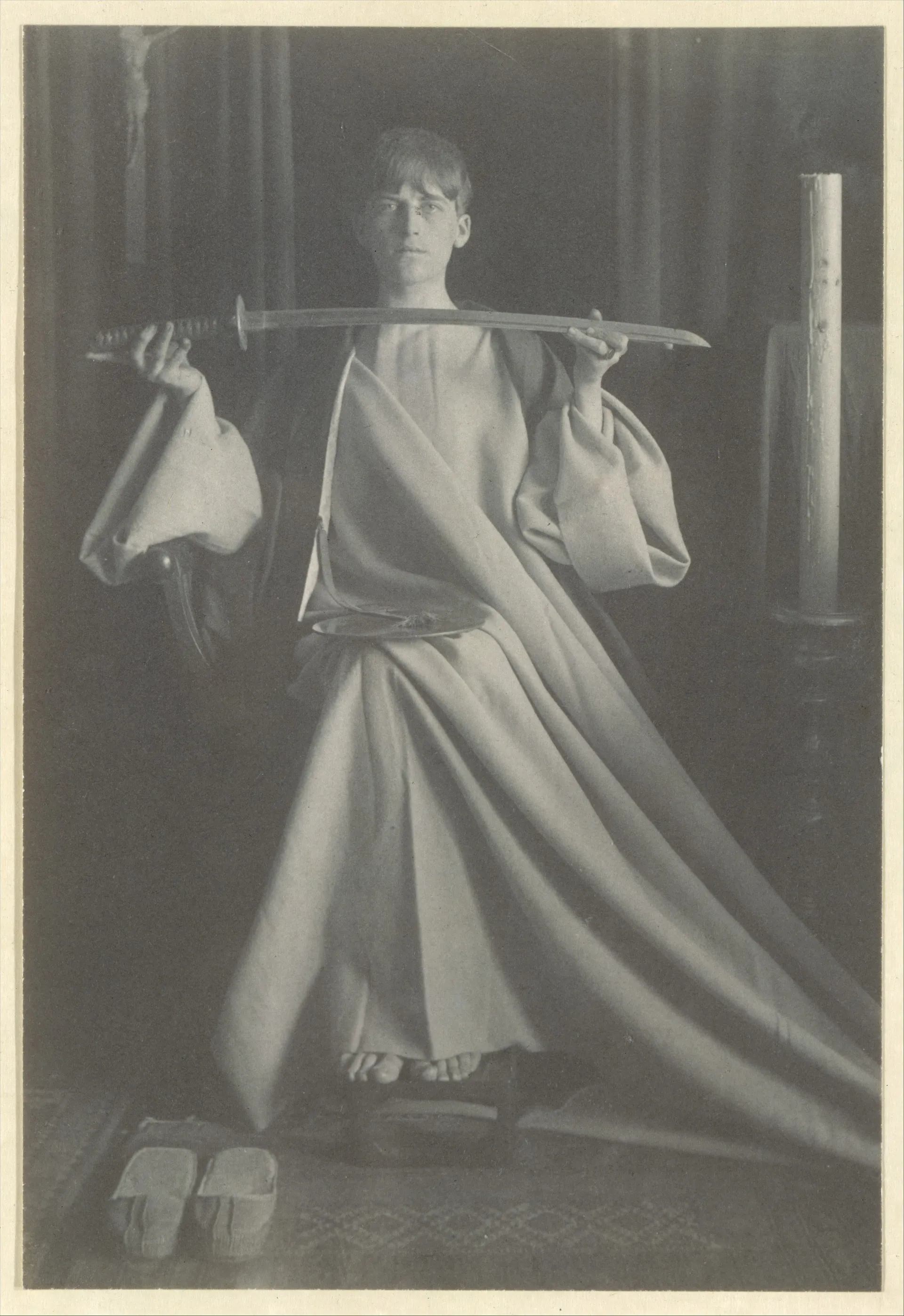
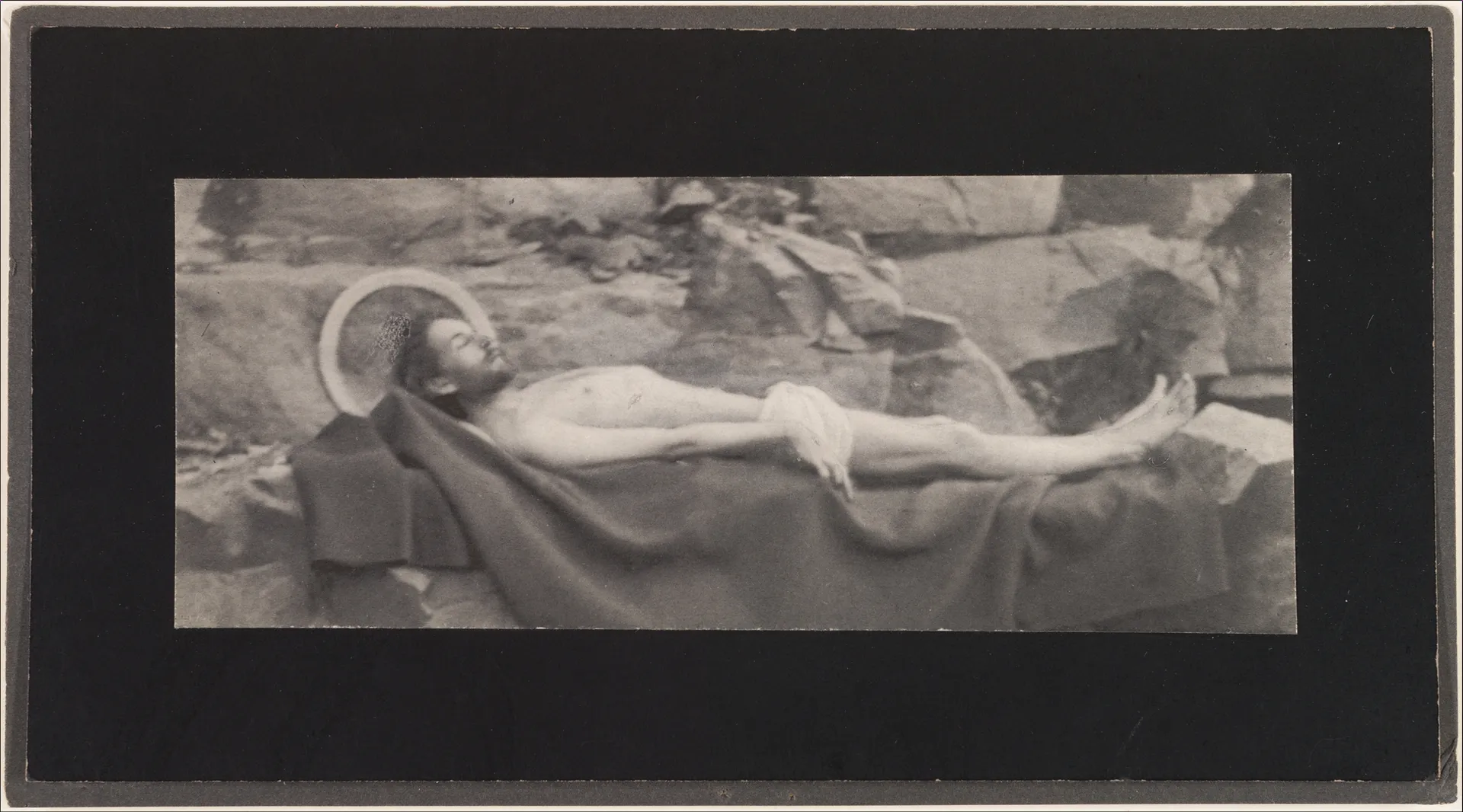
I Thirst (from The Seven Last Words)

One of seven platinum self-portraits constituting Day's most controversial and ambitious work: a series in which the photographer poses as the crucified Christ uttering His Seven Last Words. Shot outdoors in Norwood, Massachusetts, with custom-built crosses and a crown of thorns shipped from Syria. The complete set with original artist-designed frame is held by the Museum of Fine Arts Boston; an unframed set is at the MET.

Original held at : Museum of Fine Arts, Boston · Metropolitan Museum of Art · Library of Congress

Reference file source : Wikimedia Commons (Public Domain)
1896 · Platinum print

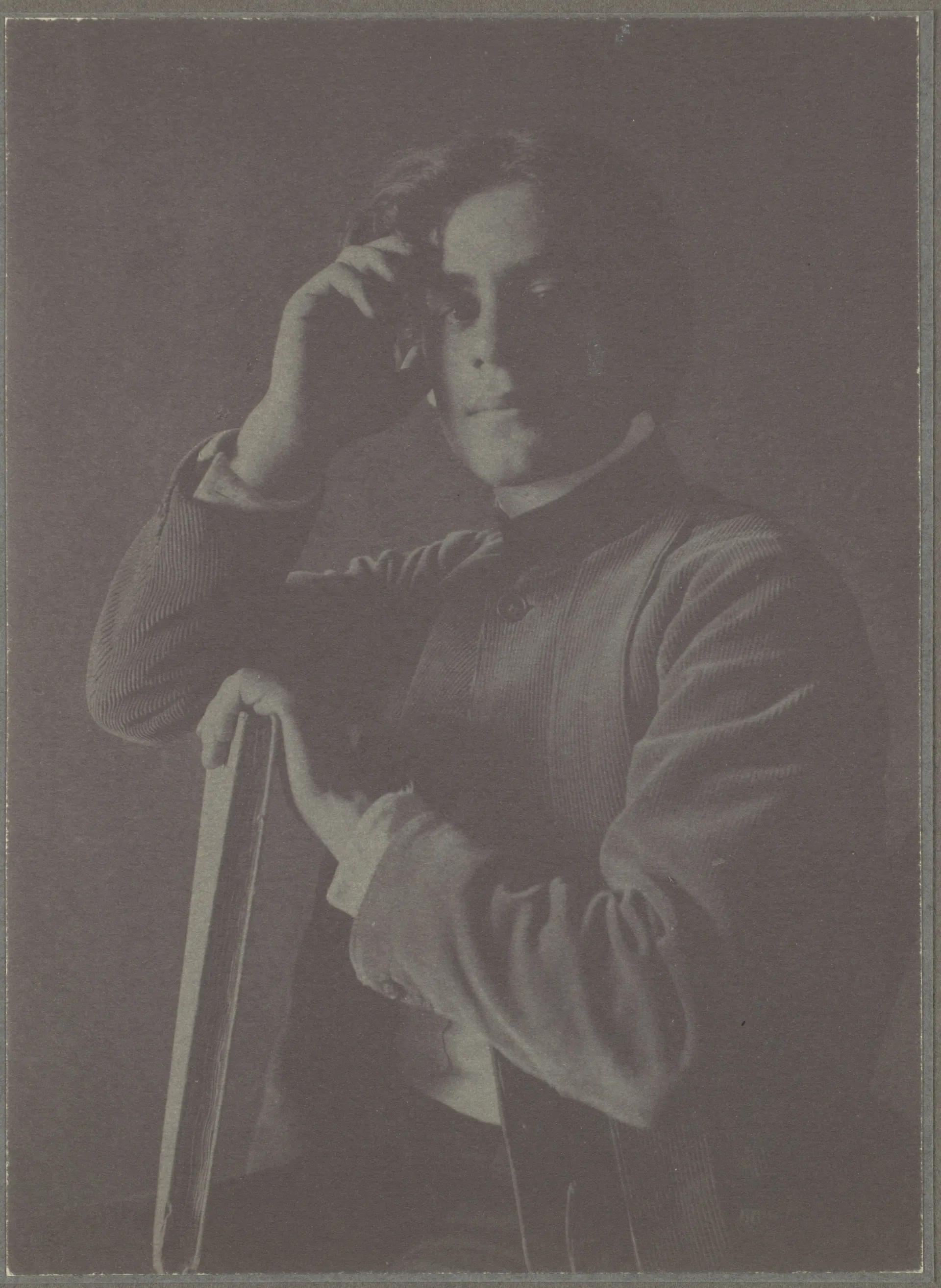
Kahlil Gibran with Book

Platinum portrait of the young Lebanese-American poet Kahlil Gibran (1883-1931), whose artistic career Day launched and supported. Day photographed the adolescent Gibran shortly after he arrived in Boston with his family; the resulting prints helped introduce Gibran to Boston's literary and artistic circles. Part of the Alfred Stieglitz Collection at the Metropolitan Museum of Art.

Original held at : Metropolitan Museum of Art · Library of Congress

Reference file source : Wikimedia Commons / MET Open Access (CC0)

1906 · Platinum print with hand-coloring on textured paper

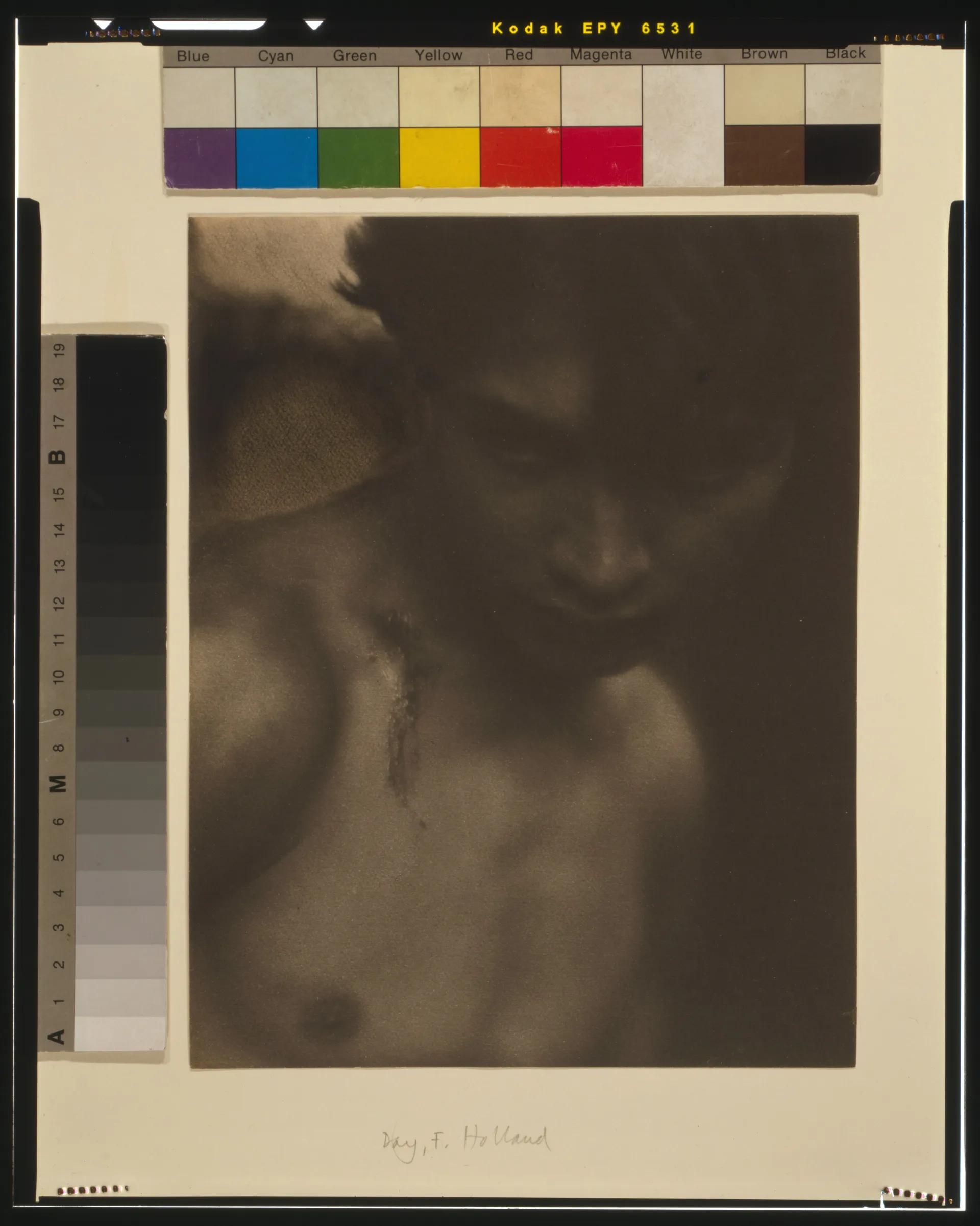
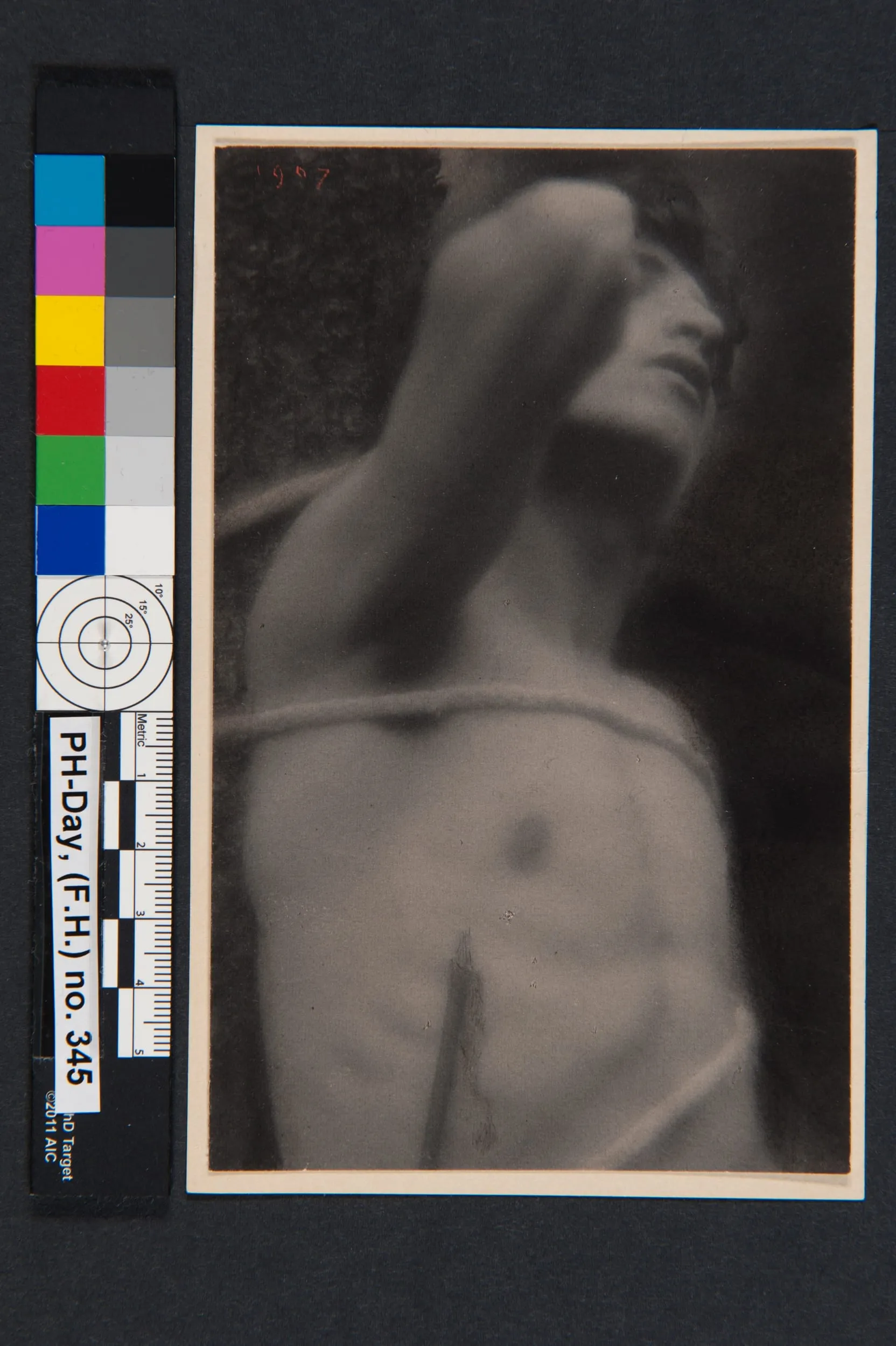
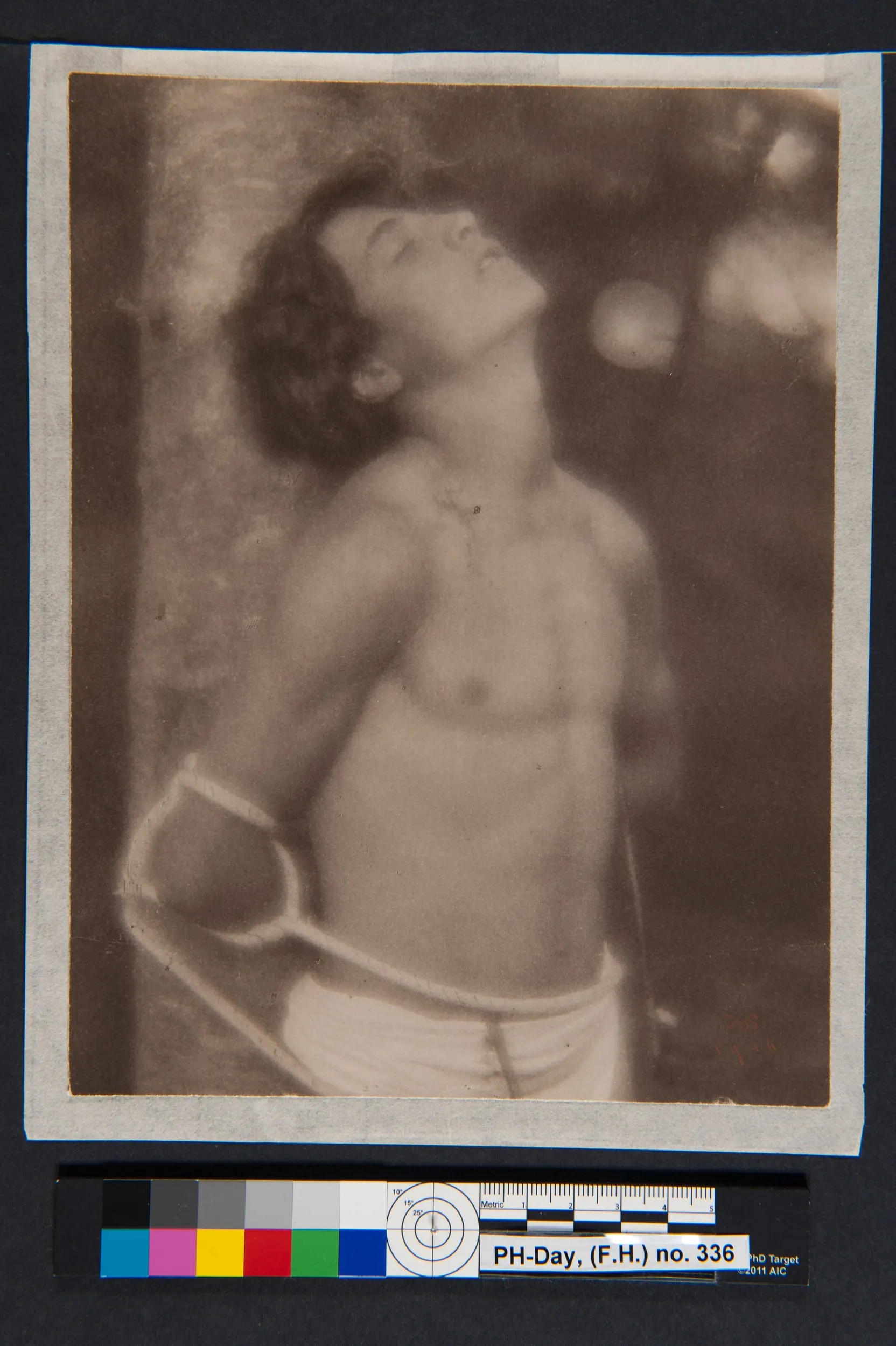
Saint Sebastian (with wounded chest)

Late masterpiece from Day's religious-allegorical phase, featuring his Italian-American protégé Nicola Giancola — a Boston shoeshine boy Day took in and mentored — as the martyr saint. Four platinum prints survive at the Library of Congress as part of the Louise Imogen Guiney Collection. One of the most refined examples of pictorialist tonal range in American photography.

Original held at : Library of Congress · Victoria & Albert Museum

Reference file source : Wikimedia Commons / Library of Congress (Public Domain)

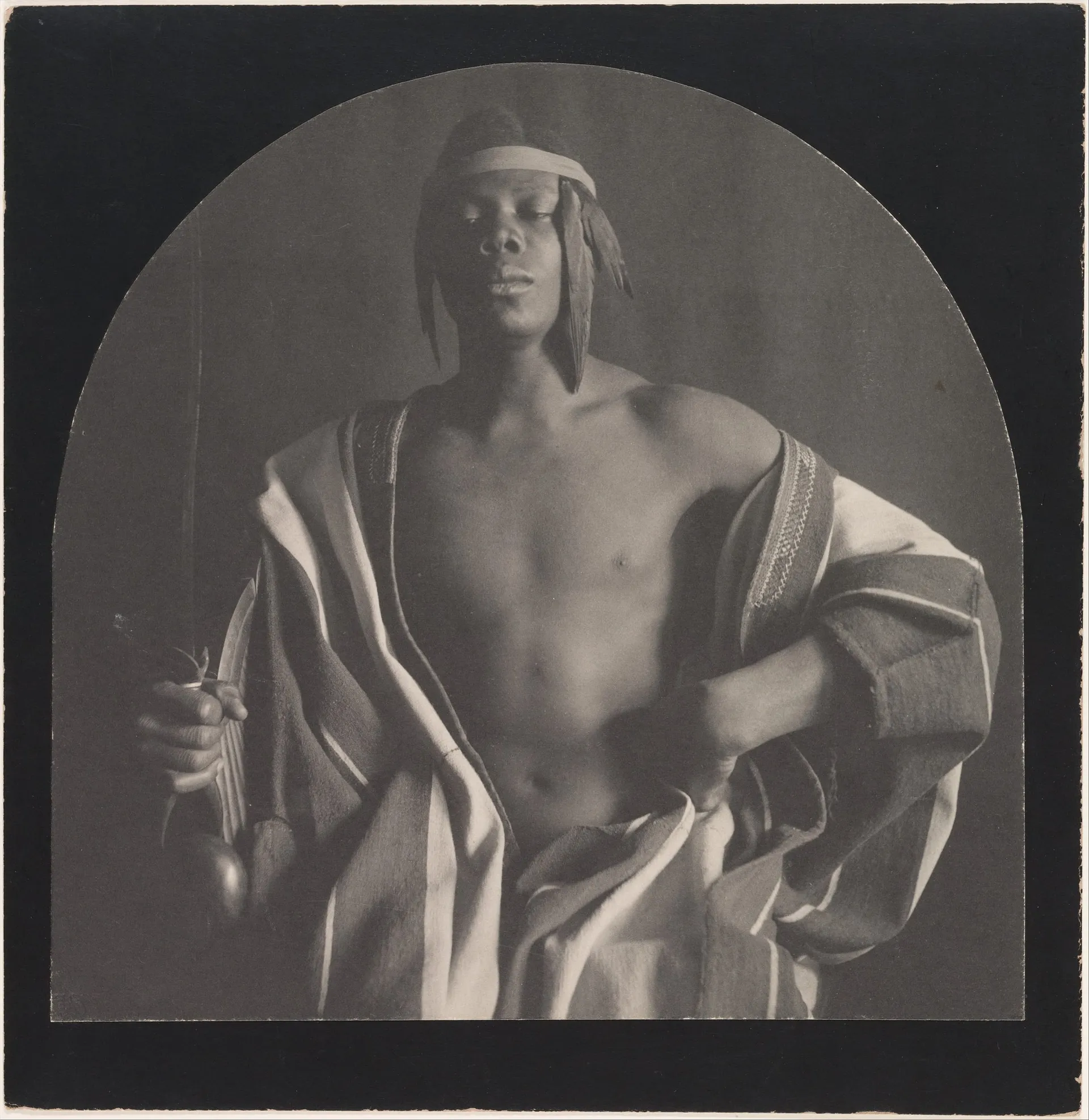
1896 · Sepia platinum print on black mount (arch-shaped)

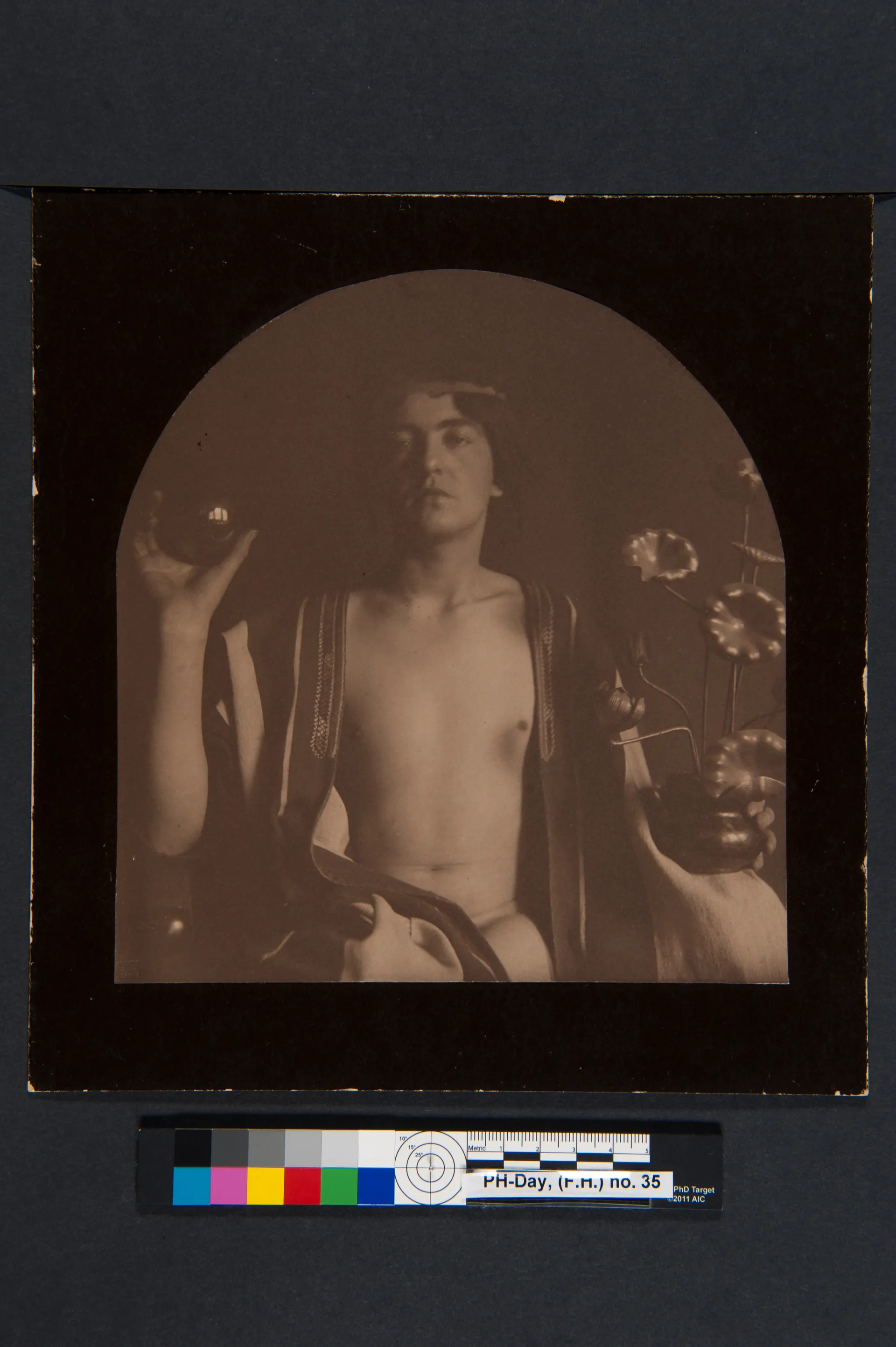
Beauty is Truth, Truth-Beauty

Allegorical platinum print exhibited at the 1899 Philadelphia Photographic Salon — the most prestigious American pictorialist showcase of its decade. The arched, sepia-toned composition (titled after the closing lines of Keats's "Ode on a Grecian Urn") embodies Day's aestheticist credo and his interest in Hellenic ideals.

Original held at : Library of Congress

Reference file source : Wikimedia Commons / Library of Congress (Public Domain)

1897 · Platinum print

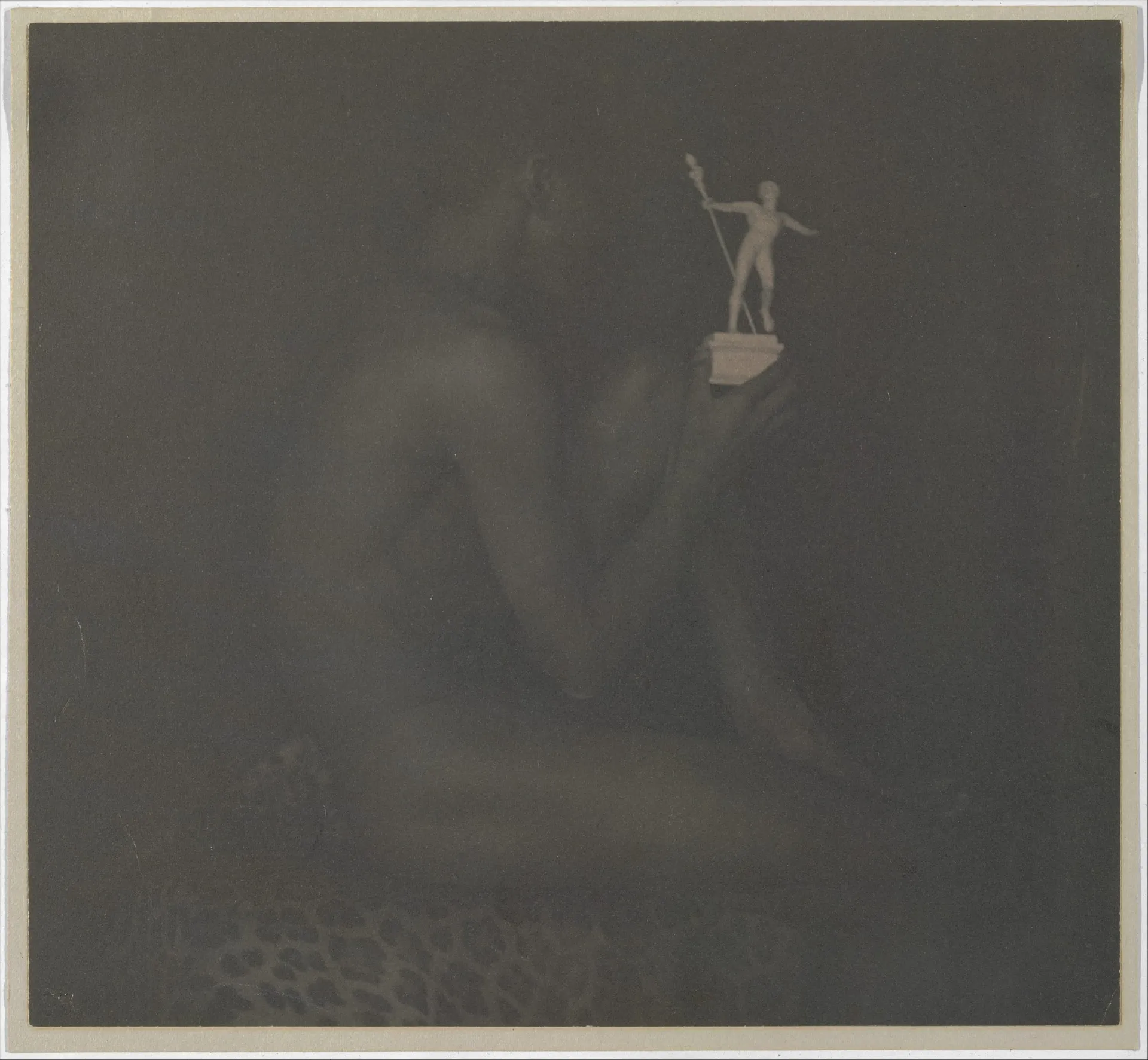
Ebony and Ivory

One of the most discussed images of the Nubian Series: a nude African-American model (J. Alexander Skeete) posed against a small ivory statuette, with deliberate juxtaposition of skin tone and material. Held at the MET (platinum, 33.43.166) and the National Gallery of Art (photogravure, 2002.120.20). A high-water mark of platinum print modulation.

Original held at : Metropolitan Museum of Art · National Gallery of Art

Reference file source : Wikimedia Commons / MET Open Access (CC0)

1898 · Platinum print on cream Japan paper

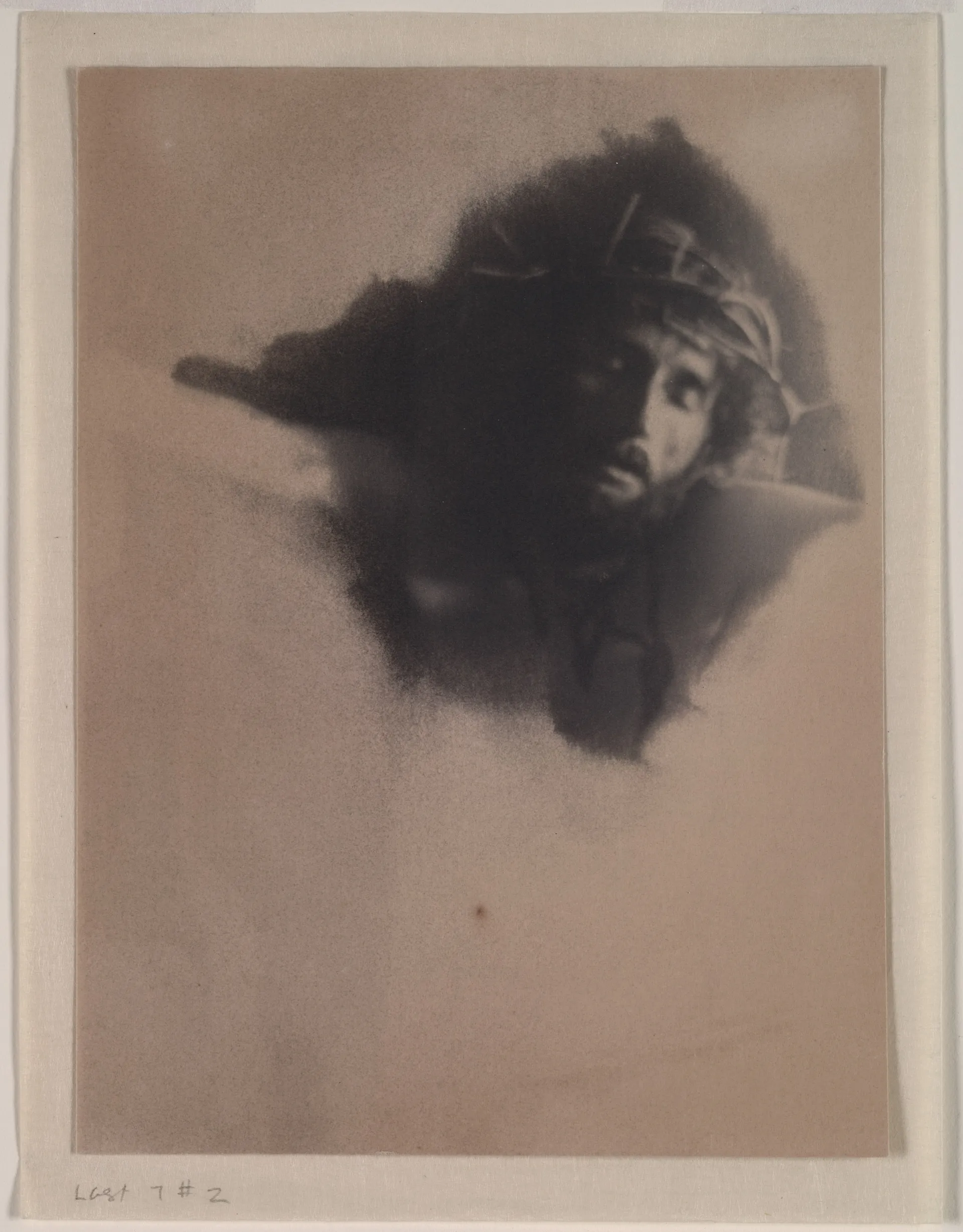
Christ with Crown of Thorns (It Is Finished)

Frontal self-portrait variant from The Seven Last Words series, bearing on the verso the title "It is finished" (consummatum est). Held at the Library of Congress as part of the Louise Imogen Guiney Collection; exhibited at the Israel Museum in Jerusalem (2002-2004) for the exhibition "Revelation: Representations of Christ in Photography."

Original held at : Library of Congress

Reference file source : Wikimedia Commons / Library of Congress (Public Domain)

The documented corpus

The rest of F. Holland Day's public-domain corpus: plates kept in our editorial archives. Reproducible on request, without dedicated editorial study.

2 archived plates

1906

St. Sebastian in Loincloth

Platinum print

1906

St. Sebastian with Wounded Chest (cropped at shoulder)

Platinum print

Commission a print after F. Holland Day

Maison Picturale produces on commission contemporary prints after works by F. Holland Day that have entered the public domain. Hand-printed by master printers Tristan Sidem and Raphaël Lebas de Lacour on 640 gsm cotton paper, signed and numbered in limited edition, with a certificate of authenticity explicitly mentioning the "after" nature of the reinterpretation.

Start a commission