Charles Marville
Library

1813-1879 · French

Charles Marville

Charles Marville (1813-1879) is the photographer of Paris during Baron Haussmann's transformation. As 'photographe de la Ville de Paris' (1862), he documented both the disappearing medieval streets of the Vieux Paris and the new Haussmannian boulevards — creating an irreplaceable archive of 19th-century urban transformation.

Public domain since 1950 · CPI L.123-1

Held at

  • Musée Carnavalet, Paris
  • Metropolitan Museum of Art
  • National Gallery of Art Washington
  • Musée d'Orsay
  • Bibliothèque historique de la Ville de Paris

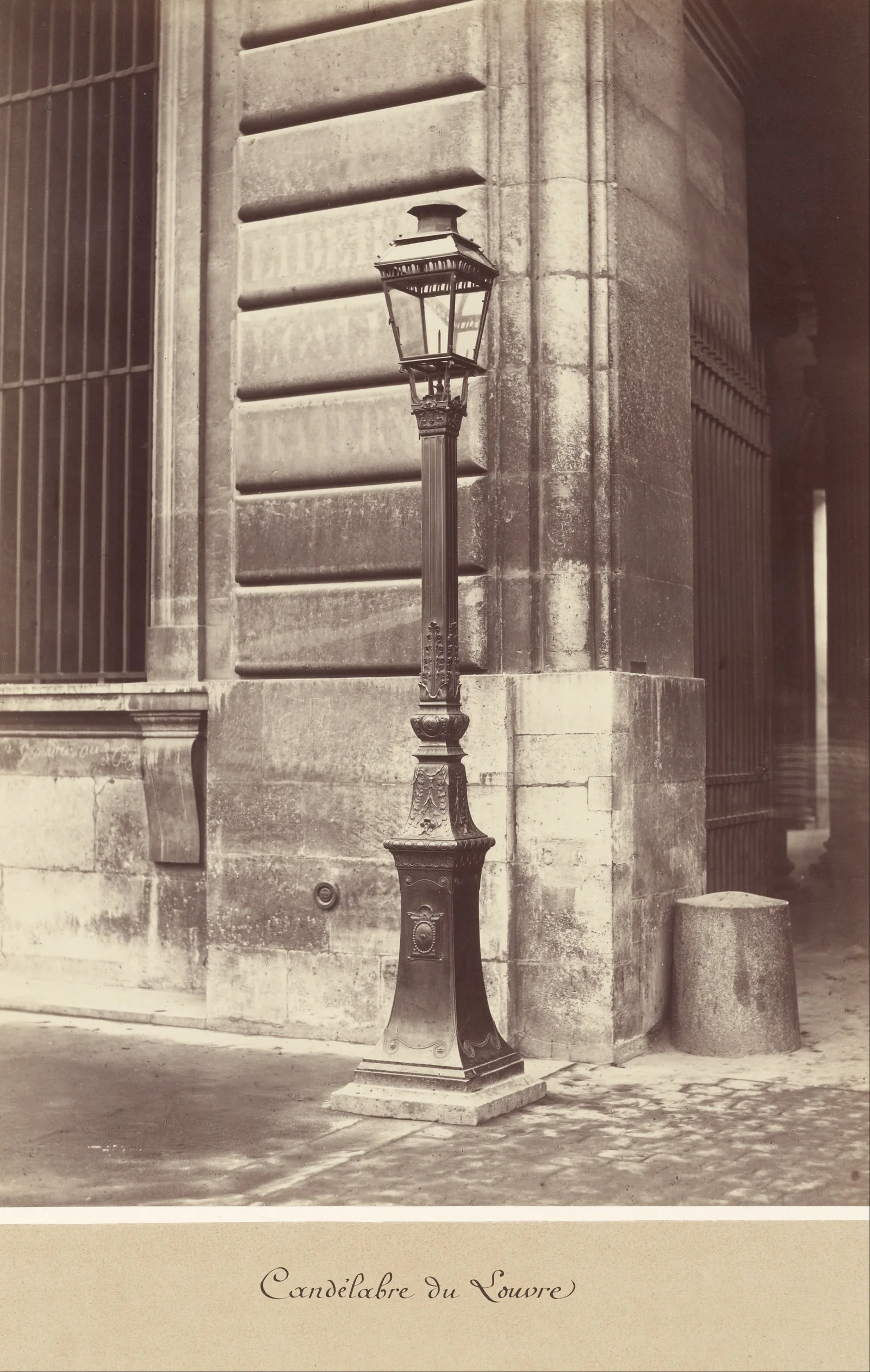
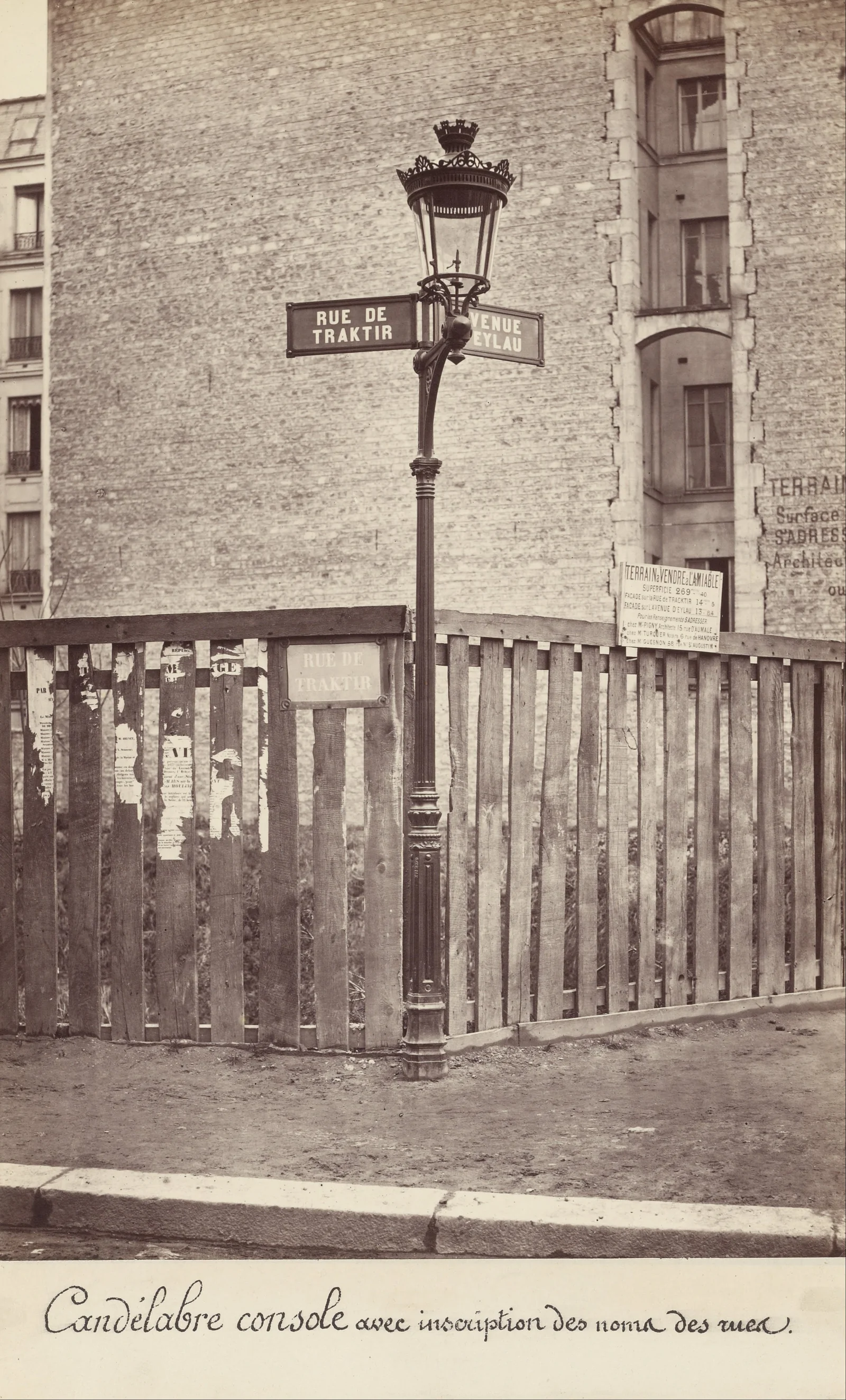
Born Charles-François Bossu in Paris ("Bossu" meaning "hunchback" in French — the reason he later adopted the pseudonym "Marville" around 1832, fearing it would harm his artistic career), Marville began photography in the 1850s. After early commissions documenting Chartres and Reims cathedrals for the Commission des Monuments Historiques (1854), he was appointed photographer to the City of Paris in 1858 (officially confirmed in 1862) by Baron Haussmann to document the medieval streets being demolished for the new boulevards — the most ambitious urban renewal of the 19th century. His pre-Haussmann street views (Rue de Constantine, Rue des Marmousets, Rue du Haut-Moulin) are the irreplaceable visual record of a vanishing Paris. He also documented Haussmann's new boulevards (Saint-Germain, Saint-Michel, Haussmann), the Hôtel de Ville before and after its 1871 Commune burning, the Bois de Boulogne pavilions, and the standardized urban furniture (gas streetlamps) that defined imperial modernity. Held at Musée Carnavalet (over 760 prints plus several hundred glass plates at the BHVP), MET, Getty Center, George Eastman Museum, Museo Cerralbo, State Library of Victoria (Melbourne), Musée de Strasbourg. Public domain since 1950. His Paris archive is foundational for Maison Picturale's local heritage practice in the 20th arrondissement.

Signature processes

The alternative processes practised by Charles Marville, printed today at Maison Picturale using Vision Picturale's non-toxic reformulated chemistry.

Essential works

A curated selection of public-domain works by Charles Marville, reinterpretable as contemporary prints by Maison Picturale's master printers. Each artwork page details the original process and its atelier equivalent.

Print after — systematic mention on the certificate of authenticity.

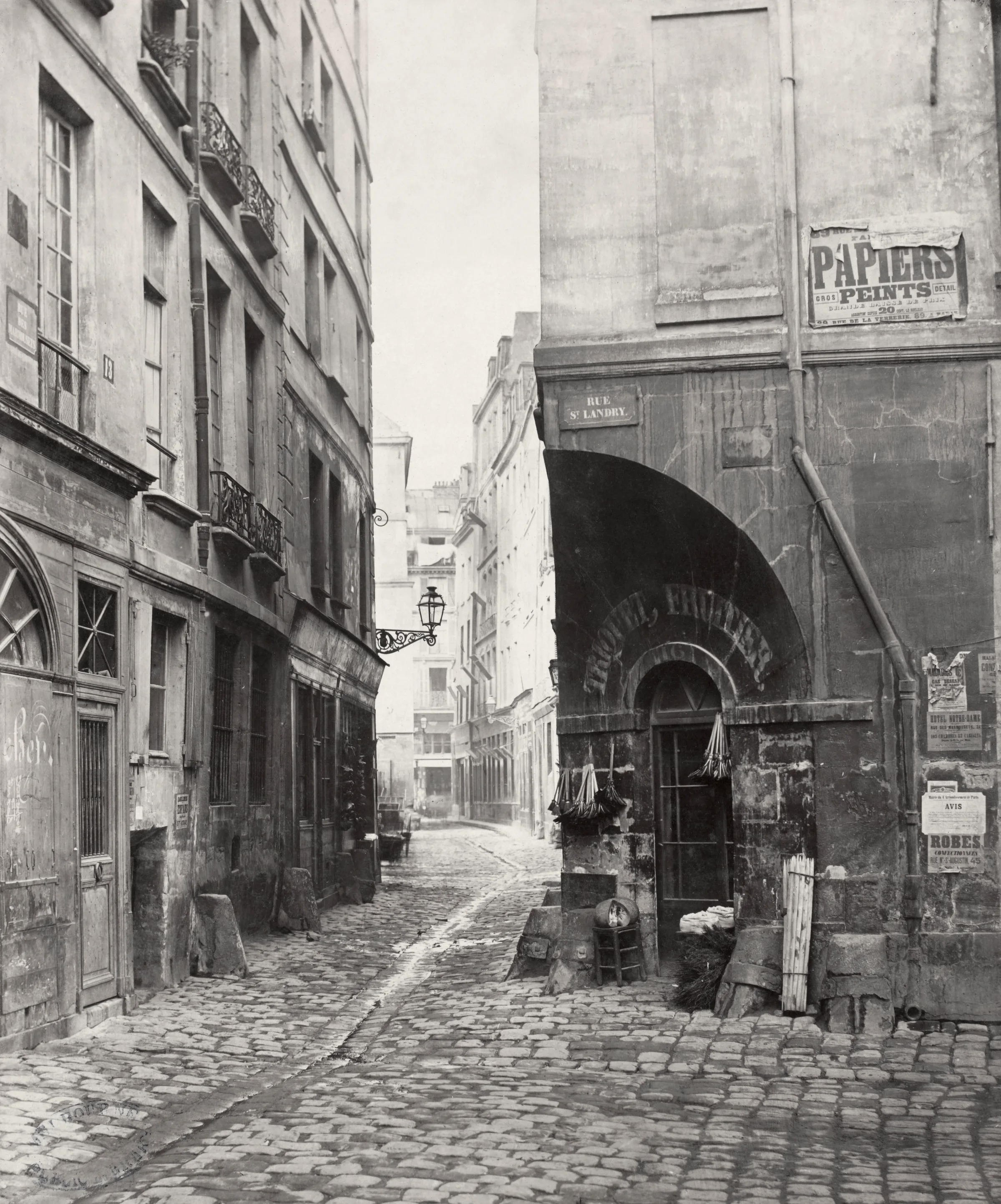
Rue des Marmousets — Charles Marville

c. 1865 · Albumen silver print

Rue des Marmousets

Rue des Marmousets cut through the dense medieval fabric of the Île de la Cité, a few steps from Notre-Dame, until Baron Haussmann's engineers erased it to open the Boulevard du Palais in the late 1860s. As photographer to the City of Paris from 1862, Charles-François Bossu — known as Charles Marville — was commissioned by the Préfecture de la Seine to make the salvage record of streets condemned by the 1853-1870 transformation, a mission without precedent at the scale of a European capital. The image belongs to the ~425 Vieux Paris views Marville produced between 1862 and 1875 for the municipal archive, the corpus that the Musée Carnavalet preserves today (~1,500 prints, complemented by glass plates at the BHVP) as the canonical visual record of pre-Haussmann Paris, reproduced in Sarah Kennel's National Gallery monograph ("Charles Marville: Photographer of Paris", Washington, 2013) and in Maria Morris Hambourg's Marville texts for the Metropolitan Museum. Marville works the wet-collodion glass negative in an 18×24 view camera at dawn, when traffic and pedestrians do not blur the long exposure; the orthochromatic emulsion is blind to blue light and the sky reads as a flat white routinely retouched by brush on the negative — a Marville signature on every Vieux Paris view. Held at Musée Carnavalet, BHVP, BnF, the Metropolitan Museum (Gilman Collection) and the National Gallery of Art (Washington, 2013 exhibition). Procédé Transposition Maison Picturale: the original albumen on salted paper translates into a contemporary Vandyke print — non-toxic ferric ammonium citrate and silver, reformulated salted paper — for the fine-print scale, or into platinum-palladium grand-format to restitute the tonal density of the medieval street.

Original held at : Musée Carnavalet · The Metropolitan Museum of Art

Reference file source : The Metropolitan Museum of Art (Gilman Collection, 2005) / Wikimedia Commons (public domain)

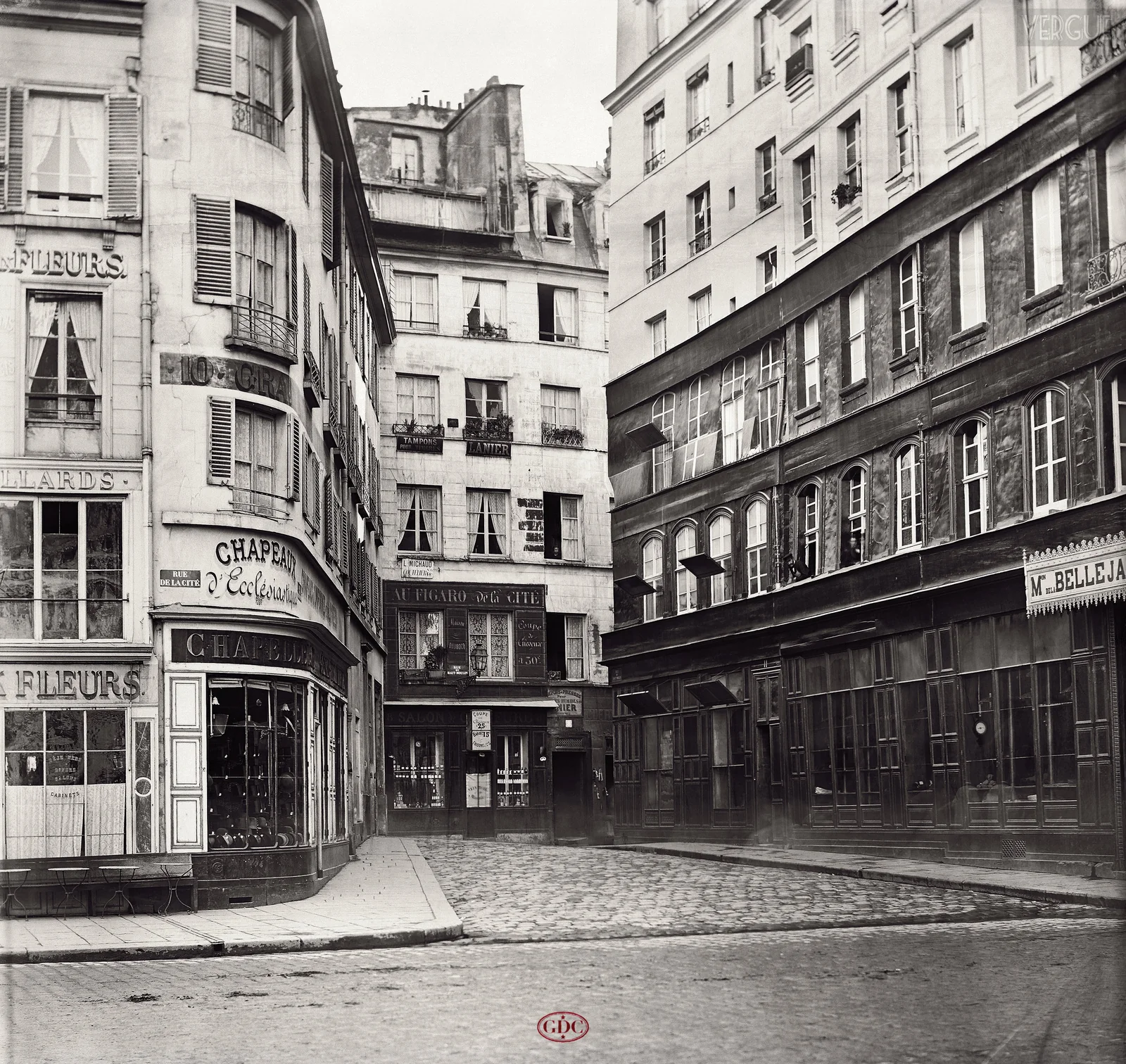
Rue du Haut-Moulin, from the Flower Market — Charles Marville

c. 1853-70 · Albumen silver print

Rue du Haut-Moulin, from the Flower Market

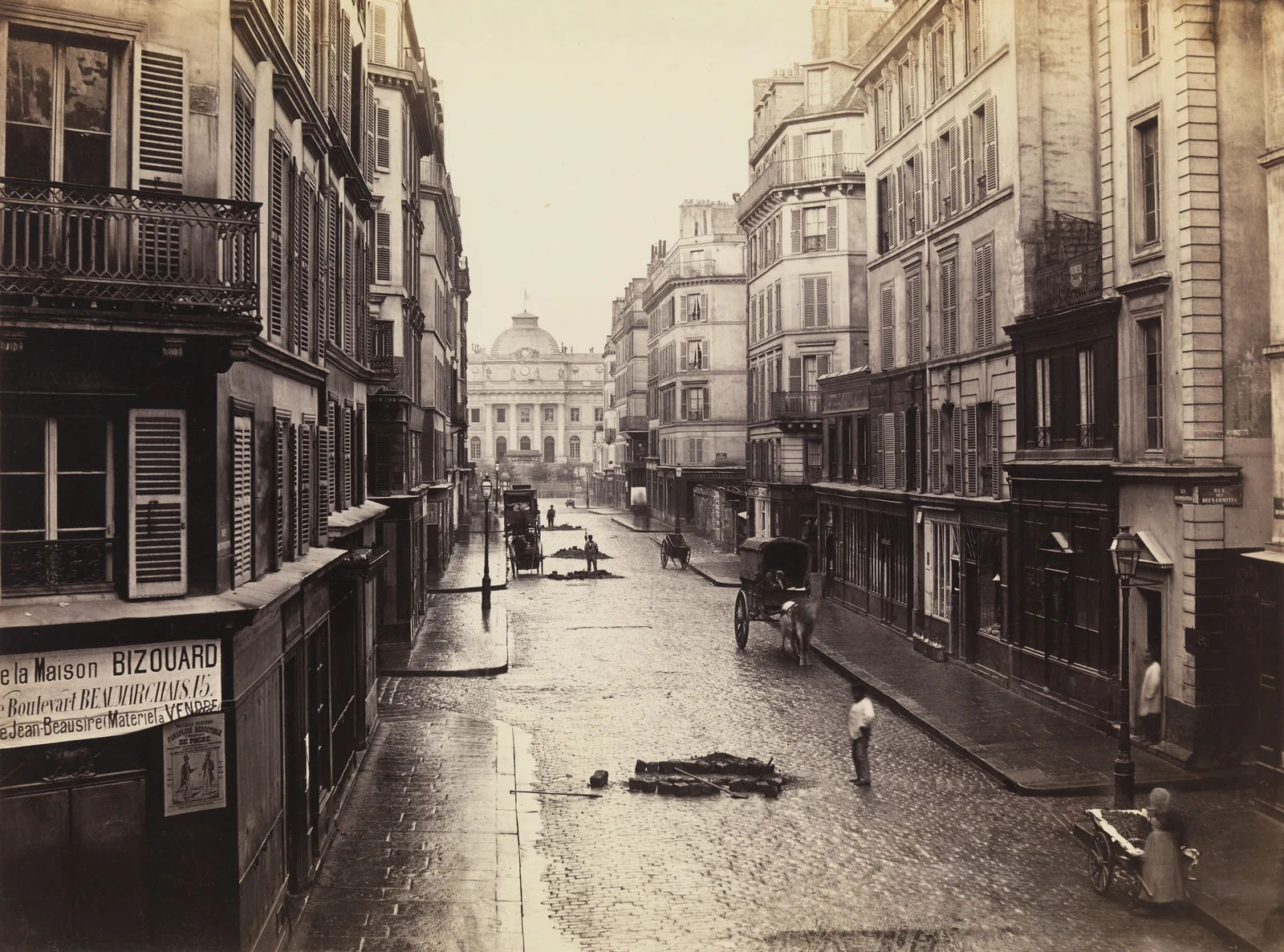
Photographed from the Marché aux Fleurs side of the Île de la Cité, the Rue du Haut-Moulin belongs to the medieval lacework of streets erased between 1860 and 1868 to open the access to the new Tribunal de Commerce and the Boulevard du Palais. The view is part of the Album du Vieux Paris that Charles-François Bossu — known as Charles Marville — assembled as photographer to the City of Paris (officially appointed 1862) under the salvage mandate of Baron Haussmann's prefecture; the album, deposited at the Hôtel de Ville, gathered the photographic record of streets condemned to disappear. Between 1862 and 1875 Marville produced approximately 425 such Vieux Paris views, donated to the municipal archive and now held by the Musée Carnavalet (~1,500 prints), the Bibliothèque historique de la Ville de Paris (BHVP, several hundred glass plates) and the Bibliothèque nationale de France — the reference corpus on pre-Haussmann urbanism, reproduced in Sarah Kennel's National Gallery monograph ("Charles Marville: Photographer of Paris", Washington, 2013). Marville exposes a wet-collodion glass negative in an 18×24 view camera at dawn or dusk; the long exposure smooths foot traffic and the cobblestones read with documentary precision. The orthochromatic collodion does not register blue light, so the sky is rendered as a flat white and routinely retouched by brush on the negative — a Marville signature on every street view. Procédé Transposition Maison Picturale: the original albumen on salted paper translates faithfully into a modern Vandyke print — non-toxic ferric ammonium citrate and silver, reformulated salted paper — or into platinum-palladium when the client commissions a large-format restitution of the street's compressed medieval geometry and its narrow horizon.

Original held at : Musée Carnavalet

Reference file source : Wikimedia Commons / Musée Carnavalet

Boulevard Saint-Germain — Charles Marville

c. 1853-70 · Albumen silver print

Boulevard Saint-Germain

The Boulevard Saint-Germain pierces the Left Bank between 1855 and 1877 as one of the longest east-west percées of Baron Haussmann's plan, cutting through the medieval quarters of Saint-Germain-des-Prés, the Quartier latin, and the Faubourg Saint-Germain. Charles-François Bossu — known as Charles Marville — photographs the boulevard while the works are still open, in his role as official photographer to the City of Paris (1862-1879), under direct commission of the Préfecture de la Seine to document the new imperial urbanism. The frame is the natural editorial pendant of his Vieux Paris views: where the medieval streets show the city before demolition, this image shows the city in its becoming, the open construction state that defined imperial modernity. The image belongs to the corpus of approximately 425 Vieux Paris and Haussmann-era views Marville produced between 1862 and 1875, conserved at the Musée Carnavalet (~1,500 prints), the BHVP (glass plates) and the Bibliothèque nationale de France — reproduced in Sarah Kennel's National Gallery monograph ("Charles Marville: Photographer of Paris", Washington, 2013). Marville exposes an 18×24 or 30×40 wet-collodion glass negative at dawn for the long pose; the orthochromatic emulsion cannot register blue light and the sky is retouched by brush on the negative, the source of Marville's distinctive luminous white skies. Held at the State Library of Victoria (Melbourne), the Musée Carnavalet, the BHVP and the Metropolitan Museum (Gilman Collection). Procédé Transposition Maison Picturale: the original albumen on salted paper translates into Vandyke — non-toxic ferric ammonium citrate and silver, reformulated salted paper — for the modular fine-print, or into platinum-palladium grand-format when the architectural scale of the boulevard demands the full tonal density and matte permanence of the platinum process.

Original held at : State Library of Victoria, Melbourne

Reference file source : Wikimedia Commons / State Library of Victoria

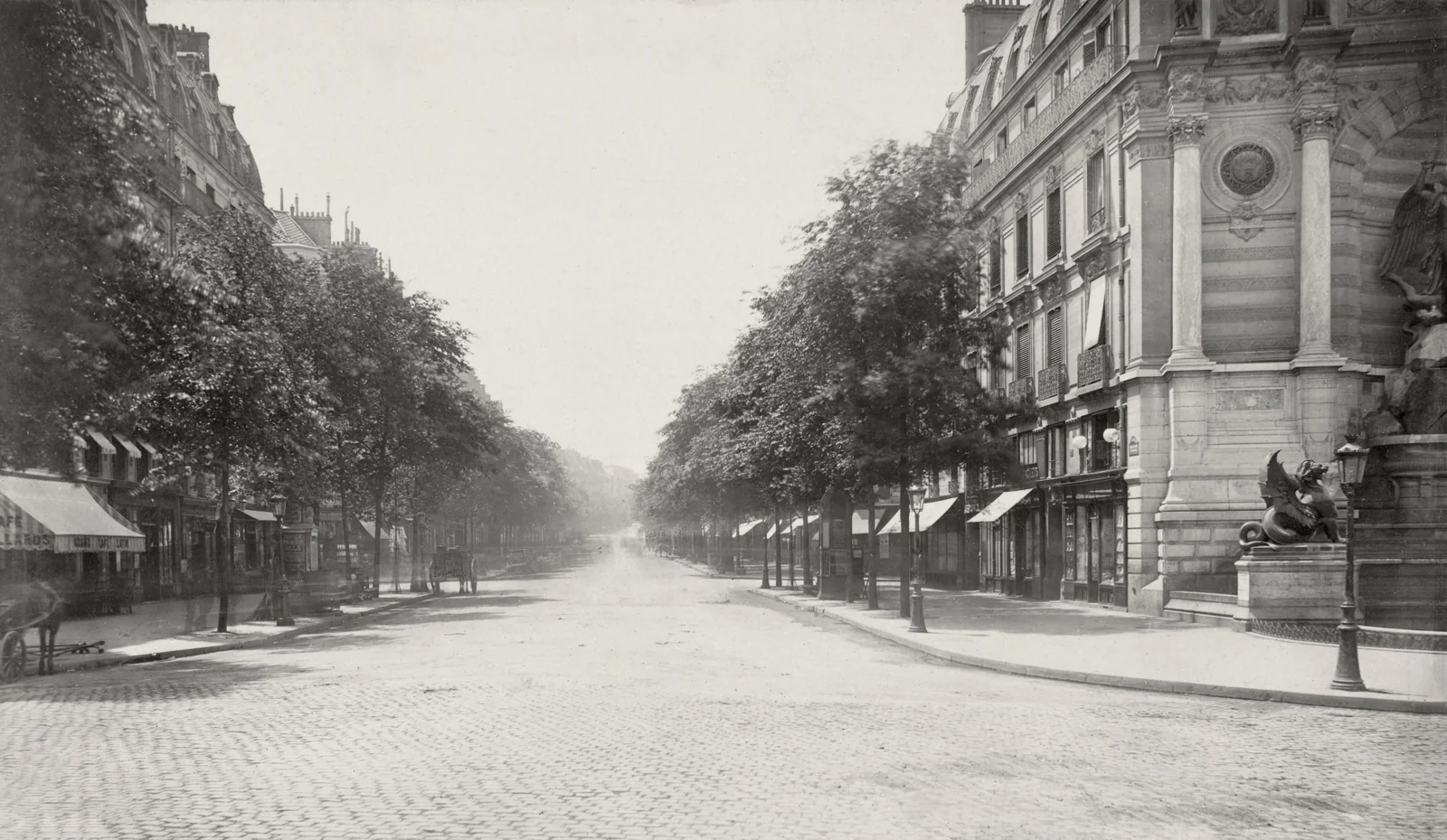
Boulevard Saint-Michel, from Fontaine Saint-Michel — Charles Marville

c. 1853-70 · Albumen silver print

Boulevard Saint-Michel, from Fontaine Saint-Michel

Marville composes the new Boulevard Saint-Michel from the Fontaine Saint-Michel, the 1858-1860 monumental fountain by Gabriel Davioud that anchors the boulevard's northern terminus on the Place Saint-André-des-Arts. The vanishing point of the boulevard, opened between 1855 and 1869 through the dense medieval fabric of the Quartier latin, converges with the perspective of the lens, producing the most legible image of the Haussmannian percée in the Marville corpus. Charles-François Bossu — known as Charles Marville — makes the view in his role as photographer to the City of Paris (officially confirmed 1862), under the salvage and documentary mandate granted by Baron Haussmann's Préfecture de la Seine. The image belongs to the corpus of approximately 425 Vieux Paris and Haussmann-era views Marville produced between 1862 and 1875, and is reproduced in Sarah Kennel's monograph for the National Gallery of Art ("Charles Marville: Photographer of Paris", Washington, 2013) and in Maria Morris Hambourg's Marville texts for the Metropolitan Museum. Marville uses an 18×24 or 30×40 wet-collodion glass negative, exposed at dawn for a long pose; the orthochromatic emulsion is blind to blue light and the sky is brush-retouched on the negative, the source of Marville's distinctive luminous white skies on every Haussmann boulevard view. Held at State Library of Victoria (Melbourne), the Musée Carnavalet, the BHVP, the Bibliothèque nationale de France and the Metropolitan Museum (Gilman Collection). Procédé Transposition Maison Picturale: the original albumen on salted paper translates into Vandyke — non-toxic ferric ammonium citrate and silver, reformulated salted paper — for the fine-print scale, or into platinum-palladium grand-format to restitute the monumental tonal arc from fountain shadow to deep boulevard recession.

Original held at : State Library of Victoria, Melbourne

Reference file source : Wikimedia Commons / State Library of Victoria

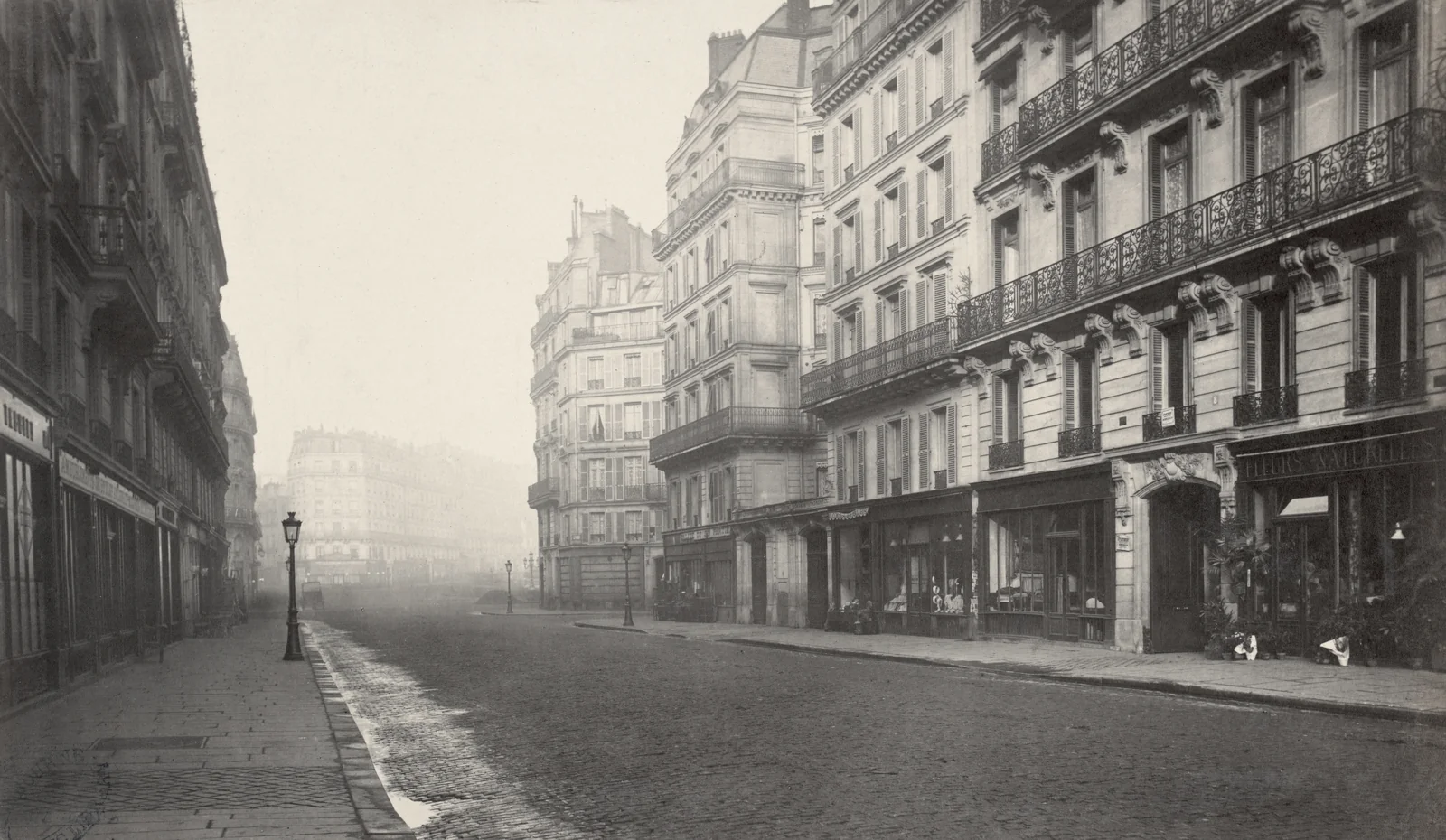
Boulevard Haussmann, from Rue du Havre — Charles Marville

c. 1853-70 · Albumen silver print

Boulevard Haussmann, from Rue du Havre

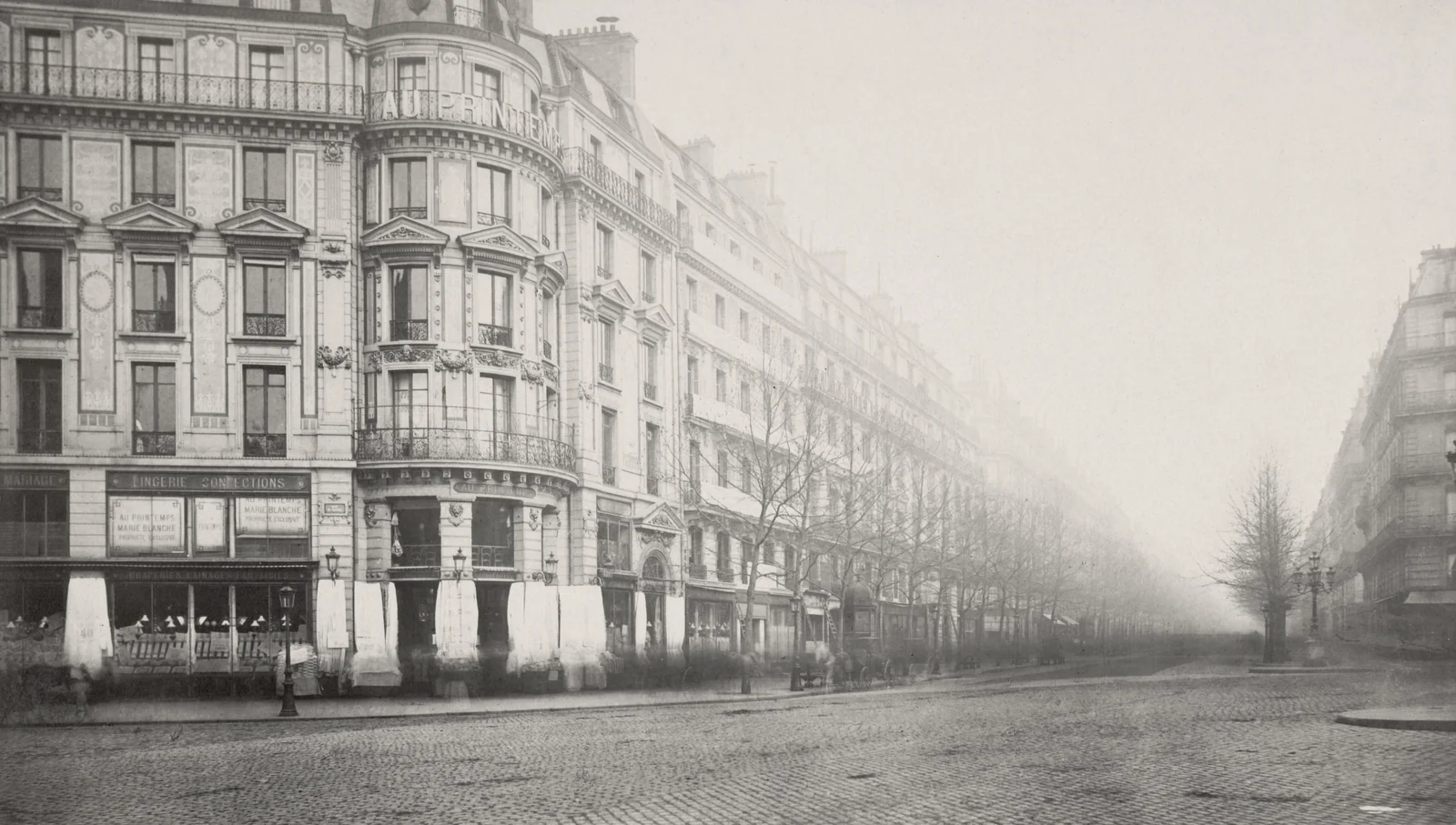
The Boulevard Haussmann, named for the prefect who designed the transformation of Paris, is opened in successive stages between 1857 and 1927; the eastern section between the rue Taitbout and the Madeleine takes shape during Marville's active years. Charles-François Bossu — known as Charles Marville — photographs the boulevard from its junction with the rue du Havre, near the Gare Saint-Lazare, as photographer to the City of Paris (officially confirmed 1862), commissioned by the Préfecture de la Seine to document the new imperial urbanism on the Right Bank. The image is part of the corpus of approximately 425 Vieux Paris and pre/post-Haussmann views Marville produced between 1862 and 1875, conserved at the Musée Carnavalet (~1,500 prints) and complemented by the glass-plate fonds at the BHVP, the Bibliothèque nationale de France and the Metropolitan Museum (Gilman Collection) — the reference corpus on pre-Haussmann urbanism, reproduced in Sarah Kennel's National Gallery monograph ("Charles Marville: Photographer of Paris", Washington, 2013). The exposure technique is canonical for Marville: an 18×24 or 30×40 wet-collodion glass negative made at dawn or dusk for the long pose; the orthochromatic emulsion does not register blue light, so the white sky is retouched by brush on the negative, the source of Marville's distinctive luminous white skies on every Haussmann boulevard view. Held at State Library of Victoria (Melbourne), Musée Carnavalet and BHVP. Procédé Transposition Maison Picturale: the original albumen on salted paper translates into Vandyke — non-toxic ferric ammonium citrate and silver, reformulated salted paper — for the fine-print scale, or into platinum-palladium grand-format to restitute the tonal density of the architecture in its open construction state.

Original held at : State Library of Victoria, Melbourne

Reference file source : Wikimedia Commons / State Library of Victoria

Hôtel de Ville, Paris — Charles Marville

c. 1865 · Albumen silver print

Hôtel de Ville, Paris

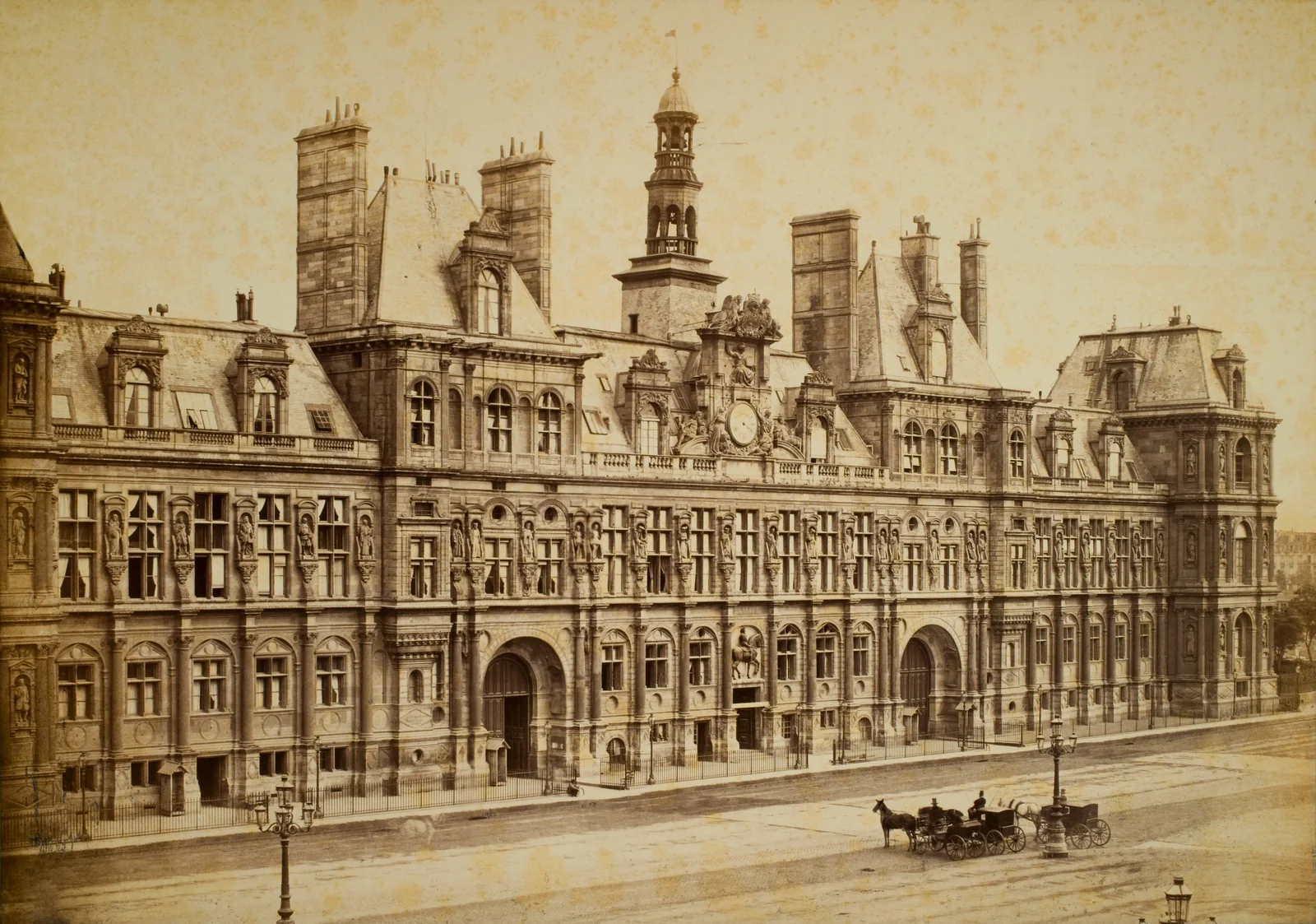
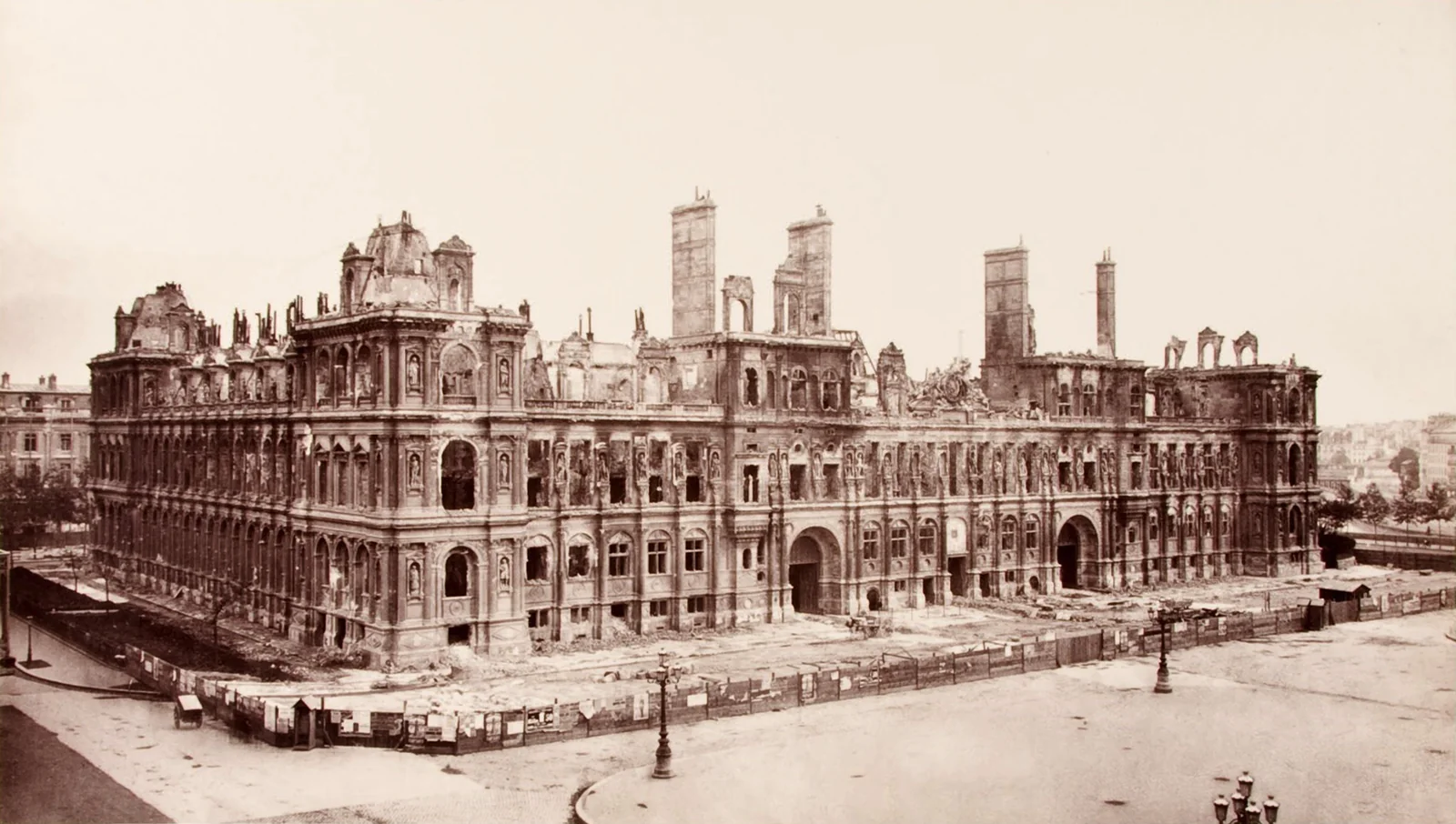
Marville photographs the Hôtel de Ville on the place de Grève during the last decade of its Renaissance state — built progressively between 1533 and 1628 under François I and Henri IV, then enlarged in 1837-1846 by Étienne-Hippolyte Godde and Jean-Baptiste-Cicéron Lesueur — before its destruction by fire during the Paris Commune of 23-24 May 1871. Charles-François Bossu — known as Charles Marville — makes the view as photographer to the City of Paris (officially confirmed 1862), under the documentary mandate granted by Baron Haussmann's Préfecture de la Seine. The image is editorially inseparable from his post-Commune view of the ruins: the pair forms the canonical before/after diptych of 19th-century Parisian iconography, reproduced in the catalogues of the Musée Carnavalet's "Paris 1871" exhibitions and in Sarah Kennel's National Gallery monograph ("Charles Marville: Photographer of Paris", Washington, 2013), as well as in Maria Morris Hambourg's Marville texts for the Metropolitan Museum. Marville exposes a 30×40 wet-collodion glass negative on the place de Grève at dawn for the long pose; the orthochromatic emulsion does not register blue light and the sky is retouched by brush on the negative — the source of Marville's distinctive luminous white skies on every monumental architectural view of his Paris corpus. Held at George Eastman Museum, Musée Carnavalet, BHVP, Bibliothèque nationale de France and the Metropolitan Museum (Gilman Collection). Procédé Transposition Maison Picturale: for this monumental architectural subject, platinum-palladium grand-format is the natural restitution, exploiting the matte tonal density and chemical permanence of the platinum process for a museum-grade reproduction; Vandyke — non-toxic ferric ammonium citrate and silver, reformulated salted paper — covers the modular fine-print scale.

Original held at : George Eastman Museum, Rochester

Reference file source : Wikimedia Commons / George Eastman Museum / Google Art Project

South Portal, Chartres Cathedral — Charles Marville

c. 1854 · Salted paper print from paper negative

South Portal, Chartres Cathedral

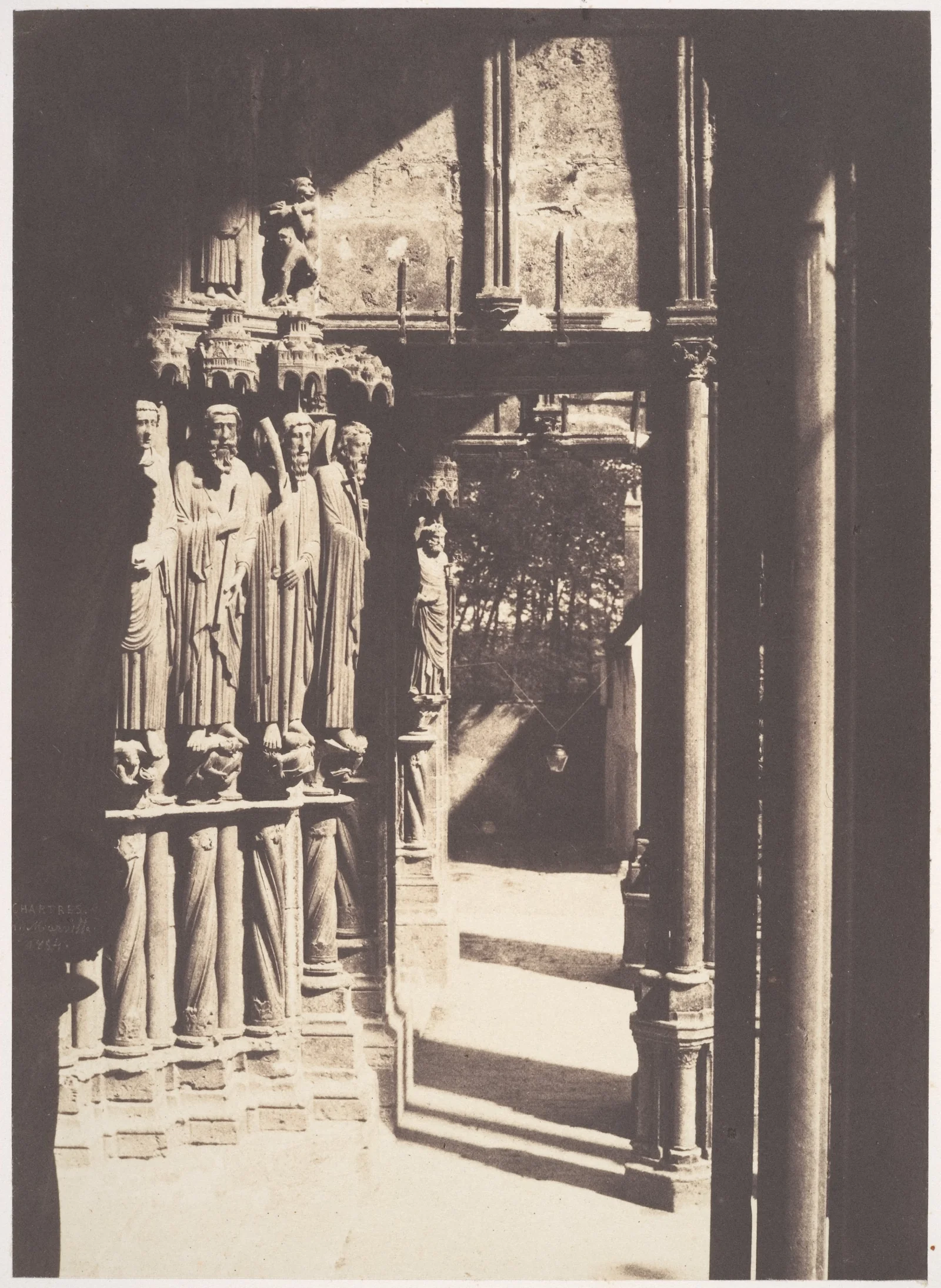
The South Portal of Chartres Cathedral, sculpted between 1210 and 1235 with its 13th-century apostolic statuary, belongs to Marville's earliest photographic period. In 1854, Charles-François Bossu — known as Charles Marville — receives one of the inaugural commissions of the Commission des Monuments Historiques to document Gothic cathedrals threatened by neglect or by the restoration projects of Eugène Viollet-le-Duc. The mission precedes by four years his appointment as photographer to the City of Paris (1858, officially confirmed 1862) and establishes his documentary discipline well before the Vieux Paris corpus. Unlike his later Paris views on wet-collodion glass negative, the Chartres campaign is made on the calotype paper negative, printed on salted paper — the high-resolution wet-collodion process is only generalised in France after 1851 but Marville still works in the calotype tradition of Henri Le Secq and Édouard Baldus, who participated in the parallel Mission héliographique of 1851 commissioned by the same Commission des Monuments Historiques. The salted-paper print is held at the Metropolitan Museum (Gilman Collection), the Musée Carnavalet, the Bibliothèque nationale de France and the National Gallery of Art (Washington, 2013 exhibition), and is reproduced in Sarah Kennel's monograph ("Charles Marville: Photographer of Paris", National Gallery of Art, Washington, 2013). Procédé Transposition Maison Picturale: this is the natural reference work for the Maison Picturale salted-paper line — the original procédé reformulated with non-toxic chemistry restitutes the matte fibrous render and the warm tonal signature of Marville's monumental heritage commissions, with Vandyke (non-toxic ferric ammonium citrate and silver) as the silver-ferric variant, and platinum-palladium grand-format when the client commissions a museum-scale restitution of the Gothic statuary.

Original held at : Metropolitan Museum of Art

Reference file source : Wikimedia Commons / MET Open Access

Tree-lined Path — Charles Marville

c. 1850-53 · Salted paper print from paper negative

Tree-lined Path

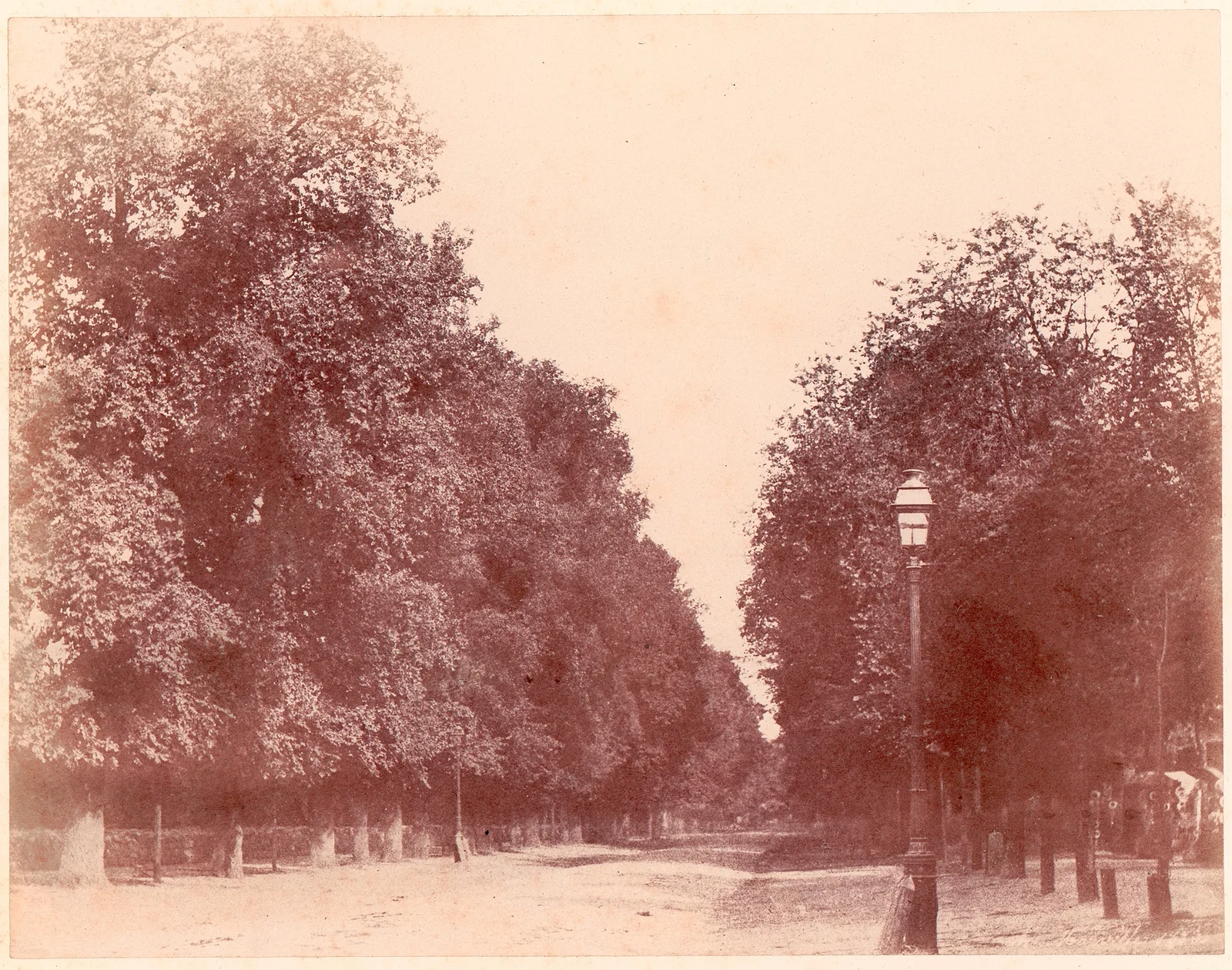
The Tree-lined Path ("Allée bordée d'arbres") belongs to Marville's earliest photographic decade, c. 1850-1853, before the wet-collodion process generalised in France. Charles-François Bossu — known as Charles Marville — works at this period with the calotype paper negative and prints on salted paper, in the tradition of Henri Le Secq, Édouard Baldus and Gustave Le Gray, who together defined the French calotype school of the 1850s. The image is part of the cohort of atmospheric park studies the Metropolitan Museum (Gilman Collection) places in counterpoint to Marville's later urban documentation — published in Maria Morris Hambourg's Marville essays and in Sarah Kennel's National Gallery monograph ("Charles Marville: Photographer of Paris", Washington, 2013) as the connective tissue between his cathedral commissions of 1854 for the Commission des Monuments Historiques and his Vieux Paris campaign begun in 1858 under Haussmann. The salted-paper print captures the matte fibrous render and the warm chromatic signature characteristic of the calotype, and stands as one of the rare landscape moments of a photographer otherwise defined by architecture; the verticals of the trees and the receding alley anticipate the compositional discipline of the later boulevard views. Held at the Metropolitan Museum, the Musée Carnavalet, the BHVP, the Bibliothèque nationale de France and the National Gallery of Art (Washington, 2013 exhibition). Procédé Transposition Maison Picturale: this is a canonical reference image for the Maison Picturale salted-paper line, the very procédé Marville himself worked with — reformulated in non-toxic chemistry — and for Vandyke (non-toxic ferric ammonium citrate and silver) as the silver-ferric variant; platinum-palladium covers the larger-format restitution when the matte tonal density of the platinum process is required.

Original held at : Metropolitan Museum of Art

Reference file source : Wikimedia Commons / MET Open Access

12 of 13 works

The documented corpus

The rest of Charles Marville's public-domain corpus: plates kept in our editorial archives. Reproducible on request, without dedicated editorial study.

7 archived plates

Rue Gervais-Laurent — Charles Marville

c. 1853-70

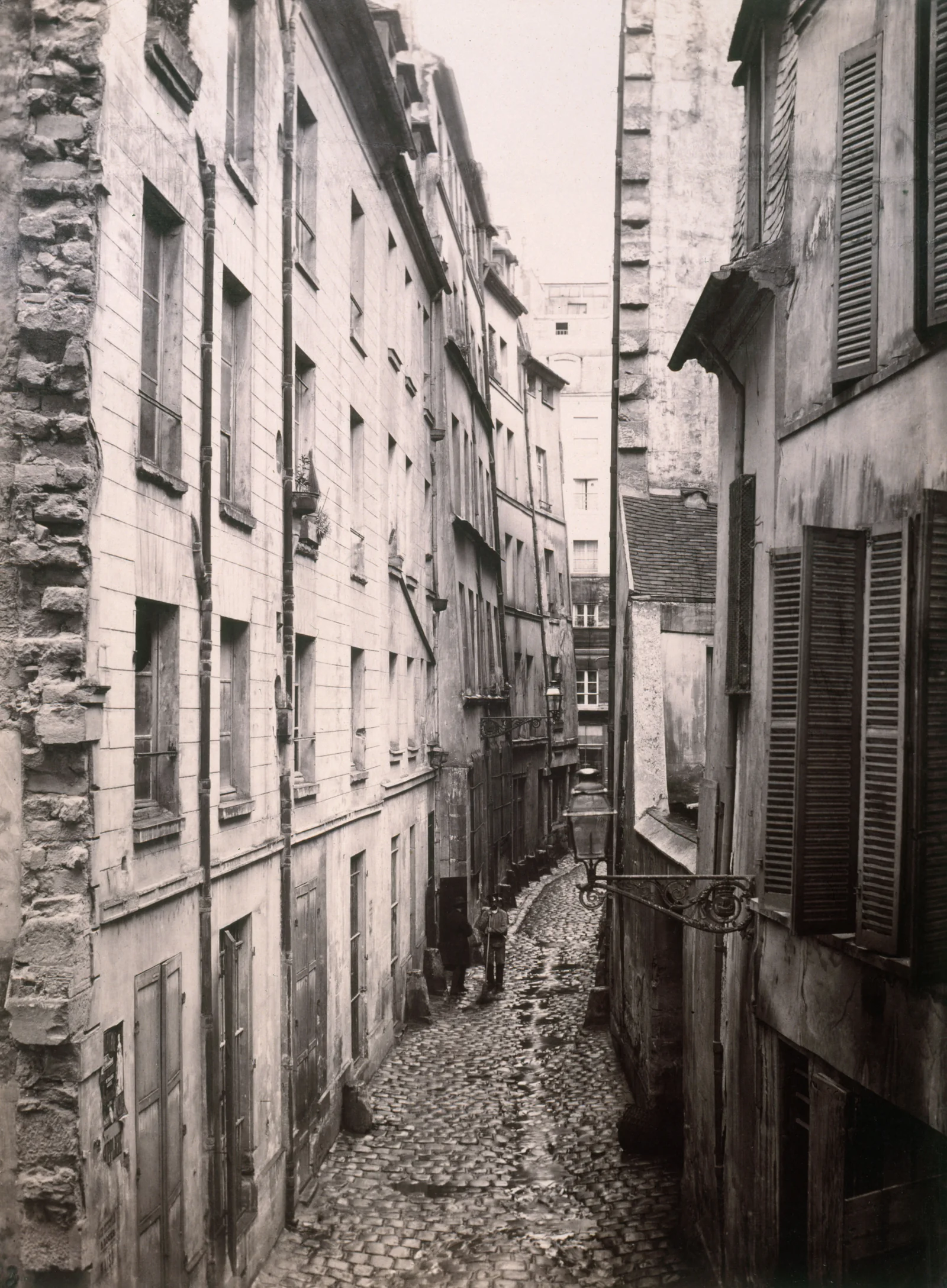
Rue Gervais-Laurent

Albumen silver print

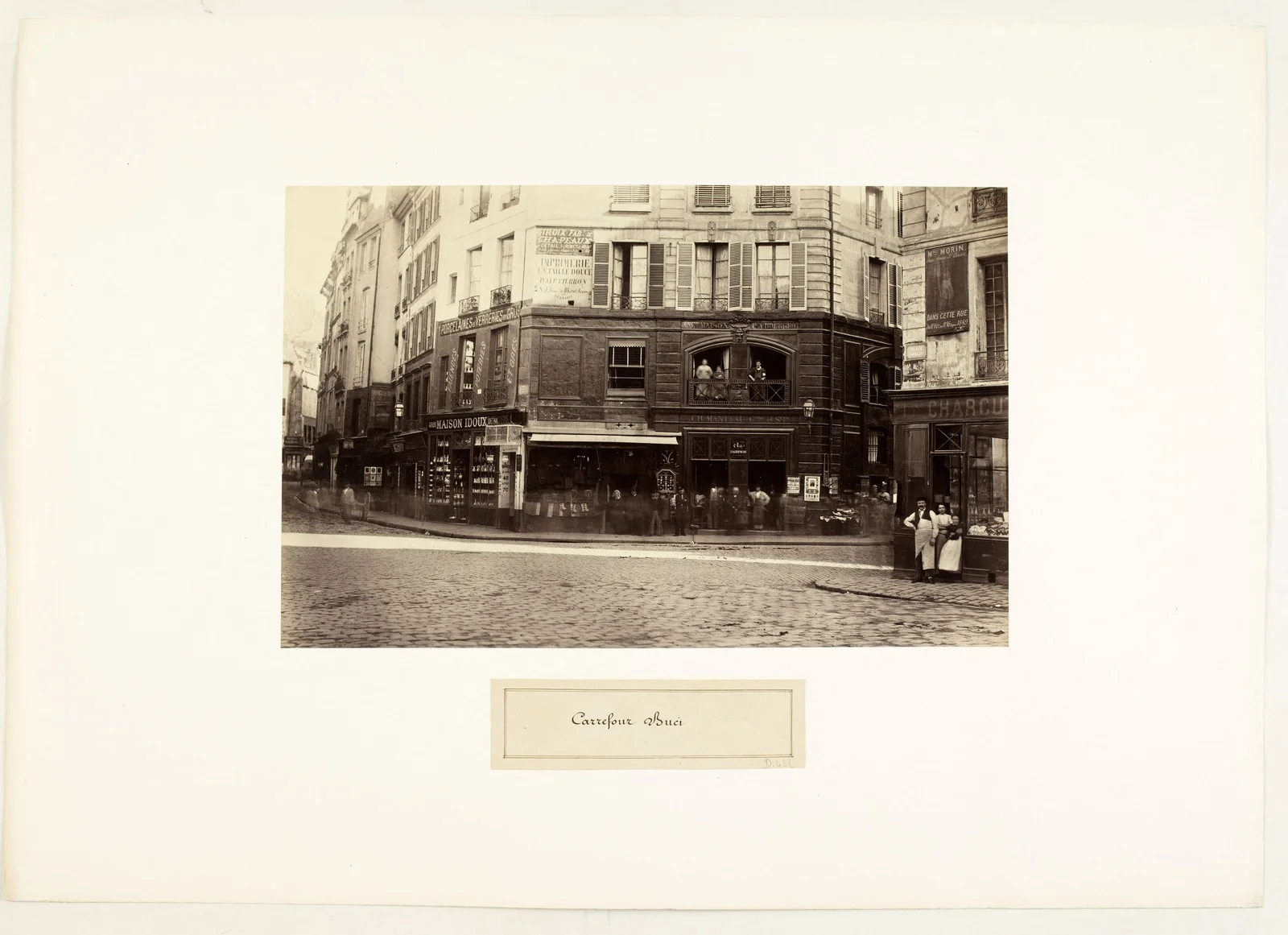
Carrefour Buci — Charles Marville

c. 1865

Carrefour Buci

Albumen silver print

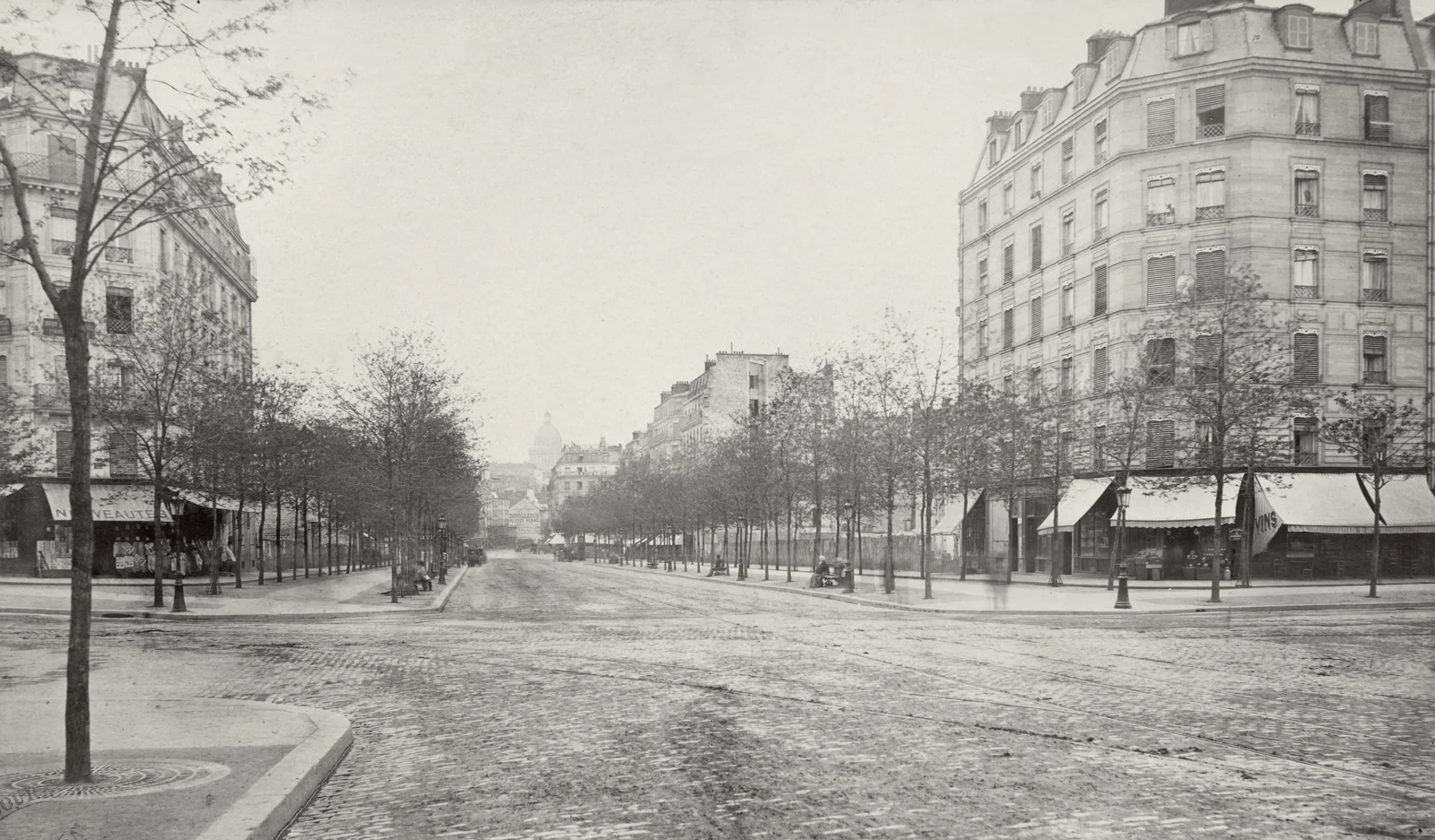
Avenue des Gobelins — Charles Marville

c. 1853-70

Avenue des Gobelins

Albumen silver print

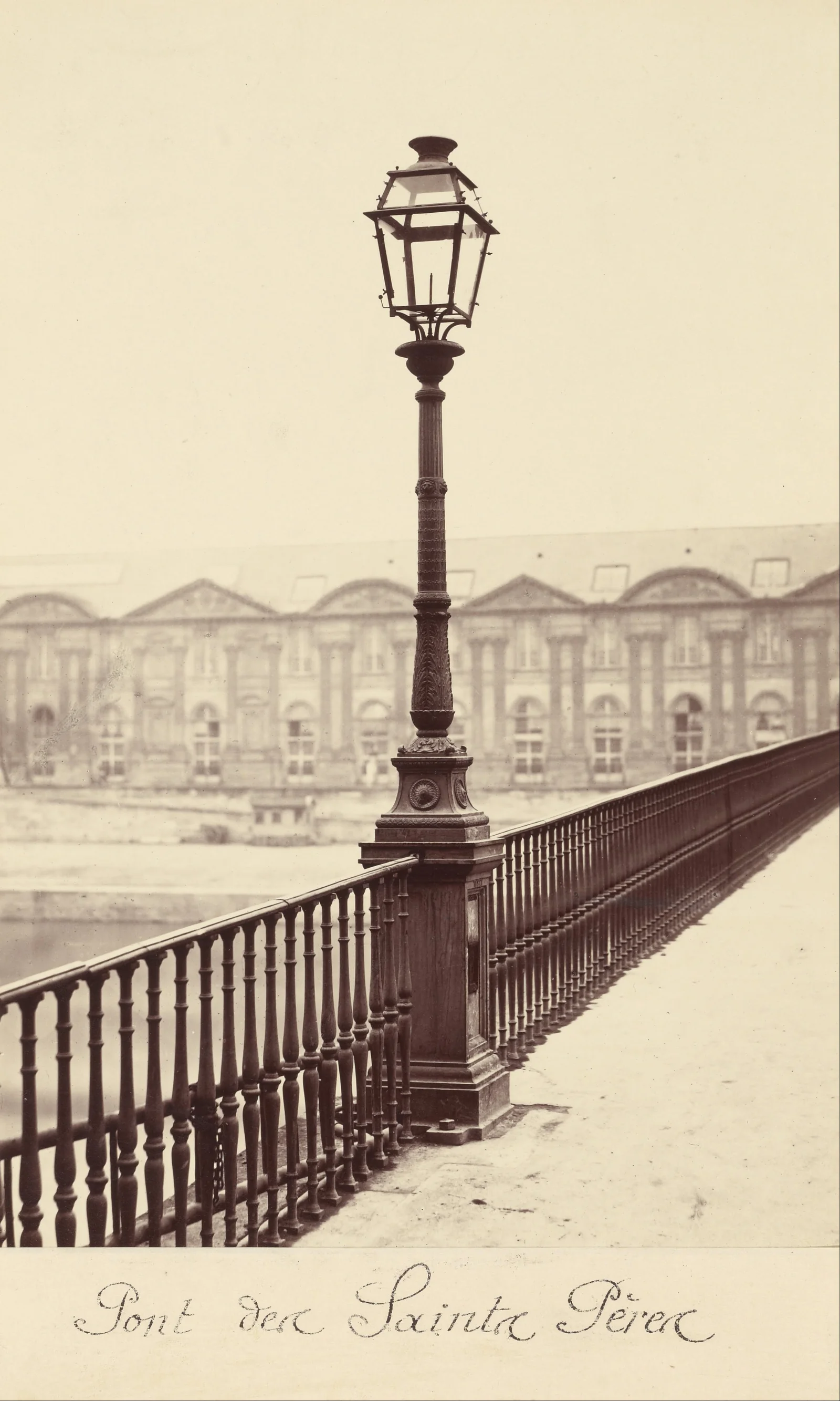
Pont des Saints-Pères — Charles Marville

c. 1877

Pont des Saints-Pères

Albumen silver print

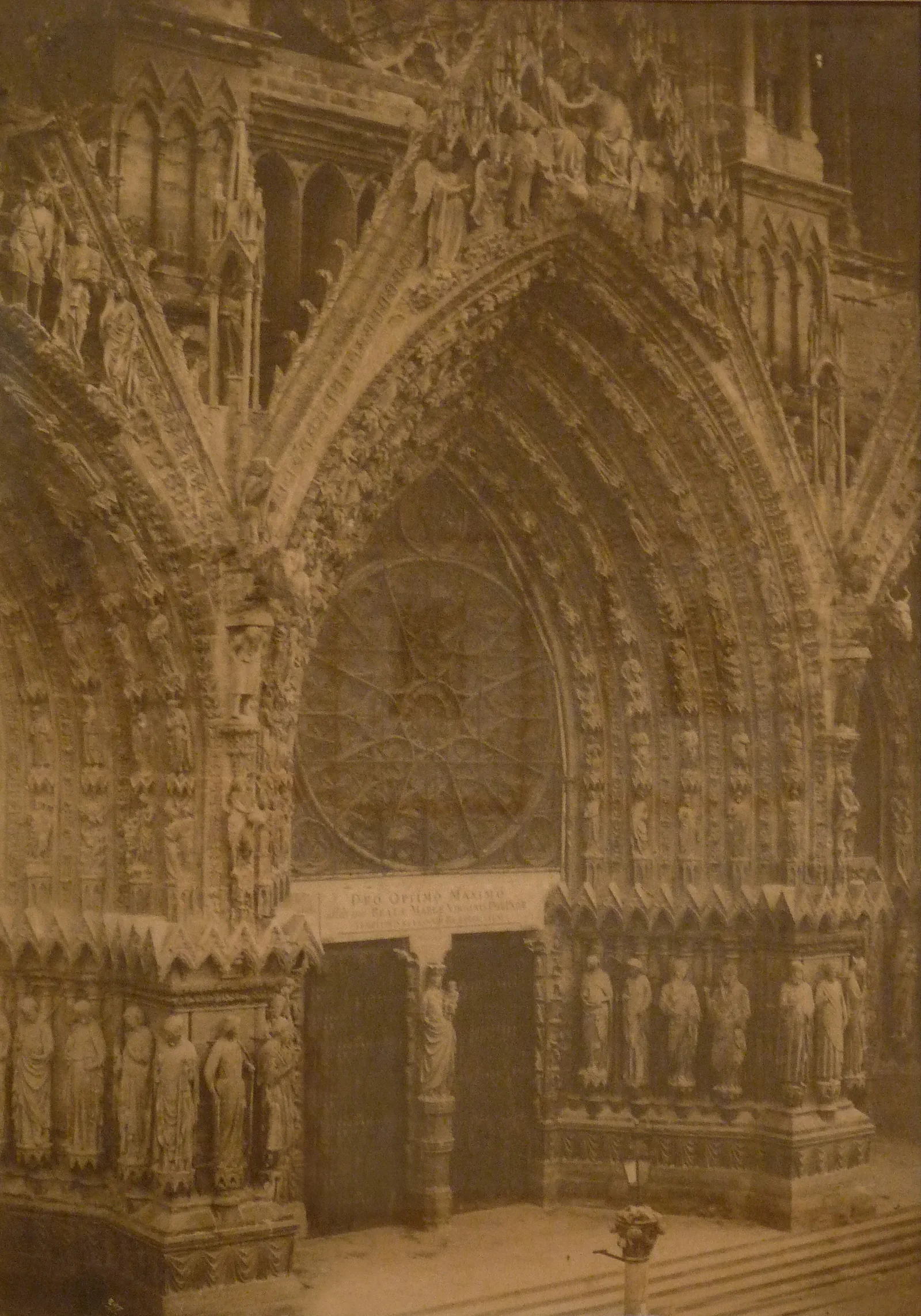
Reims Cathedral — Charles Marville

c. 1854

Reims Cathedral

Salted paper print

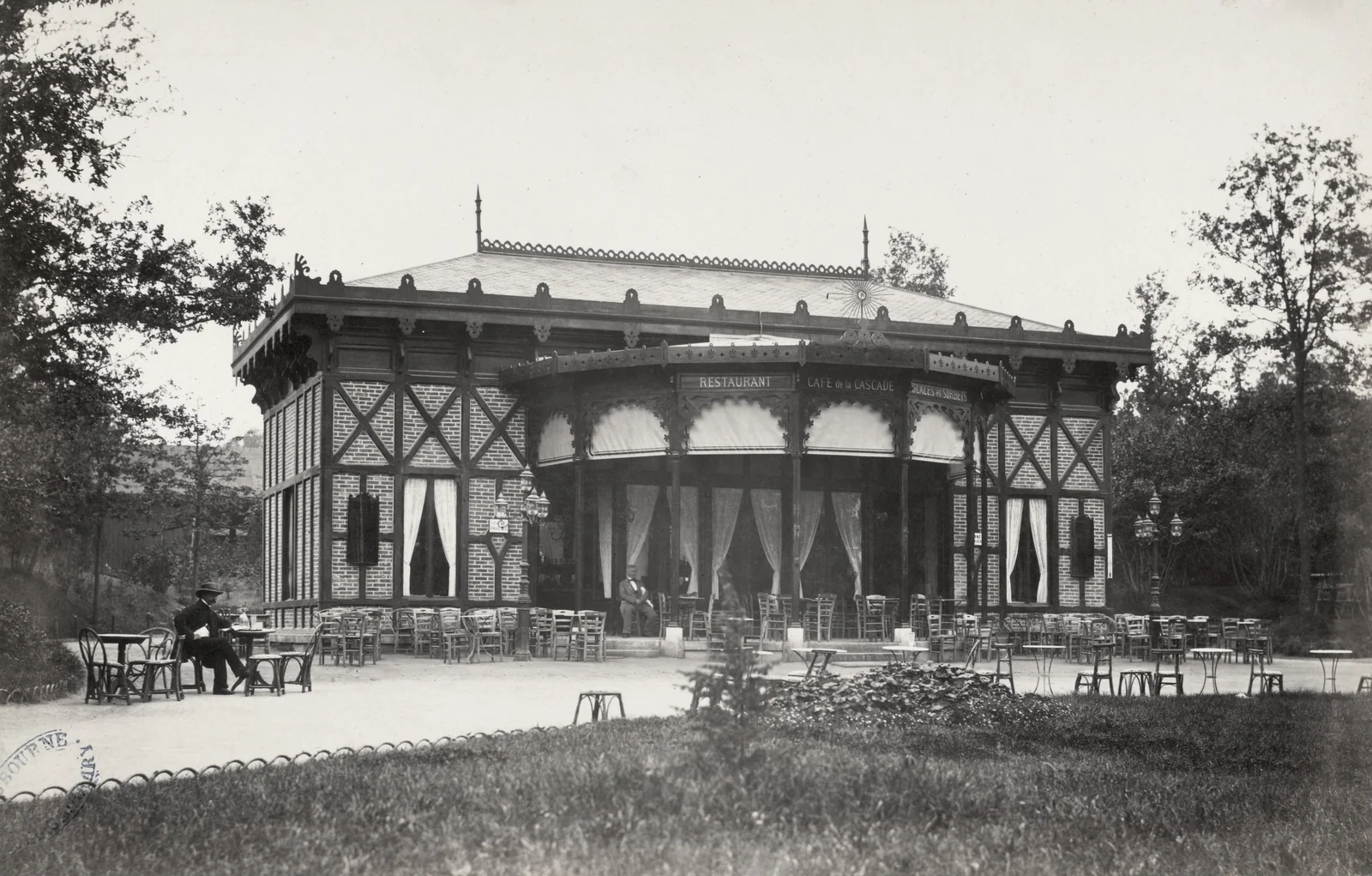
Bois de Boulogne — Café de la Cascade — Charles Marville

c. 1858-60

Bois de Boulogne — Café de la Cascade

Albumen silver print

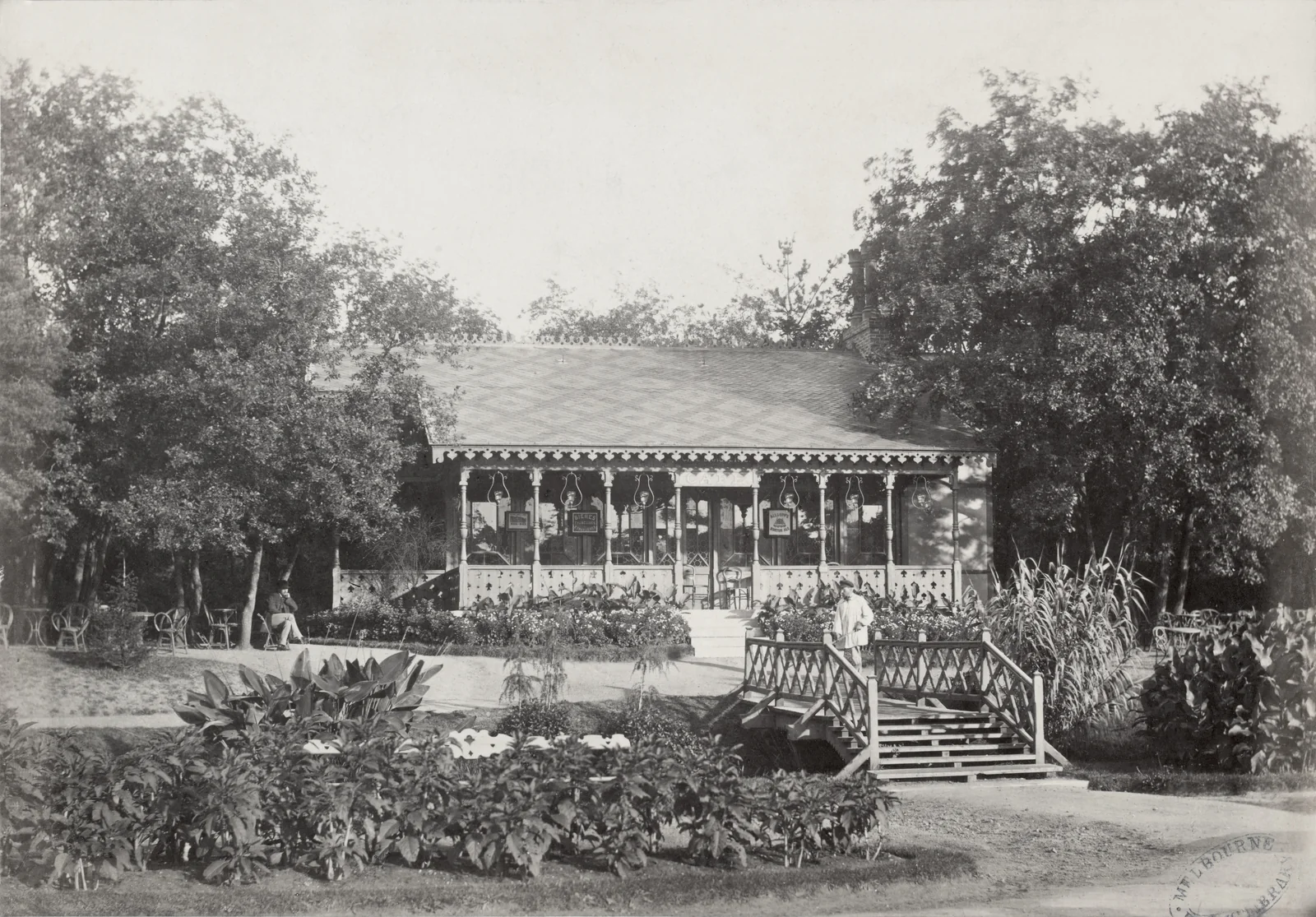
Bois de Boulogne — Pré Catelan — Charles Marville

c. 1858-60

Bois de Boulogne — Pré Catelan

Albumen silver print

Commission a print after Charles Marville

Maison Picturale produces on commission contemporary prints after works by Charles Marville that have entered the public domain. Hand-printed by master printers Tristan Sidem and Raphaël Lebas de Lacour on 640 gsm cotton paper, signed and numbered in limited edition, with a certificate of authenticity explicitly mentioning the "after" nature of the reinterpretation.
Start a commission