Frank Eugene
Library

1865-1936 · American-German

Frank Eugene

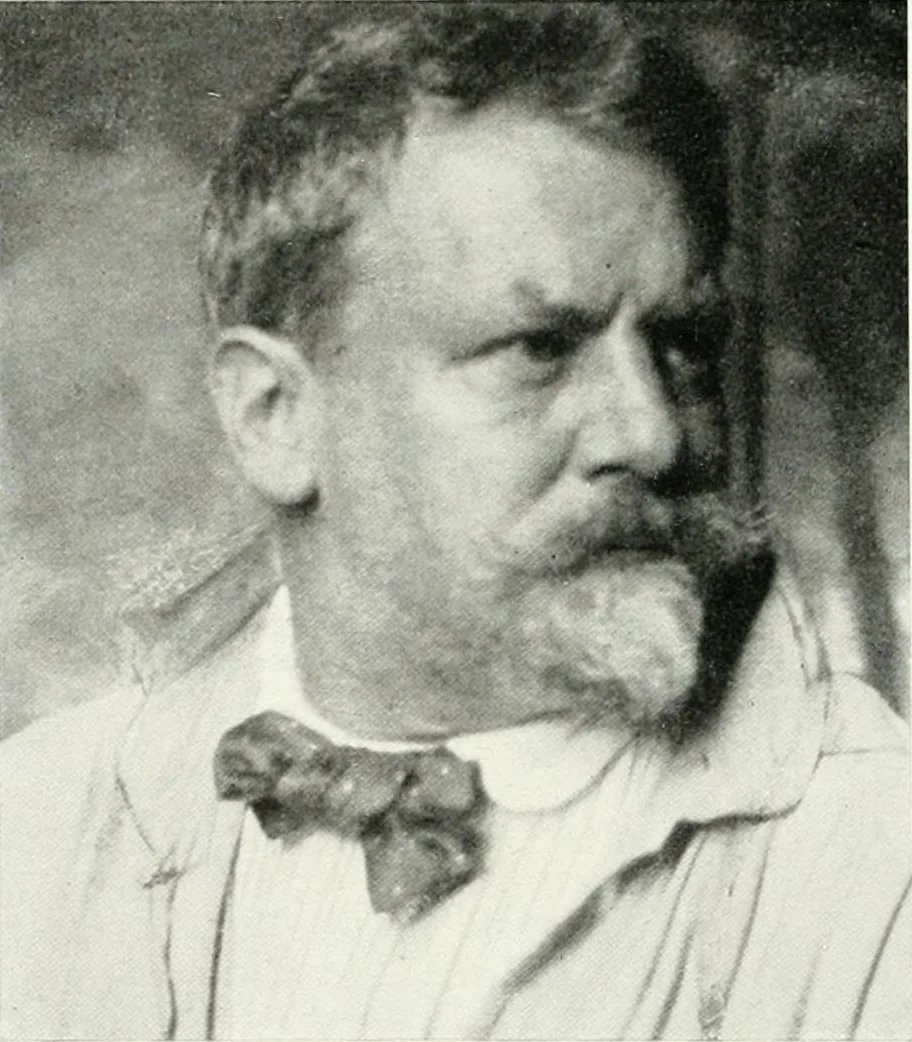
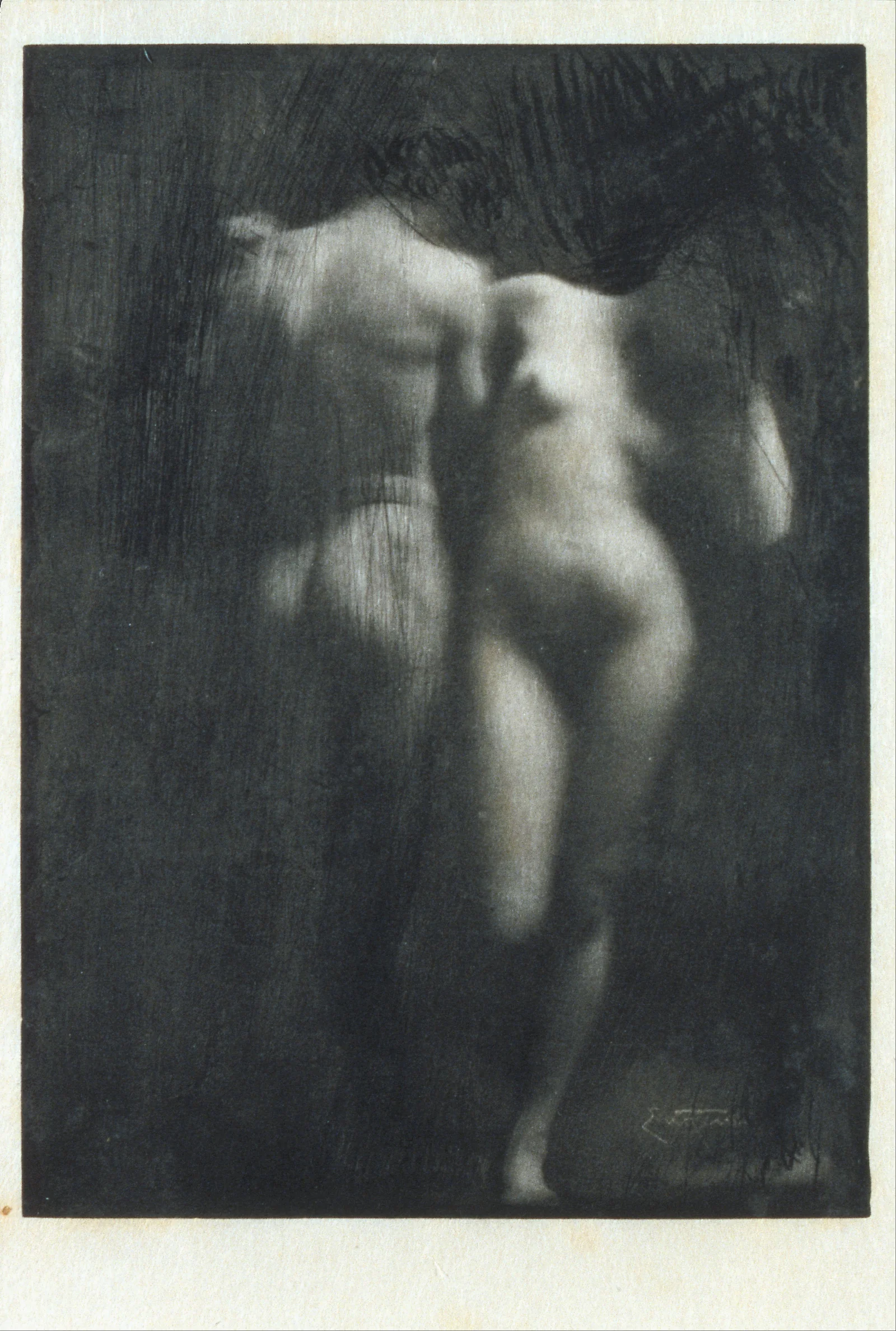
Frank Eugene (Frank Eugene Smith, 1865-1936) is the American-German pictorialist who deliberately scratched and reworked his photographic negatives with etching tools, producing prints that blurred the boundary between photograph and engraving. Founding Photo-Secession member, later professor at the Royal Academy of Graphic Arts of Leipzig — the first university chair in the world for pictorial photography.

Public domain since 2007 · CPI L.123-1

Held at

  • Metropolitan Museum of Art
  • Museum of Modern Art, New York
  • Royal Photographic Society
  • Victoria & Albert Museum
  • George Eastman Museum
  • Münchner Stadtmuseum

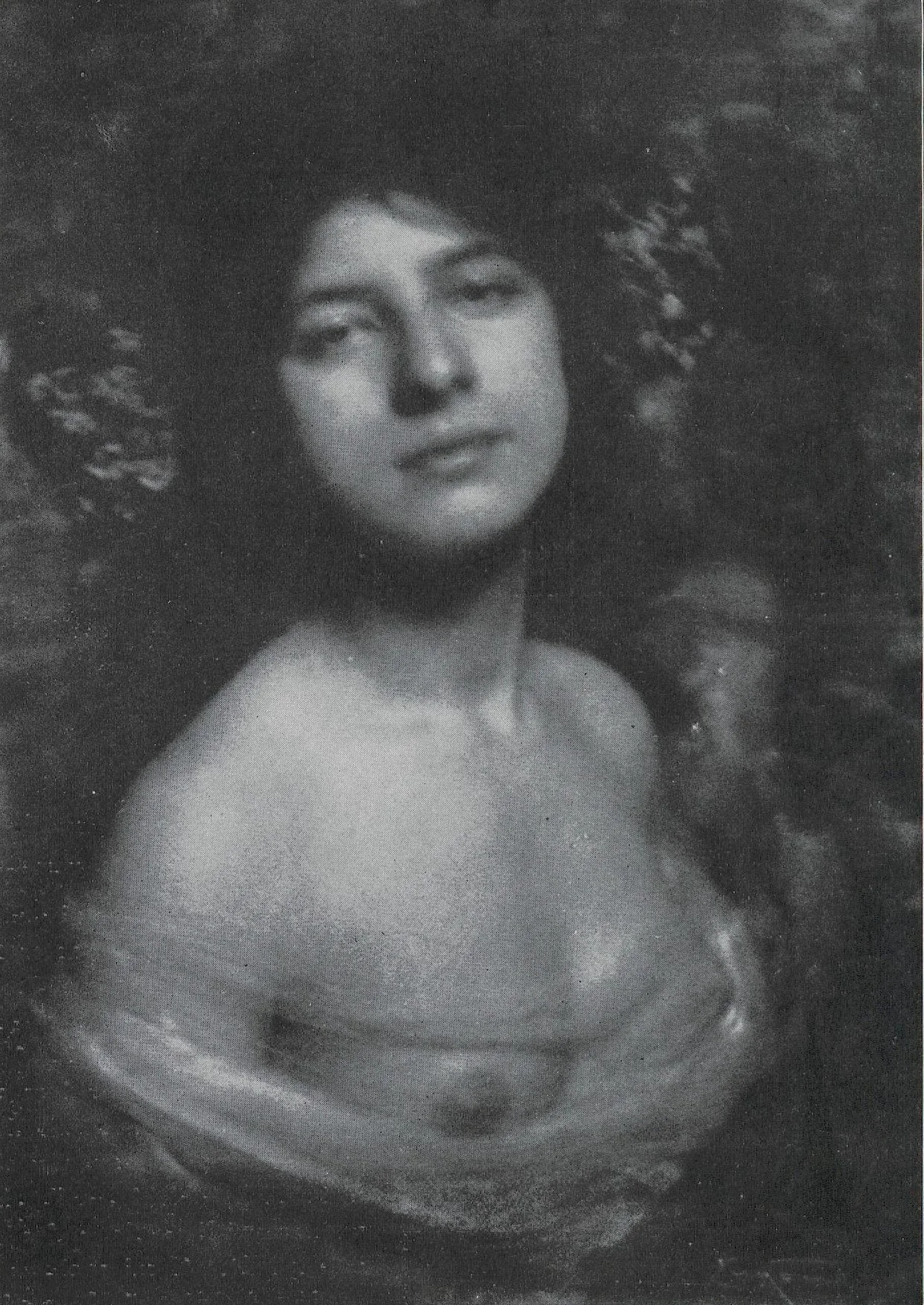
Born Frank Eugene Smith in New York to German parents, Eugene studied drawing and stage design at the Bavarian Academy of Fine Arts (Akademie der Bildenden Künste München) from 1886, before returning to New York. He combined his painterly training with photography, scratching photographic negatives with engraving tools to produce prints that read simultaneously as photographs and as etchings — a radical pictorialist intervention. Featured in Stieglitz's Camera Work no. 25 (1909) with portraits and figure studies (Adam and Eve, Brigitta, Frau Ludwig von Hofmann), he became a founding member of the Photo-Secession (1902) and the Linked Ring. In 1906 he relocated permanently to Germany, where he became lecturer at the Lehr- und Versuchsanstalt für Photographie in Munich (from 1907). In 1913 he was appointed Royal Professor of Pictorial Photography at the Royal Academy of Graphic Arts of Leipzig (Königliche Akademie für Graphische Künste und Buchgewerbe zu Leipzig) — the first university chair in the world dedicated to pictorial photography, institutionally establishing photography as art. Held at MET, MoMA, RPS, V&A, Münchner Stadtmuseum. Public domain since 2007. His scratched-negative technique remains an inspiration for Maison Picturale's mixed-media interventions on negatives.

Essential works

A curated selection of public-domain works by Frank Eugene, reinterpretable as contemporary prints by Maison Picturale's master printers. Each artwork page details the original process and its atelier equivalent.

Print after — systematic mention on the certificate of authenticity.

Mr Alfred Stieglitz — Frank Eugene

1901 · Photogravure (Camera Work)

Mr Alfred Stieglitz

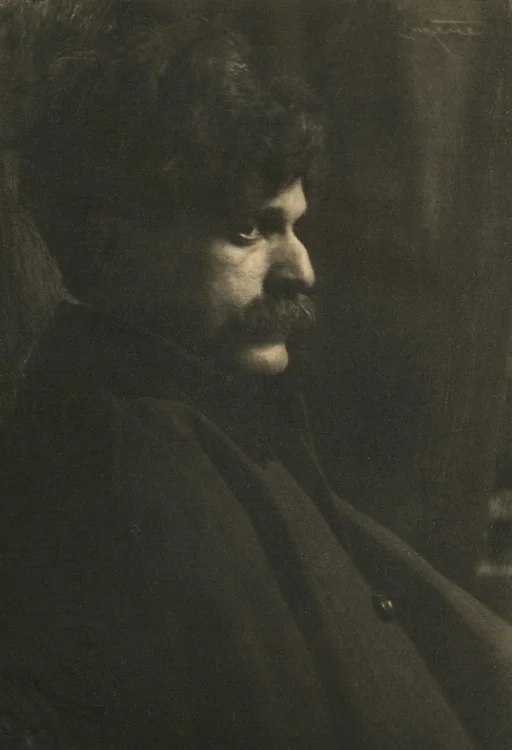
Portrait of Alfred Stieglitz, Eugene's intimate friend and the founding editor of Camera Work, photographed in New York in 1901 and first reproduced as a halftone in Camera Notes vol. 4 no. 3. Eugene later reissued the image as a full-plate photogravure in Camera Work no. 25 (January 1909), the legendary monograph issue Stieglitz devoted entirely to Eugene's work alongside a critical essay by Joseph T. Keiley. The portrait is a cornerstone document of the Photo-Secession's inner circle: Stieglitz appears in three-quarter profile, dark-suited, the gaze averted in editorial concentration, modeled by the soft-focus pictorialist diffusion that Eugene helped canonize. The print bears Eugene's signature negative-side intervention — fine scratched hatching along the background and garments, applied with a metal stylus directly into the gelatin emulsion of the glass plate. This painter's mark, inherited from his Munich training in drawing and engraving, transforms the photographic record into a hybrid object that reads simultaneously as platinum print, etching and painted study. The 1909 photogravure printing, executed on Japan tissue under Stieglitz's direction, faithfully translates the scratched negative through the rotogravure plate, preserving the velvety blacks and the etched line-work. This image consolidated Eugene's status as one of the four founding pictorialists (with Steichen, Käsebier, White) and remains a reference in MET, MoMA and George Eastman Museum holdings. For Maison Picturale, this portrait anchors the platine-palladium curriculum: the platinum print rendered from a digital negative engraved by burin reproduces Eugene's scratched-negative aesthetic with contemporary tools, while the héliogravure transposition (Poitevin process) restages the Camera Work photogravure as a teachable workshop module.

Original held at : Camera Work archives

Reference file source : Wikimedia Commons (Public Domain)

Self-Portrait — Frank Eugene

1924 · Platinum print

Self-Portrait

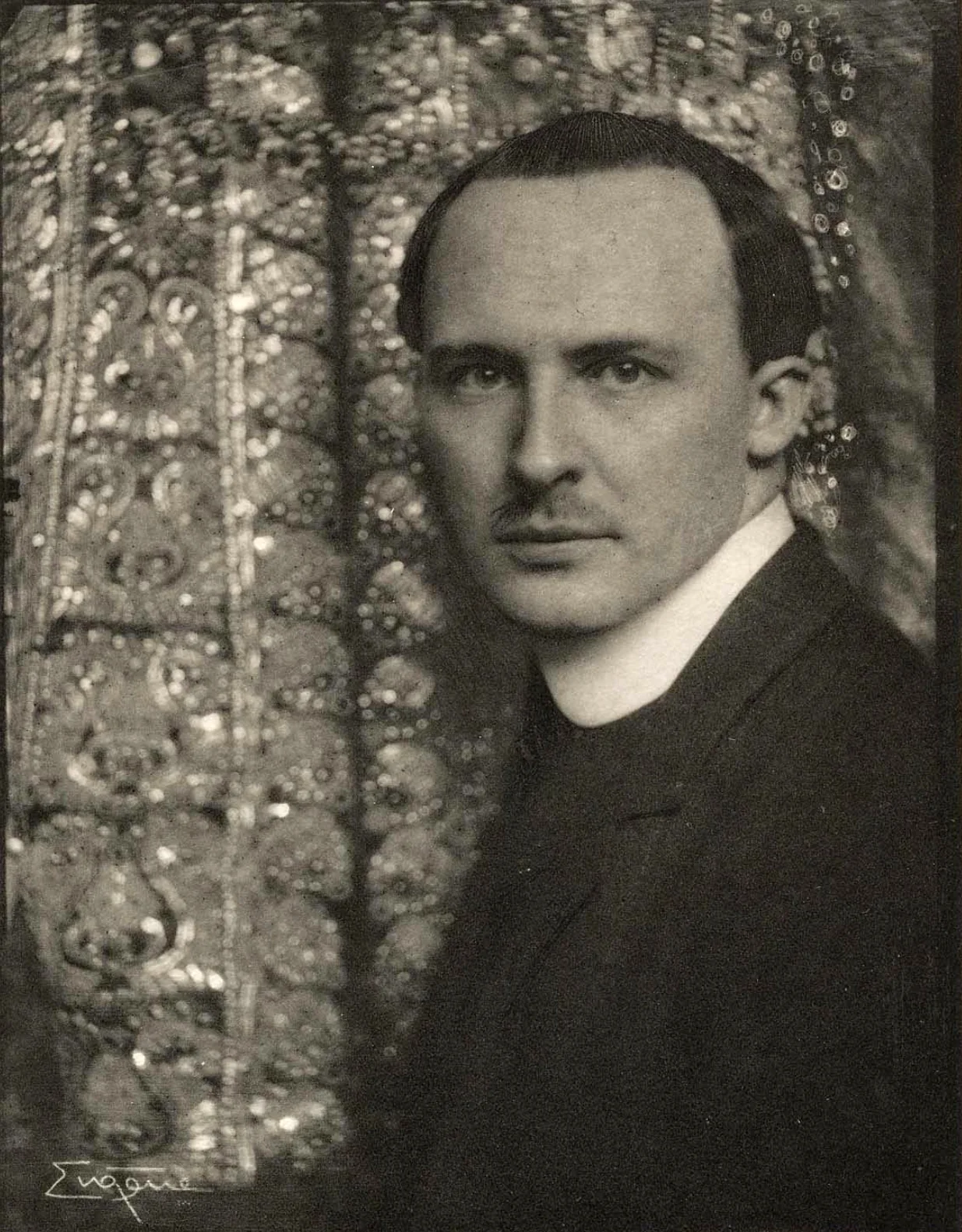
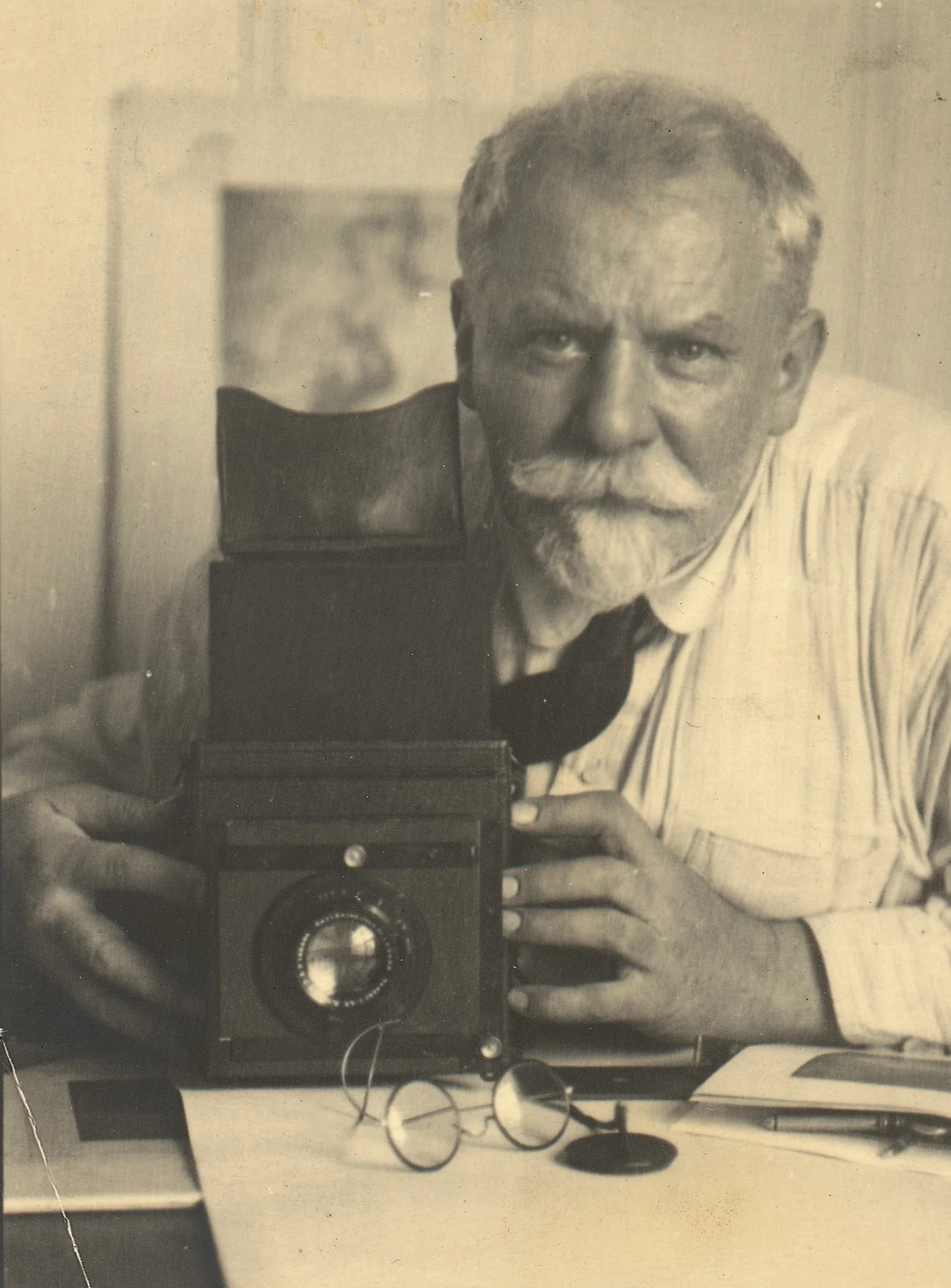
Late-career self-portrait realized in 1924, conserved at the Metropolitan Museum of Art in the historic Alfred Stieglitz Collection (MET DP72001), made by Eugene during his Leipzig professorship at the Königliche Akademie für Graphische Künste und Buchgewerbe. Twenty-six years after the theatrical Man in Armor self-portrait (1898) and eleven years after the Selbstbildnis of 1913 — the consecration-year image taken upon his appointment to the world's first university chair in pictorial photography — this 1924 portrait shows a mature, almost valedictory painter-photographer at the end of his teaching years, three years before his retirement from the Akademie in 1927. The pose is sober, frontal, stripped of allegorical staging: Eugene faces his own camera as a master craftsman documenting his own face at the moment of disciplinary maturity. The platinum print exhibits Eugene's late-period restraint with scratched-negative intervention — minimal hatching reserved to the background, allowing the modeled face to dominate — a pictorialist economy that contrasts with the dense painterly engravings of his Munich years (Adam and Eve, Brigitta). Acquired by the MET via Stieglitz, the print is a key piece of the 1933 Stieglitz bequest documenting the Photo-Secession's surviving founders. It complements but does not duplicate the 1913 Selbstbildnis held at the Münchner Stadtmuseum: the two self-portraits frame the Leipzig professorship's beginning and end, forming a paired biographical document. For Maison Picturale, the print serves as a model for the contemporary platinum-palladium self-portrait protocol: digital negative engraved selectively at the burin, contact-printed on hand-coated palladium, in the genealogy of the scratched portrait practice Eugene institutionalized in Leipzig.

Original held at : Metropolitan Museum of Art

Reference file source : Wikimedia Commons / MET Open Access (CC0)

The Man in Armor (Self-Portrait) — Frank Eugene

1898 · Platinum print

The Man in Armor (Self-Portrait)

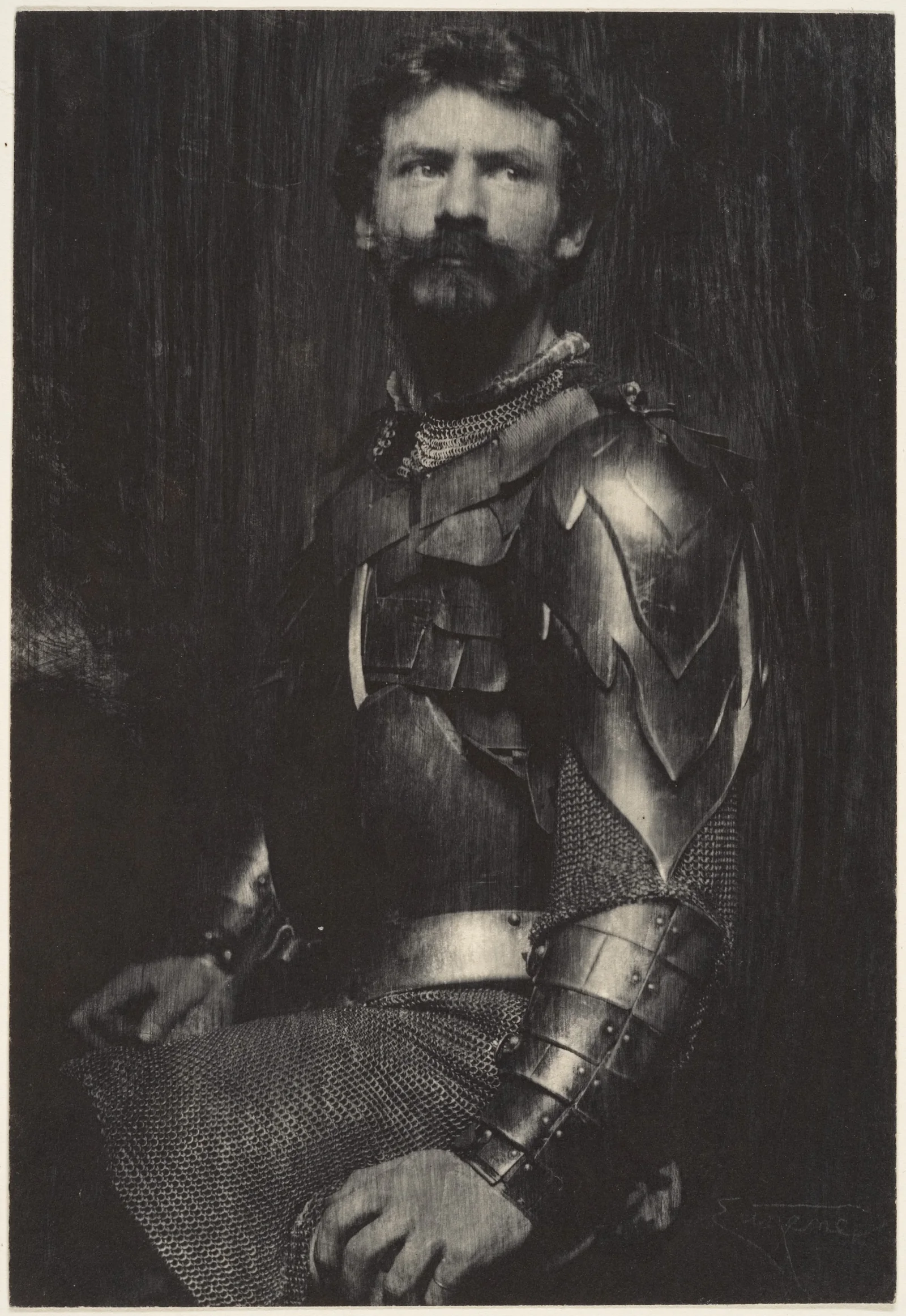
Theatrical self-portrait in medieval plate armor, realized in 1898 and conserved at the Metropolitan Museum of Art (MET DP152113), accessioned via the Alfred Stieglitz Collection. This 1898 staging predates Eugene's permanent move to Germany (1906) and inscribes him in the symbolist-pictorialist current of allegorical, costume-driven tableaux that the Photo-Secession championed against the documentary realism of straight photography. Eugene poses standing, armored chest forward, helmet held in the crook of the arm in the heraldic attitude of a medieval portraitist's sitter — a Dürer-quoting attitude that signals his Munich academy training and his self-positioning as painter-photographer rather than mere recorder. The platinum print exhibits the dense scratched-negative intervention characteristic of Eugene's pre-1910 figural works: cross-hatched lines applied with a metal stylus into the gelatin of the glass plate produce a tactile painterly surface across the dark armor and the background drape, blurring the distinction between photograph, engraving and painted study. This deliberate hybridization is the founding gesture of Eugene's signature method: scratching is not retouching but auteur intervention, claiming the negative as a print plate to be engraved. The work is reproduced in Camera Work no. 30 (April 1910) as a photogravure on Japan tissue, alongside other Eugene self-portraits, in Stieglitz's editorial project to canonize the pictorialist self-image. Held by the MET as a foundational document of American pictorialism. For Maison Picturale, Man in Armor exemplifies the platine-palladium with scratched-negative workshop: digital negative engraved by burin, contact-printed on hand-coated paper, in direct technical and conceptual genealogy with Eugene's auteur intervention on the photographic plate.

Original held at : Metropolitan Museum of Art

Reference file source : Wikimedia Commons / MET Open Access (CC0)

Male Nude (Männerakt) — Frank Eugene

ca. 1910 · Platinum print

Male Nude (Männerakt)

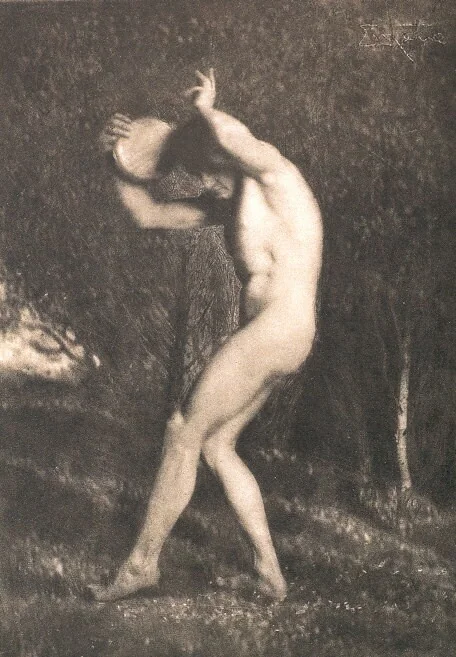
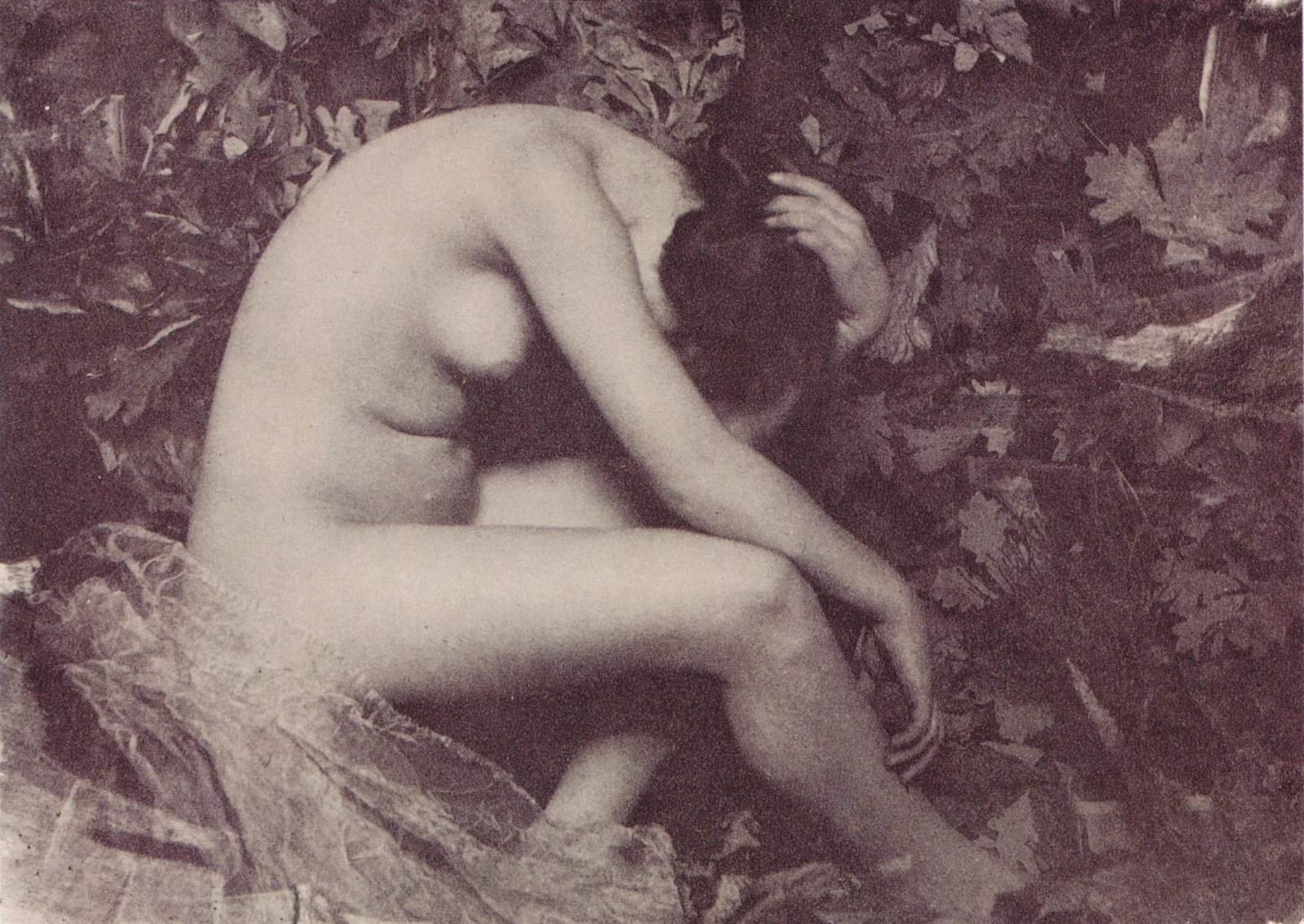
Male nude study (Männerakt) realized circa 1910 during Eugene's Munich teaching years at the Lehr- und Versuchsanstalt für Photographie, conserved at the Münchner Stadtmuseum which holds the largest single corpus of Eugene's work (over 400 prints) following the bequest of his German estate. The image is rare in the pictorialist canon: nude male studies were exceptional in early 20th-century art photography, dominated by female allegorical figures, and Eugene's incursion into the academic male nude reactivates the genealogy of Munich-academy classical drawing tradition in which he was trained from 1886. The figure is posed in three-quarter contrapposto against a neutral painterly backdrop, in direct citation of Greco-Roman statuary and the Albrecht-Dürer / Hans-von-Marées Munich tradition that Eugene synthesized into photography. The platinum print exhibits Eugene's signature scratched-negative intervention applied selectively: cross-hatched lines on the background and along the contour of the figure, leaving the modeled flesh deliberately untouched to preserve the academic flesh-tone economy of the platinum tonal scale. This technical decision — selective scratching to articulate figure-and-ground — exemplifies Eugene's matured Munich-period practice, more disciplined than the all-over hatching of the 1898 figural works. The print circulated in the Munich Lehrkörper as a pedagogical model for Eugene's classes, and entered the Stadtmuseum corpus that anchors his German legacy alongside Selbstbildnis, Dora Polster and Prinz Luitpold. For Maison Picturale, this nude operates as the figure-study module of the platine-palladium and photogravure curricula: contemporary digital negative engraved at the burin in selective hatching, contact-printed on palladium, then transposed to héliogravure (Poitevin process) as a workshop reference.

Original held at : Münchner Stadtmuseum

Reference file source : Wikimedia Commons (Public Domain)

Dido (La Cigale) — Frank Eugene

April 1900 · Platinum print

Dido (La Cigale)

Allegorical figure study referencing both Virgil's Aeneid and La Fontaine's fable, published in Camera Notes vol. 3 no. 4 (April 1900) and republished as a photogravure in Camera Work no. 30 (April 1910). The Metropolitan Museum of Art catalogues the work under its double title Dido (La Cigale) — a polymorphic Venus model that signals Eugene's symbolist-pictorialist program of layered classical and modern allegory. Read as Dido, the figure is the tragic queen of Carthage from book IV of the Aeneid, abandoned by Aeneas and dying on her pyre — a stock motif of 19th-century salon painting that Eugene transposes into photography. Read as La Cigale, the figure is the singing grasshopper of La Fontaine's fable Les Animaux malades de la peste / La Cigale et la Fourmi — the bohemian artist contrasted to the bourgeois ant, a self-portrait by allegorical proxy of the pictorialist as un-thrifty singer. The double title is editorial: the MET catalogue preserves both readings, refusing to collapse one into the other. The print exists across four major institutions — Metropolitan Museum of Art, Art Institute of Chicago, Philadelphia Museum of Art and Münchner Stadtmuseum — an institutional spread that confirms its status as a Eugene canonical work. The platinum print exhibits Eugene's signature scratched-negative hatching across the drapery and the background foliage, painterly intervention that recodes the photographic figure as engraved tableau. For Maison Picturale, La Cigale anchors a teaching dyad: the platine-palladium workshop reproduces the scratched negative on digital plate engraved at the burin, and the héliogravure workshop transposes the 1910 Camera Work photogravure into the Poitevin process for direct experimental reenactment.

Original held at : Metropolitan Museum of Art · Art Institute of Chicago · Philadelphia Museum of Art · Münchner Stadtmuseum

Reference file source : Wikimedia Commons (Public Domain)

Dora Polster — Frank Eugene

ca. 1910 · Platinum print

Dora Polster

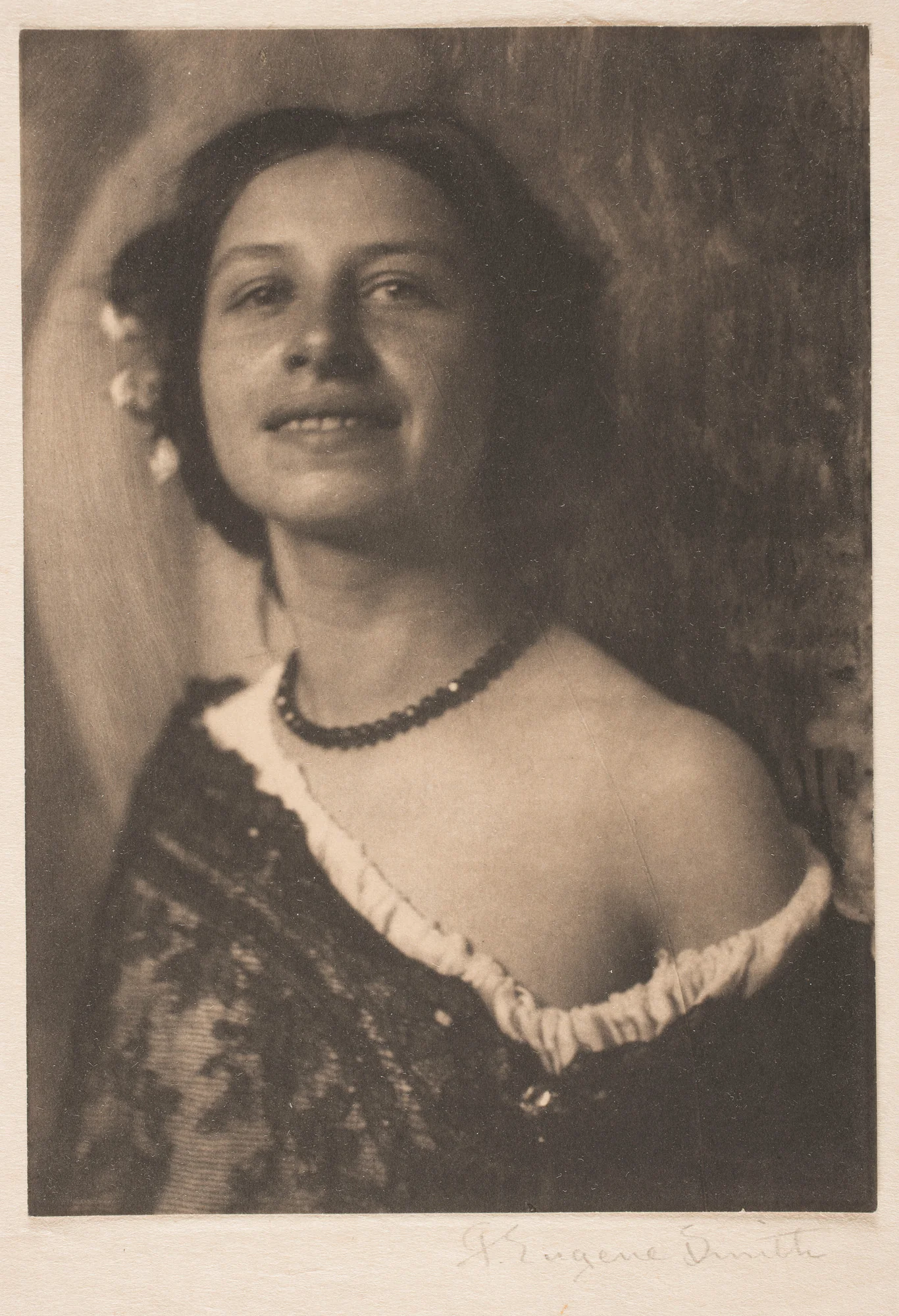
Portrait of the German illustrator Dora Polster (1884-1958), a leading figure in early-20th-century Munich's book-illustration scene, realized by Eugene circa 1910 during his Munich teaching years at the Lehr- und Versuchsanstalt für Photographie. The platinum print is conserved at the Münchner Stadtmuseum, anchor institution of Eugene's German corpus. Polster, trained at the Damenakademie of the Münchner Künstlerinnen-Verein and later associated with the Jugendstil book-arts milieu, was part of the same Munich modernist network in which Eugene moved — alongside Willi Geiger, Hans von Marées disciples, and Akademie der Bildenden Künste affiliates — and the portrait documents the cross-pollination of Munich pictorial photography with the city's illustration, graphic-arts and applied-arts scenes that would crystallize in the Königliche Akademie für Graphische Künste und Buchgewerbe of Leipzig (Eugene's chair from 1913). Polster is photographed in three-quarter view, the gaze averted in artist-at-work concentration, framed in the Munich-pictorialist conventions of sober tonal staging. The platinum print exhibits Eugene's mature selective scratched-negative intervention: hatched lines along the background and the dress, leaving the face modeled in clean platinum half-tones, the same technical economy as the Männerakt and the 1913 Selbstbildnis. The portrait belongs to the Stadtmuseum's Münchner-Frauenporträts cluster that documents the female creative network of pre-WWI Munich. For Maison Picturale, Dora Polster operates as the female-portrait module of the platine-palladium curriculum, paired with the male-portrait modules (Stieglitz, Willi Geiger, self-portraits): digital negative engraved selectively at the burin, contact-printed on hand-coated palladium, in continuity with Eugene's mature Munich-period scratched-portrait method.

Original held at : Münchner Stadtmuseum

Reference file source : Wikimedia Commons (Public Domain)

Prinz Luitpold mit Schaukelpferd — Frank Eugene

ca. 1906 · Platinum print

Prinz Luitpold mit Schaukelpferd

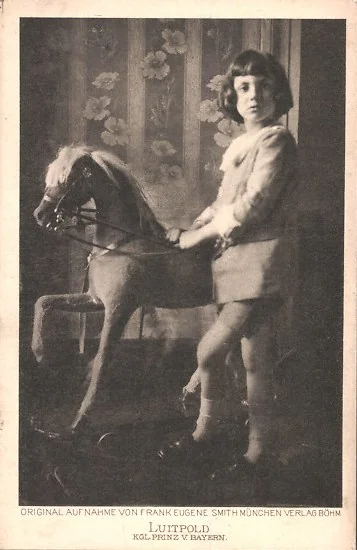
Royal portrait of the young Prinz Luitpold of Bavaria (1901-1914), great-grandson of the Prinzregent Luitpold who ruled Bavaria as regent from 1886 to 1912, posed beside his rocking horse circa 1906 — the year Eugene relocated permanently from New York to Germany and began the Munich phase of his career. The platinum print is conserved at the Münchner Stadtmuseum, the German anchor institution of Eugene's corpus. The portrait is a key document of Eugene's privileged access to the Bavarian court: as an American expatriate photographer trained at the Akademie der Bildenden Künste, Eugene operated at the intersection of Bavarian aristocracy, the Munich modernist scene, and the international Photo-Secession network, and this commission of the heir-to-be (Prinz Luitpold died at age 13 in 1914 of polio, never reaching the throne to which his lineage entitled him) documents the institutional patronage that sustained pictorialist photography in pre-WWI Bavaria. The young prince is photographed standing in courtly child's dress next to a wooden rocking horse — a domestic, almost intimate setting that contrasts with the formal state portraiture of court painters and that shows Eugene's softer pictorialist vein, focused on tonal modelation rather than scratched intervention. The print exhibits restrained scratched-negative work, applied only to the background to soften the ambient tone, the figure left untouched in clean platinum half-tones. This commission helped position Eugene for his Royal Professor appointment in Leipzig in 1913. For Maison Picturale, the Prinz Luitpold portrait anchors the child-portrait module of the platine-palladium curriculum: contemporary digital negative engraved selectively at the burin, contact-printed on hand-coated palladium, in the continuity of Eugene's Bavarian portraiture practice.

Original held at : Münchner Stadtmuseum

Reference file source : Wikimedia Commons (Public Domain)

Commission a print after Frank Eugene

Maison Picturale produces on commission contemporary prints after works by Frank Eugene that have entered the public domain. Hand-printed by master printers Tristan Sidem and Raphaël Lebas de Lacour on 640 gsm cotton paper, signed and numbered in limited edition, with a certificate of authenticity explicitly mentioning the "after" nature of the reinterpretation.
Start a commission