c. 1852-1862 · Albumen print from wet collodion negative
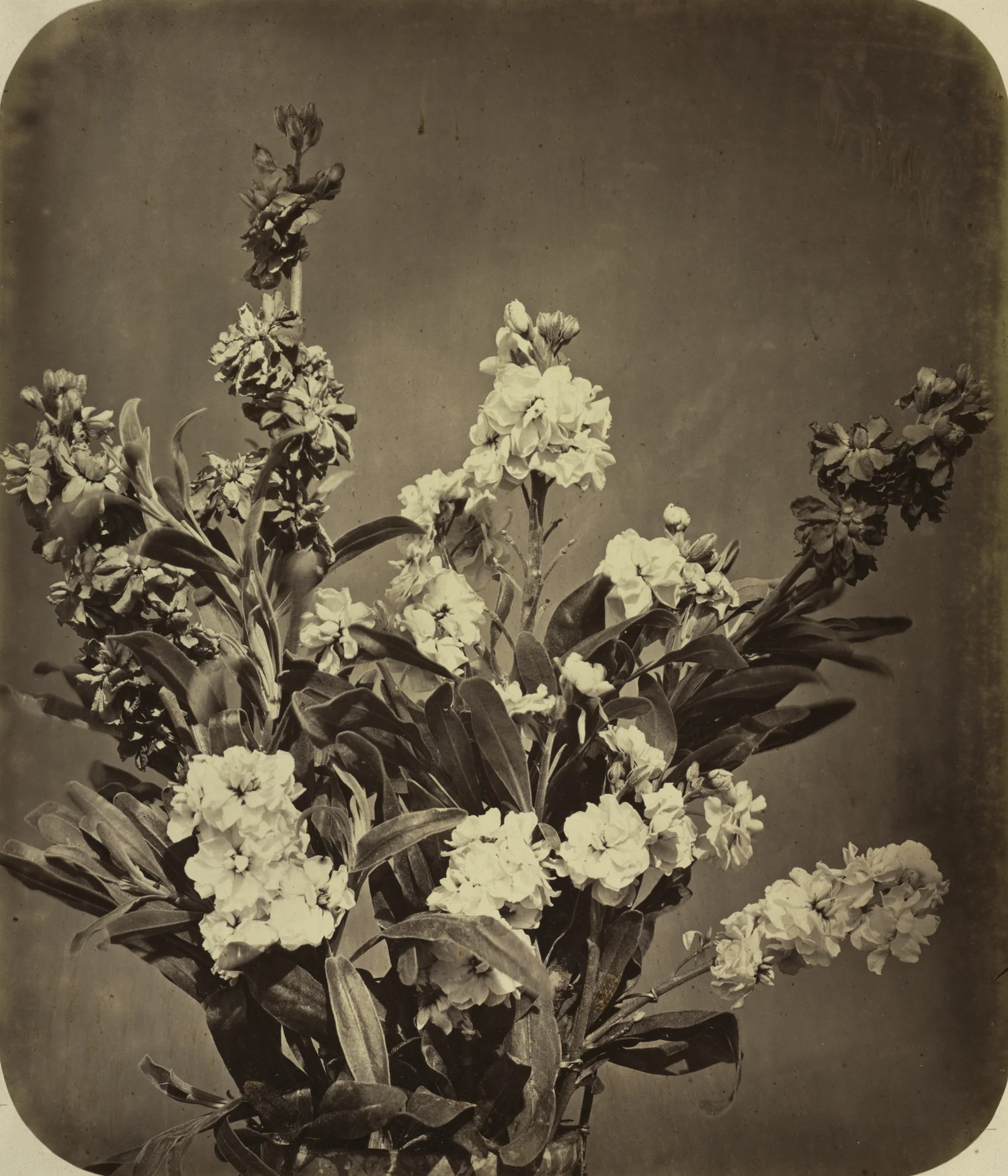
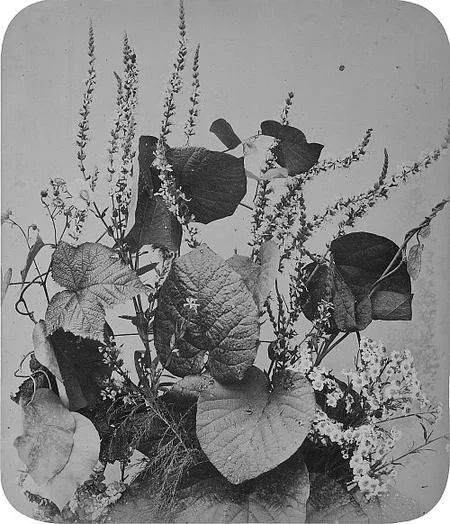
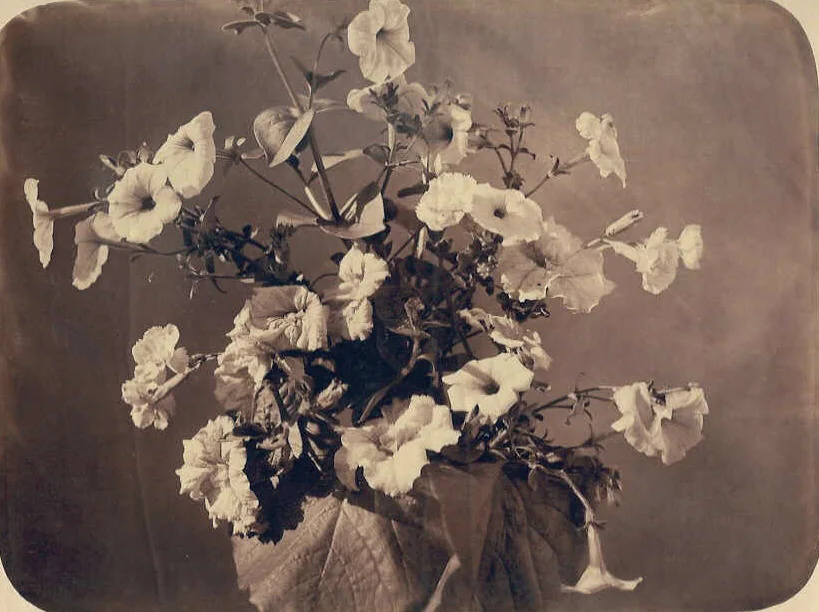
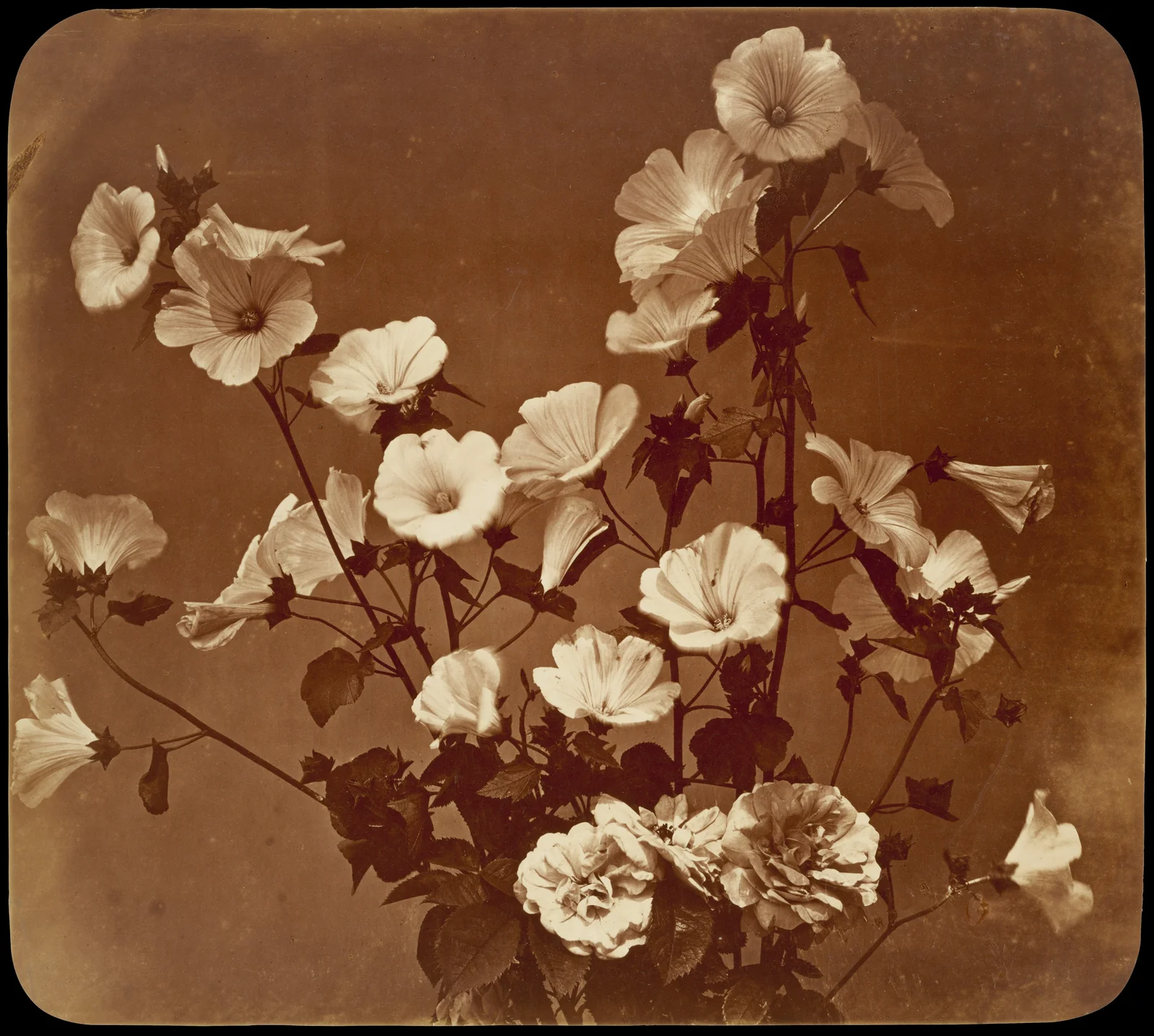
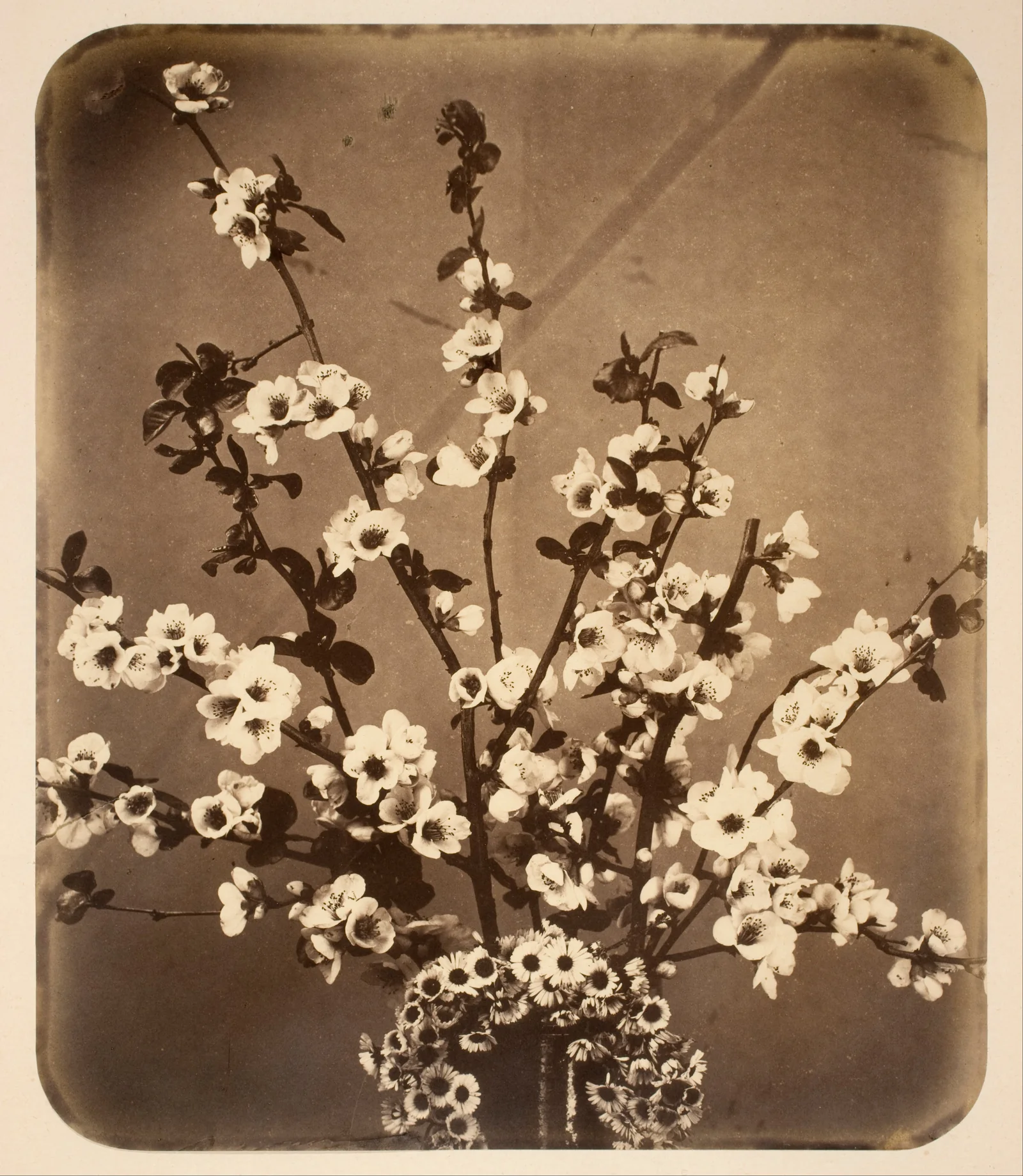
Floral Still Life
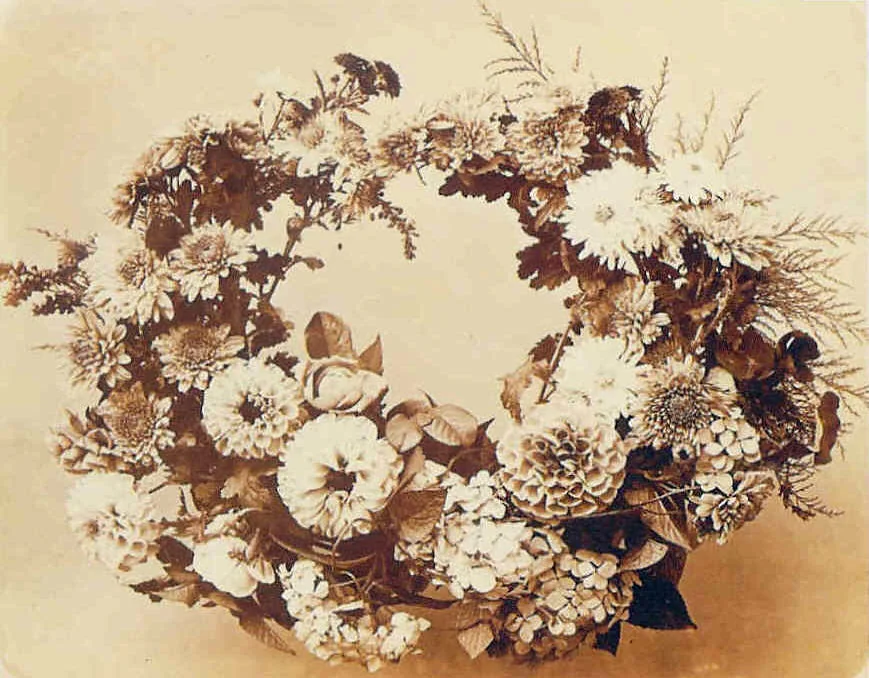
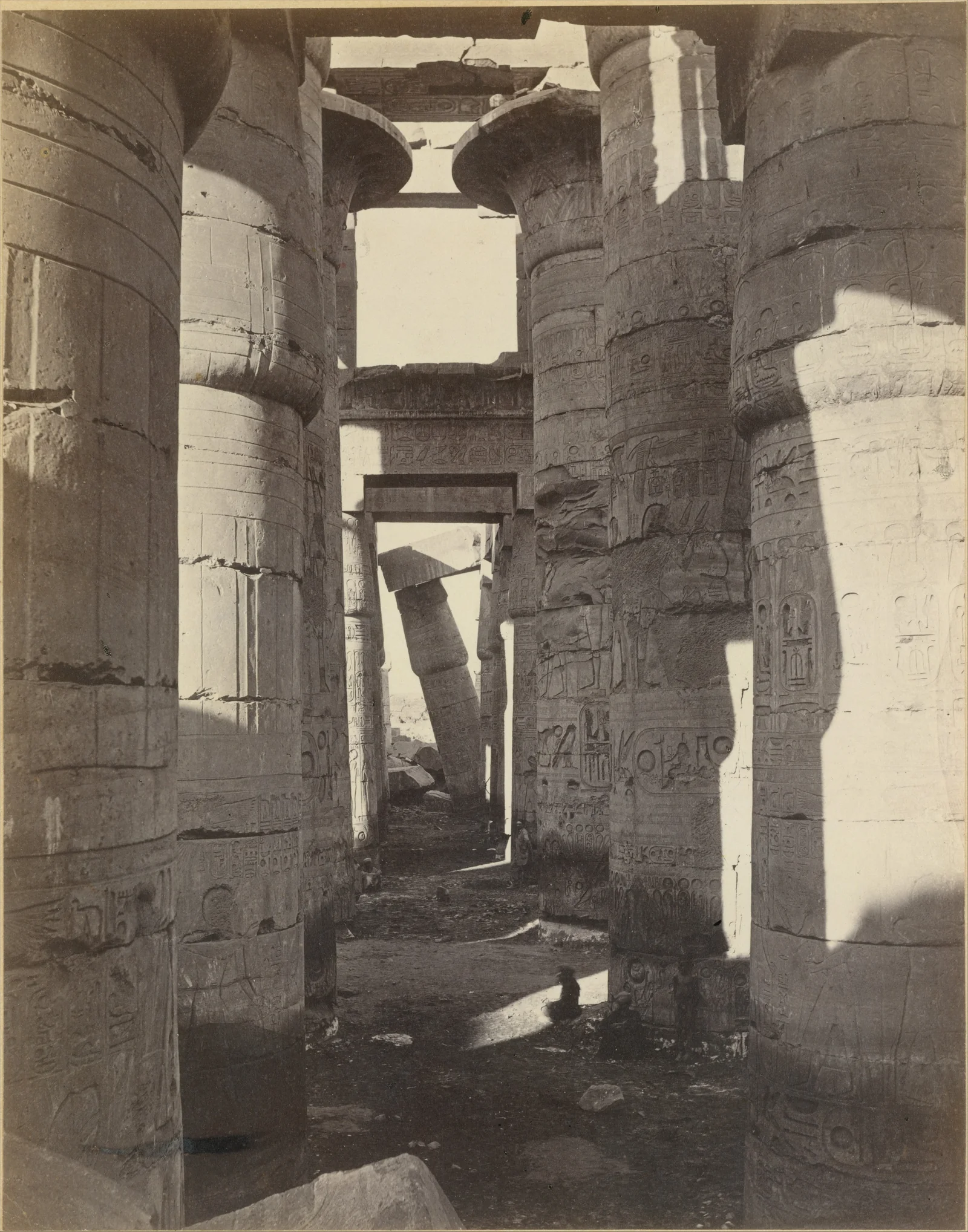
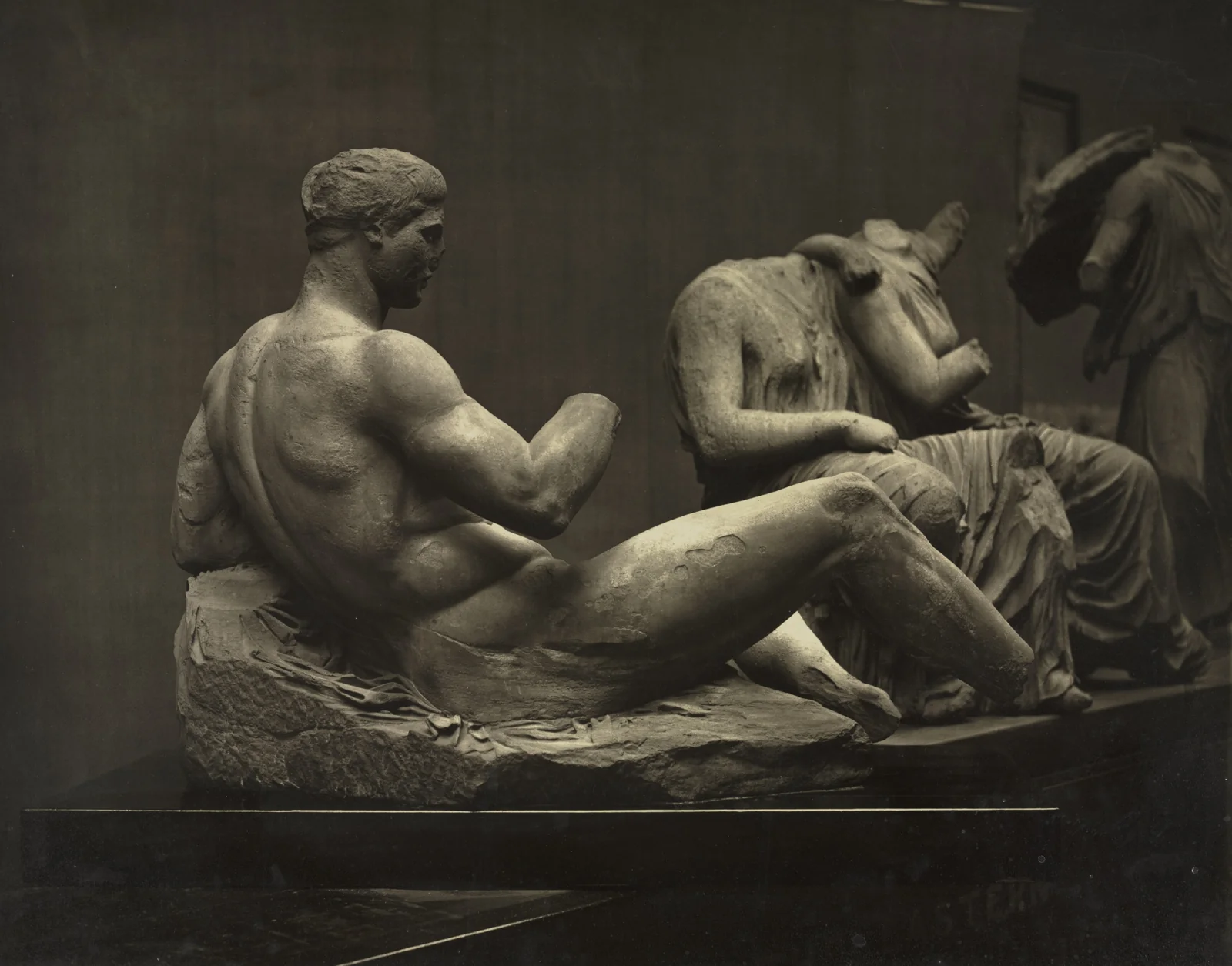
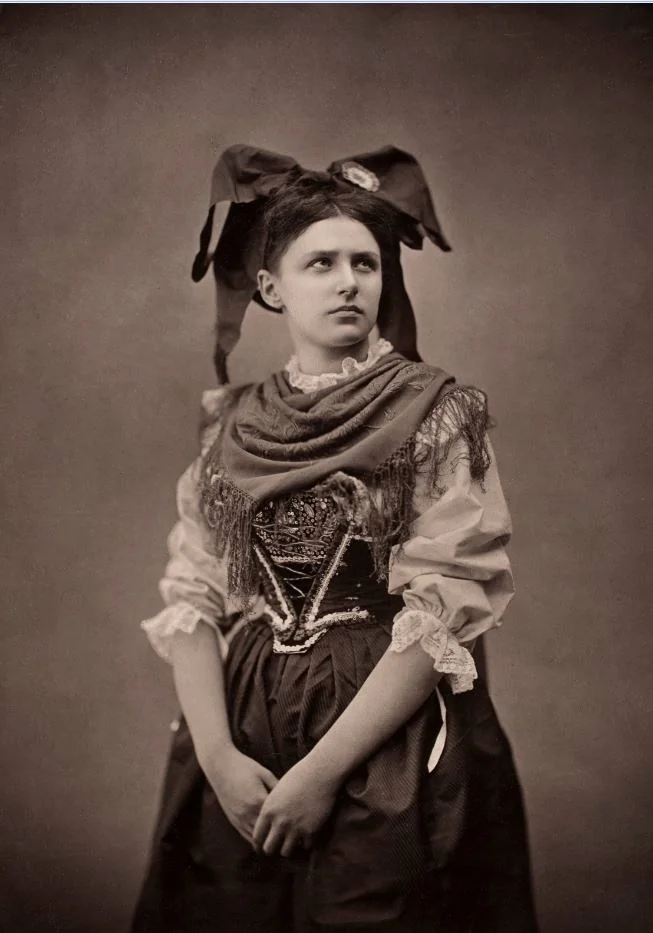
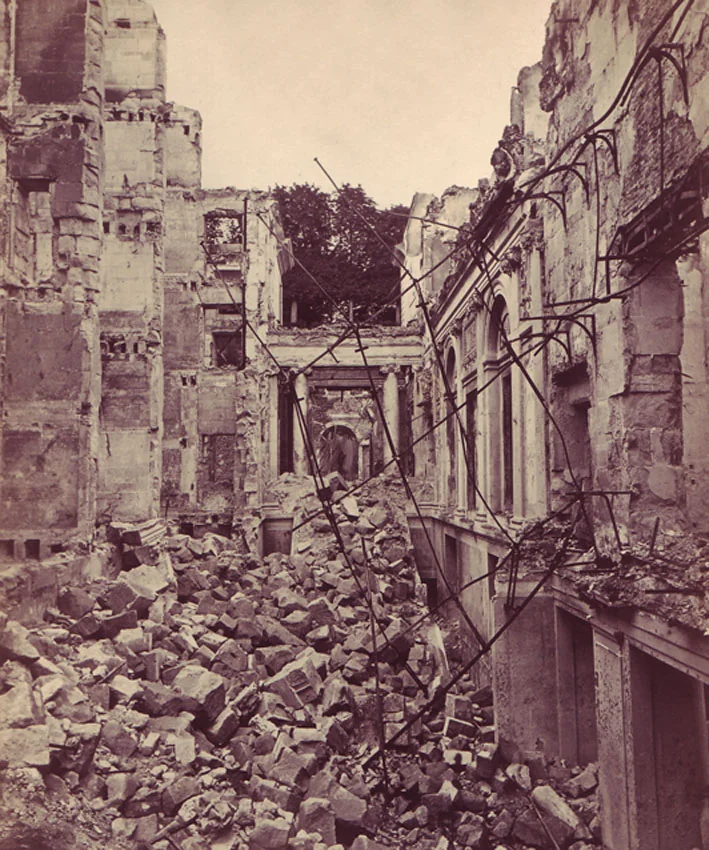
Iconic floral arrangement from the early career of Jean Adolphe Braun (1812-1877), the Alsatian photographer-industrialist who founded the Braun studio at Dornach (Alsace) in the 1850s and elevated it to a full industrial photographic enterprise by 1860. This still life belongs to the celebrated « Fleurs Photographiées » series (1854-1855), sold by the thousand to painters, embroiderers and the Lyon silk industry as drawing models, and acclaimed at the 1855 Paris Exposition Universelle where it won a first-class medal. The series secured Braun's 1857 election to the Société française de photographie and funded his industrial pivot toward carbon transfer (Swan licence acquired 1864), of which he was the first European industrialiser — employing up to 200 staff at the Dornach ateliers to produce permanent carbon reproductions for the Louvre, the Vatican Museums and the British Museum. Botanical naming, naturalistic lighting and balanced compositional rhythm align the plates with seventeenth-century Flemish flower painting while asserting photography's claim to fine-art status. Holdings of the floral corpus are split between the George Eastman Museum, the Metropolitan Museum of Art, the J. Paul Getty Museum, the Library of Congress and the Musée Unterlinden in Colmar, which keeps the principal Braun studio archive. Procédé Transposition Maison Picturale: this floral still life is reinterpreted as a direct-monochrome charbon print using the non-toxic chemistry reformulated by Vision Picturale, with pigmented gelatin in Noir Musée or Couleur Profonde tissues, transferred onto 640 g/m² cotton paper — the direct contemporary equivalent of the carbon transfer Braun industrialised, preserving the deep tonal scale and archival permanence that secured his nineteenth-century reputation while removing the dichromate hazards of the original Swan-Braun workflow.
Original held at : George Eastman Museum
Reference file source : Wikimedia Commons / Google Art Project / George Eastman Museum