Heinrich Kühn
Library

1866-1944 · Austrian-German

Heinrich Kühn

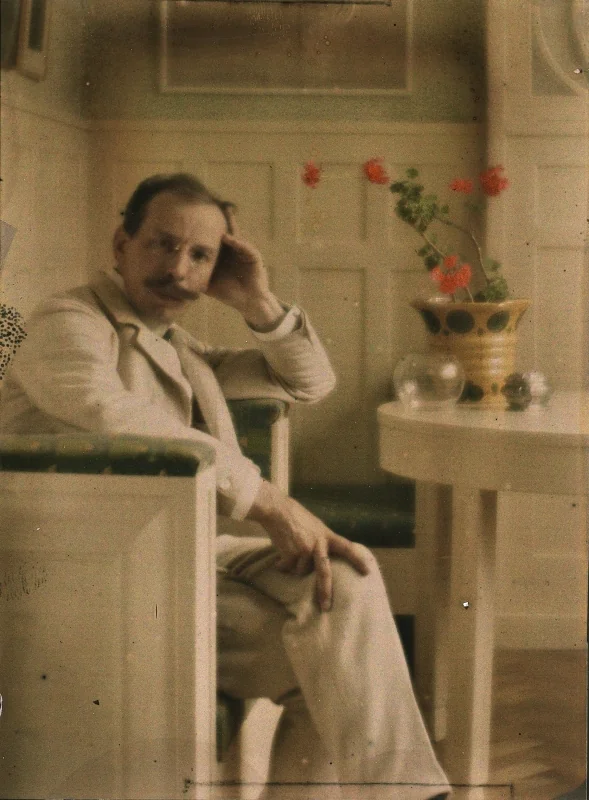
Heinrich Kühn (1866-1944) is the Austrian-German pictorialist master who perfected the gum bichromate and gum-over-platinum processes in Innsbruck. A peer of Stieglitz and Steichen, Kühn brought painterly chromatic depth to family portraiture and Alpine landscapes, and pioneered the multi-layer pigment print at monumental scale.

Public domain since 2015 · CPI L.123-1

Held at

  • Albertina Vienna
  • Museum of Modern Art, New York
  • Metropolitan Museum of Art
  • Städel Museum, Frankfurt
  • Neue Galerie, New York

Born in Dresden, Kühn settled in Innsbruck (Tyrol) in 1888 and there developed an obsessive mastery of the gum bichromate process — using multiple passes of pigment over a single sheet to achieve unprecedented tonal range and color depth. His family portraits of his children (Hans, Lotte, Walter, Edeltrude) and the family governess Mary Warner form one of pictorialism's most intimate corpora. As a member of the Wiener Kleeblatt (Vienna Trifolium) with Hans Watzek and Hugo Henneberg, and friend of Stieglitz (who published him in Camera Work), Kühn co-defined the international pictorialist project. He also pioneered the gum-over-platinum hybrid (Gummiplatindruck), the bromoil transfer, and was an early adopter of the Lumière Autochrome (1907). Held at Albertina Vienna, MoMA, MET, and Städel Museum Frankfurt. Public domain since 2015. His gum bichromate practice is a direct historical model for Maison Picturale.

Essential works

A curated selection of public-domain works by Heinrich Kühn, reinterpretable as contemporary prints by Maison Picturale's master printers. Each artwork page details the original process and its atelier equivalent.

Print after — systematic mention on the certificate of authenticity.

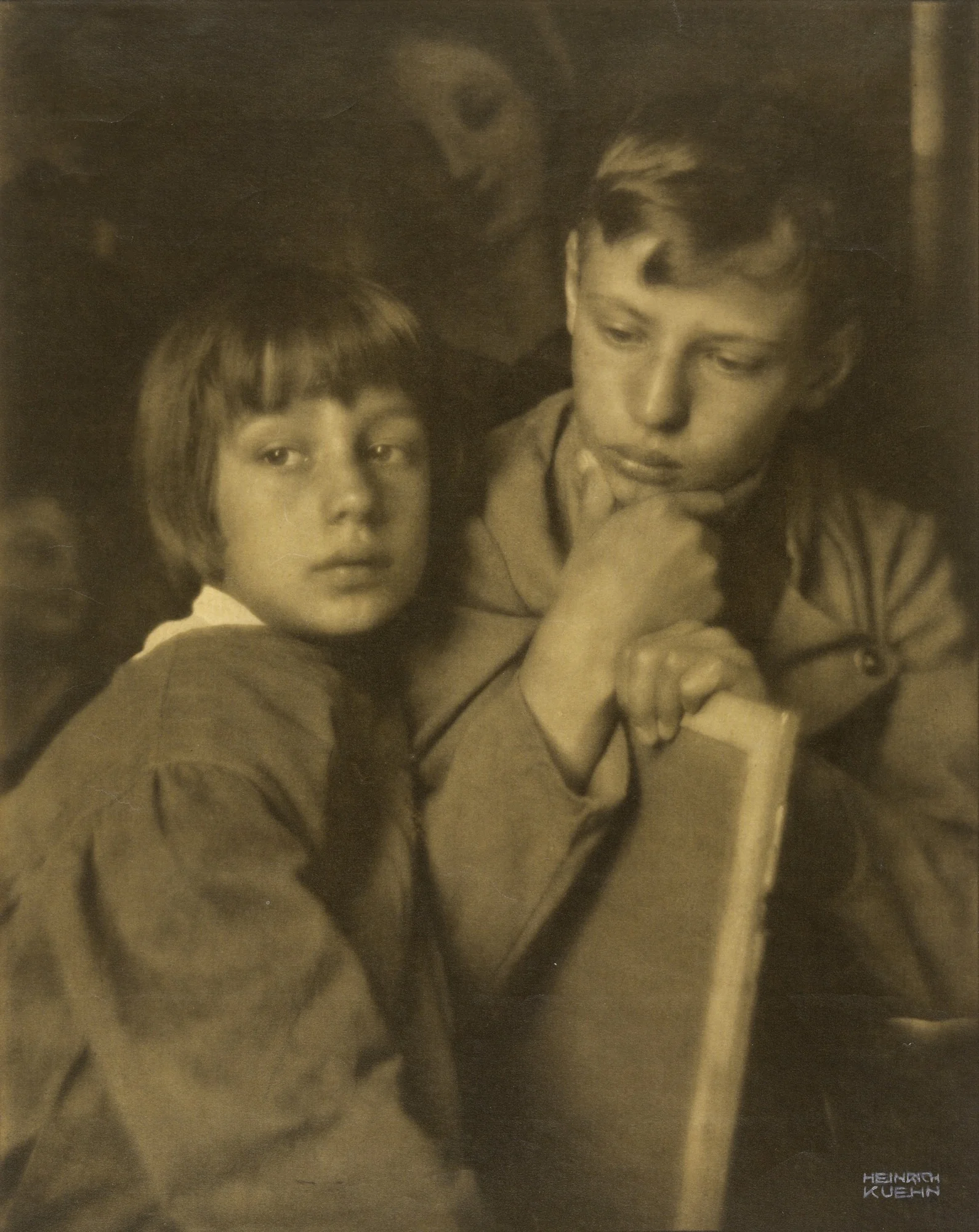
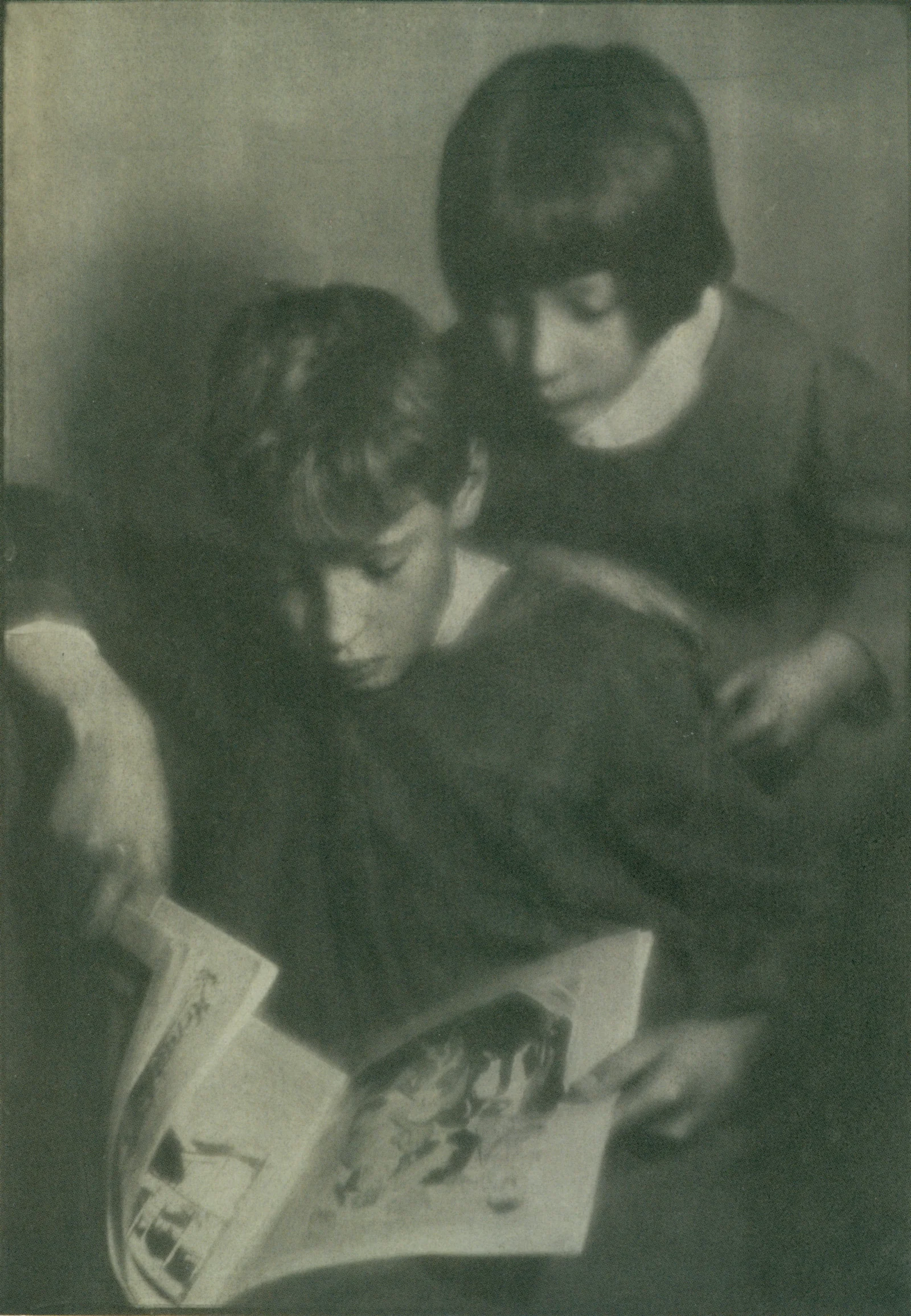
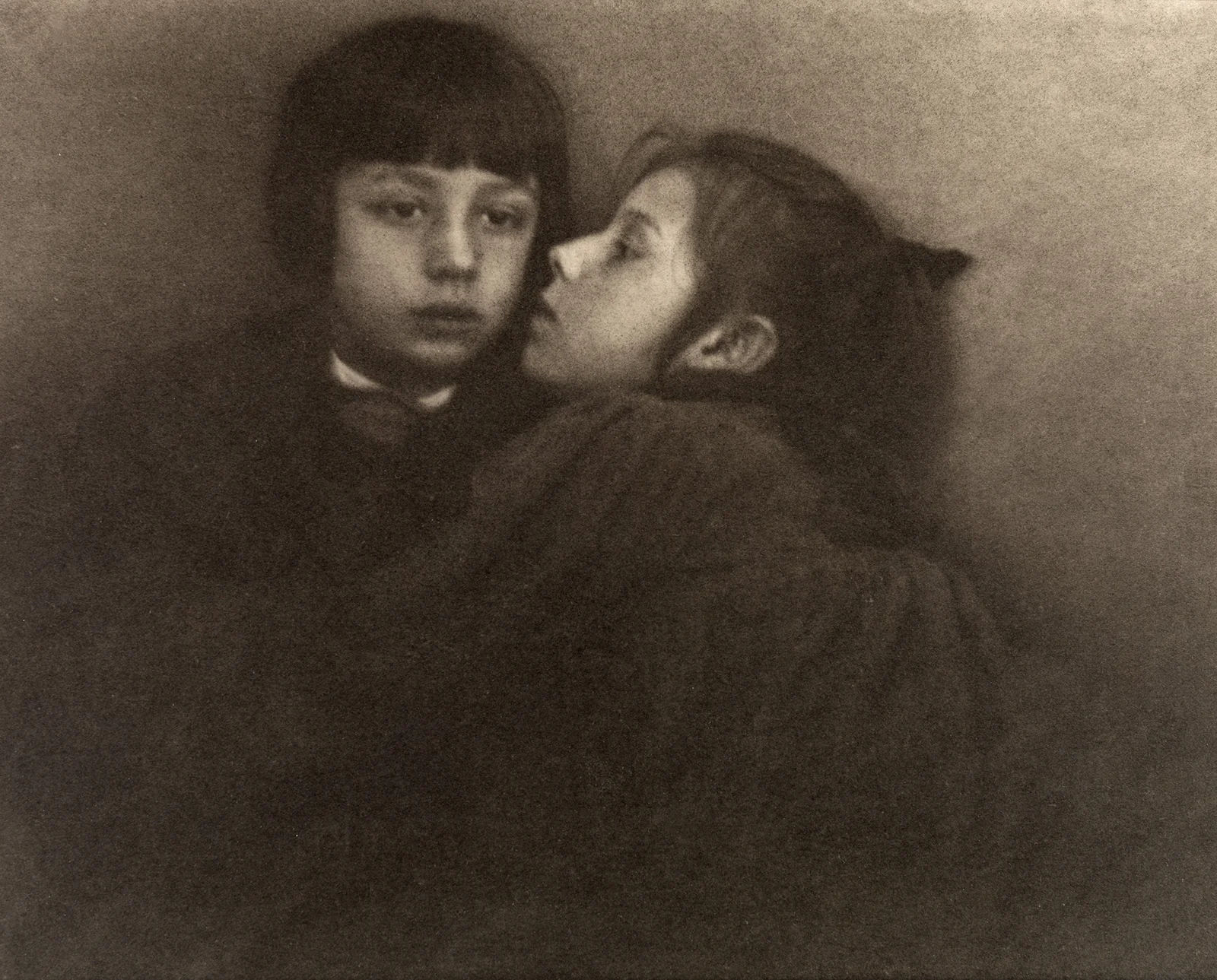
Walter und Hans (Platingummidruck) — Heinrich Kühn

c. 1906 · Platinum-gum print (Platingummidruck)

Walter und Hans (Platingummidruck)

Platingummidruck variant of the celebrated 1906 double portrait of Kühn's sons Walter and Hans, this print is the canonical example of the gum-over-platinum process that Dr. Heinrich Kühn (1866-1944), Austrian-German pictorialist and trained physician, invented in his Innsbruck atelier. Kühn first laid down a platinum-palladium image, then overprinted one or more layers of gum bichromate in pigment, fusing the cool tonal precision and archival permanence of platinum with the painterly mass and chromatic depth of gum. Held by Galerie Maier in Innsbruck, this version differs from the single-process Walter and Hans Kühn print at the Museum of Modern Art in New York: where the MoMA sheet is pure pigment on paper, the Platingummidruck reveals a luminous platinum substructure beneath the gum layers, a hallmark of the technique and the proof that Kühn's contribution was a synthesis rather than a mere variation. As a co-founder of the Wiener Kleeblatt (Vienna Trifolium) with Hans Watzek and Hugo Henneberg, and a close correspondent of Alfred Stieglitz and Edward Steichen, Kühn used such hybrid prints to argue that photography could rival painting on its own terms. Stieglitz published Kühn in Camera Work pl. 18 (1905) and pl. 33 (1911), cementing his international standing. Process Transposition Maison Picturale: the Platingummidruck is transposed via platinum-palladium MP printing overlaid with an Aquaprint MP layer (Maison Picturale's non-toxic Vision Picturale gum bichromate reformulation), preserving the dual-layer logic of Kühn's invention without the historical dichromate hazard. This work is studied at the Maison Picturale Paris atelier as the reference case for layered platinum-and-pigment printing. Kühn entered the public domain in 2015.

Original held at : Galerie Maier, Innsbruck

Reference file source : Wikimedia Commons (Public Domain)

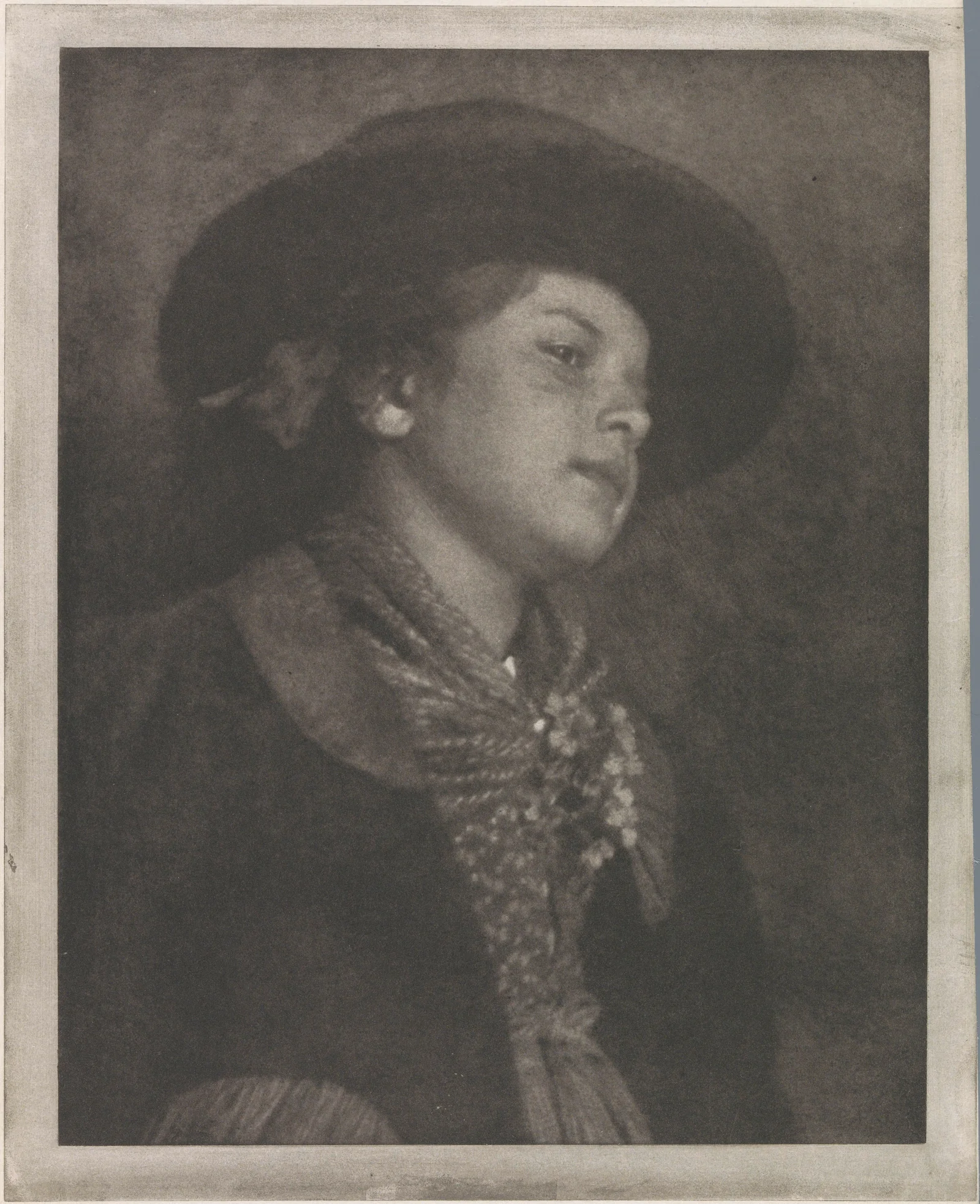
Portrait of Lotte — Heinrich Kühn

1911 · Heliogravure / photogravure

Portrait of Lotte

Portrait of Lotte Kühn (1911), one of Heinrich Kühn's four children and a recurring sitter alongside her siblings Hans, Walter, and Edeltrude, who together with their governess and Kühn's longtime muse Mary Warner — the subject of the iconic Study in Tonal Values III (1908) — form the intimate cast of his domestic Pictorialism. This heliogravure, held by the Rijksmuseum Amsterdam, was among the most widely reproduced of Kühn's family images and circulated through European photographic journals in the early 1910s. The heliogravure technique, a fine intaglio photomechanical method on copper plate, allowed Kühn to disseminate his pictorial vision well beyond the limited circle of original gum bichromate and platinum prints. Dr. Heinrich Kühn (1866-1944), Austrian-German pictorialist, trained in medicine before settling in Innsbruck in 1888 and dedicating his life to perfecting pictorial photography. As a member of the Wiener Kleeblatt (Trifolium) with Hans Watzek and Hugo Henneberg, and a close interlocutor of Alfred Stieglitz, who published him in Camera Work pl. 18 (1905) and pl. 33 (1911), and Edward Steichen, Kühn led the German-Austrian wing of international Pictorialism. He invented the Platingummidruck (gum-over-platinum) process and was among the first European photographers to adopt the Lumière Autochrome in 1907. His prints are held at the Albertina Vienna, the Museum of Modern Art, the Metropolitan Museum of Art, the Städel Museum Frankfurt, and Galerie Maier Innsbruck. Process Transposition Maison Picturale: heliogravure compositions of this kind are studied at the Maison Picturale Paris atelier through Aquaprint MP, the non-toxic Vision Picturale reformulation of gum bichromate, which preserves the matte tonal velvet of Kühn's family portraits without the historical dichromate hazard. Kühn entered the public domain in 2015.

Original held at : Rijksmuseum Amsterdam

Reference file source : Wikimedia Commons / Rijksmuseum (Public Domain)

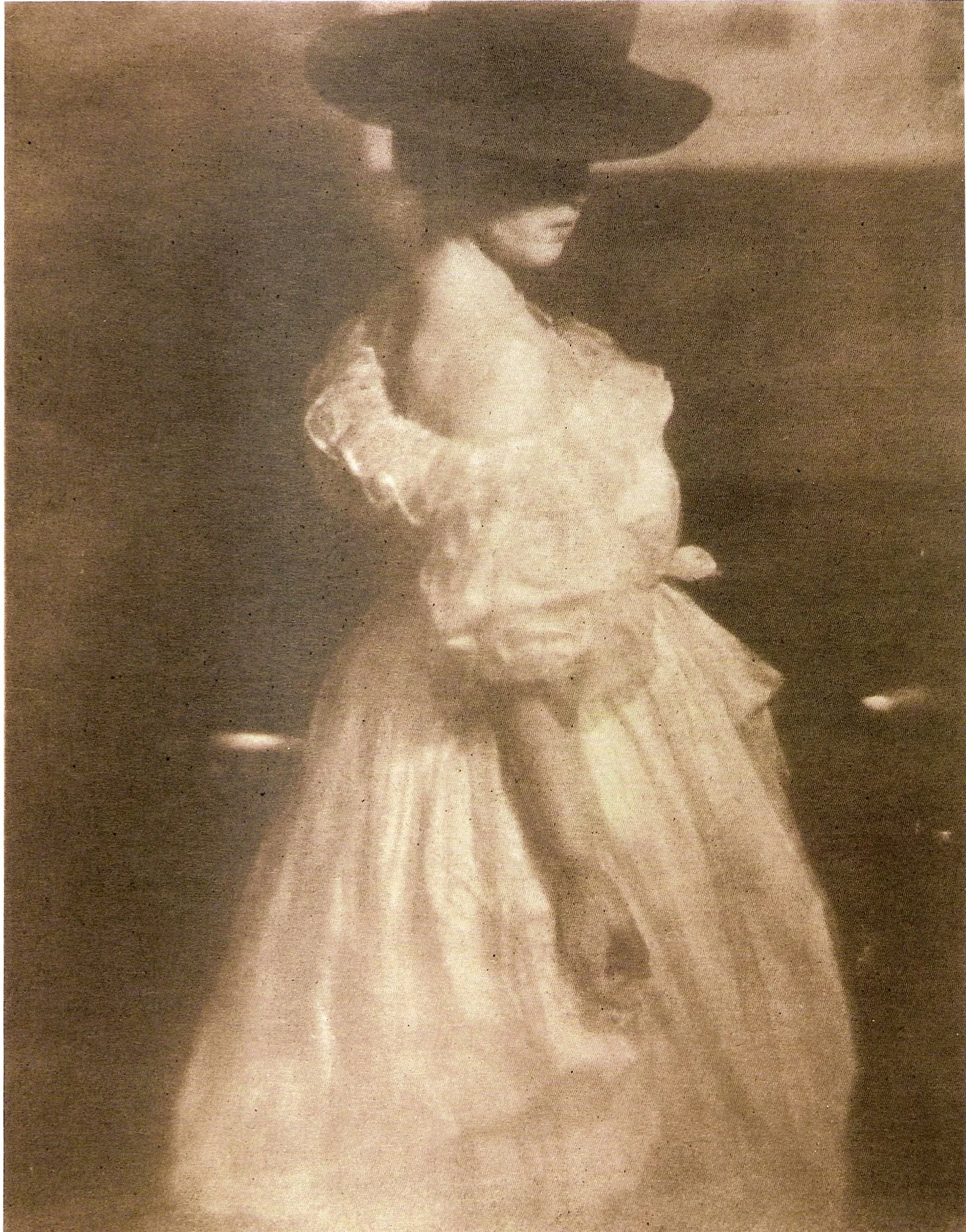
Woman before a Mirror — Heinrich Kühn

1906 · Dichromate (gum bichromate)

Woman before a Mirror

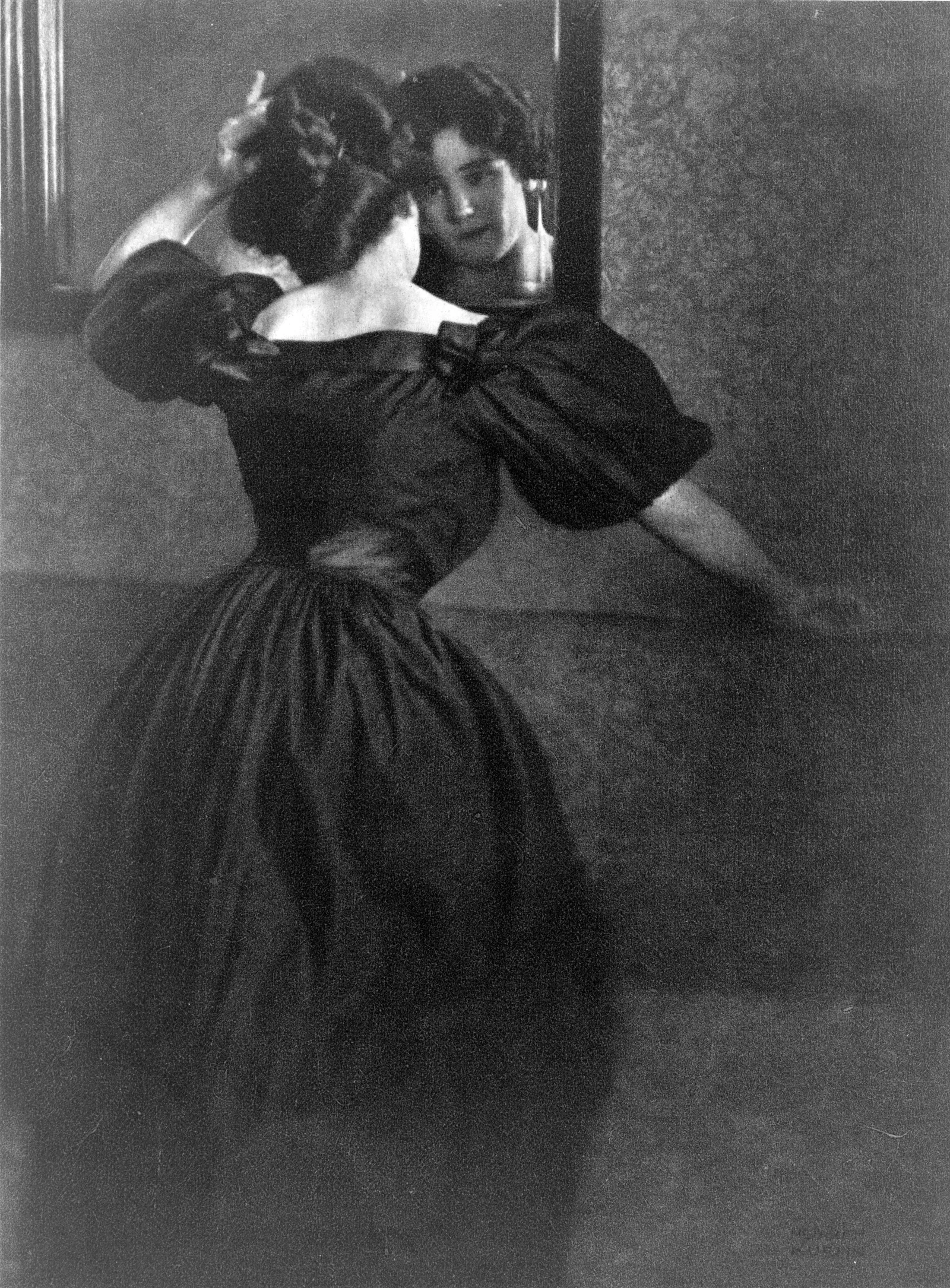
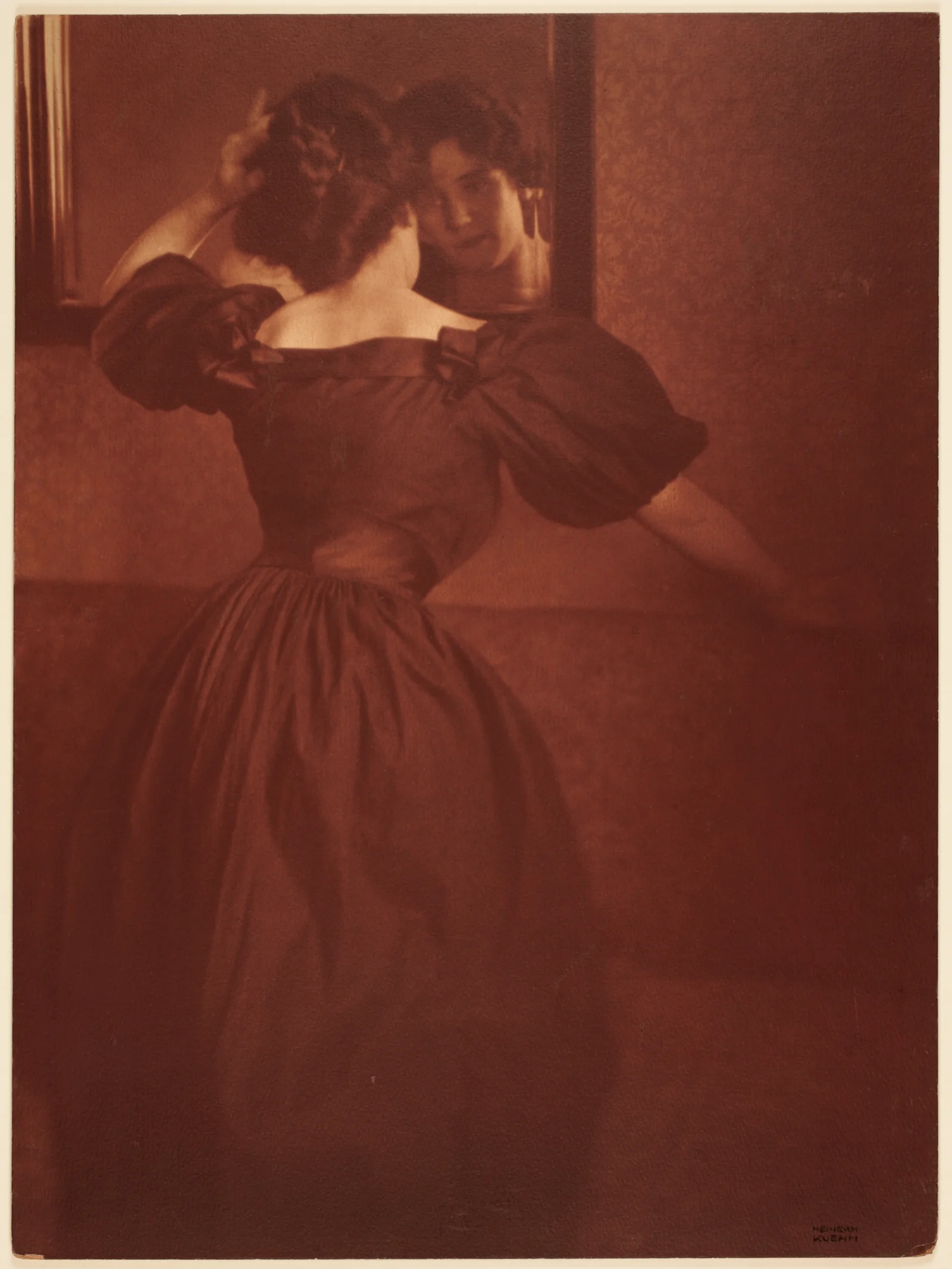
Frau vor dem Spiegel (Woman before a Mirror, 1906) is a contemplative figure study in gum bichromate acquired by the Städel Museum in Frankfurt, where it stands as a classic specimen of Dr. Heinrich Kühn's mature command of the dichromate-pigment medium. The sitter, posed in front of an interior mirror, is rendered with the painterly diffusion and tonal weight that Kühn extracted from successive gum coats — each layer adding density, color, and surface to the previous one, in a process that effectively allowed photography to assume the chromatic logic of painting. The motif of the woman at the mirror was a signature interior subject for Kühn alongside related works such as Girl with Mirror (1906) held at the Library of Congress in Washington, the two prints framing the same compositional family across collections. Dr. Heinrich Kühn (1866-1944), Austrian-German pictorialist trained as a physician, settled in Innsbruck in 1888 and co-led the Wiener Kleeblatt (Vienna Trifolium) with Hans Watzek and Hugo Henneberg. A close correspondent of Alfred Stieglitz, who published him in Camera Work pl. 18 (1905) and pl. 33 (1911), and of Edward Steichen, Kühn invented the Platingummidruck (gum-over-platinum) process and was among the first European photographers to adopt the Lumière Autochrome in 1907. His models were drawn almost exclusively from his domestic circle: his children Hans, Walter, Edeltrude, and Lotte, and the family governess Mary Warner. Process Transposition Maison Picturale: Kühn's gum bichromate is transposed at the Maison Picturale Paris atelier via Aquaprint MP, the non-toxic Vision Picturale reformulation, which preserves the multi-layer painterly logic of Frau vor dem Spiegel without the historical dichromate hazard. Kühn entered the public domain in 2015.

Original held at : Städel Museum, Frankfurt

Reference file source : Wikimedia Commons / Städel Museum (Public Domain)

Innsbrucker Ansicht (Innsbruck View) — Heinrich Kühn

c. 1900s · Gum bichromate on paper

Innsbrucker Ansicht (Innsbruck View)

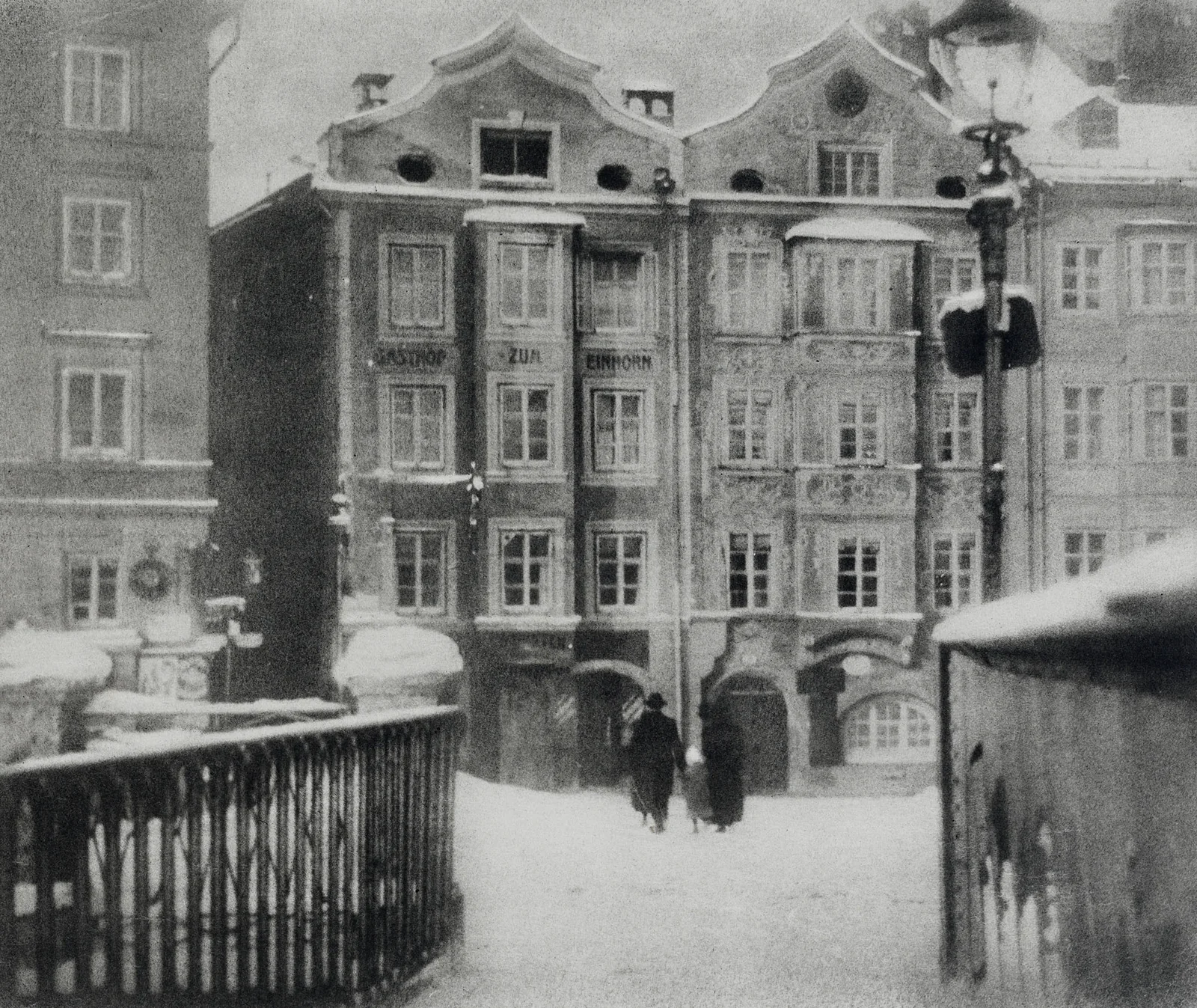
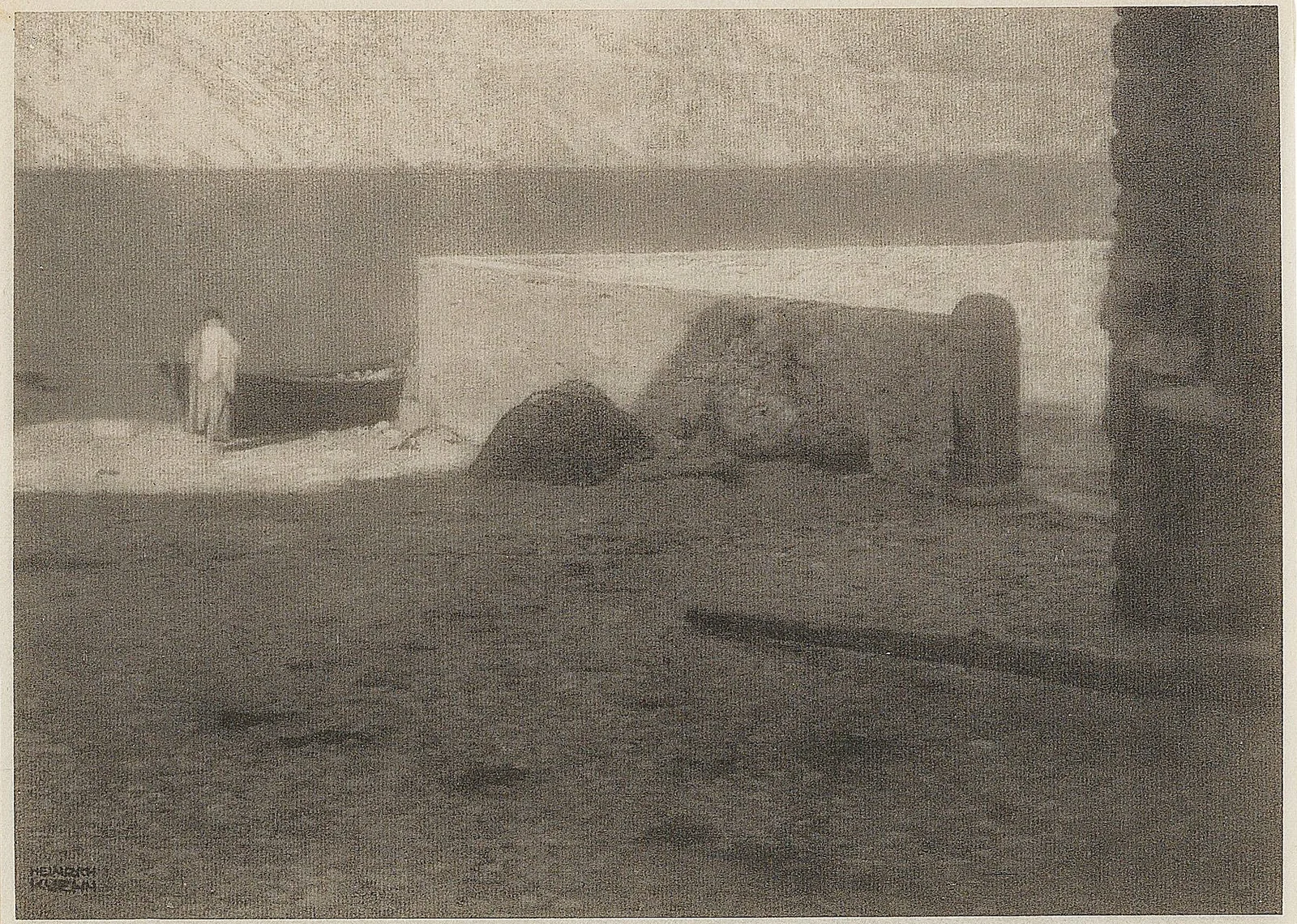
Innsbrucker Ansicht (Innsbruck View) is a soft-toned gum bichromate townscape of Innsbruck, the Tyrolean city where Dr. Heinrich Kühn (1866-1944) settled in 1888 and developed his lifelong mastery of pictorial photography. Held at the Albertina Vienna and measuring 27.5 by 32.6 cm, the print belongs to the small body of urban subjects in Kühn's overwhelmingly domestic and landscape-oriented corpus, which makes it a rare and instructive sheet for understanding how Kühn applied his pictorial vocabulary to the built environment of his adopted city. The image renders Innsbruck through the painterly diffusion and selective accent that gum bichromate makes possible — a single substrate, multiple passes of pigment, and an envelope of soft mountain light specific to the Inn valley, with the surrounding Alps suggested rather than described. Trained as a physician, Kühn became the leader of the German-Austrian wing of Pictorialism and a co-founder of the Wiener Kleeblatt (Vienna Trifolium) with Hans Watzek and Hugo Henneberg. A close correspondent of Alfred Stieglitz, who published him in Camera Work pl. 18 (1905) and pl. 33 (1911), and Edward Steichen, he invented the Platingummidruck (gum-over-platinum) process and was among the first European photographers to adopt the Lumière Autochrome in 1907. His prints are held at the Albertina Vienna, MoMA, the Metropolitan Museum of Art, the Städel Museum Frankfurt, and Galerie Maier Innsbruck. Process Transposition Maison Picturale: Kühn's gum bichromate townscapes are transposed at the Maison Picturale Paris atelier via Aquaprint MP, the non-toxic Vision Picturale reformulation, which preserves the layered chromatic softness of Innsbrucker Ansicht without the historical dichromate hazard. Kühn entered the public domain in 2015.

Original held at : Albertina Vienna

Reference file source : Wikimedia Commons (Public Domain)

Landschaft (Landscape) — Heinrich Kühn

1889 · Gum bichromate on paper

Landschaft (Landscape)

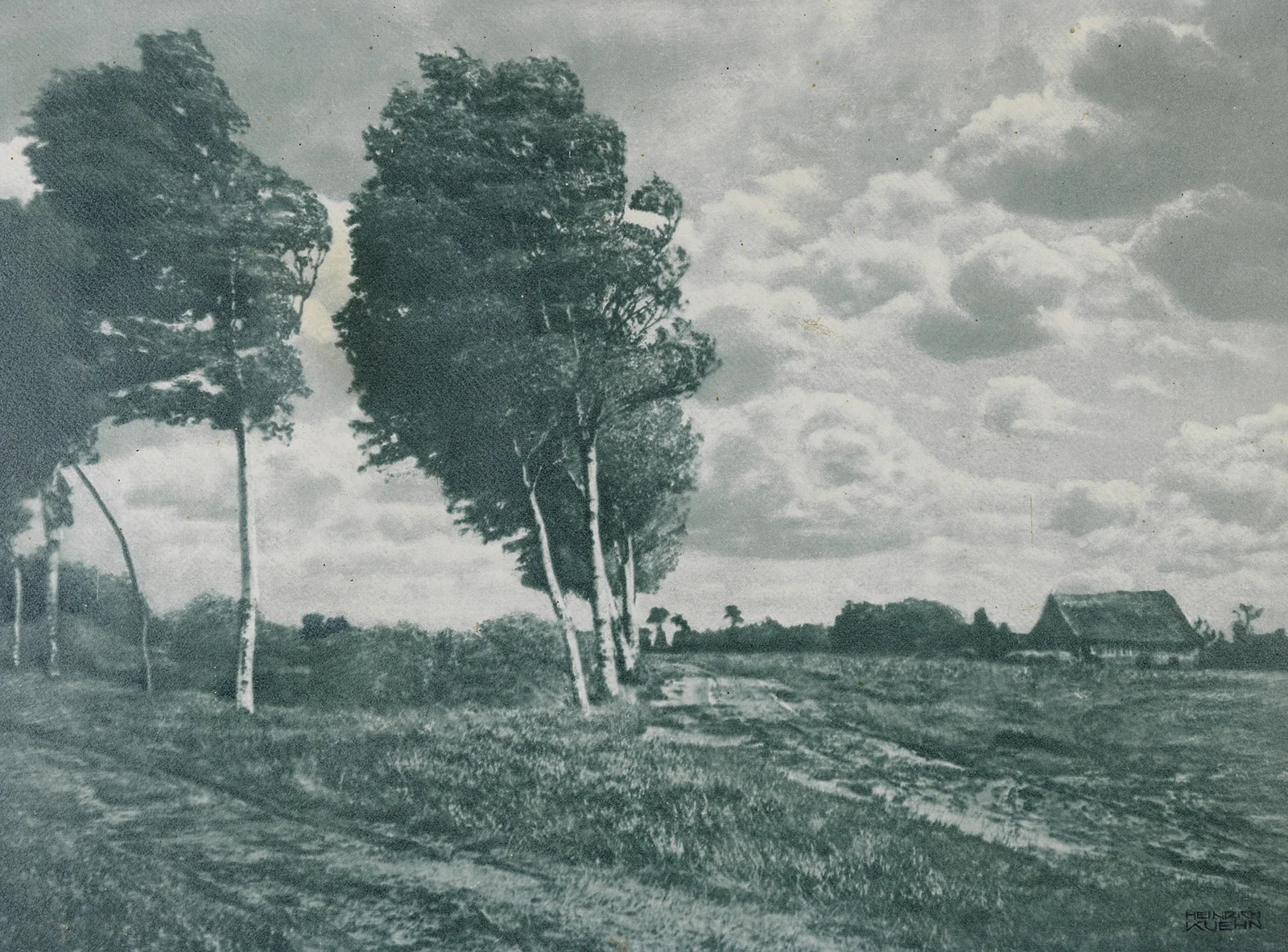
Landschaft (Landscape, 1889) is an early monumental gum bichromate landscape measuring 54.5 by 73.3 cm, held by the Albertina Vienna. The sheer size of the print — exceptional for a dichromate-pigment image at the close of the 1880s — documents Dr. Heinrich Kühn's pioneering ambition to scale gum bichromate beyond the cabinet format into a medium capable of competing with painting at gallery scale, an argument that would only be fully realized by the international Pictorialist movement two decades later. Dr. Heinrich Kühn (1866-1944), Austrian-German pictorialist, trained as a physician before settling in Innsbruck in 1888, the year before this landscape was made; Landschaft thus stands at the threshold of his Tyrolean career. As leader of the German-Austrian wing of Pictorialism and a co-founder of the Wiener Kleeblatt (Vienna Trifolium) with Hans Watzek and Hugo Henneberg, Kühn pursued an obsessive multi-layer approach to gum bichromate, building up tonal range and color depth through successive pigment coats on a single substrate. He later invented the Platingummidruck (gum-over-platinum) process and was a close correspondent of Alfred Stieglitz, who published him in Camera Work pl. 18 (1905) and pl. 33 (1911), and Edward Steichen. Kühn was among the first European photographers to adopt the Lumière Autochrome in 1907. His prints are held at the Albertina Vienna, MoMA, the Metropolitan Museum of Art, the Städel Museum Frankfurt, and Galerie Maier Innsbruck. Process Transposition Maison Picturale: Kühn's large-format gum bichromate landscapes are transposed at the Maison Picturale Paris atelier via Aquaprint MP, the non-toxic Vision Picturale reformulation, which preserves the painterly mass of Landschaft without the historical dichromate hazard. Kühn entered the public domain in 2015.

Original held at : Albertina Vienna

Reference file source : Wikimedia Commons (Public Domain)

Stillleben mit Obstschale (Still Life with Fruit Bowl) — Heinrich Kühn

c. 1909 · Oil print on paper (Ölumdruck)

Stillleben mit Obstschale (Still Life with Fruit Bowl)

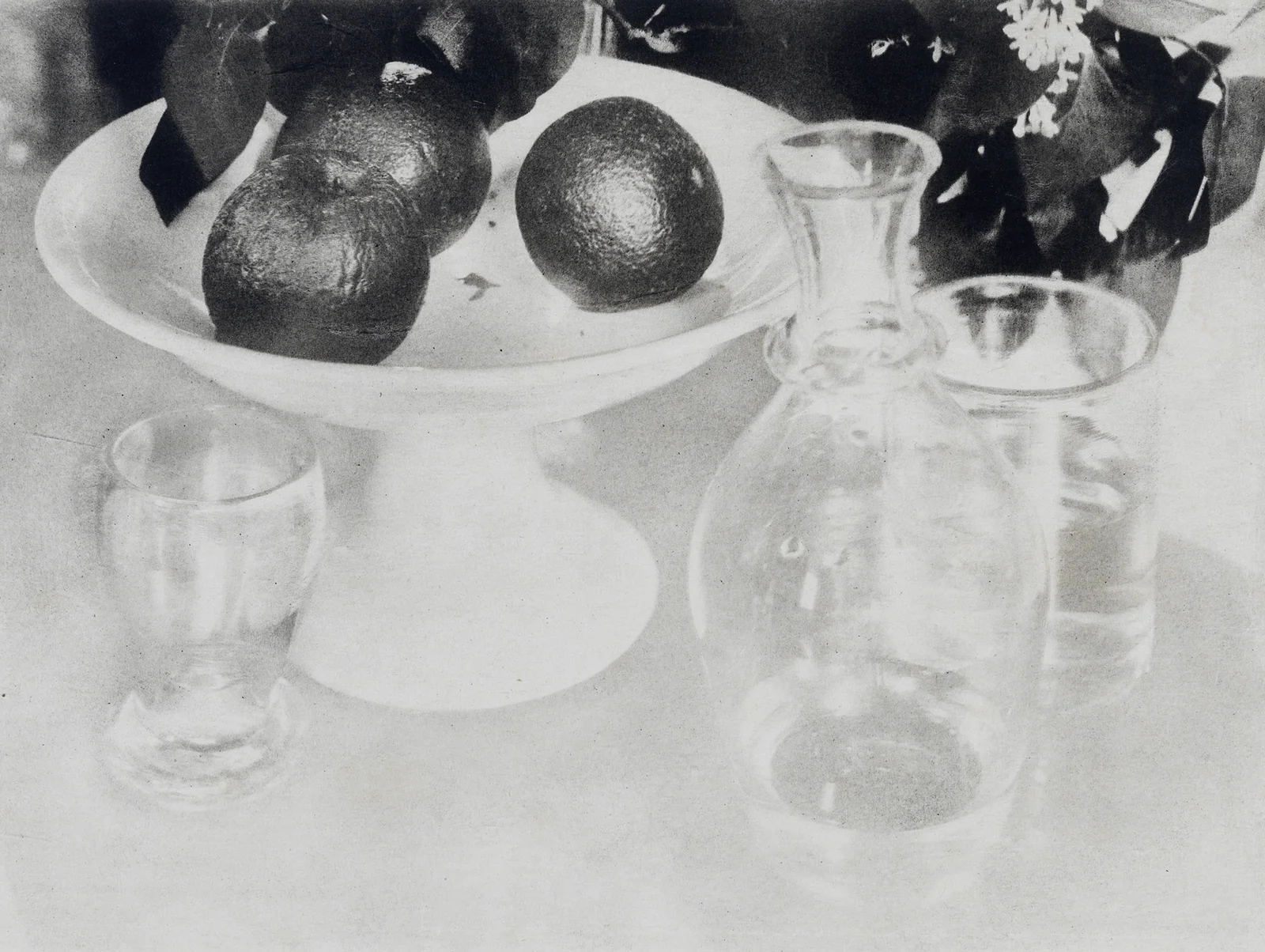
Stillleben mit Obstschale (Still Life with Fruit Bowl, c. 1909) is a painterly still life measuring 29.3 by 39 cm, held by the Albertina Vienna. The print demonstrates Dr. Heinrich Kühn's command of the Ölumdruck (oil pigment transfer) process, in which a gelatin-and-bichromate matrix is selectively inked with greasy pigment and then transferred to paper, yielding a continuous tonal image close in surface to a lithograph or a charcoal drawing. The fruit bowl, lit with low-key directional light, allowed Kühn to deploy the medium's painterly virtues — broad tonal masses, suppressed highlights, a tactile pigment surface — on a classical studio subject inherited from the Dutch and German still-life tradition. Dr. Heinrich Kühn (1866-1944), Austrian-German pictorialist trained as a physician, settled in Innsbruck in 1888 and led the German-Austrian wing of international Pictorialism as a co-founder of the Wiener Kleeblatt (Vienna Trifolium) with Hans Watzek and Hugo Henneberg. He invented the Platingummidruck (gum-over-platinum) process and was a close correspondent of Alfred Stieglitz, who published him in Camera Work pl. 18 (1905) and pl. 33 (1911), and Edward Steichen. Kühn was among the first European photographers to adopt the Lumière Autochrome in 1907. His prints are held at the Albertina Vienna, MoMA, the Metropolitan Museum of Art, the Städel Museum Frankfurt, and Galerie Maier Innsbruck. Process Transposition Maison Picturale: the painterly pigment surface of Kühn's oil prints is transposed at the Maison Picturale Paris atelier via Aquaprint MP, the non-toxic Vision Picturale gum bichromate reformulation, which approximates the tonal mass of Stillleben without the historical dichromate hazard. Kühn entered the public domain in 2015.

Original held at : Albertina Vienna

Reference file source : Wikimedia Commons (Public Domain)

12 of 16 works

The documented corpus

The rest of Heinrich Kühn's public-domain corpus: plates kept in our editorial archives. Reproducible on request, without dedicated editorial study.

4 archived plates

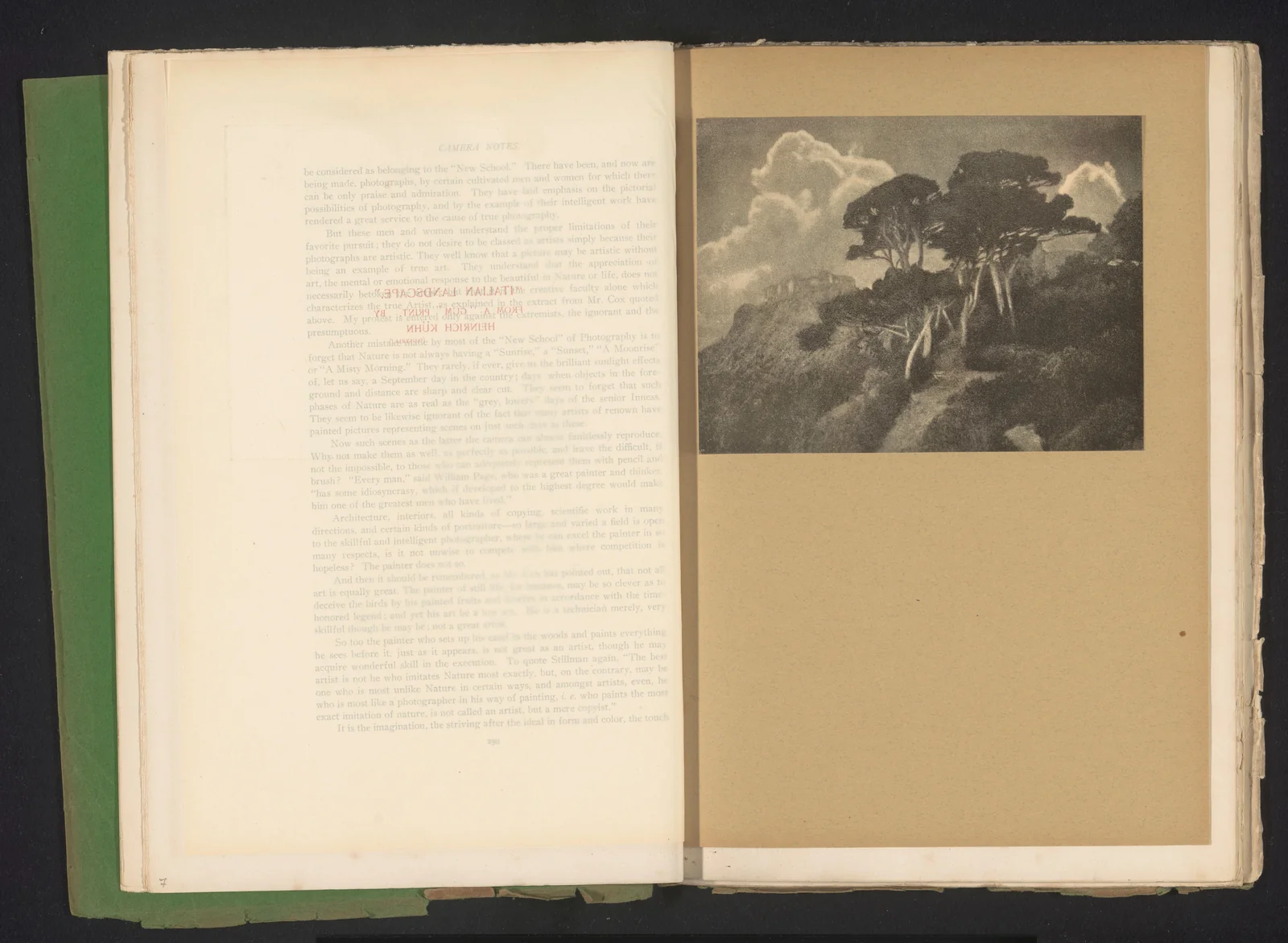
Italian Landscape — Heinrich Kühn

c. 1897-1902

Italian Landscape

Autotype (photomechanical)

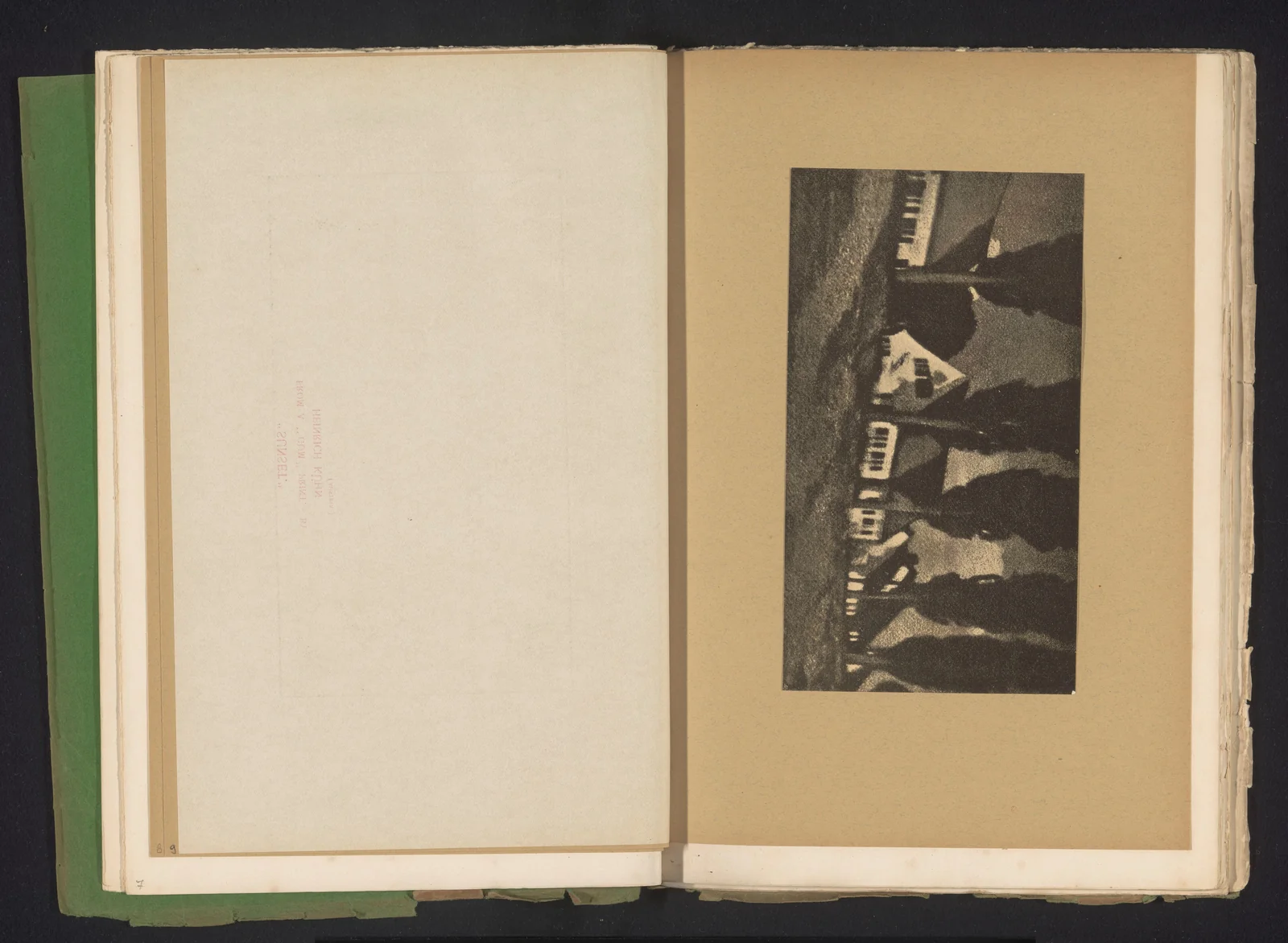
Three Houses at Sunset — Heinrich Kühn

c. 1897-1902

Three Houses at Sunset

Autotype (photomechanical)

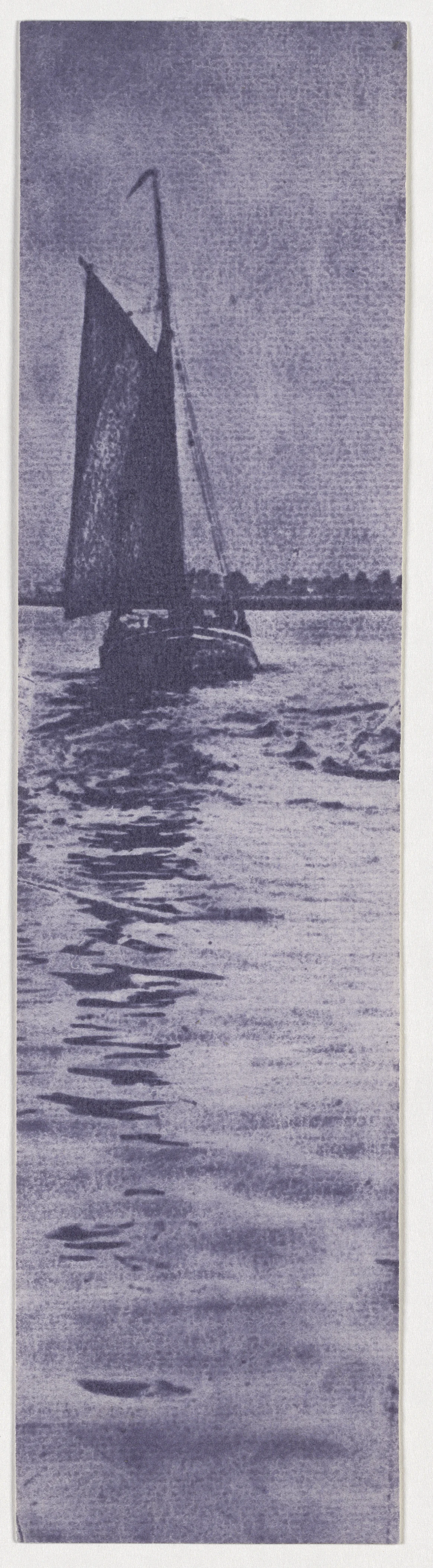
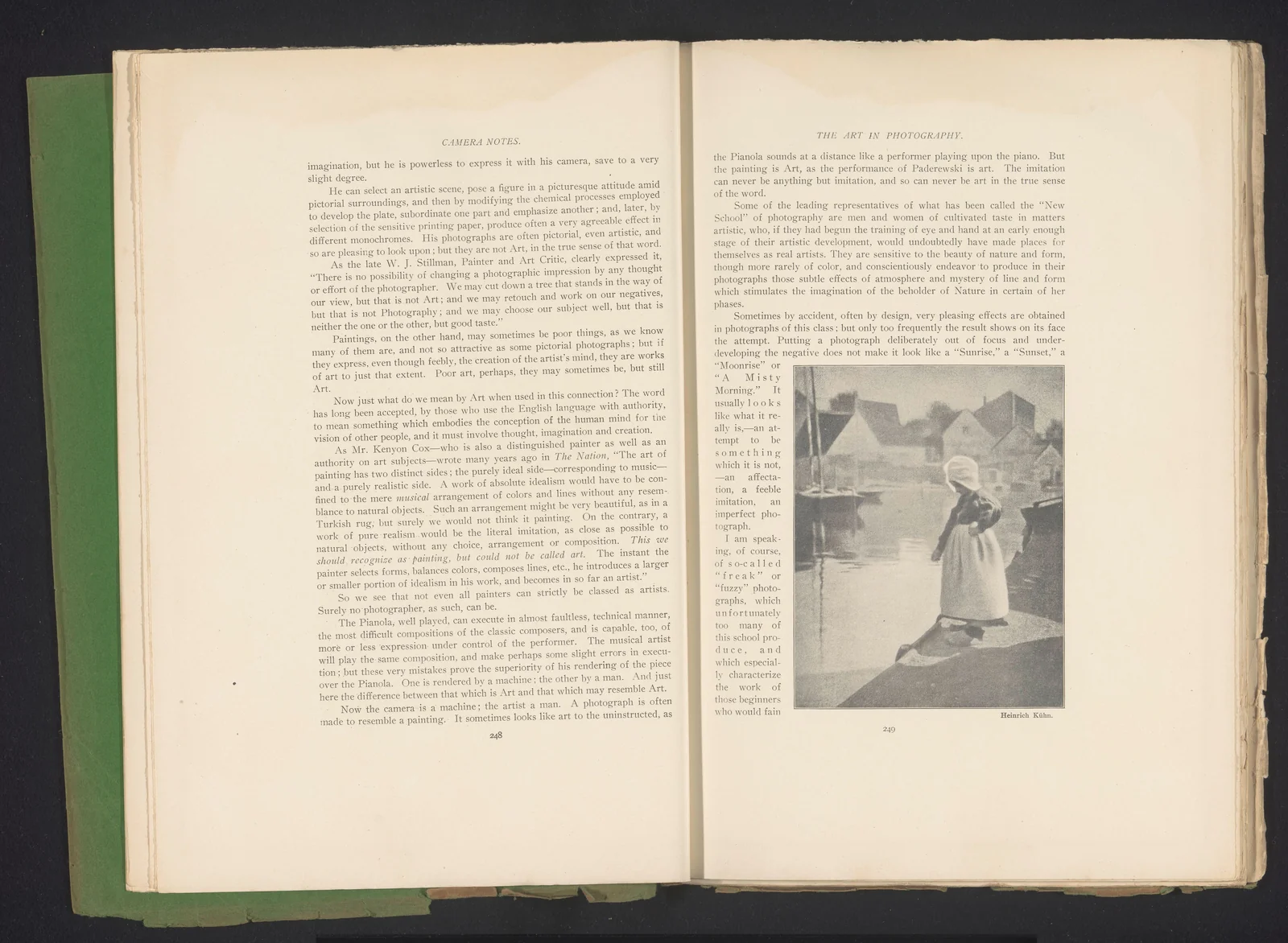
Girl at the Waterside — Heinrich Kühn

c. 1897-1902

Girl at the Waterside

Autotype (photomechanical)

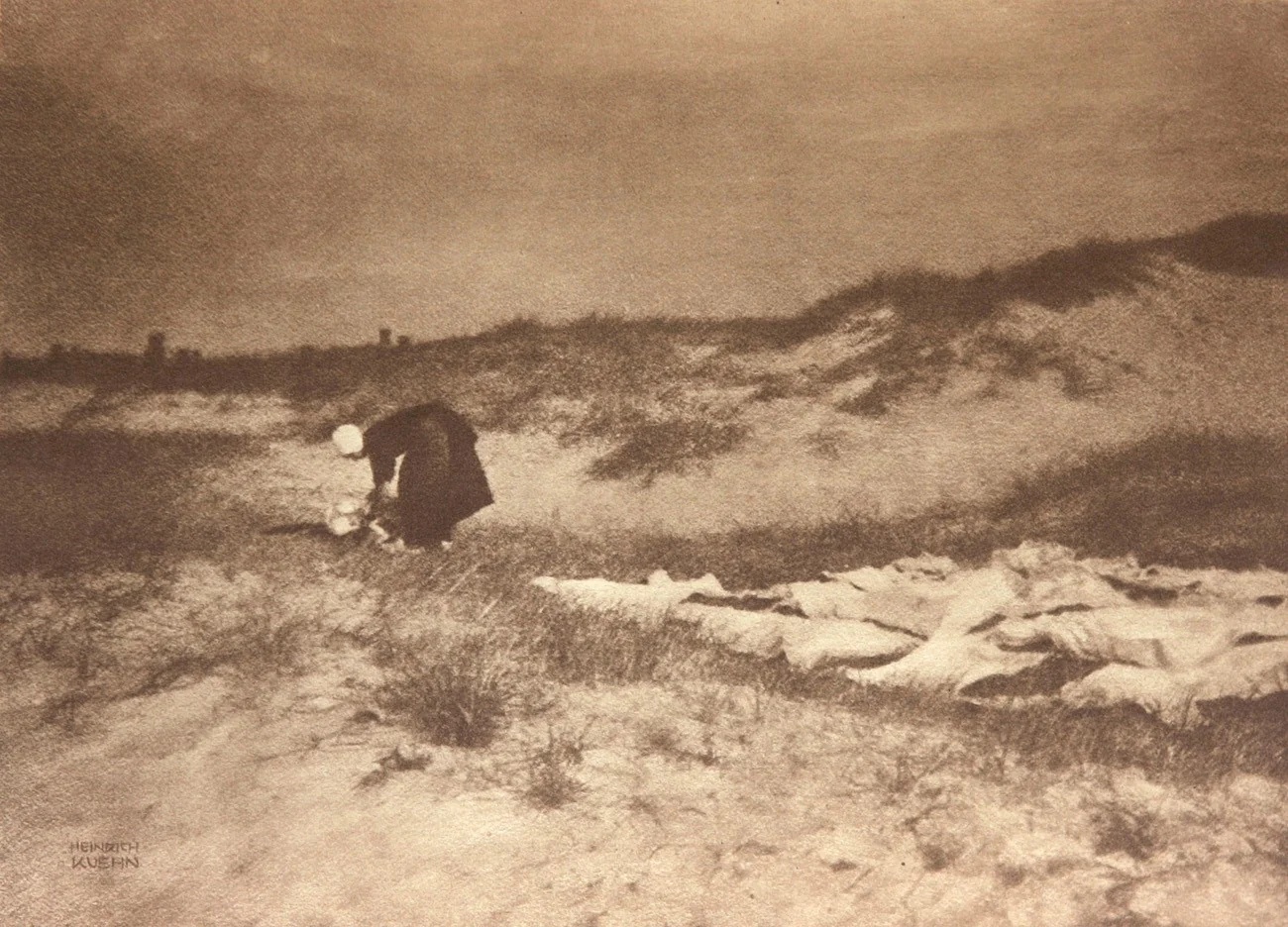
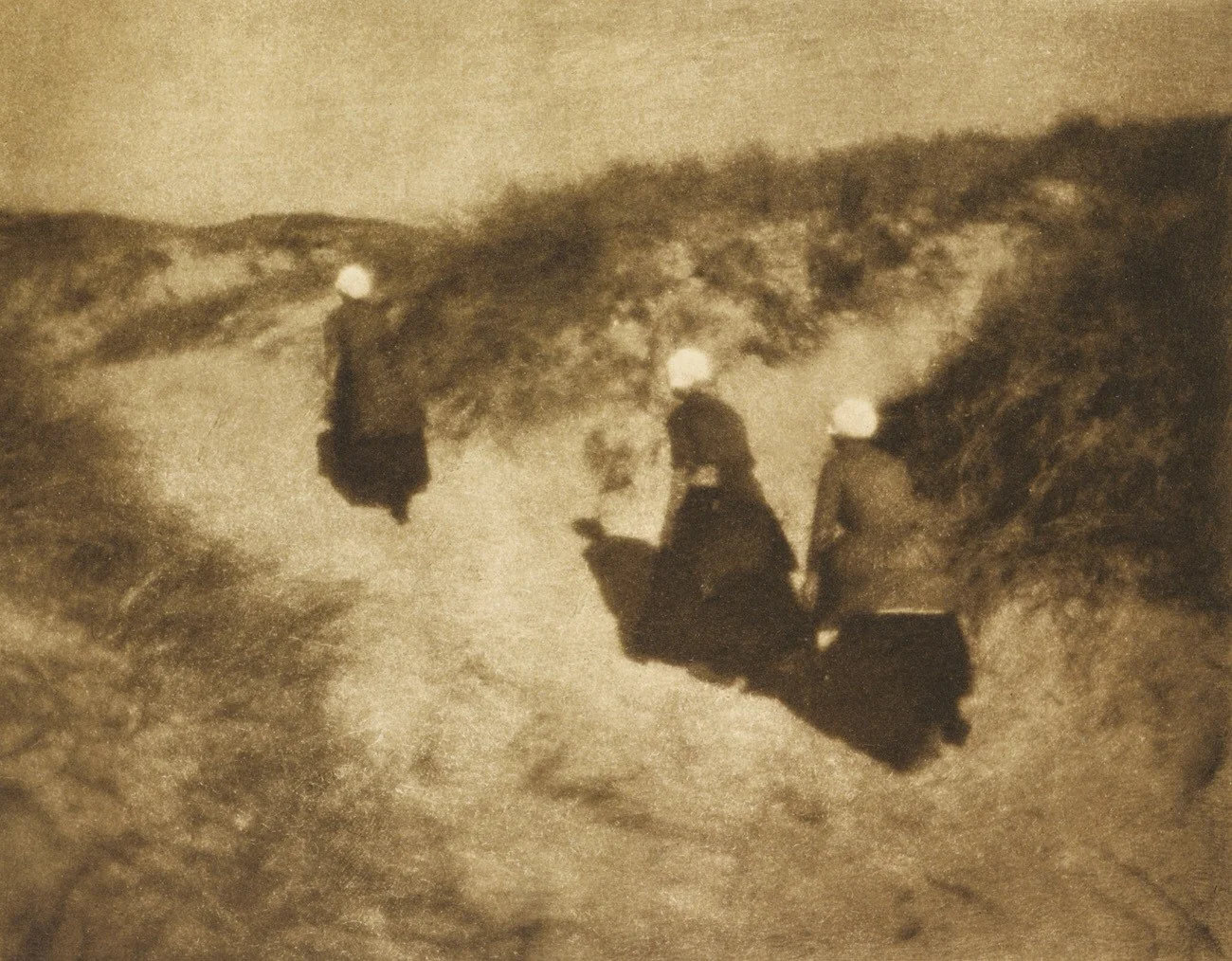
In the Dunes (In der Düne) — Heinrich Kühn

c. 1900

In the Dunes (In der Düne)

Pictorialist photographic print

Commission a print after Heinrich Kühn

Maison Picturale produces on commission contemporary prints after works by Heinrich Kühn that have entered the public domain. Hand-printed by master printers Tristan Sidem and Raphaël Lebas de Lacour on 640 gsm cotton paper, signed and numbered in limited edition, with a certificate of authenticity explicitly mentioning the "after" nature of the reinterpretation.
Start a commission