Gertrude Käsebier
Library

1852-1934 · American

Gertrude Käsebier

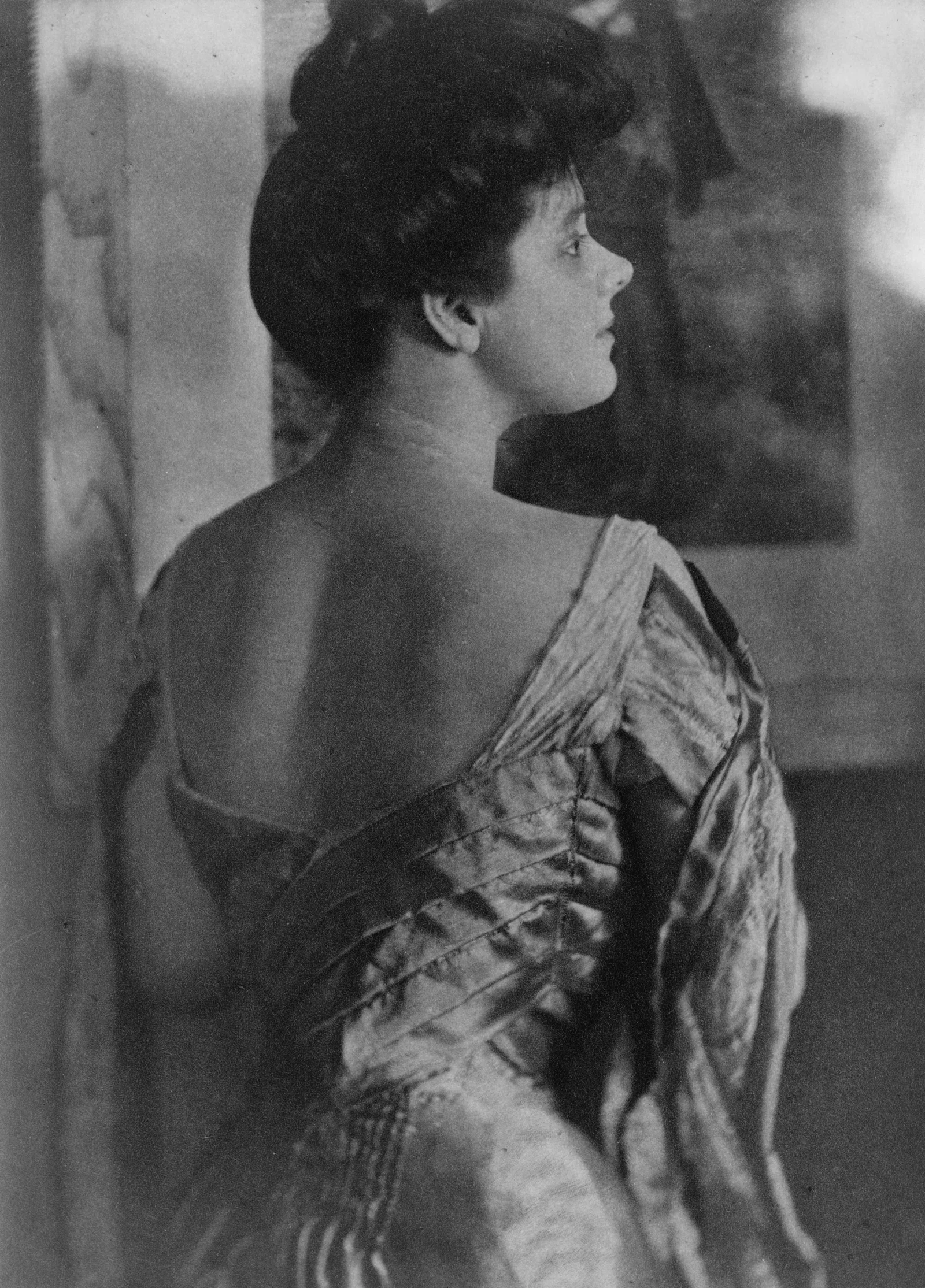
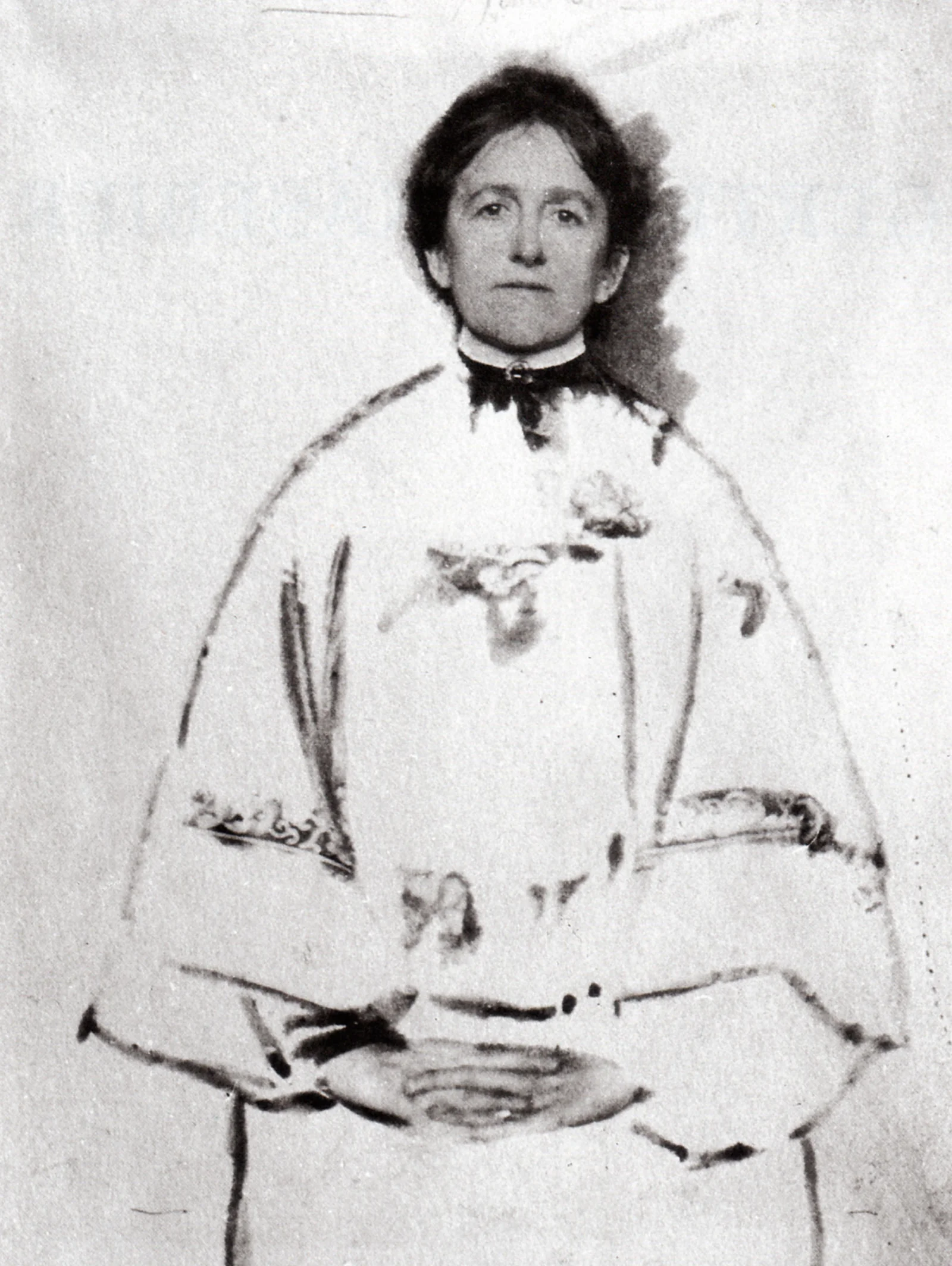
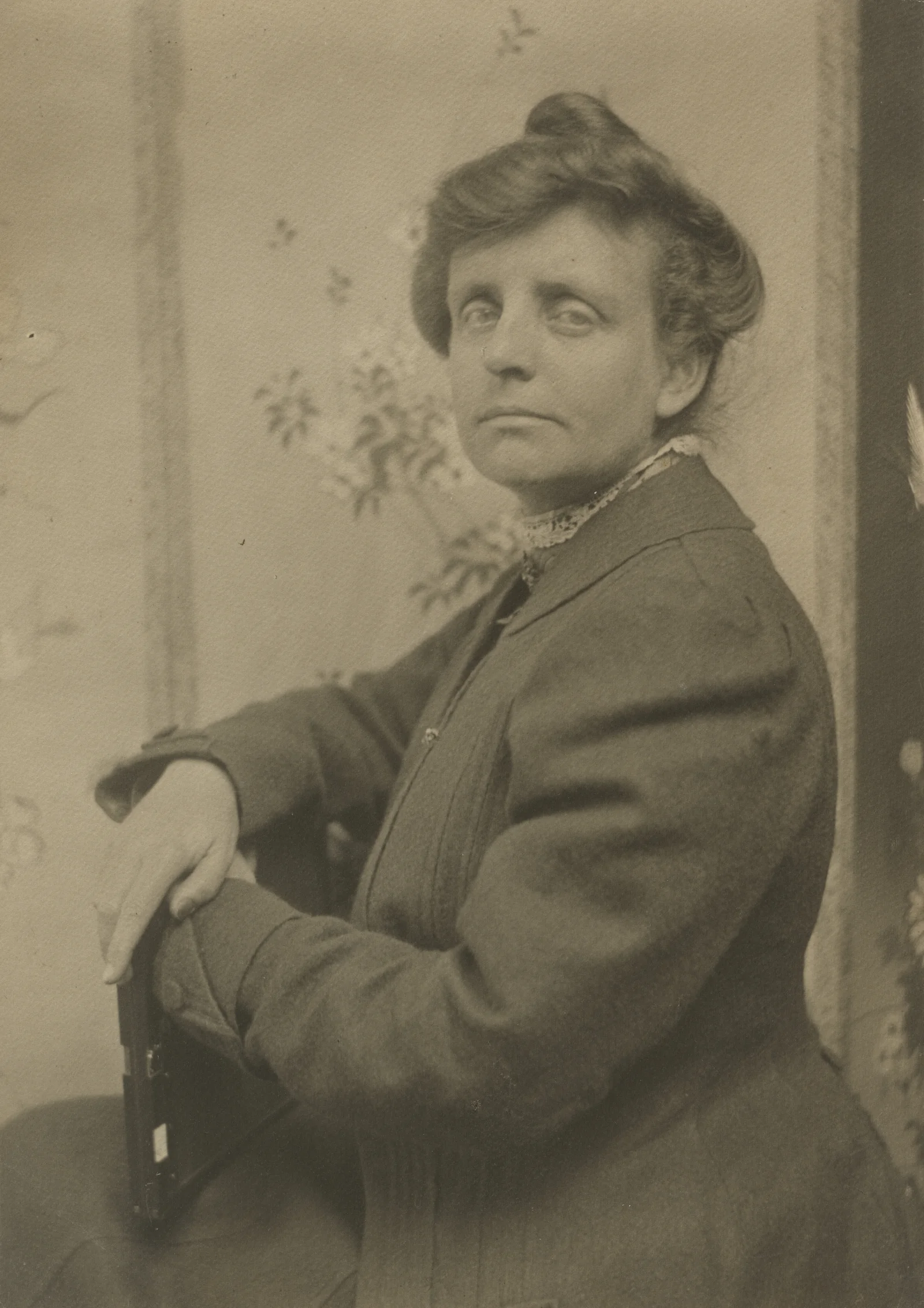
Gertrude Käsebier (1852-1934) is the American pictorialist whose maternal portraits — The Manger, Blessed Art Thou Among Women — became Photo-Secession icons. A founding member of Stieglitz's circle and later co-founder of the Pictorial Photographers of America, she elevated commercial portraiture to fine art.

Public domain since 2005 · CPI L.123-1

Held at

  • Metropolitan Museum of Art
  • National Gallery of Art
  • Library of Congress
  • Smithsonian Institution
  • LACMA

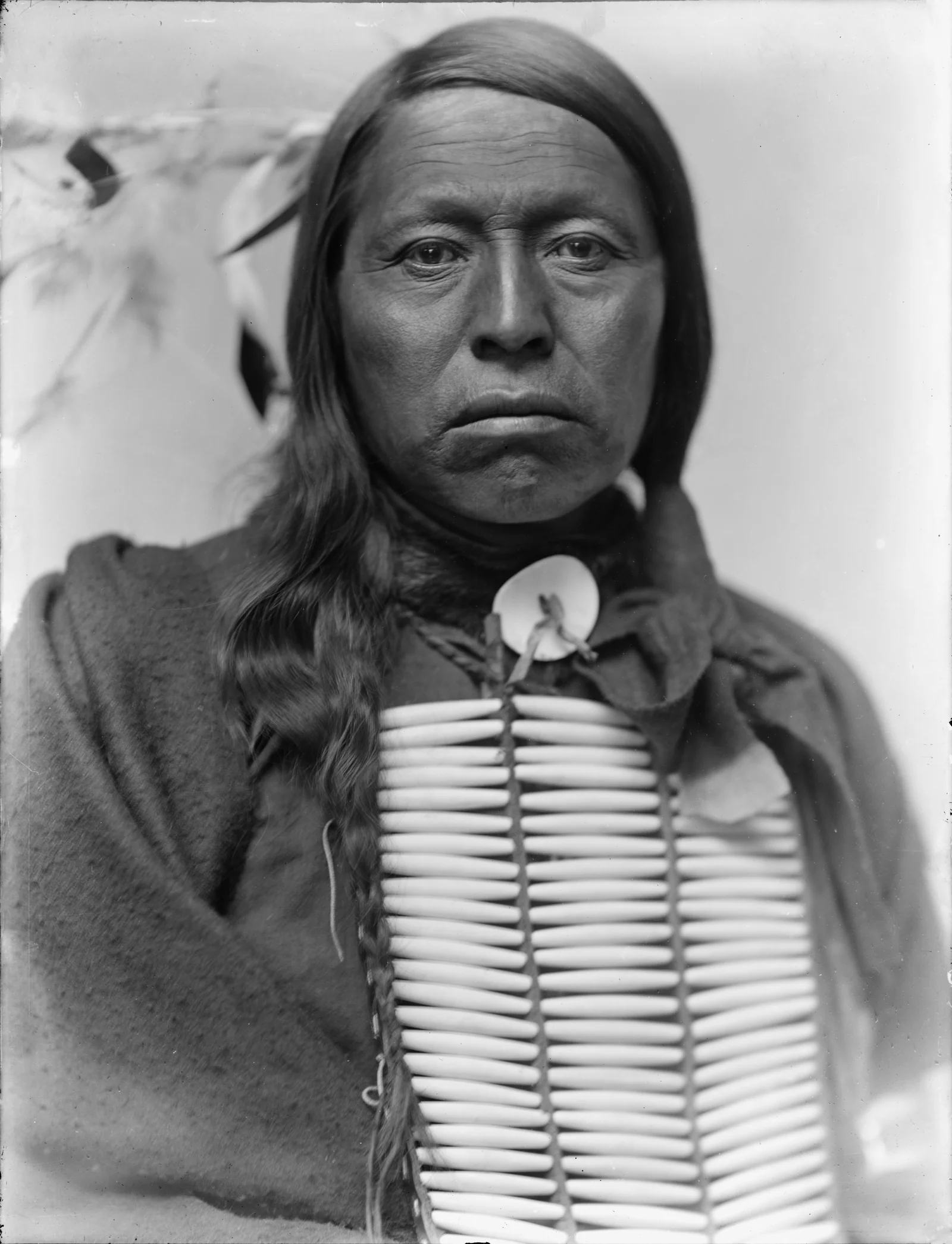
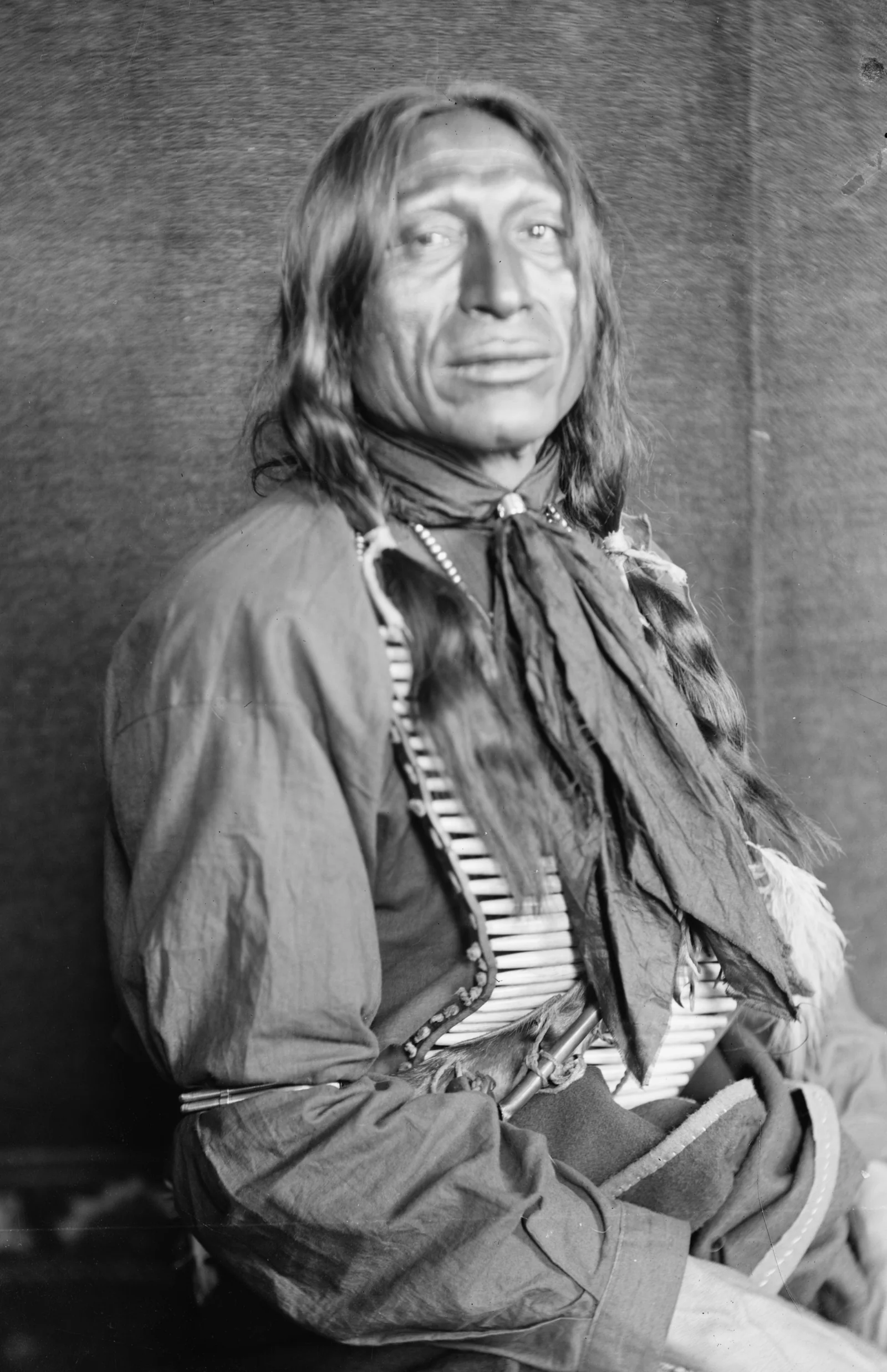
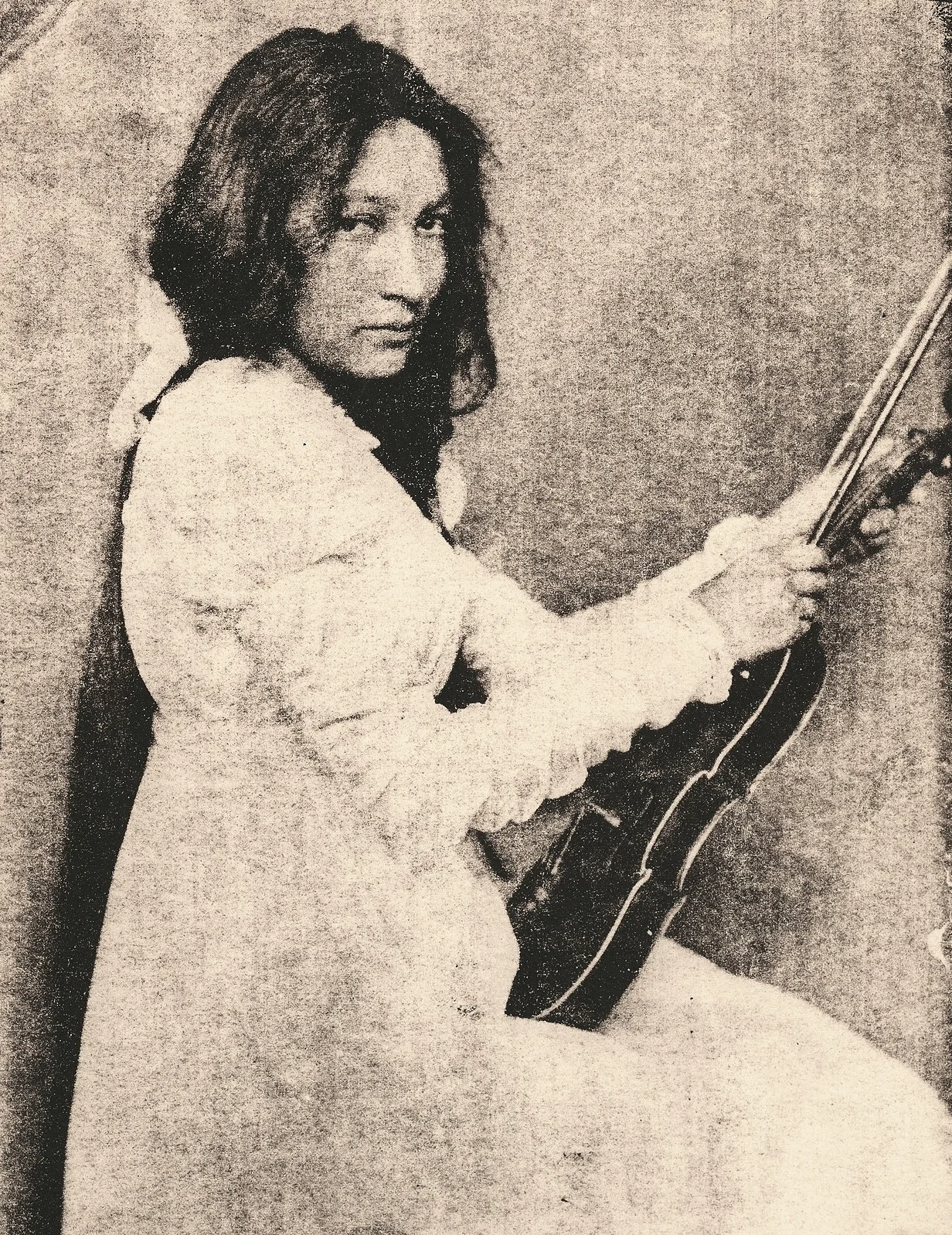
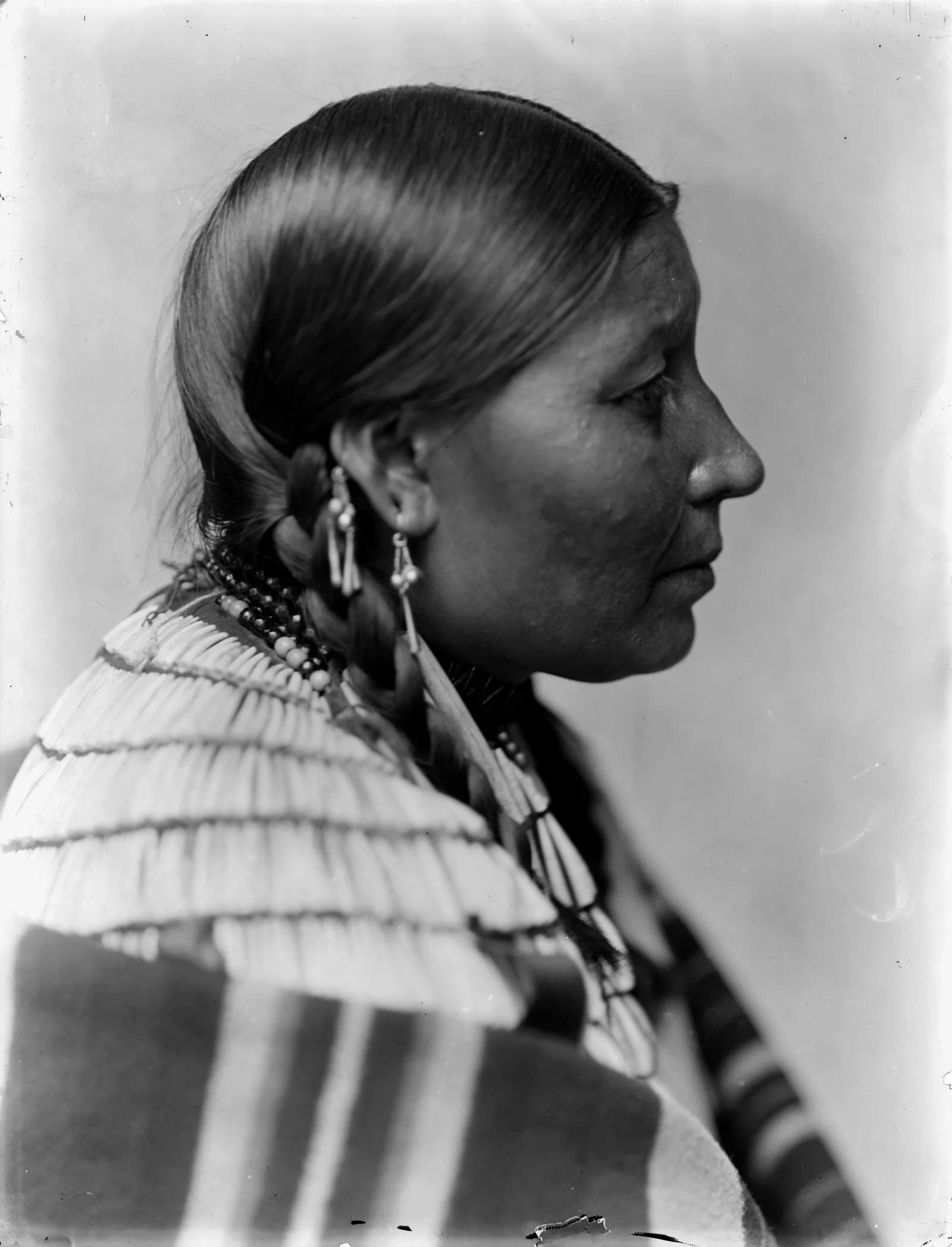
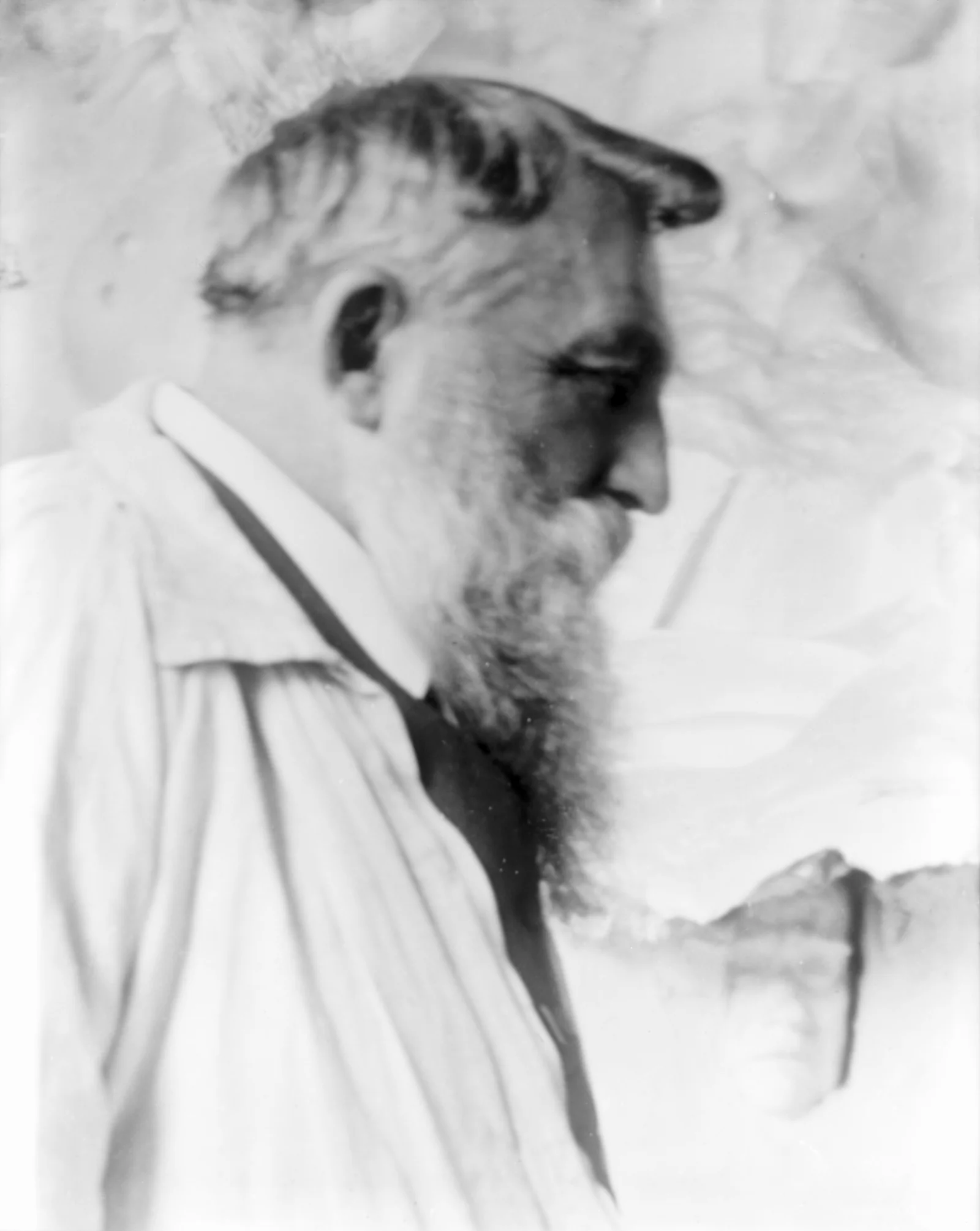
Born in Iowa, Käsebier studied painting at Pratt Institute before opening a portrait studio at 273 Fifth Avenue, New York, in 1897. Her allegorical mother-and-child compositions, drawing on Renaissance Madonna imagery and Pre-Raphaelite painting, became defining works of American pictorialism. The Manger (c. 1899) sold for $100 — then the highest price ever paid for a photograph. She was a founding member of the Photo-Secession (1902), featured in the inaugural Camera Work issue (1903), and later co-founded the Pictorial Photographers of America with Clarence H. White, Karl Struss and Edward Dickinson in 1916. Her 1898 series includes both Sioux performers from Buffalo Bill's Wild West Show (Chief Iron Tail, Chief Flying Hawk) and other Native American sitters of the period such as the Yankton Sioux writer-violinist Zitkala-Ša — pioneering empathetic Native American portraiture. Her 1905 portrait of Rodin in his Meudon studio is among the most celebrated artist portraits of the period. Held at MET, NGA, LoC, Smithsonian. Public domain since 2005. Her platinum-print practice is a model for Maison Picturale's noble-metal portraits. Today, Maison Picturale's Paris workshops invite practitioners to revisit her platinum and palladium portraiture with the non-toxic chemistries reformulated by Vision Picturale and the Procédé Transposition — preserving Käsebier's tonal range without the legacy hazards.

Essential works

A curated selection of public-domain works by Gertrude Käsebier, reinterpretable as contemporary prints by Maison Picturale's master printers. Each artwork page details the original process and its atelier equivalent.

Print after — systematic mention on the certificate of authenticity.

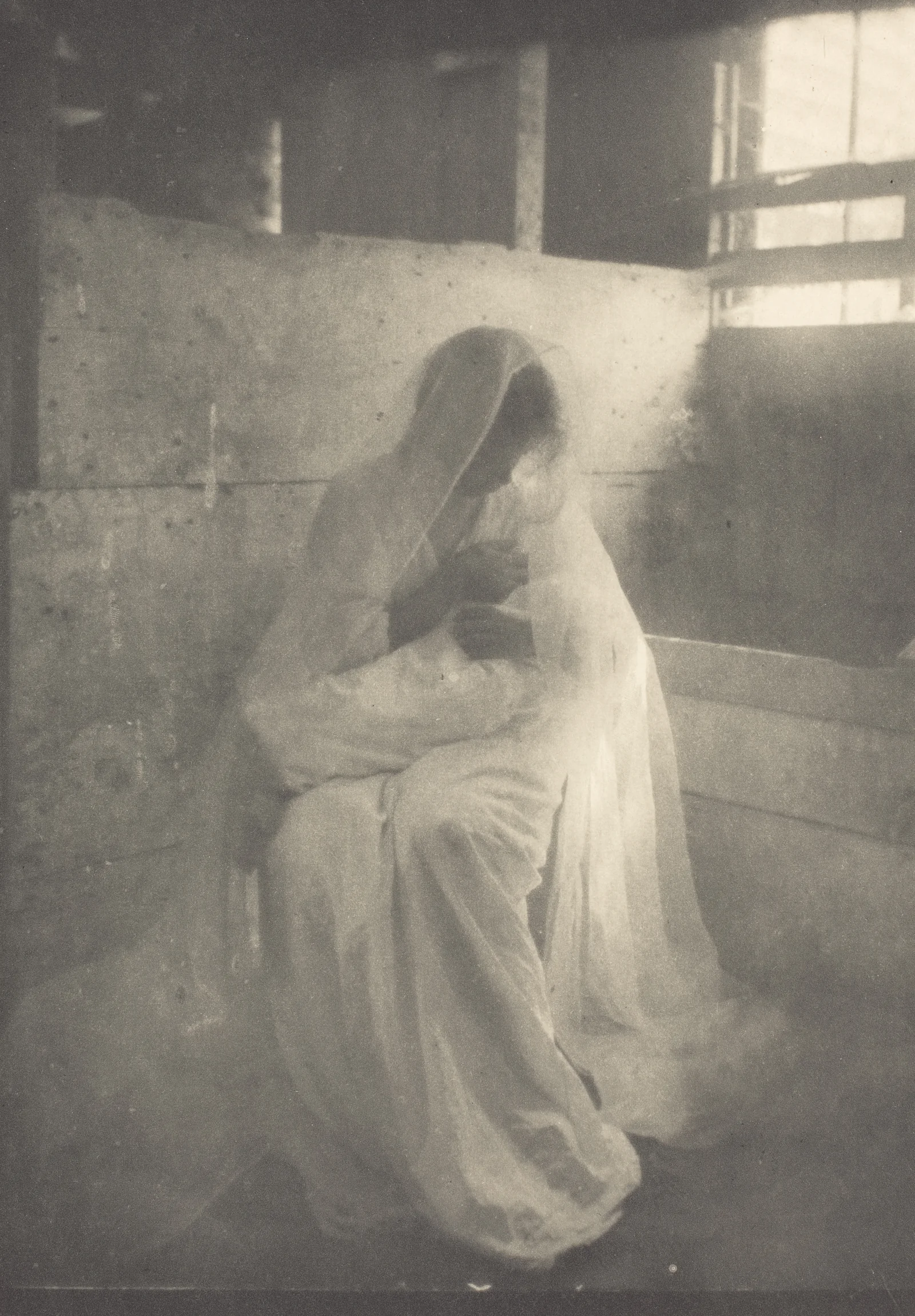
The Manger (Ideal Motherhood) — Gertrude Käsebier

c. 1899 (platinum print original; photogravure diffusion c. 1900 per NGA) · Platinum print

The Manger (Ideal Motherhood)

Käsebier's most celebrated work, an intimate mother-and-child composition in white robes that became a Photo-Secession icon and one of the highest-priced photographs of its era. First exhibited as a platinum print in 1899 — when a single print sold for $100, then the highest price ever paid for a photograph — and widely diffused in photogravure by Stieglitz c. 1900 (per NGA).

Original held at : National Gallery of Art, Washington · Metropolitan Museum of Art

Reference file source : National Gallery of Art / Wikimedia Commons (Public Domain)
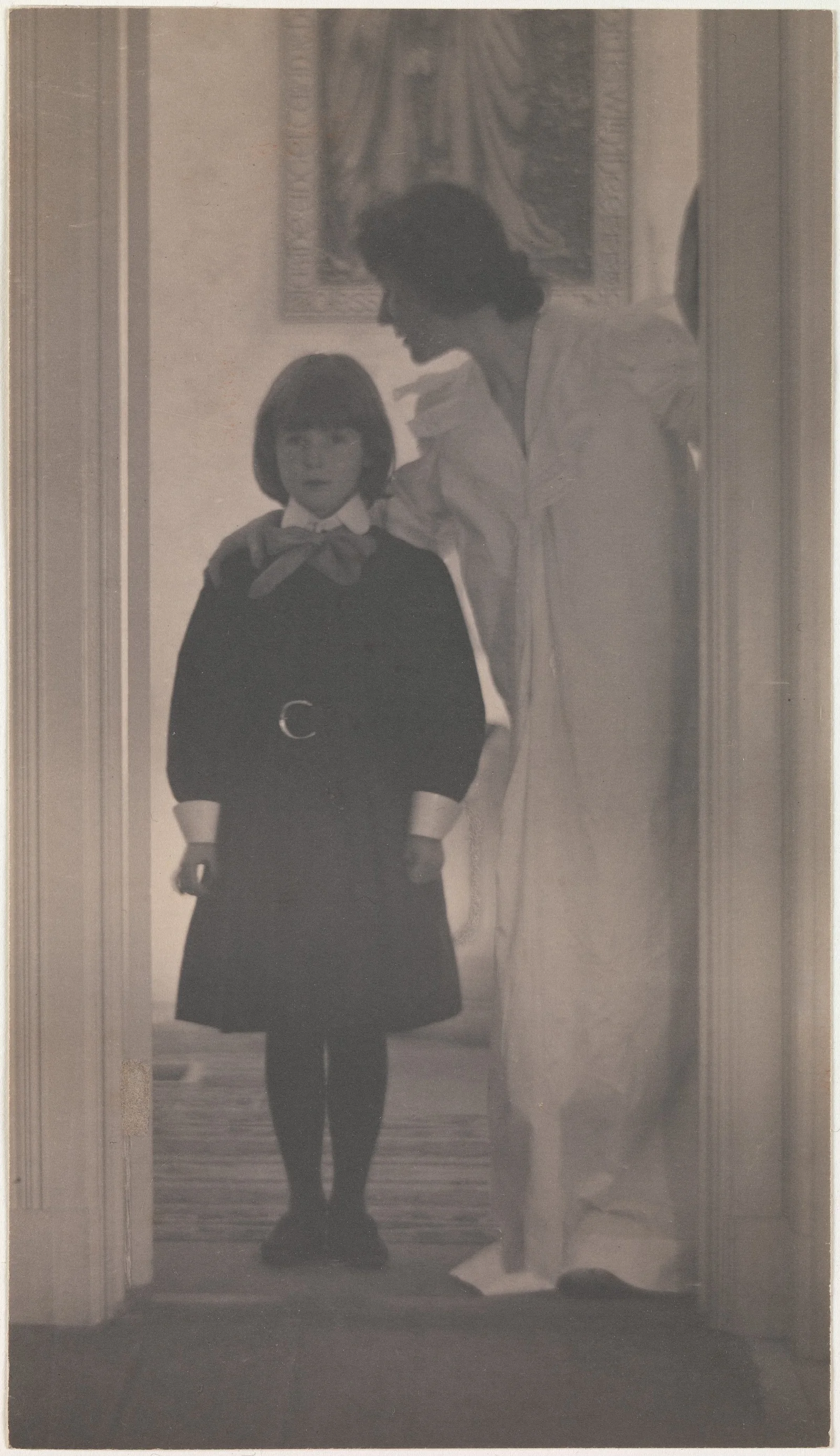
Adoration — Gertrude Käsebier

c.1898 · Platinum print

Adoration

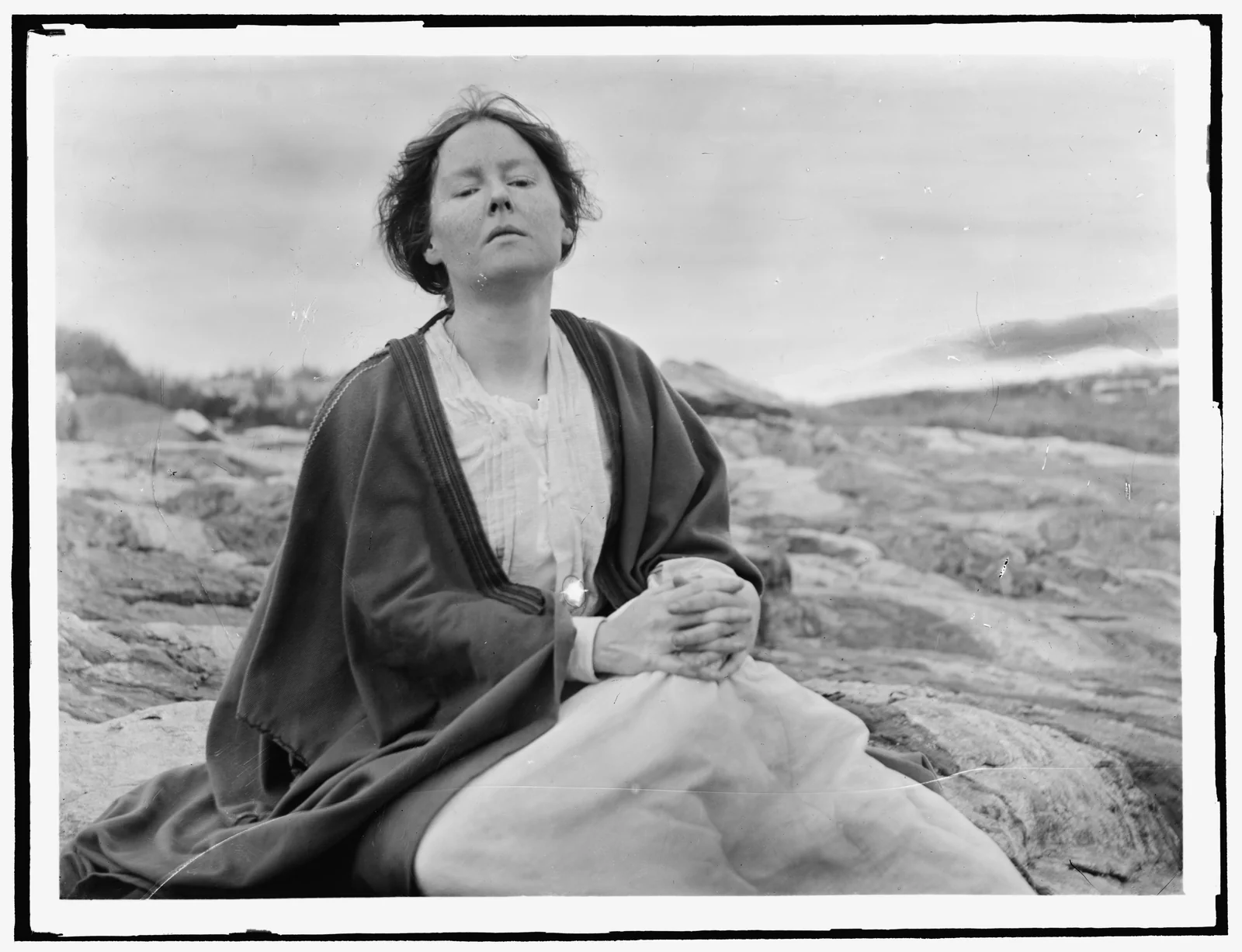
Adoration (c. 1898) is one of Gertrude Käsebier's most explicit borrowings from Christian iconography: an allegorical platinum print posed by the models May Holly and Hortense in her studio at 273 Fifth Avenue, New York, in which a kneeling figure venerates a luminous Madonna-like presence. The composition transposes the Marian visual grammar of Renaissance painters — Fra Angelico, Botticelli — into the modern photographic studio, using long exposures, gauze diffusion and platinum's broad mid-tone scale to dissolve the silhouettes into a single contemplative field. Made the year before The Manger (1899), Adoration belongs to Käsebier's first major cycle of maternal and devotional allegories, which would define American pictorialism and earn her a founding role in the Photo-Secession in 1902. The print is held by the Library of Congress as part of the Käsebier-Turner archive and is among the works that established her studio as a destination for collectors of pictorialist photography. Today, Maison Picturale's Paris workshops transpose Käsebier's platinum process to the non-toxic platine-palladium chemistry reformulated by Vision Picturale, printed on 640 g/m² cotton paper. The Procédé Transposition preserves the long tonal range, the deep blacks and the cool neutral whites that define Adoration, while removing the lead and chromium hazards of the original 1898 formulation. Practitioners study the image as a model of low-key allegorical lighting in pictorialism, of religious iconography reframed through photography, and of the technical demands — exposure, development, paper sizing — required to render velvet shadows without losing the highlight diffusion that gives the piece its devotional quality. The work prefigures Käsebier's later Madonna-and-child cycle.

Original held at : Library of Congress

Reference file source : Library of Congress / Wikimedia Commons (Public Domain)
Happy Days — Gertrude Käsebier

c.1903 · Platinum print

Happy Days

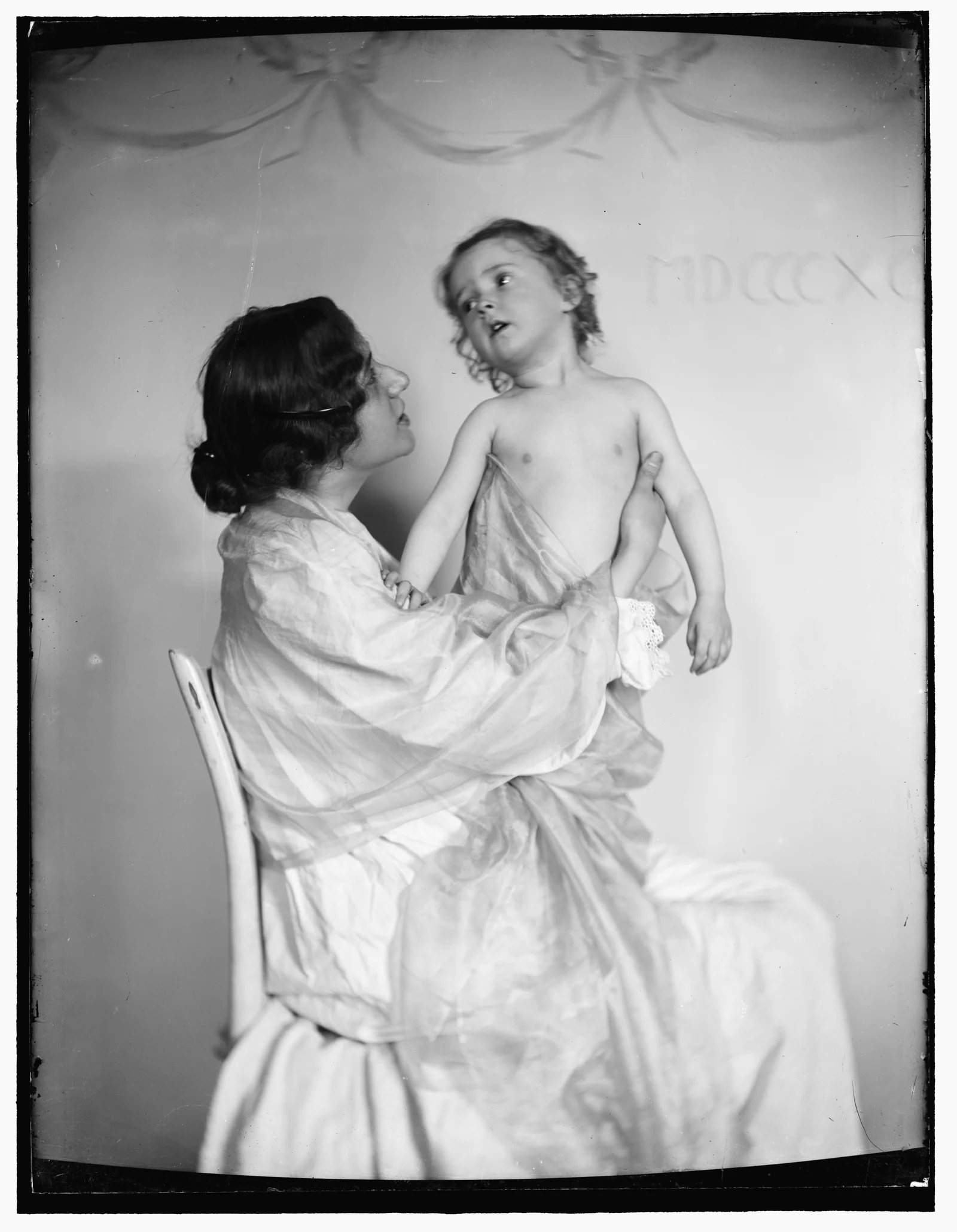
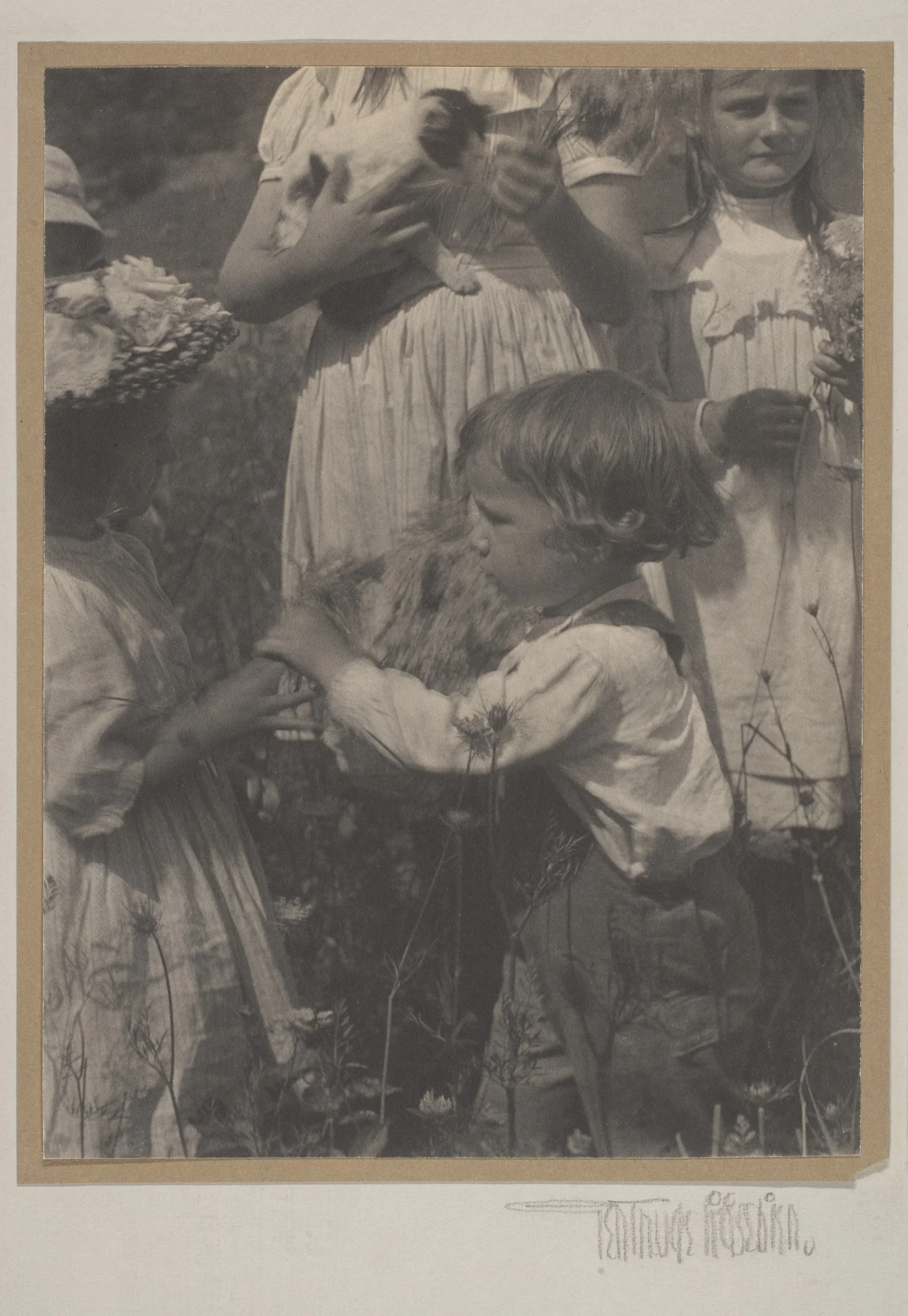
Happy Days (c. 1903) is Gertrude Käsebier's platinum-print portrait of her grandson Charles O'Malley, then about three years old, and one of the canonical pictorialist treatments of childhood in American photography. The image was made in the soft north light of Käsebier's New York studio at 273 Fifth Avenue, exploiting the long mid-tone range of the platinum process to render the child's face with luminous skin, diffused contours and a sense of suspended, interior joy. The composition is deliberately quiet: a single sitter against an unmodelled ground, no narrative props, the focus carried entirely by gaze, lighting and the photographer's grandmotherly intimacy with her subject. Stieglitz had selected six of Käsebier's prints for the inaugural issue of Camera Work in January 1903, the same year as Happy Days, and works from this period now reside in the Alfred Stieglitz Collection at the Metropolitan Museum of Art, where Happy Days is held. The print exemplifies the way Käsebier turned commercial portraiture — her livelihood from 1897 onward — into a vehicle for fine-art pictorialism, anticipating the children's portraits of Clarence H. White and the family photographs of later American modernists. At Maison Picturale, Happy Days is studied as a benchmark for portraying childhood in noble metals: the platinum and palladium transposition reformulated by Vision Picturale reproduces the same long-scale tonality and skin rendering on cotton paper 640 g/m², without the toxic chromium of period gum bichromate or the lead hazards of nineteenth-century platinum chemistry. The Procédé Transposition lets contemporary practitioners study Käsebier's pictorialist treatment of light, focus and intimacy as a living craft, rather than a museum artefact.

Original held at : Metropolitan Museum of Art

Reference file source : MET Open Access (CC0) / Wikimedia Commons

When the Sands are Running Low — Gertrude Käsebier

c.1902 · Platinum print

When the Sands are Running Low

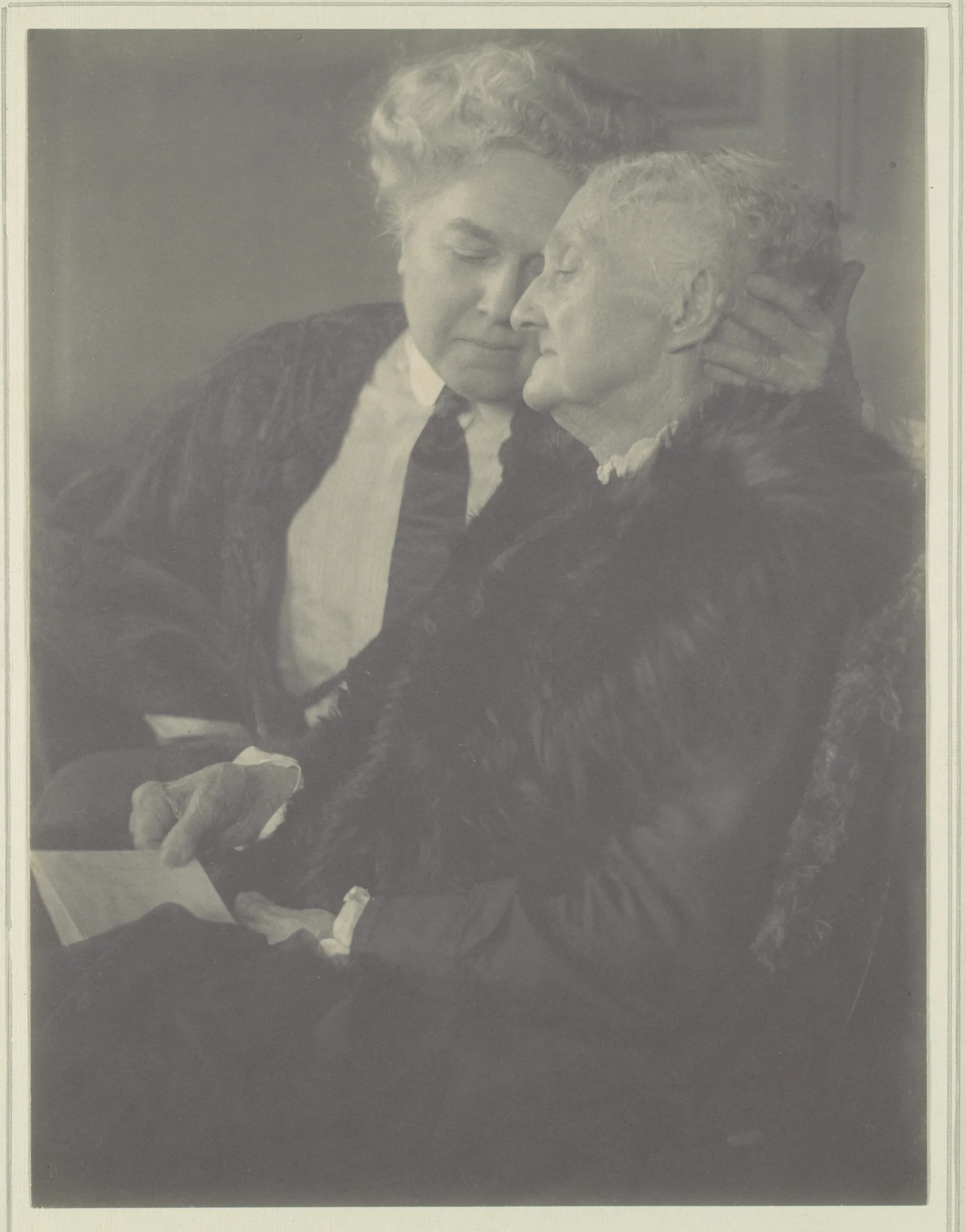
When the Sands are Running Low (c. 1902) is Gertrude Käsebier's most refined platinum-print allegory of mortality: an elderly female figure draped in dark robes, posed against a softly diffused ground, contemplating the inexorable passage of time as marked by an hourglass. The title — borrowed from Charles Carroll Sawyer's 1868 Civil War parlour song — frames the image as a meditation on aging and finitude rather than a portrait of an individual sitter. Käsebier exploits the full mid-tone range of the platinum process to keep the figure embedded in atmosphere rather than carved out by contrast, a Symbolist treatment of the subject that aligns her with Eugène Carrière and the European fin-de-siècle painters she admired during her European study years in the 1880s. The work was exhibited in the pictorialist circuit of the early 1900s and entered the Alfred Stieglitz Collection at the Metropolitan Museum of Art, where it remains today. Made the year of the founding of the Photo-Secession (1902), When the Sands are Running Low marks the moment Käsebier's narrative pictorialism turned from maternal joy (The Manger) toward grief and mortality, prefiguring The Heritage of Motherhood (1904). At Maison Picturale, the print is studied as a reference for low-key, atmospheric platinum portraiture and as a case study in Symbolist photographic composition. The Procédé Transposition transposes Käsebier's platinum chemistry to non-toxic platine-palladium reformulated by Vision Picturale, on cotton paper 640 g/m², preserving the long tonal scale and cool neutral blacks that give the image its meditative weight, without the lead and acidic-iron hazards of period workflows.

Original held at : Metropolitan Museum of Art

Reference file source : MET Open Access (CC0) / Wikimedia Commons

Landscape, Rodin's Garden, Meudon, France — Gertrude Käsebier

1905 · Platinum print

Landscape, Rodin's Garden, Meudon, France

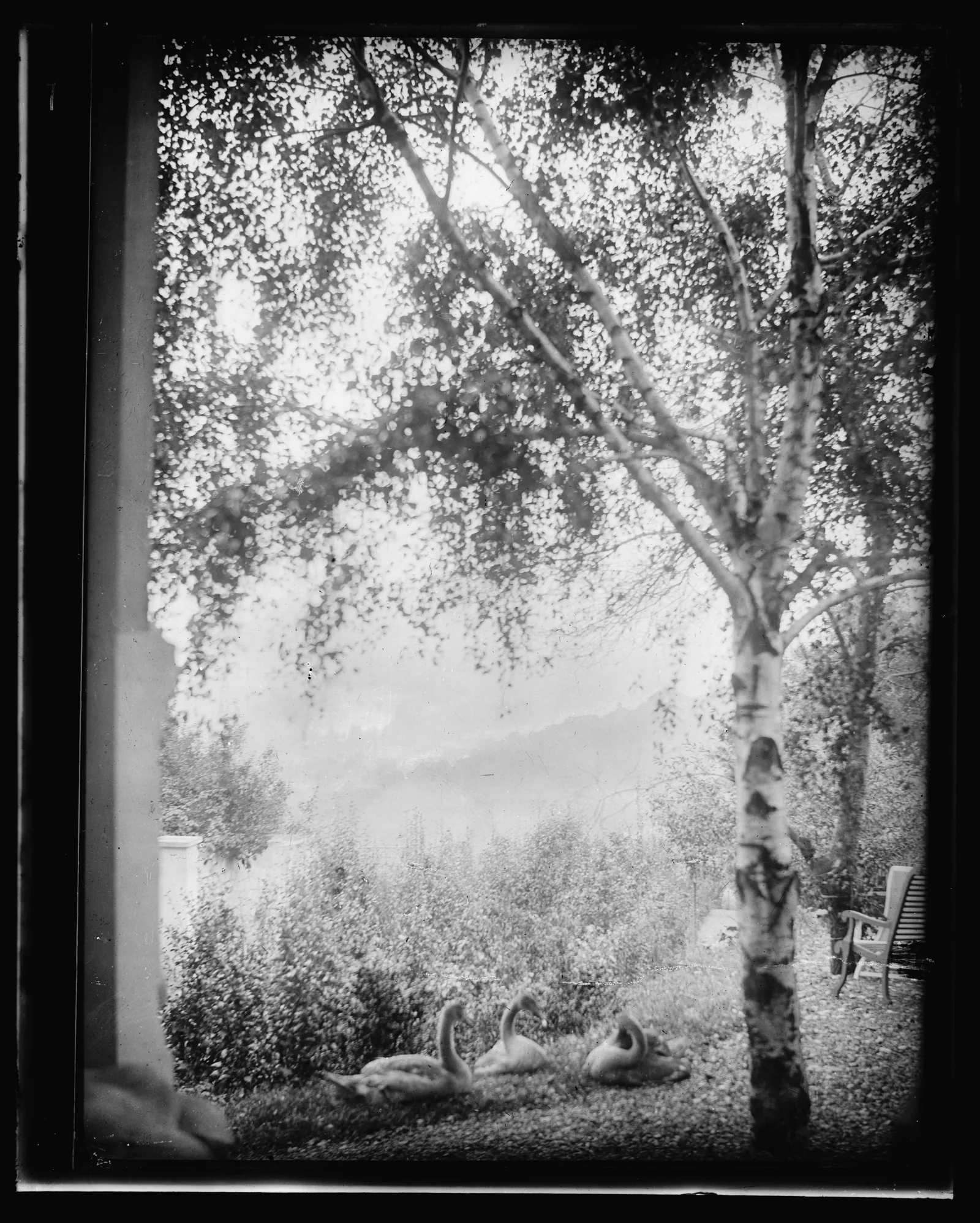
Landscape, Rodin's Garden, Meudon, France (1905) is an atmospheric platinum print made by Gertrude Käsebier during her European trip of that year, on the same Meudon visit at which she photographed Auguste Rodin in his studio at the Villa des Brillants. While the Rodin portrait remains the more famous outcome of the visit, the garden landscape reveals an entirely different facet of her practice: a painterly treatment of natural space, with trees and sculptures dissolved into a soft tonal continuum reminiscent of James McNeill Whistler and the Tonalist painters Käsebier admired. The print exploits the long mid-tone scale of the platinum process to render foliage, statuary and mist without sharp edges — a deliberate rejection of the documentary aesthetic and an affirmation of the pictorialist credo that photography could be a fine art. The work is held in the Library of Congress as part of the Käsebier-Turner archive (LCCN 2006690446) and is a rare landscape within an output dominated by studio portraiture and figural allegory. It was made the year after Käsebier's grief-image The Heritage of Motherhood (1904) and three years after her co-founding of the Photo-Secession (1902), at the peak of her international reputation. At Maison Picturale, the print is studied as a reference for atmospheric landscape in noble metals, a register often eclipsed in Käsebier's reception by her maternal portraits and Native American series. The Procédé Transposition transposes the platinum process to the non-toxic platine-palladium chemistry reformulated by Vision Picturale on cotton paper 640 g/m², preserving the tonal continuity and silvery mid-tones essential to the image's painterly quality.

Original held at : Library of Congress

Reference file source : Library of Congress / Wikimedia Commons (Public Domain)
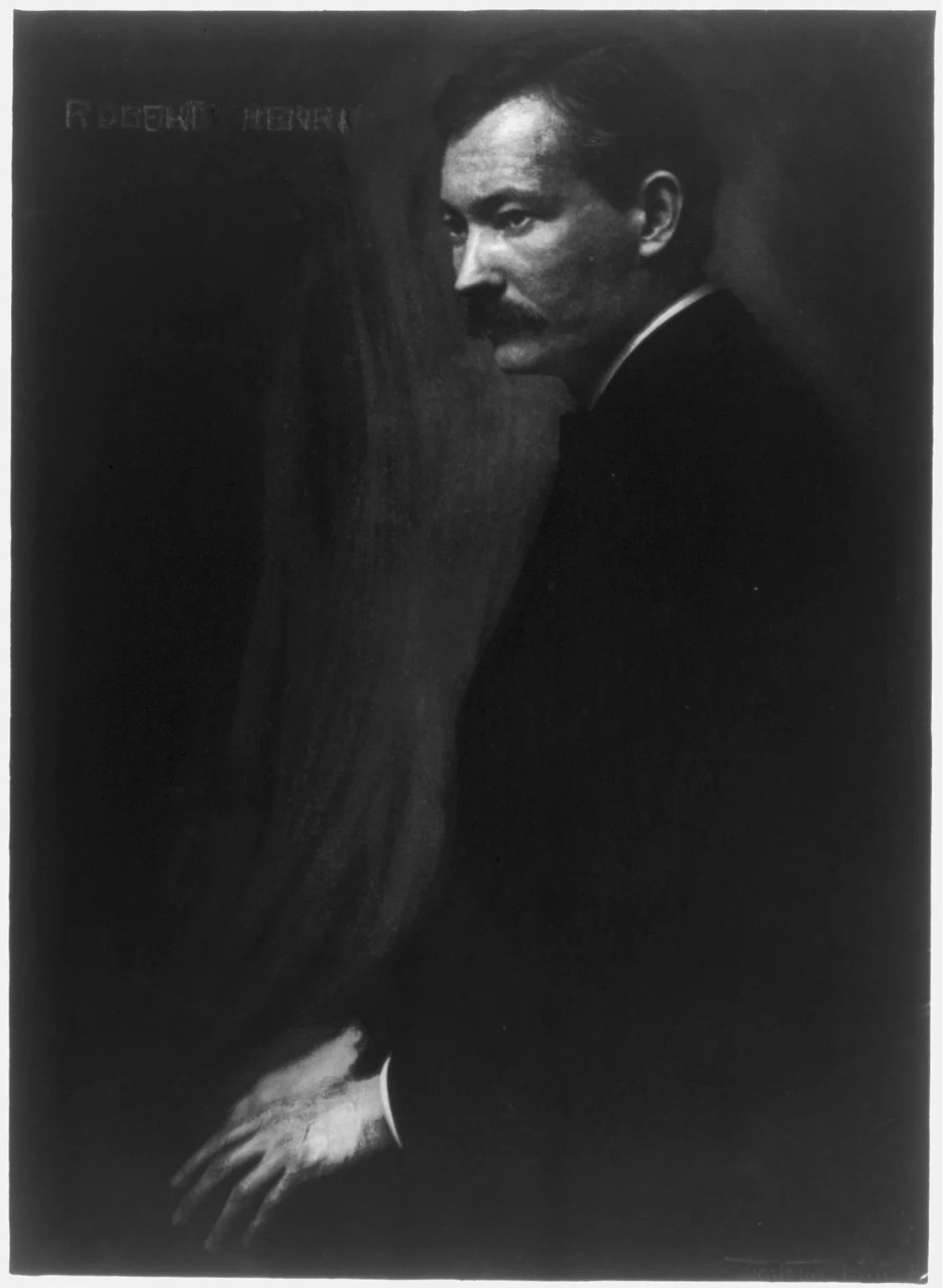
Portrait of Robert Henri — Gertrude Käsebier

c.1900 · Platinum print

Portrait of Robert Henri

Portrait of Robert Henri (c. 1900) is Gertrude Käsebier's platinum-print portrait of the American painter and teacher Robert Henri (1865-1929), founder of the Ashcan School and theorist of The Art Spirit (1923). The sitting took place in Käsebier's New York studio at 273 Fifth Avenue, where Henri — then emerging as a leader of the New York realist movement — was photographed with a directness characteristic of Käsebier's portraiture of fellow artists: dark coat, low-key lighting, the gaze turned slightly off-axis to suggest interior thought rather than performance. The print exploits the platinum process's long mid-tone scale and matt finish to render the sitter's face as a sculpted volume rather than a hard graphic mask, a treatment Käsebier applied across her artist-portrait gallery — Auguste Rodin (1905), Alfred Stieglitz, Clarence H. White, F. Holland Day, Frederick H. Evans. The print is held in the Library of Congress and circulates as one of the canonical photographic portraits of the Ashcan circle, often reproduced alongside Käsebier's portrait of John Sloan. It illustrates the social network at the heart of New York pictorialism: Henri's realist painting and the pictorialist photography of Käsebier, though aesthetically distinct, shared a sitter pool, a publication ecosystem (Camera Work, The Craftsman) and a commitment to fine-art status for their medium. At Maison Picturale, the print is studied as a reference for psychological artist-portraiture in noble metals and as a primary document of turn-of-the-century New York art networks. The Procédé Transposition transposes Käsebier's platinum process to platine-palladium reformulated by Vision Picturale on cotton paper 640 g/m², without lead or chromium.

Original held at : Library of Congress

Reference file source : Library of Congress / Wikimedia Commons (Public Domain)
Portrait of Clarence H. White — Gertrude Käsebier

c.1908 · Platinum print

Portrait of Clarence H. White

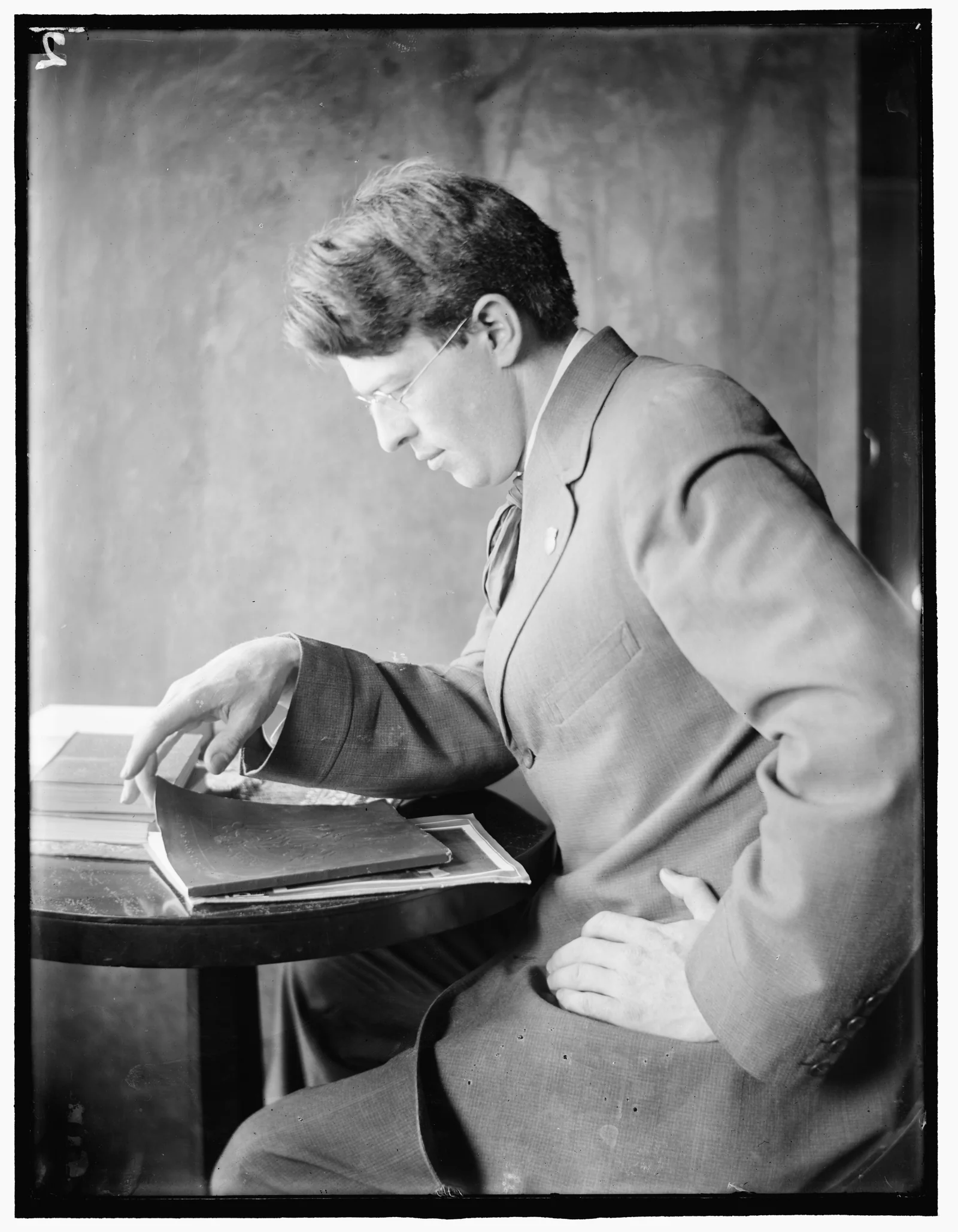
Portrait of Clarence H. White (c. 1908) is Gertrude Käsebier's platinum-print portrait of her fellow pictorialist and longtime collaborator Clarence H. White (1871-1925), made at a turning point in their shared career: White had moved from Newark, Ohio to New York in 1906 and was about to begin teaching at Columbia Teachers College, while both photographers were navigating the slow disintegration of the Photo-Secession under Stieglitz. The sitting captures White in his characteristic restraint — small frame, soft eyes, a stillness of bearing — rendered in the long mid-tone scale of the platinum process and the matt, paper-fibre finish that Käsebier preferred for portraits of artists. The print belongs to the Library of Congress (Käsebier-Turner archive) and is a key document of the friendship that would, in 1916, lead them — together with Karl Struss and Edward R. Dickinson — to co-found the Pictorial Photographers of America after the dissolution of Stieglitz's Photo-Secession. Käsebier and White had been Photo-Secession founders together in 1902 and exhibited side by side in Camera Work; the 1908 portrait visually anchors their alliance against Stieglitz's growing modernist turn toward Cubism and Abstract Expressionism. At Maison Picturale, the print is studied as a reference for pictorialist artist-portraiture and as a node in the network of relationships that structured American pictorialism. The Procédé Transposition transposes Käsebier's platinum process to non-toxic platine-palladium reformulated by Vision Picturale on cotton paper 640 g/m², preserving the long tonal scale, the soft modelling of skin and the silvery neutrality of period platinum without lead or chromium.

Original held at : Library of Congress

Reference file source : Library of Congress / Wikimedia Commons (Public Domain)
Portrait of Frederick H. Evans — Gertrude Käsebier

c.1900 · Platinum print

Portrait of Frederick H. Evans

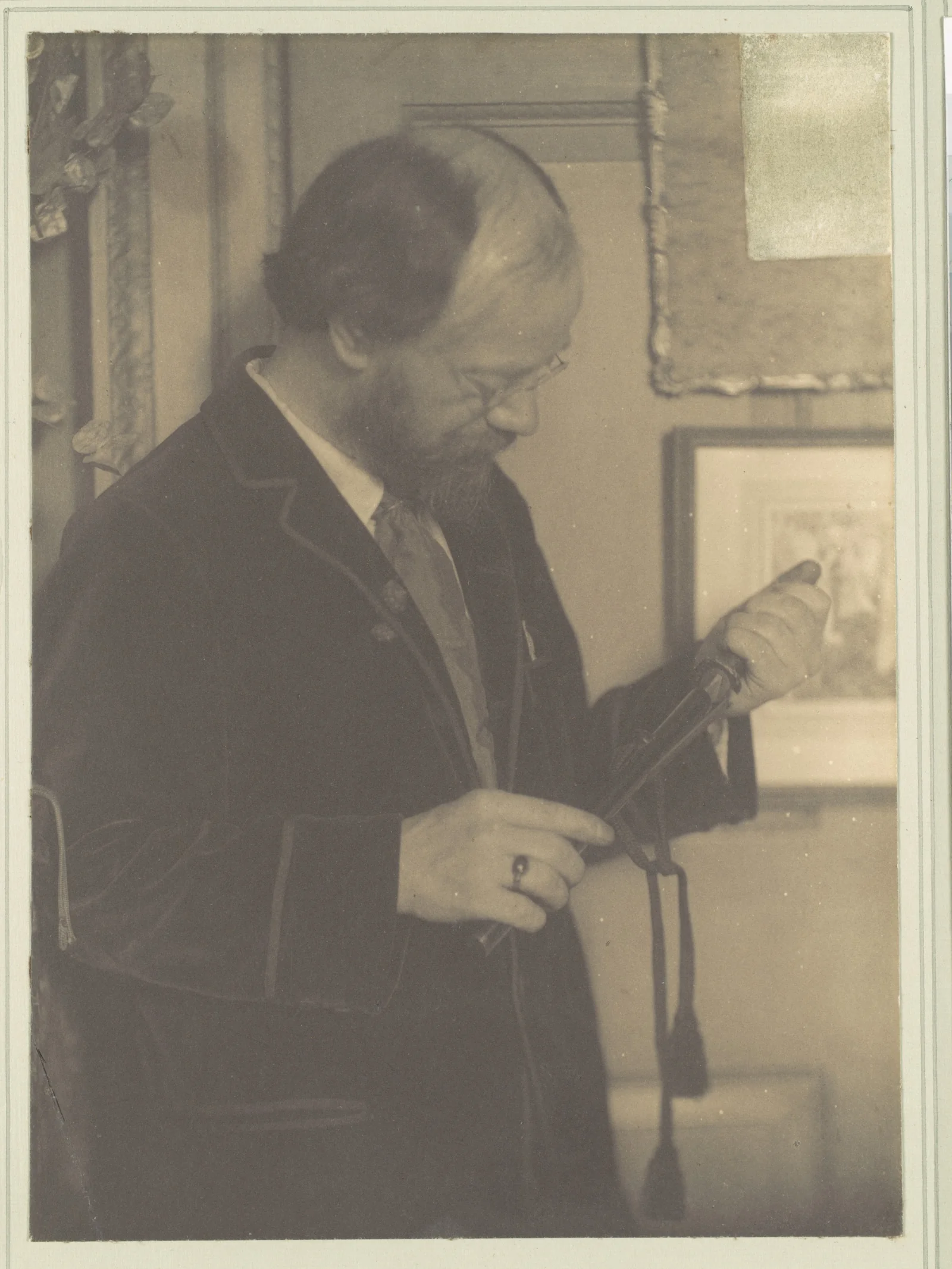
Portrait of Frederick H. Evans (c. 1900) is Gertrude Käsebier's platinum-print portrait of the British architectural photographer Frederick H. Evans (1853-1943), made during Evans's transatlantic engagement with the American pictorialist circle. Evans, then operating his bookshop on Queen Street in London and developing the platinum-print studies of English cathedrals — Wells, Lincoln, Westminster — that would become canonical works of architectural photography, was a fellow master of the platinum process and a leading figure of the Linked Ring brotherhood. Käsebier's portrait situates him in the international network of platinum-print practitioners: she had close ties to the Linked Ring, exhibited in its salons, and shared with Evans both technique and aesthetic conviction. The platinum process, with its long mid-tone scale, matt surface and absence of glossy reflections, is rendered here as both subject and method — a portrait of one platinum master by another. The print is held in the Alfred Stieglitz Collection at the Metropolitan Museum of Art and represents the moment when American pictorialism (Photo-Secession, 1902) and British pictorialism (Linked Ring, 1892) consolidated their transatlantic dialogue through shared sitters, publications and printing chemistries. At Maison Picturale, the print is studied as a reference for noble-metal artist-portraiture and as a document of the international platinum print network at the turn of the twentieth century. The Procédé Transposition transposes Käsebier's original platinum chemistry to non-toxic platine-palladium reformulated by Vision Picturale on cotton 640 g/m², preserving the silvery long-scale rendering for which both Käsebier and Evans were celebrated, without the lead and acidic-iron hazards of period workflows.

Original held at : Metropolitan Museum of Art

Reference file source : MET Open Access (CC0) / Wikimedia Commons

Portrait of Rita de Acosta Lydig — Gertrude Käsebier

1905 · Platinum print

Portrait of Rita de Acosta Lydig

Portrait of Rita de Acosta Lydig (1905) is Gertrude Käsebier's platinum-print portrait of the New York socialite, fashion patron and aesthete Rita de Acosta Lydig (1875-1929), one of the most photographed women of the Belle Époque and a celebrated client of the couturier Mariano Fortuny. The sitting belongs to Käsebier's society-portrait practice, which provided the commercial foundation that made her fine-art pictorialism economically viable: from her 1897 opening of the 273 Fifth Avenue studio, Käsebier's society clientele financed the experimental work — The Manger, The Heritage of Motherhood, the Sioux series of 1898 — for which she is now best known. The Lydig portrait shows Käsebier's command of glamour photography decades before the genre became codified by Edward Steichen and George Hoyningen-Huene at Condé Nast: long mid-tones, sculptural rendering of fabric, soft modelling of skin, a poise that anticipates the high-style fashion photography of the 1920s and 1930s. The print is held in the Library of Congress as part of the Käsebier-Turner archive. Made the same year as Käsebier's European trip and the Rodin Meudon series, it confirms 1905 as a peak year in her output and an inflection point in her international visibility. At Maison Picturale, the print is studied as a reference for society and fashion portraiture in noble metals and as a case study in the economics of pictorialism — the commercial portrait financing the artistic one. The Procédé Transposition transposes Käsebier's platinum process to non-toxic platine-palladium reformulated by Vision Picturale on cotton 640 g/m², preserving the silvery long scale and matt finish without lead or chromium.

Original held at : Library of Congress

Reference file source : Library of Congress / Wikimedia Commons (Public Domain)
12 of 17 works

The documented corpus

The rest of Gertrude Käsebier's public-domain corpus: plates kept in our editorial archives. Reproducible on request, without dedicated editorial study.

3 archived plates

Labor — Gertrude Käsebier

c.1900

Labor

Platinum print

Allegory — Marriage — Gertrude Käsebier

c.1900

Allegory — Marriage

Platinum print

Portrait of Frances Benjamin Johnston — Gertrude Käsebier

c.1900

Portrait of Frances Benjamin Johnston

Platinum print

Commission a print after Gertrude Käsebier

Maison Picturale produces on commission contemporary prints after works by Gertrude Käsebier that have entered the public domain. Hand-printed by master printers Tristan Sidem and Raphaël Lebas de Lacour on 640 gsm cotton paper, signed and numbered in limited edition, with a certificate of authenticity explicitly mentioning the "after" nature of the reinterpretation.

Start a commission