PAINTING WITH LIGHT
About the process
Gumoil combines the principles of watercolour gum with the use of oil paint. The image is formed by the selective adhesion of paint on an exposed gum layer, creating a unique rendering between photography and pictorial art.
History
Gumoil is a contemporary process developed in the 1990s by the American photographer Karl Koenig, who formalised his technique in Gumoil Photographic Printing, published in 1994. More recent than most alternative processes, gumoil inherits from both the gum print tradition (gum bichromate) and classical oil painting, from which it borrows its pigments.
Technically, gumoil differs radically from the gum print: ground artists' oil pigments are incorporated directly into the sensitised gum arabic before exposure. There is no hot-water development as in classic gum bichromate: the image appears through the selective adhesion of the oil pigments to the exposed areas, producing a rendering that sits on the border between printmaking and photography.
Koenig trained several generations of practitioners through the studios of the University of New Mexico and the Bostick & Sullivan workshops. The process is still practised by a small circle of printers internationally, notably in the United States, Germany and central Europe, where gumoil's thick painterly matter finds an echo in the Expressionist tradition.
Gumoil's stability is exceptional: the ASTM I lightfast artists' oil pigments used in the studio (Sennelier or Old Holland extra-fine) are the same as those used by the old masters whose works cross the centuries at the Louvre and the Rijksmuseum in Amsterdam. The process's permanence across centuries is therefore underwritten by that of oil painting itself.
Maison Picturale includes gumoil in the catalogue as a continuation of our complex pigment processes. The chemistry has been reformulated by our sister brand Vision Picturale to remove the historical dichromate, while preserving the selective adhesion effect that gives the process its identity.
At Maison Picturale
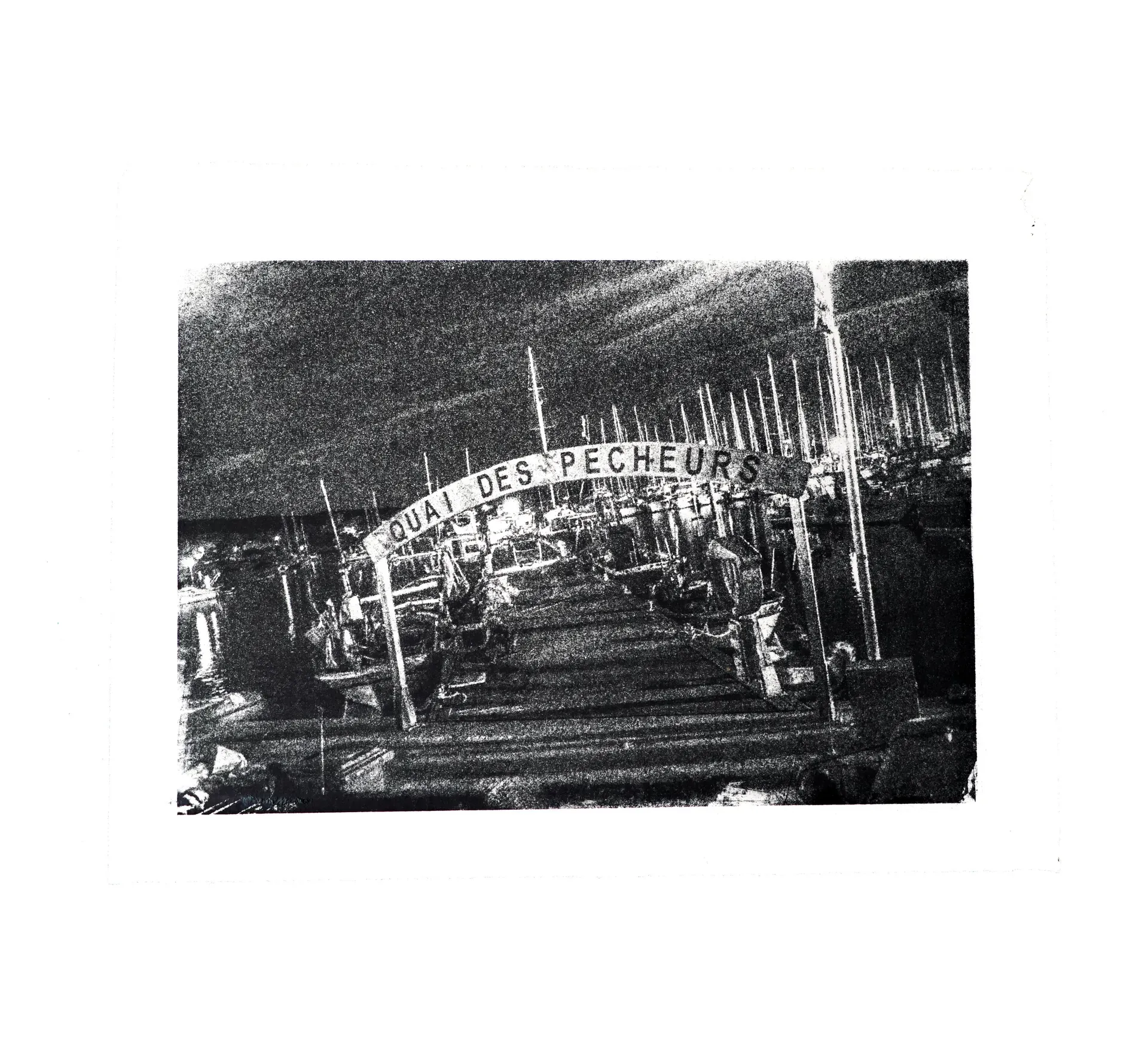
Every gumoil print made at the studio at 1 passage Dagorno is a unique piece, almost sculptural in the thickness of its artists' oil pigments. The image is not printed: it is carried by the raw pigment itself, whose thickness varies with the tonal zones and creates a subtle relief that only reveals itself fully in raking light.
Our 640 gsm 100% cotton satin watercolour paper suits gumoil particularly well: its weight supports the pigment load without distortion, and its satin surface lets the oil pigment adhere without absorbing the matter into the fibres. This conservation paper guarantees the work's stability across centuries, consistent with the recognised longevity of artists' oil pigments.
The recommended formats for gumoil are Coquille (44 × 56 cm) and Jésus (56 × 76 cm) — scales at which the pigment grain and the printer's gesture remain fully legible. Gumoil suits contrasted graphic subjects, still lifes and expressive portraits particularly well, where the painterly matter reinforces the visual argument.
For a commissioned print, you can send us your high-resolution file through the contact form. Our printers prepare a digital negative calibrated for gumoil's specific tonal curve, in discussion with you about the dominant pigment: raw sienna, ivory black, ultramarine blue or other tones from the Sennelier extra-fine range.
Example results
40 results for this process
Sizes & Pricing
Pricing on request
This process requires a personalised study based on your project.
Practise at home
Make your own Gumoil prints at home
Gumoil has no kit of its own: the process is practised with Aquaprint chemistry and oil paint.
Reproducibility
Calibrate your Gumoil
HD test chart → scan → .acv curve in 3 steps. Calibration Flow generates the exact correction for your process.
Calibrate this processFrequently asked questions
Who invented gumoil, and where are the reference prints held?
Gumoil is a contemporary process developed in the 1990s by the American artist and theorist Karl P. Koenig, who published the protocol in 1994 in Gumoil Photographic Printing (Focal Press). More recent than most alternative processes, gumoil inherits both from the gum print tradition (Alphonse Poitevin's gum bichromate, 1855) and from classical oil painting, from which it borrows its pigments. Original prints by Karl Koenig have since entered the collections of the Rijksmuseum in Amsterdam and of several European print rooms. Gumoil's visual signature — thick oil matter, selective pigment adhesion, a border between photography, printmaking and painting — sets the process radically apart from any other photographic technique. It is one of the very few contemporary alternative processes with a documented presence in museum collections.
How does Maison Picturale make a gumoil print?
At Maison Picturale, gumoil is printed by hand in the studio at 1 passage Dagorno, Paris 20e, by master printers Tristan Sidem and Raphaël Lebas de Lacour, using Vision Picturale's proprietary reformulation, which eliminates the historical potassium dichromate. The 640 gsm cotton paper is sensitised, exposed under UV from a digital negative calibrated for gumoil's specific tonal curve, then inked by brush with artists' oil pigments — Sennelier extra-fine or Old Holland, rated ASTM I (maximum permanence). The oil pigment adheres selectively to the exposed areas of the gum arabic, creating a thick, almost sculptural matter in relief. The rendering sits on the border between photography, printmaking and painting. Coquille to Grand Aigle formats, signed and numbered limited edition.
How long does a gumoil print last, and how stable is it?
Gumoil offers archival permanence greater than that of a standard silver print, inherited directly from classical oil painting. The artists' oil pigments used (Sennelier extra-fine and Old Holland, rated ASTM I lightfast by the American Society for Testing and Materials) are identical to those used in classical oil painting. The oil paintings of the Louvre, the Rijksmuseum in Amsterdam and the Prado in Madrid, the oldest of which date from the fifteenth century, retain their original pigments after five centuries. Gumoil inherits that documented multi-century permanence directly. At Maison Picturale, every print is supplied with a certificate of authenticity detailing the pigments used (Sennelier or Old Holland reference) and the conservation conditions: moderate lighting, 40-60% relative humidity, a stable temperature around 20 °C.
How do I commission a gumoil print?
To commission a gumoil print from Maison Picturale, send your high-resolution file (ideally 16-bit TIFF, 300 dpi minimum) through the contact form, specifying the dominant pigment you want from the Sennelier extra-fine range (raw sienna, cobalt blue, oxide green, ivory black and others) and the format. Our master printers confirm suitability — gumoil renders contrasted graphic subjects particularly well (portraits, still lifes, dense landscapes) — and prepare the calibrated digital negative with strengthened mid-tone contrast. A proof is approved before the final print. The standard lead time is five to seven weeks depending on the format. Gumoil prices are quoted on request, given the cost of ASTM I artists' pigments, in formats from Coquille to Grand Aigle. Every print is signed, numbered and supplied with its certificate of authenticity.
How should a gumoil print be framed?
Because a Maison Picturale gumoil carries a relief of oil pigment on its surface, it must be float mounted, with no direct contact between the pigmented surface and the glass — such contact would crush the signature oil matter and cause irreversible transfer. Maison Picturale recommends high-grade UV-protective glass (Artglass or Mirogard), a 100% cotton pH-8 neutral conservation mount board thick enough to create the standoff (4 mm minimum), and hinging with Japanese paper along the top edge only. The work should be lit in raking light so the pigment matter is fully revealed. The studio works with several professional Parisian framers who specialise in alternative works with pronounced pigment grain; their details are given when the print is handed over.
What is the difference between commissioning a gumoil print and making one yourself with a kit?
Maison Picturale and Vision Picturale cover two complementary intentions around gumoil. At Maison Picturale you commission a fine-art print made by hand by the master printers on 640 gsm museum-grade cotton paper, with ASTM I oil pigments built into the matter, in a signed and numbered limited edition with a certificate of authenticity — a rare collector's object, archivally stable for several centuries. With the Vision Picturale gumoil kit you practise the process yourself, from the non-toxic reformulated chemistry shared by both brands, on more affordable papers, with your own oil pigments — a demanding making experience, not a collector's work. The proprietary chemical recipes are the same on both sides: Maison Picturale prints only with the Vision Picturale formulation, free of dichromate. NOEME Picturale Academy offers online courses for going further.
Why is Maison Picturale's gumoil non-toxic?
Karl P. Koenig's historical gumoil has used a potassium-dichromate sensitiser since the 1990s — a hexavalent chromium salt classified as a Group 1 carcinogen by the International Agency for Research on Cancer (IARC), toxic by inhalation and skin contact. Maison Picturale has removed this salt entirely by using only Vision Picturale's proprietary reformulation (a confidential recipe), which achieves the same photochemical cross-linking of the gum arabic with no dichromate and no chromium at all. The artists' oil pigments used (Sennelier, Old Holland) are everyday painting materials, free of petroleum solvents and of toxic fumes. The result: the gumoil signature — thick oil matter, selective pigment adhesion, sculptural relief — is preserved without compromise, while the studio operates without carcinogenic-fume extraction and without health risk to the master printers.
See also
Related processes
PAINTING WITH LIGHT
About the process
A hybrid technique between gum arabic watercolour and oil painting. The image is formed by the selective adhesion of paint on an exposed gum layer.
Gumoil combines the principles of watercolour gum with the use of oil paint. The image is formed by the selective adhesion of paint on an exposed gum layer, creating a unique rendering between photography and pictorial art.
Recommended files: High-definition TIFF or JPEG (300 dpi). We create the digital negative.
Example results
40 results made with this process
View full gallery →Need advice?
Our team can help you choose the right paper, format and finish for your project.
History
Gumoil is a contemporary process developed in the 1990s by the American photographer Karl Koenig, who formalised his technique in Gumoil Photographic Printing, published in 1994. More recent than most alternative processes, gumoil inherits from both the gum print tradition (gum bichromate) and classical oil painting, from which it borrows its pigments.
Technically, gumoil differs radically from the gum print: ground artists' oil pigments are incorporated directly into the sensitised gum arabic before exposure. There is no hot-water development as in classic gum bichromate: the image appears through the selective adhesion of the oil pigments to the exposed areas, producing a rendering that sits on the border between printmaking and photography.
Koenig trained several generations of practitioners through the studios of the University of New Mexico and the Bostick & Sullivan workshops. The process is still practised by a small circle of printers internationally, notably in the United States, Germany and central Europe, where gumoil's thick painterly matter finds an echo in the Expressionist tradition.
Gumoil's stability is exceptional: the ASTM I lightfast artists' oil pigments used in the studio (Sennelier or Old Holland extra-fine) are the same as those used by the old masters whose works cross the centuries at the Louvre and the Rijksmuseum in Amsterdam. The process's permanence across centuries is therefore underwritten by that of oil painting itself.
Maison Picturale includes gumoil in the catalogue as a continuation of our complex pigment processes. The chemistry has been reformulated by our sister brand Vision Picturale to remove the historical dichromate, while preserving the selective adhesion effect that gives the process its identity.
At Maison Picturale
Every gumoil print made at the studio at 1 passage Dagorno is a unique piece, almost sculptural in the thickness of its artists' oil pigments. The image is not printed: it is carried by the raw pigment itself, whose thickness varies with the tonal zones and creates a subtle relief that only reveals itself fully in raking light.
Our 640 gsm 100% cotton satin watercolour paper suits gumoil particularly well: its weight supports the pigment load without distortion, and its satin surface lets the oil pigment adhere without absorbing the matter into the fibres. This conservation paper guarantees the work's stability across centuries, consistent with the recognised longevity of artists' oil pigments.
The recommended formats for gumoil are Coquille (44 × 56 cm) and Jésus (56 × 76 cm) — scales at which the pigment grain and the printer's gesture remain fully legible. Gumoil suits contrasted graphic subjects, still lifes and expressive portraits particularly well, where the painterly matter reinforces the visual argument.
For a commissioned print, you can send us your high-resolution file through the contact form. Our printers prepare a digital negative calibrated for gumoil's specific tonal curve, in discussion with you about the dominant pigment: raw sienna, ivory black, ultramarine blue or other tones from the Sennelier extra-fine range.
Frequently asked questions
Who invented gumoil, and where are the reference prints held?
Gumoil is a contemporary process developed in the 1990s by the American artist and theorist Karl P. Koenig, who published the protocol in 1994 in Gumoil Photographic Printing (Focal Press). More recent than most alternative processes, gumoil inherits both from the gum print tradition (Alphonse Poitevin's gum bichromate, 1855) and from classical oil painting, from which it borrows its pigments. Original prints by Karl Koenig have since entered the collections of the Rijksmuseum in Amsterdam and of several European print rooms. Gumoil's visual signature — thick oil matter, selective pigment adhesion, a border between photography, printmaking and painting — sets the process radically apart from any other photographic technique. It is one of the very few contemporary alternative processes with a documented presence in museum collections.
How does Maison Picturale make a gumoil print?
At Maison Picturale, gumoil is printed by hand in the studio at 1 passage Dagorno, Paris 20e, by master printers Tristan Sidem and Raphaël Lebas de Lacour, using Vision Picturale's proprietary reformulation, which eliminates the historical potassium dichromate. The 640 gsm cotton paper is sensitised, exposed under UV from a digital negative calibrated for gumoil's specific tonal curve, then inked by brush with artists' oil pigments — Sennelier extra-fine or Old Holland, rated ASTM I (maximum permanence). The oil pigment adheres selectively to the exposed areas of the gum arabic, creating a thick, almost sculptural matter in relief. The rendering sits on the border between photography, printmaking and painting. Coquille to Grand Aigle formats, signed and numbered limited edition.
How long does a gumoil print last, and how stable is it?
Gumoil offers archival permanence greater than that of a standard silver print, inherited directly from classical oil painting. The artists' oil pigments used (Sennelier extra-fine and Old Holland, rated ASTM I lightfast by the American Society for Testing and Materials) are identical to those used in classical oil painting. The oil paintings of the Louvre, the Rijksmuseum in Amsterdam and the Prado in Madrid, the oldest of which date from the fifteenth century, retain their original pigments after five centuries. Gumoil inherits that documented multi-century permanence directly. At Maison Picturale, every print is supplied with a certificate of authenticity detailing the pigments used (Sennelier or Old Holland reference) and the conservation conditions: moderate lighting, 40-60% relative humidity, a stable temperature around 20 °C.
How do I commission a gumoil print?
To commission a gumoil print from Maison Picturale, send your high-resolution file (ideally 16-bit TIFF, 300 dpi minimum) through the contact form, specifying the dominant pigment you want from the Sennelier extra-fine range (raw sienna, cobalt blue, oxide green, ivory black and others) and the format. Our master printers confirm suitability — gumoil renders contrasted graphic subjects particularly well (portraits, still lifes, dense landscapes) — and prepare the calibrated digital negative with strengthened mid-tone contrast. A proof is approved before the final print. The standard lead time is five to seven weeks depending on the format. Gumoil prices are quoted on request, given the cost of ASTM I artists' pigments, in formats from Coquille to Grand Aigle. Every print is signed, numbered and supplied with its certificate of authenticity.
How should a gumoil print be framed?
Because a Maison Picturale gumoil carries a relief of oil pigment on its surface, it must be float mounted, with no direct contact between the pigmented surface and the glass — such contact would crush the signature oil matter and cause irreversible transfer. Maison Picturale recommends high-grade UV-protective glass (Artglass or Mirogard), a 100% cotton pH-8 neutral conservation mount board thick enough to create the standoff (4 mm minimum), and hinging with Japanese paper along the top edge only. The work should be lit in raking light so the pigment matter is fully revealed. The studio works with several professional Parisian framers who specialise in alternative works with pronounced pigment grain; their details are given when the print is handed over.
What is the difference between commissioning a gumoil print and making one yourself with a kit?
Maison Picturale and Vision Picturale cover two complementary intentions around gumoil. At Maison Picturale you commission a fine-art print made by hand by the master printers on 640 gsm museum-grade cotton paper, with ASTM I oil pigments built into the matter, in a signed and numbered limited edition with a certificate of authenticity — a rare collector's object, archivally stable for several centuries. With the Vision Picturale gumoil kit you practise the process yourself, from the non-toxic reformulated chemistry shared by both brands, on more affordable papers, with your own oil pigments — a demanding making experience, not a collector's work. The proprietary chemical recipes are the same on both sides: Maison Picturale prints only with the Vision Picturale formulation, free of dichromate. NOEME Picturale Academy offers online courses for going further.
Why is Maison Picturale's gumoil non-toxic?
Karl P. Koenig's historical gumoil has used a potassium-dichromate sensitiser since the 1990s — a hexavalent chromium salt classified as a Group 1 carcinogen by the International Agency for Research on Cancer (IARC), toxic by inhalation and skin contact. Maison Picturale has removed this salt entirely by using only Vision Picturale's proprietary reformulation (a confidential recipe), which achieves the same photochemical cross-linking of the gum arabic with no dichromate and no chromium at all. The artists' oil pigments used (Sennelier, Old Holland) are everyday painting materials, free of petroleum solvents and of toxic fumes. The result: the gumoil signature — thick oil matter, selective pigment adhesion, sculptural relief — is preserved without compromise, while the studio operates without carcinogenic-fume extraction and without health risk to the master printers.
See also
Related processes
Practise at home
Make your own Gumoil prints at home
Gumoil has no kit of its own: the process is practised with Aquaprint chemistry and oil paint.
Reproducibility
Calibrate your Gumoil
HD test chart → scan → .acv curve in 3 steps. Calibration Flow generates the exact correction for your process.
Calibrate this processGumoil
On request