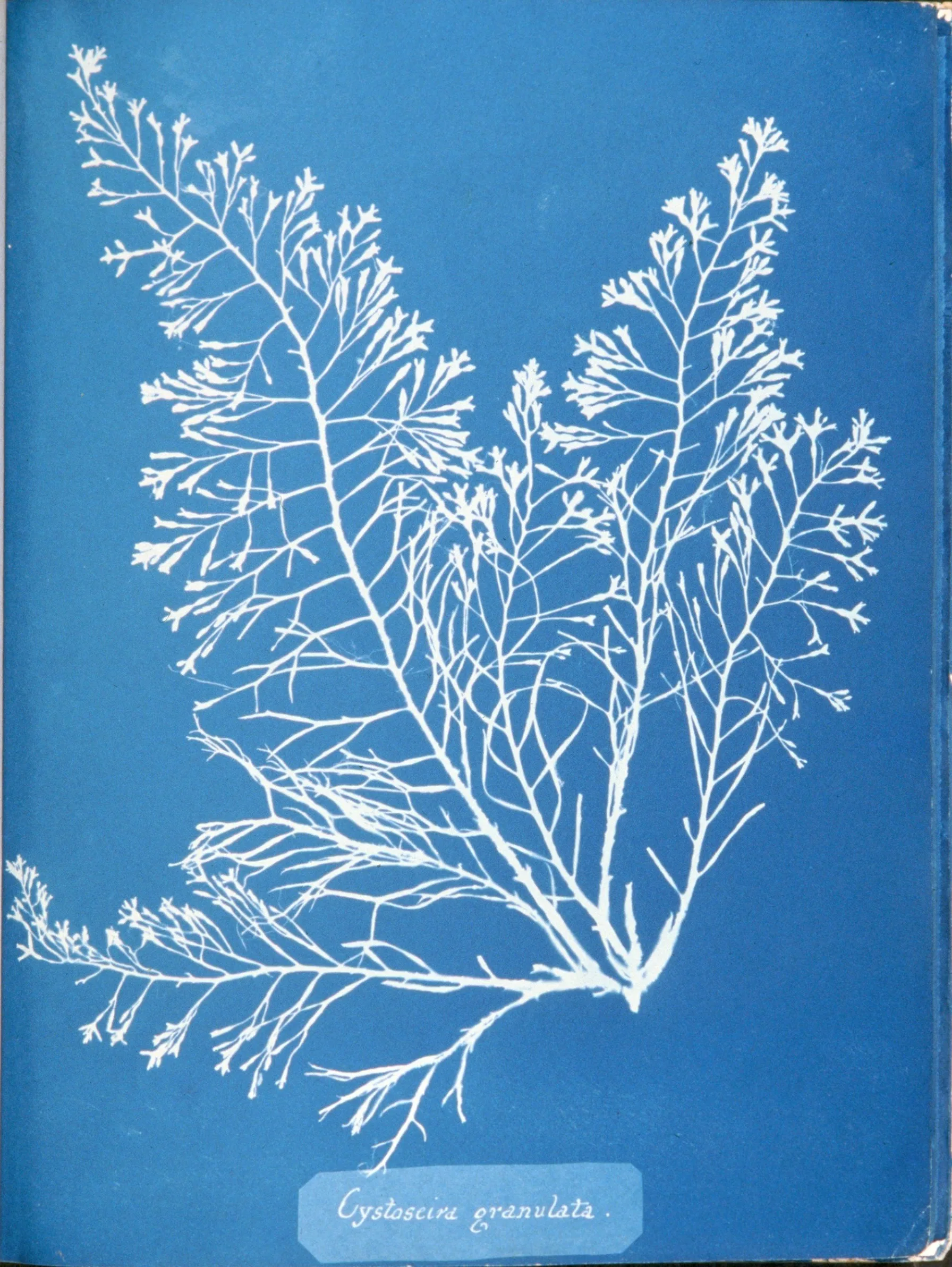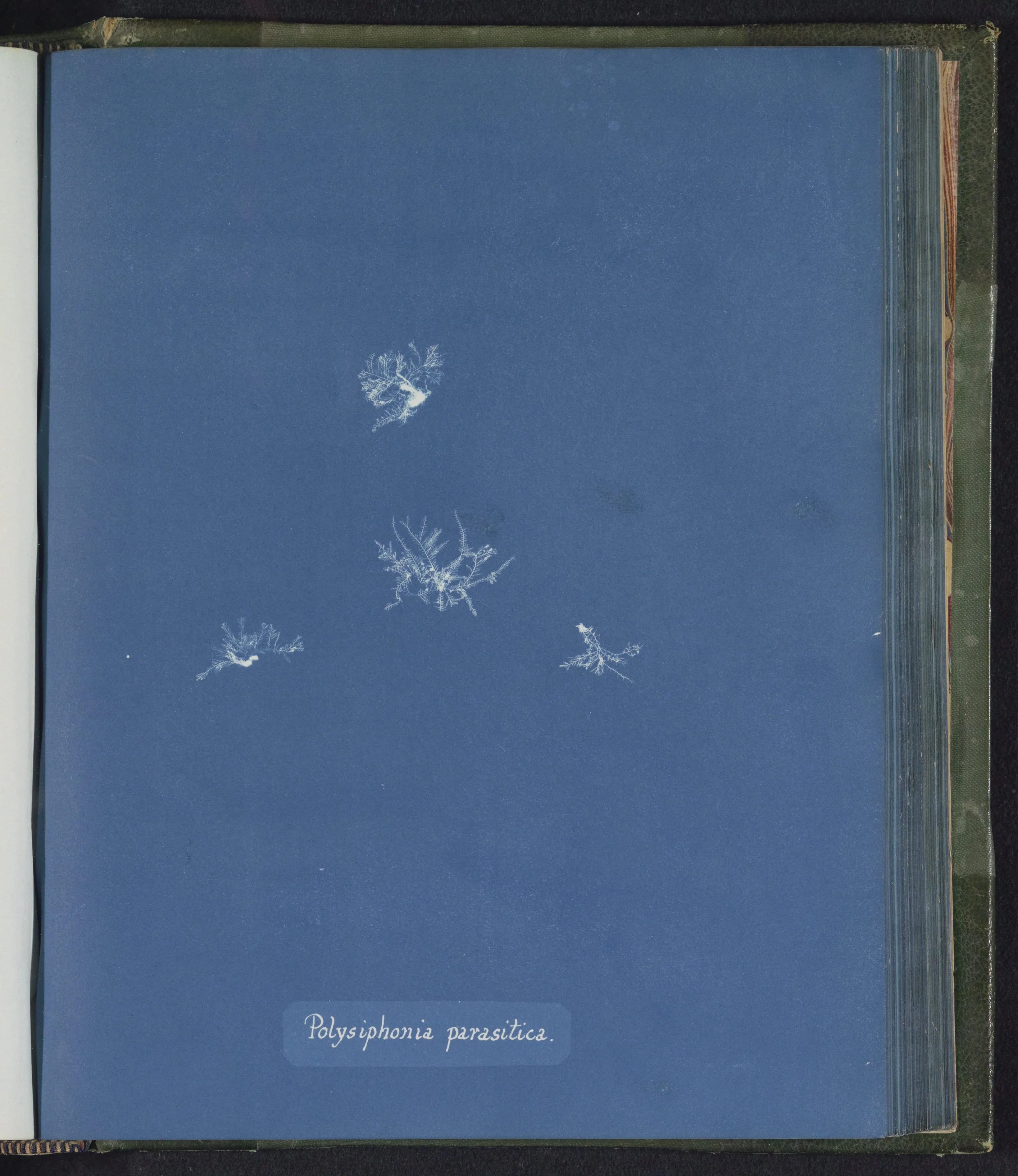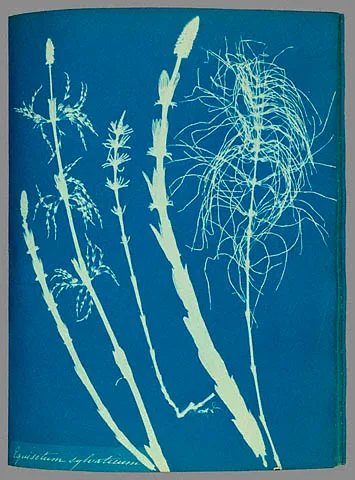
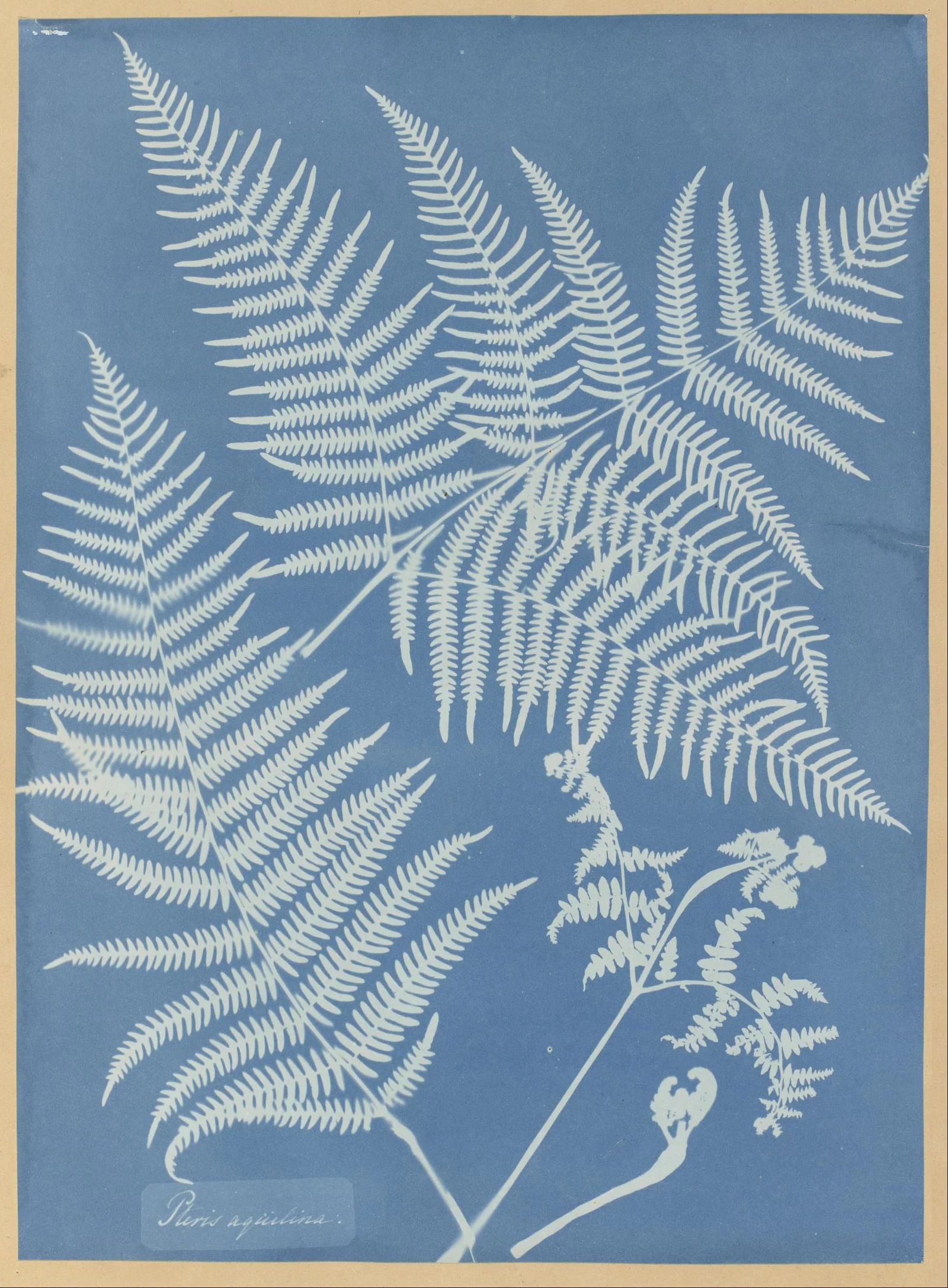
Image: the public-domain reference file. Your print is a hand-made interpretation of it, produced at the studio in Cyanotype — its matter and tonality are its own.
Anna Atkins · 1851
Pteris aquilina (bracken)
- Year
- 1851
- Original process
- Cyanotype contact print
- Held at
- Museum of Fine Arts, Houston
Key facts
- Edition
- Signed and numbered limited edition
- Authenticity
- Official certificate of authenticity
- Chemistry
- Non-toxic process (Vision Picturale recipes)
- Year
- 1851
- Original held at
- Museum of Fine Arts, Houston
- Public domain
- Since 1942 (CPI L.123-1)
- Printer
- Maison Picturale — Paris 20e studio
- Lead time
- Hand-made · 3 to 5 weeks
Maison Picturale reinterpretation in cyanotype
About this work
Bracken fern (Pteris aquilina): a large, finely divided frond from the Ferns portfolio whose tracery dissolves into near-invisible filaments at the edges. One of the species described by William Henry Harvey in his Manual of the British Algae (1841), the kind of dense, branching specimen for which the contact-print method is unrivalled in fidelity.
Reference file : Wikimedia Commons (Museum of Fine Arts, Houston / Google Arts & Culture)
Procédé Transposition
Print like Anna Atkins today — the same light, a purified chemistry.
Each Maison Picturale print is a material reinterpretation of the image. Three readings of the same work — the original, its closest transposition, and a creative transposition into another procédé.
Deep Prussian blue on 640 gsm cotton paper. Process invented in 1842 by Sir John Herschel.
MP procédé — reformulated non-toxic chemistry, signed by Tristan Sidem and Raphaël Lebas de Lacour.
View the procédéOr print it yourself
The chemistry of this process, reformulated non-toxic, is available as a kit from Vision Picturale — the house’s studio brand. Your image, your hands, the same chemistry as our printers.
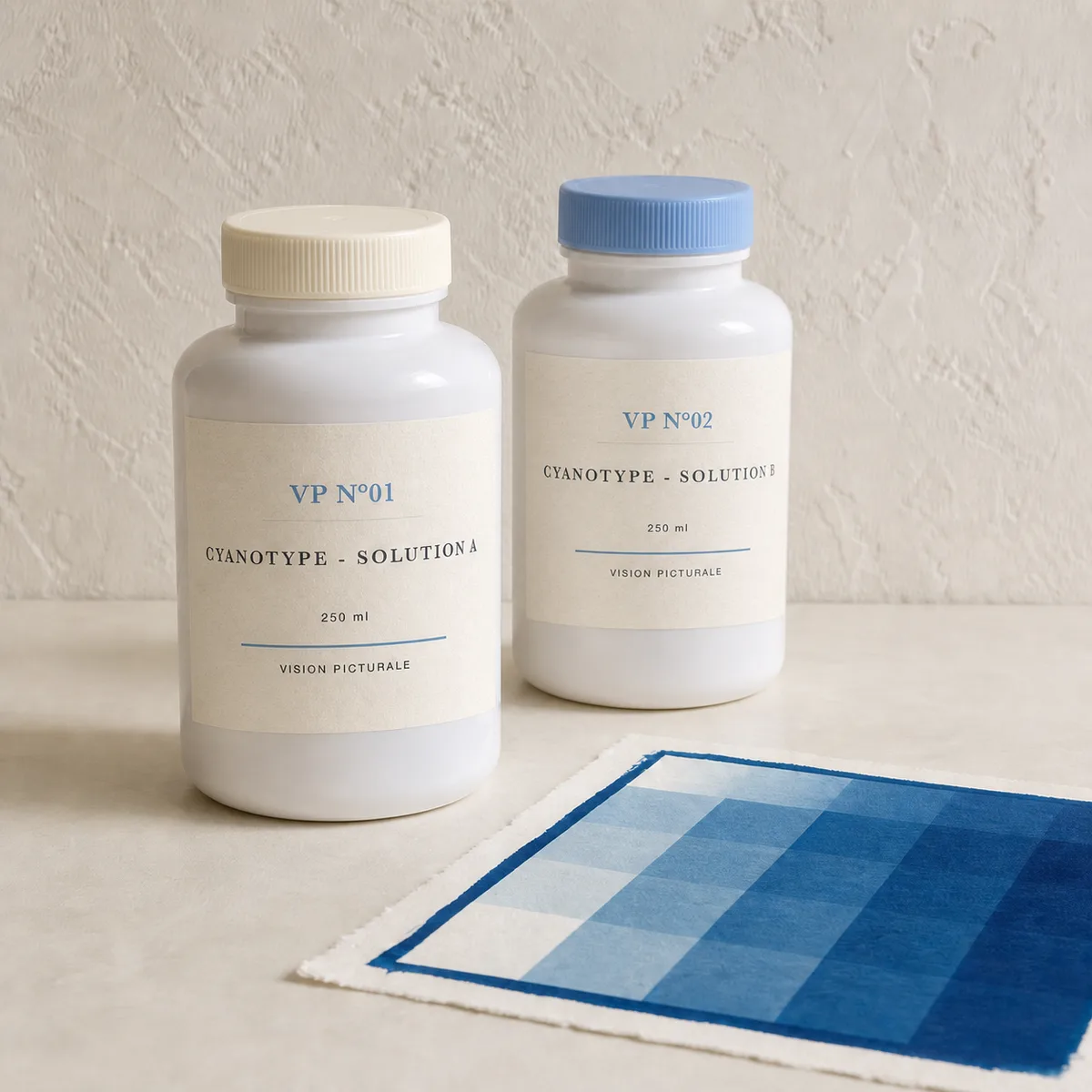
Coffret Cyanotype — Bleu Iconique
History of the process
Cyanotype is one of the oldest photographic processes still practised today. It was invented in 1842 by Sir John Herschel, a British astronomer and chemist, while searching for a way to reproduce his scientific notes. The process relies on the photosensitivity of iron salts which, when exposed to ultraviolet light, produce an intense pigment — Prussian blue.
It was Anna Atkins, a botanist and friend of Herschel, who elevated the cyanotype to an art form. Between 1843 and 1853, she produced "Photographs of British Algae: Cyanotype Impressions", widely considered the first book illustrated with photographs. Her botanical plates — seaweed placed directly on sensitised paper — are now held in the world's greatest institutions: the New York Public Library, the Victoria & Albert Museum, and the Getty Museum.
Our approach
Every cyanotype print made by Maison Picturale is a unique piece, produced entirely by hand in our Parisian workshop.
The paper used is a 100% cotton satin watercolour stock at 640 g/m², chosen for its ability to absorb the emulsion deep into its fibres — the Prussian blue does not sit on the surface but dyes the very fibre of the paper. This ensures exceptional longevity and a tactile quality reminiscent of engraving.
Inside our studio
1 Passage Dagorno, Paris 20e. Each print is hand-crafted by Tristan Sidem and Raphaël Lebas de Lacour, using Vision Picturale's reformulated non-toxic chemistry. Limited edition, signed and numbered.
Commission this print
- Hand-printed and signed by Tristan Sidem & Raphaël Lebas de Lacour
- Reformulated non-toxic chemistry (Vision Picturale recipes)
- Limited edition, numbered, certificate of authenticity
- 1 Passage Dagorno studio, Paris 20e
- Delivery 3 to 5 weeks · ships worldwide from France
Formats and prices
- ProcédéCyanotype
- Coquille44 × 56 cm100 €
- Jésus56 × 76 cm200 €
Firm prices: they follow from the procédé and the paper format, as on our Process pages. 100% cotton paper, 640 gsm, deckled edges. Which formats are offered depends on the resolution of the reference file we hold for this work.
Contemporary print after a work in the public domain (CPI L.123-1, 70 years post-mortem). Hand-crafted reinterpretation by Maison Picturale's master printers — this is not an original vintage by the master. The mention 'after [Master]' is systematic on the print and on the certificate of authenticity.