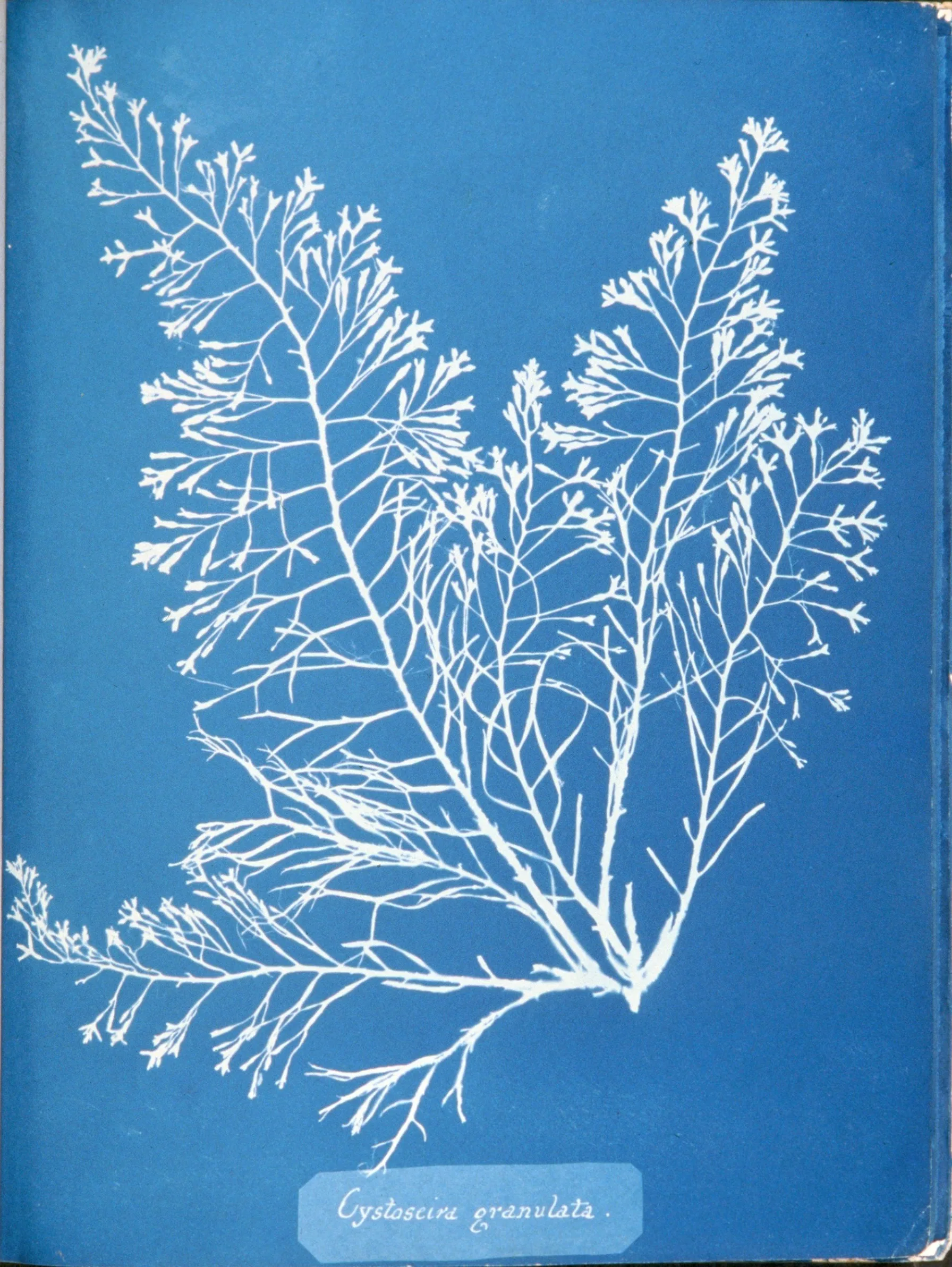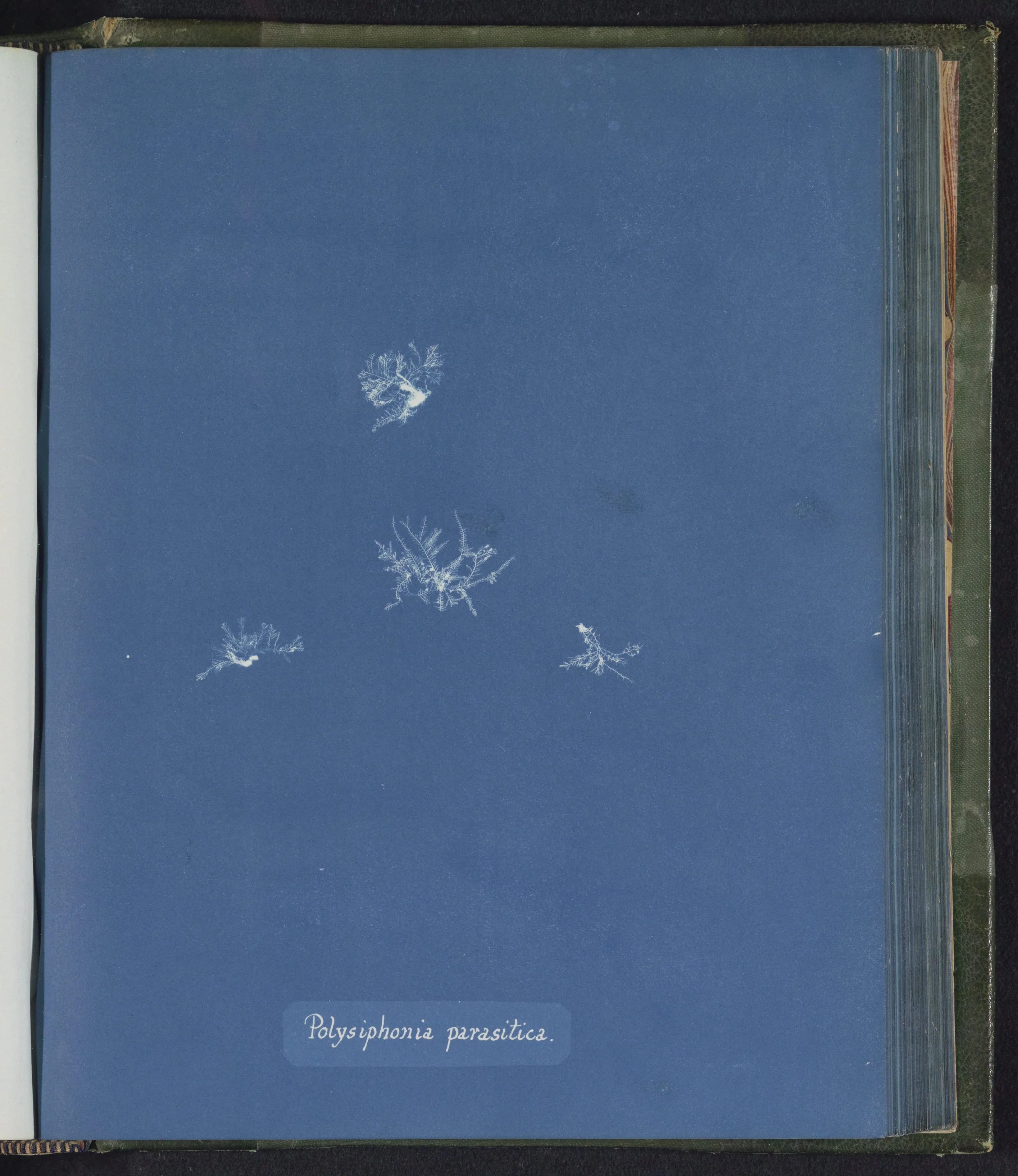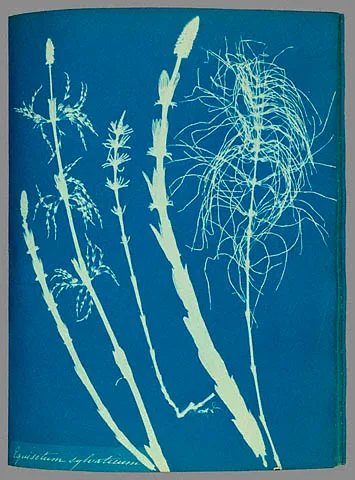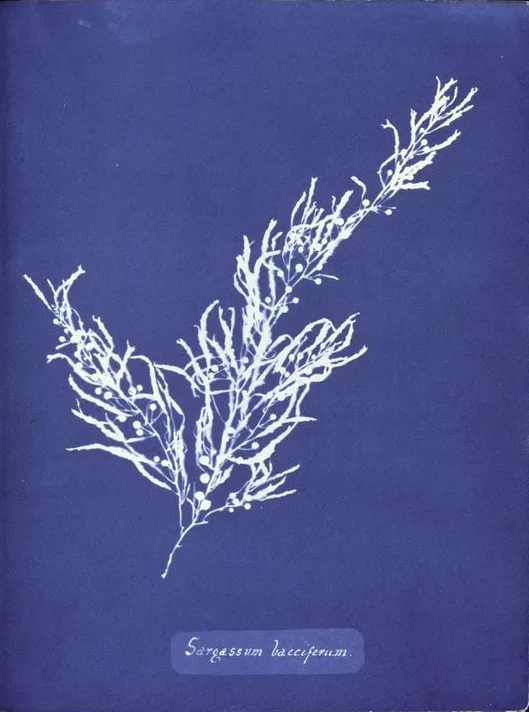

Image: the public-domain reference file. Your print is a hand-made interpretation of it, produced at the studio in Cyanotype — its matter and tonality are its own.
Anna Atkins · c. 1843-1853
Dictyota dichotoma — young plant
- Year
- c. 1843-1853
- Original process
- Cyanotype contact print on paper
- Held at
- Metropolitan Museum of Art · Royal Society, London · Natural History Museum (Google Arts & Culture)
Key facts
- Edition
- Signed and numbered limited edition
- Authenticity
- Official certificate of authenticity
- Chemistry
- Non-toxic process (Vision Picturale recipes)
- Year
- c. 1843-1853
- Original held at
- Metropolitan Museum of Art
- Public domain
- Since 1942 (CPI L.123-1)
- Printer
- Maison Picturale — Paris 20e studio
- Lead time
- Hand-made · 3 to 5 weeks
Maison Picturale reinterpretation in cyanotype
About this work
Olive-green forked brown alga (Dictyota dichotoma): a young specimen whose binary ramification reads as a calligraphic Y multiplied across the page. One of the most reproduced plates from Photographs of British Algae — Wikipedia FR opens its Atkins gallery with this image, and the Met conserves it as part of the early subscription portfolio. The flatness of the contact-print method renders each branching axis with absolute geometric clarity.
Reference file : Wikimedia Commons (Natural History Museum / Google Arts & Culture)
Procédé Transposition
Print like Anna Atkins today — the same light, a purified chemistry.
Each Maison Picturale print is a material reinterpretation of the image. Three readings of the same work — the original, its closest transposition, and a creative transposition into another procédé.
Deep Prussian blue on 640 gsm cotton paper. Process invented in 1842 by Sir John Herschel.
MP procédé — reformulated non-toxic chemistry, signed by Tristan Sidem and Raphaël Lebas de Lacour.
View the procédéOr print it yourself
The chemistry of this process, reformulated non-toxic, is available as a kit from Vision Picturale — the house’s studio brand. Your image, your hands, the same chemistry as our printers.
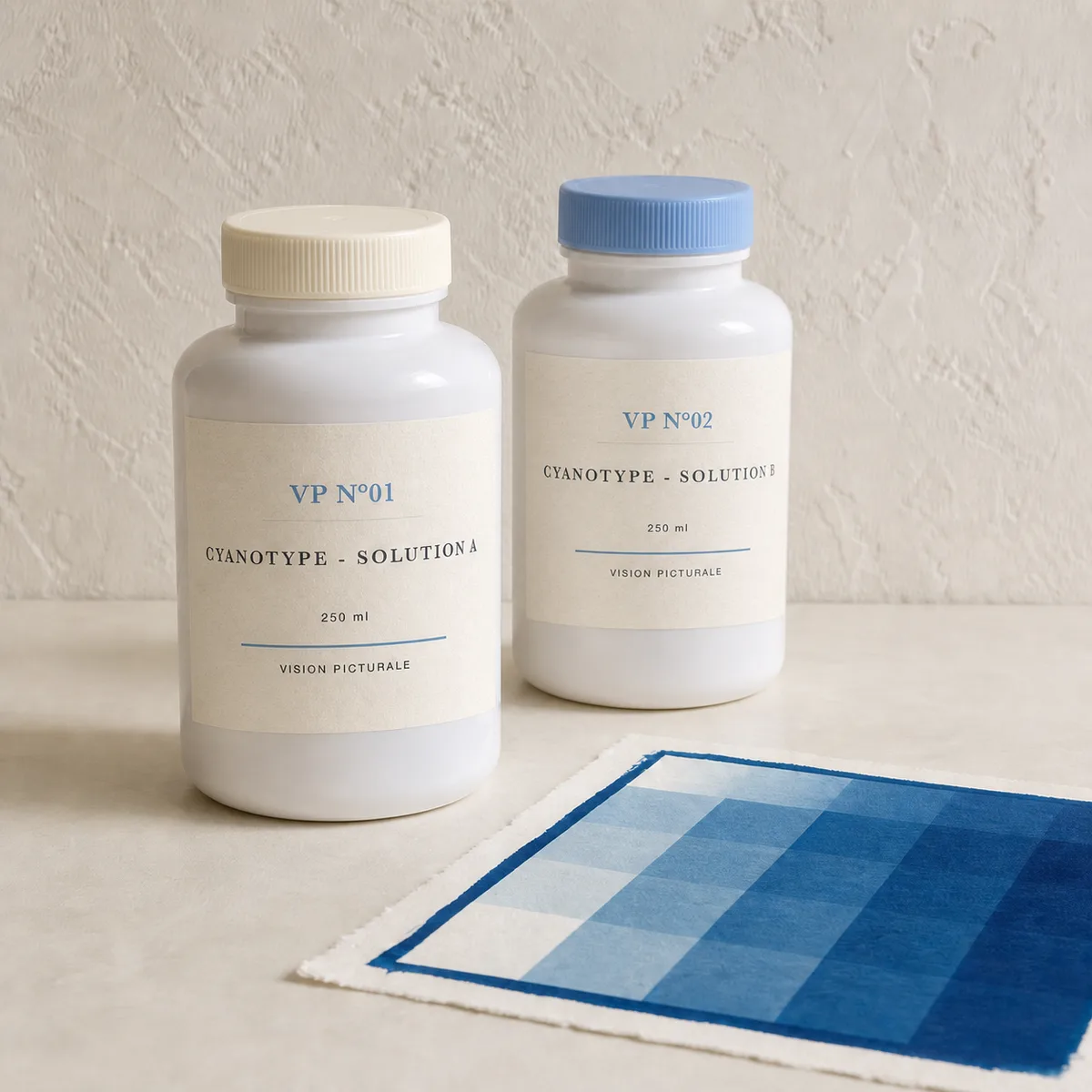
Coffret Cyanotype — Bleu Iconique
History of the process
Cyanotype is one of the oldest photographic processes still practised today. It was invented in 1842 by Sir John Herschel, a British astronomer and chemist, while searching for a way to reproduce his scientific notes. The process relies on the photosensitivity of iron salts which, when exposed to ultraviolet light, produce an intense pigment — Prussian blue.
It was Anna Atkins, a botanist and friend of Herschel, who elevated the cyanotype to an art form. Between 1843 and 1853, she produced "Photographs of British Algae: Cyanotype Impressions", widely considered the first book illustrated with photographs. Her botanical plates — seaweed placed directly on sensitised paper — are now held in the world's greatest institutions: the New York Public Library, the Victoria & Albert Museum, and the Getty Museum.
Our approach
Every cyanotype print made by Maison Picturale is a unique piece, produced entirely by hand in our Parisian workshop.
The paper used is a 100% cotton satin watercolour stock at 640 g/m², chosen for its ability to absorb the emulsion deep into its fibres — the Prussian blue does not sit on the surface but dyes the very fibre of the paper. This ensures exceptional longevity and a tactile quality reminiscent of engraving.
Inside our studio
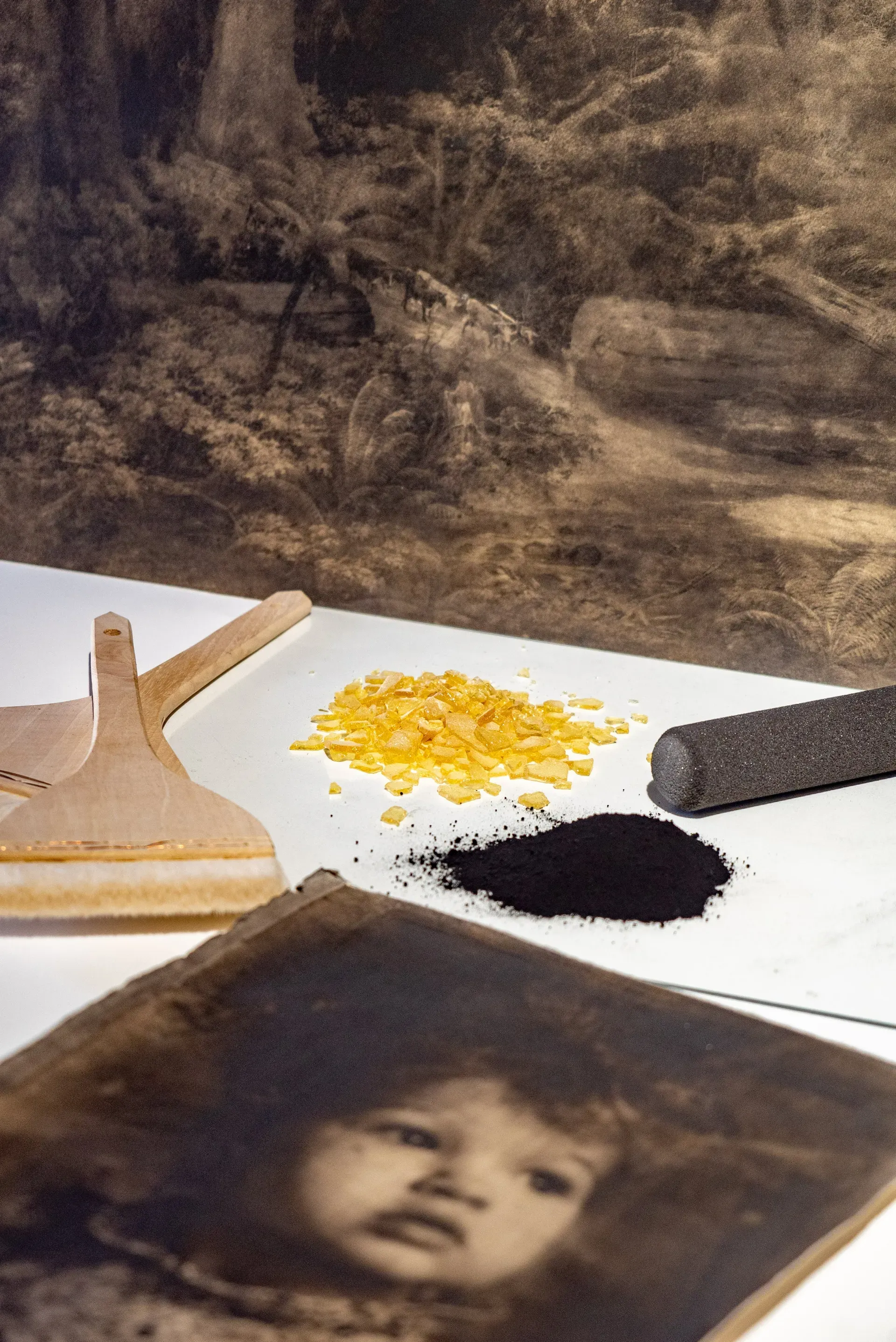
1 Passage Dagorno, Paris 20e. Each print is hand-crafted by Tristan Sidem and Raphaël Lebas de Lacour, using Vision Picturale's reformulated non-toxic chemistry. Limited edition, signed and numbered.
Commission this print
- Hand-printed and signed by Tristan Sidem & Raphaël Lebas de Lacour
- Reformulated non-toxic chemistry (Vision Picturale recipes)
- Limited edition, numbered, certificate of authenticity
- 1 Passage Dagorno studio, Paris 20e
- Delivery 3 to 5 weeks · ships worldwide from France
Formats and prices
- ProcédéCyanotype
- Coquille44 × 56 cm100 €
- Jésus56 × 76 cm200 €
- Grand Aigle76 × 112 cm300 €
- Univers100 × 140 cm600 €
Firm prices: they follow from the procédé and the paper format, as on our Process pages. 100% cotton paper, 640 gsm, deckled edges. Which formats are offered depends on the resolution of the reference file we hold for this work.
Contemporary print after a work in the public domain (CPI L.123-1, 70 years post-mortem). Hand-crafted reinterpretation by Maison Picturale's master printers — this is not an original vintage by the master. The mention 'after [Master]' is systematic on the print and on the certificate of authenticity.