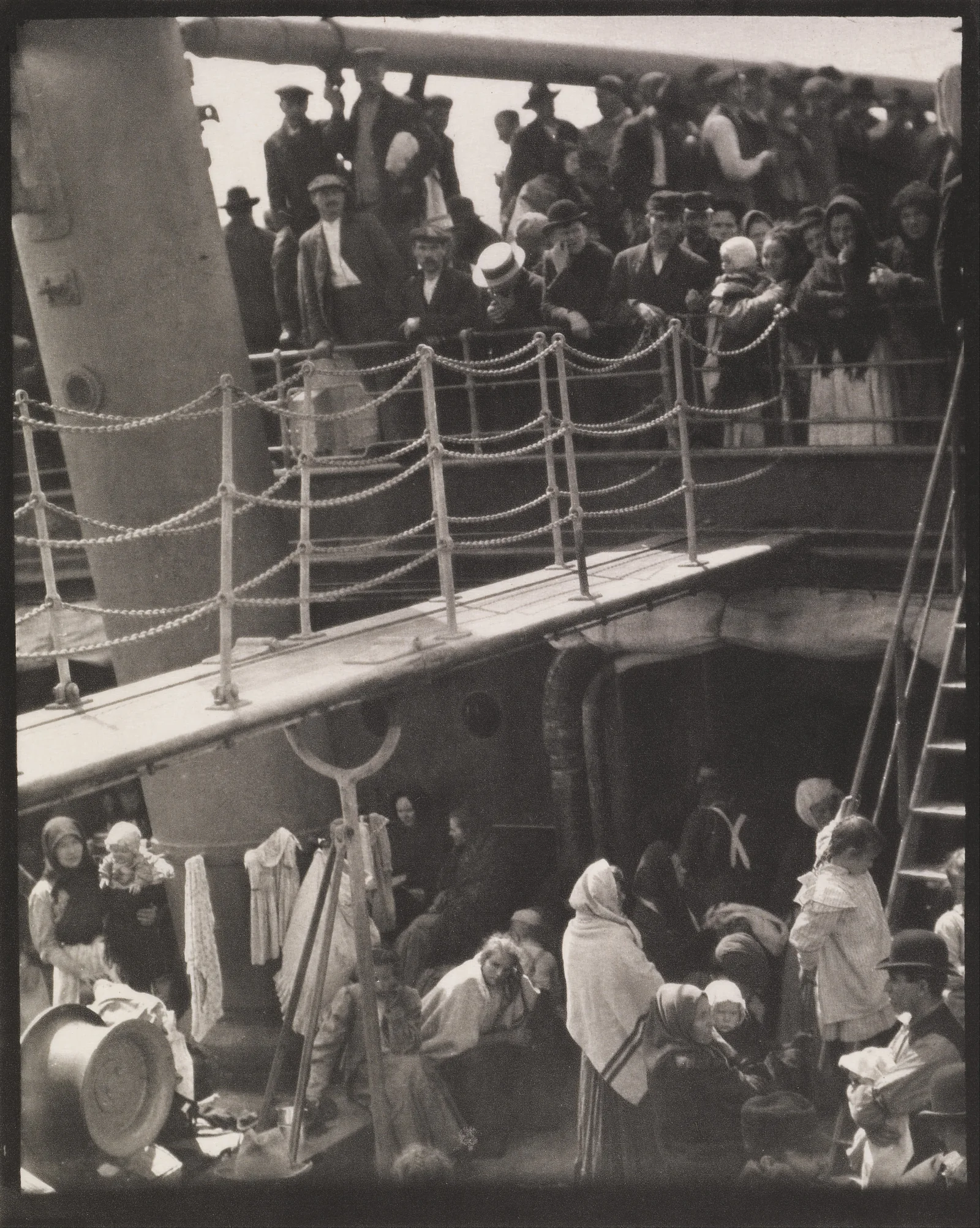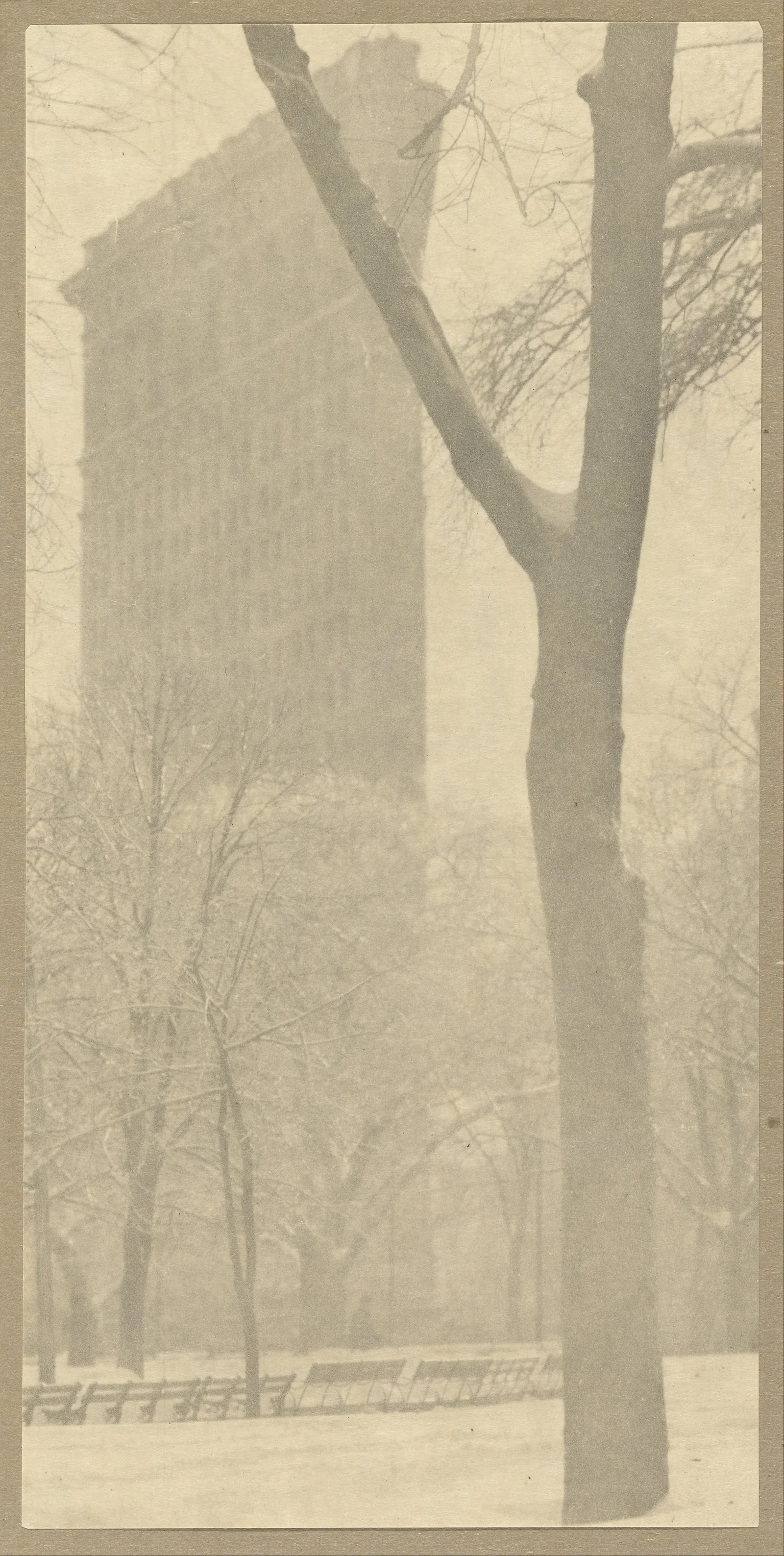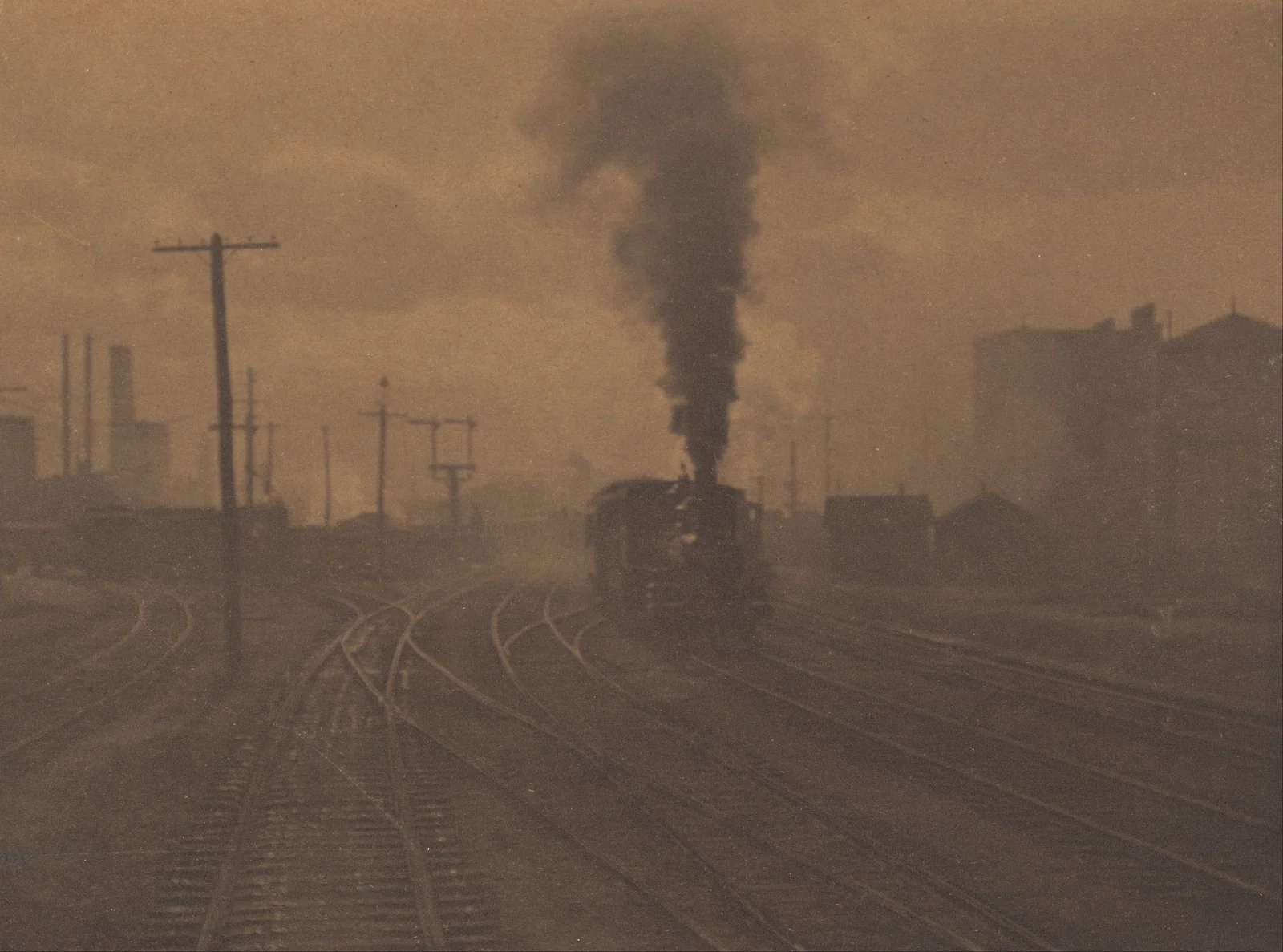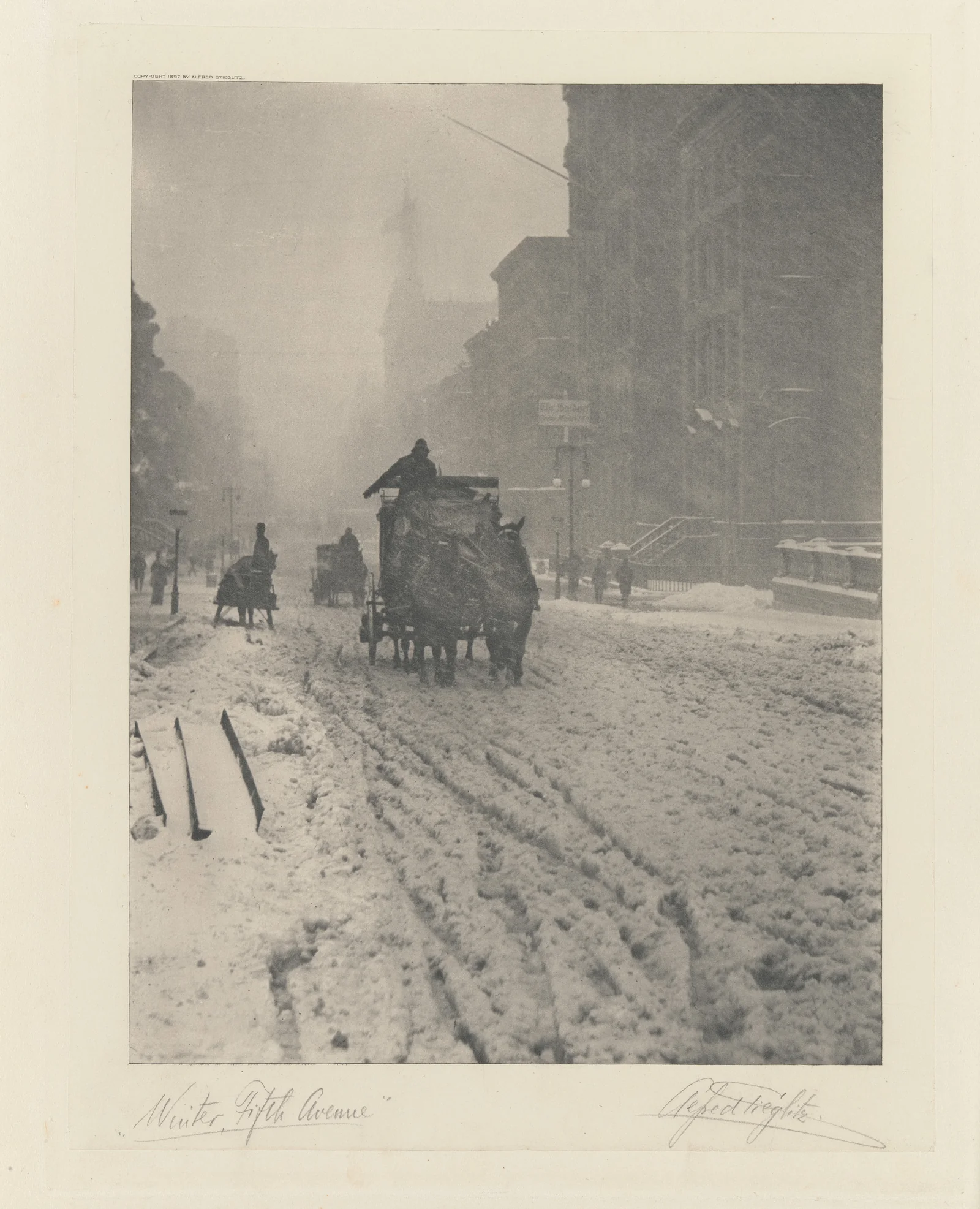
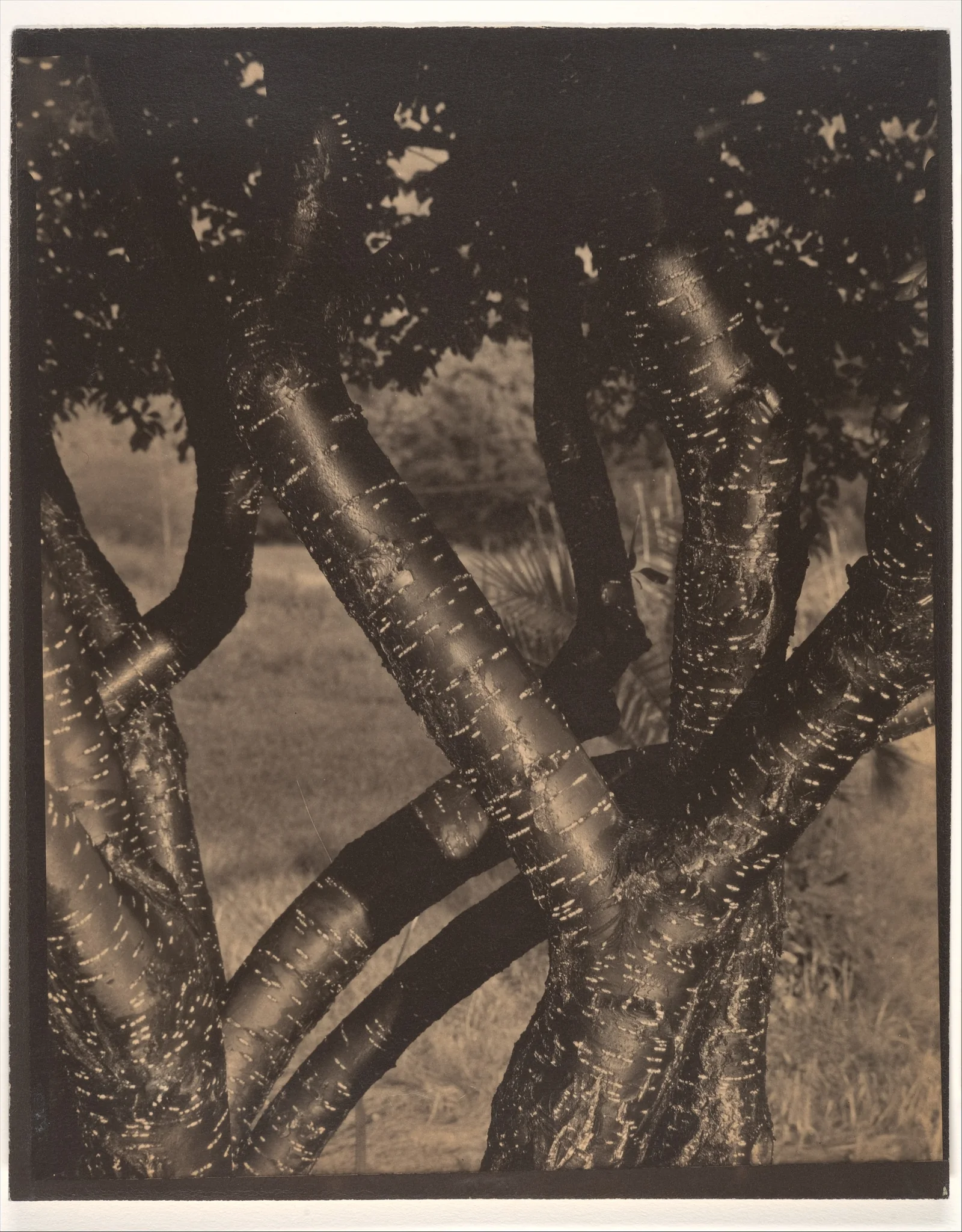
Image: the public-domain reference file. Your print is a hand-made interpretation of it, produced at the studio in Platinum-palladium — its matter and tonality are its own.
Alfred Stieglitz · 1922
The Dancing Trees
- Year
- 1922
- Original process
- Palladium print
- Held at
- Metropolitan Museum of Art
Key facts
- Edition
- Signed and numbered limited edition
- Authenticity
- Official certificate of authenticity
- Chemistry
- Non-toxic process (Vision Picturale recipes)
- Year
- 1922
- Original held at
- Metropolitan Museum of Art
- Public domain
- Since 2017 (CPI L.123-1)
- Printer
- Maison Picturale — Paris 20e studio
- Lead time
- Hand-made · 3 to 5 weeks
Maison Picturale reinterpretation in platinum-palladium
About this work
Palladium print exposed in 1922 at Lake George, New York — Stieglitz's family summer estate where he photographed almost every year from 1885 until his death in 1946, producing the four serial bodies of work that close his career: the O'Keeffe composite (1918-1937), the Equivalents (1925-1934), the Songs of the Sky (1922-1929) and the late Lake George studies of poplars and grass. The Dancing Trees frames a tight cluster of poplars whose trunks lean and twist in wind-shaped rhythm, the foliage decomposing into pure tonal pattern against the neutral sky. The image belongs to the same Lake George campaign that produced Music: A Sequence of Ten Cloud Photographs (1922-23) — the cloud series that preceded the Equivalents proper (1925-1934) — and shares their core compositional gesture: removing the horizon, isolating a tonal motif and asking the print to operate as musical chord rather than landscape document. Stieglitz had abandoned pictorialist soft focus by this date; The Dancing Trees is exposed with f/22 sharpness across the frame, the palladium deposit carrying the long tonal scale from the pale sky to the deepest trunk shadows without any of the chemical haze of his 1900s photogravures. The Metropolitan Museum of Art (DP224391) holds the print within the Alfred Stieglitz Collection donated by the photographer himself in 1933, the foundational gift of 419 prints that established the museum's photography department. At Maison Picturale today, the palladium procédé translates directly into a platine-palladium tirage on 640 gsm cotton paper — the same noble-metal procédé Stieglitz used, reformulated by Vision Picturale to remove the dangerous platinum salts, signed by master printers in Paris.
Reference file : MET Open Access via Wikimedia Commons (Public Domain)
Procédé Transposition
Print like Alfred Stieglitz today — without the toxics.
Each Maison Picturale print is a material reinterpretation of the image. Three readings of the same work — the original, its closest transposition, and a creative transposition into another procédé.
Noble metals — platinum and palladium — on 640 gsm cotton paper. The longest tonal range in all analog photography.
MP procédé — reformulated non-toxic chemistry, signed by Tristan Sidem and Raphaël Lebas de Lacour.
View the procédéHistory of the process
The platinotype was invented in 1873 by the British engineer William Willis, who patented the process that same year under the name Platinotype Process. In 1879 Willis founded the Platinotype Company, which sold platinum-sensitised papers across Europe for several decades. Palladium was introduced in the early twentieth century as an economical variant, giving nothing away on tonal quality.
Platinum-palladium quickly became the process of choice for the masters of fine-art photography. Alfred Stieglitz, Edward Weston, Alvin Langdon Coburn and Frederick H. Evans made it their signature process, and their original prints held at the Royal Photographic Society in London, at George Eastman House in Rochester and at the Metropolitan Museum of Art in New York still testify to platinum's tonal perfection. Stieglitz wrote that platinum offered a wider scale of greys than any other process.
Our approach
Every platinum-palladium print made at the studio at 1 passage Dagorno is a unique piece in a very limited edition, intended for serious collectors and institutions. The cost of platinum and palladium salts — noble metals whose prices follow the financial markets — makes this our premium process. Each print is prepared, sensitised and developed by hand by our master printers.
Our 640 gsm 100% cotton satin watercolour paper suits platinum-palladium particularly well: its pure cotton fibre, free of optical brighteners and alkaline additives, lets the metal salts embed deep in the paper, and its satin surface fully reveals the process's unique warm tonality and exceptional tonal scale.
Inside our studio
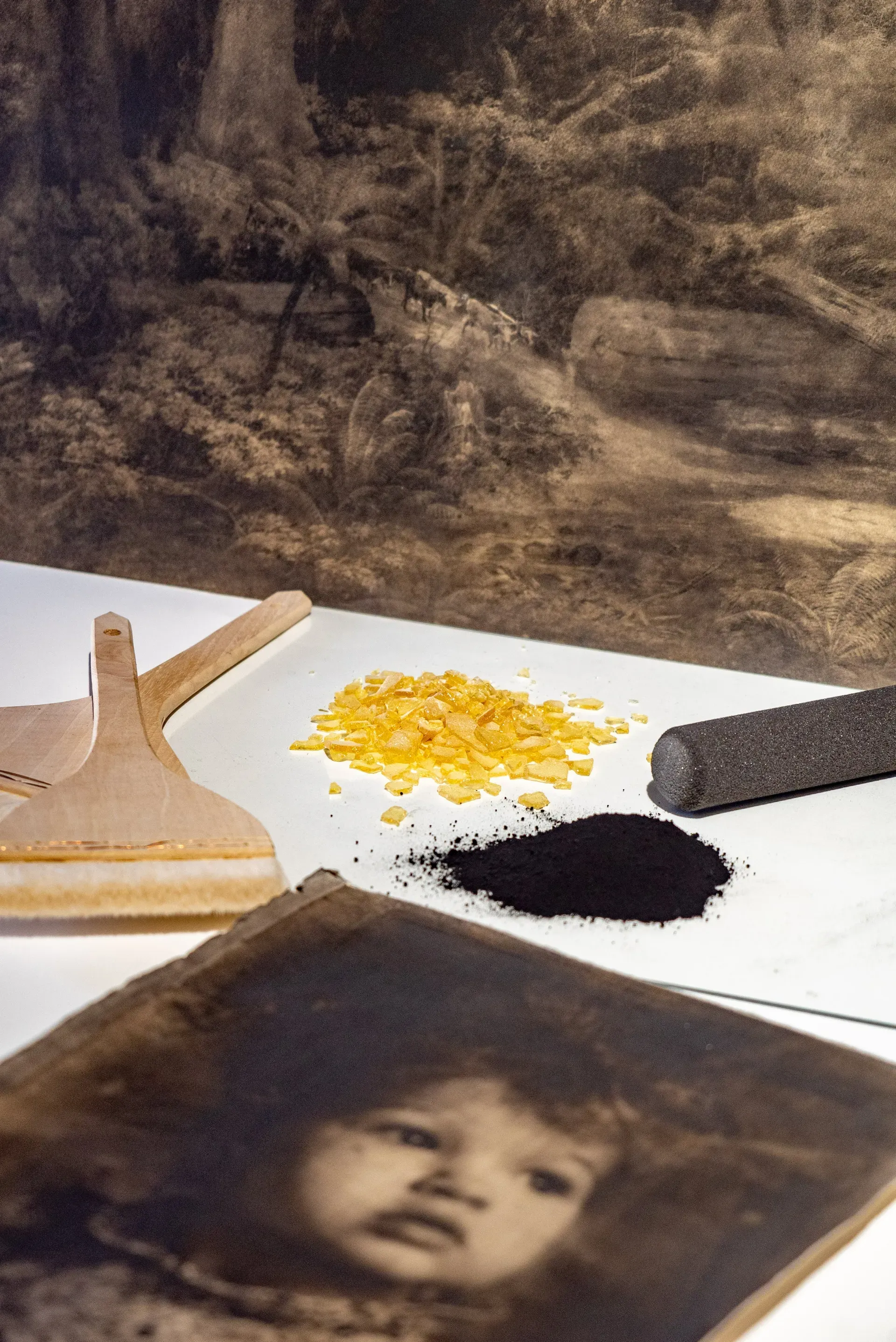
1 Passage Dagorno, Paris 20e. Each print is hand-crafted by Tristan Sidem and Raphaël Lebas de Lacour, using Vision Picturale's reformulated non-toxic chemistry. Limited edition, signed and numbered.
Commission this print
- Hand-printed and signed by Tristan Sidem & Raphaël Lebas de Lacour
- Reformulated non-toxic chemistry (Vision Picturale recipes)
- Limited edition, numbered, certificate of authenticity
- 1 Passage Dagorno studio, Paris 20e
- Delivery 3 to 5 weeks · ships worldwide from France
Formats and prices
- ProcédéPlatinum-palladium
- Coquille44 × 56 cm200 €
- Jésus56 × 76 cm400 €
- Grand Aigle76 × 112 cm600 €
- Univers100 × 140 cm1 200 €
Firm prices: they follow from the procédé and the paper format, as on our Process pages. 100% cotton paper, 640 gsm, deckled edges. Which formats are offered depends on the resolution of the reference file we hold for this work.
Contemporary print after a work in the public domain (CPI L.123-1, 70 years post-mortem). Hand-crafted reinterpretation by Maison Picturale's master printers — this is not an original vintage by the master. The mention 'after [Master]' is systematic on the print and on the certificate of authenticity.