Cyanotype Workshop
A full cyanotype print in the morning, then three more processes in the afternoon: a day to discover non-toxic historic photographic processes. Trainers: Tristan Sidem and Raphaël Lebas de Lacour. Materials provided, 6 people maximum.
Small groups
6 people maximum for personalised guidance throughout the day.
Materials provided
Chemistry, 640 gsm cotton paper, negatives, brushes, Luminograph — everything is included.
Leave with your prints
A full cyanotype print in the morning, then a test print in Aquaprint or resinotype in the afternoon.
A full day to discover the four processes
In the morning you make a full cyanotype print from start to finish. In the afternoon you discover Aquaprint, resinotype and oleotype. No technical prerequisites.
Welcome & overview
Introductions, safety briefing, reference prints in the four processes. Common principle: contact negative, UV exposure, development.
Cyanotype, start to finish
Digital negative with the Calibration Flow grid, paper coating, Luminograph exposure, development and drying of your print.
Rotating workshop & test
Aquaprint in practice, resinotype and oleotype demonstrations, then a test print in Aquaprint or resinotype.
Wrap-up & certificate
Skills assessment, quiz on the four processes, advice for next steps. You leave with your prints.
What you take home
A finished cyanotype print on 640 gsm cotton paper, and a test print in Aquaprint or resinotype.
The full cyanotype steps: digital negative, coating, UV exposure, development and rinsing.
Access to digital ICC profiles to continue at home with the VP kit.
Frequently asked questions
Practical information
The regulatory information for this course, gathered here before you enquire.
- Learning outcomes
- Situate the four process families (cyanotype, Aquaprint, resinotype, oleotype): principle, rendering, use. Prepare a digital negative with the Calibration Flow grid. Coat, expose and develop a cyanotype print independently. Make a test print in Aquaprint or resinotype, supported by a trainer. Apply the workshop's safety and non-toxic chemistry rules. Choose, with reasons, the process to explore further.
- Prerequisites
- No technical prerequisites. Bring 2 to 3 of your own digital images.
- Duration
- 1 day — 7 hours (9 am–12:30 pm · 1:30–5 pm).
- Fee
- €480 incl. VAT per person. Chemistry, paper, negatives and protective equipment included.
- Access lead time
- No fixed calendar: workshops are arranged on request. Any enquiry answered within 5 working days, with a date agreed together at the latest 15 days before the workshop. Allow a further 6 to 8 weeks where OPCO funding is involved.
- Group size and format
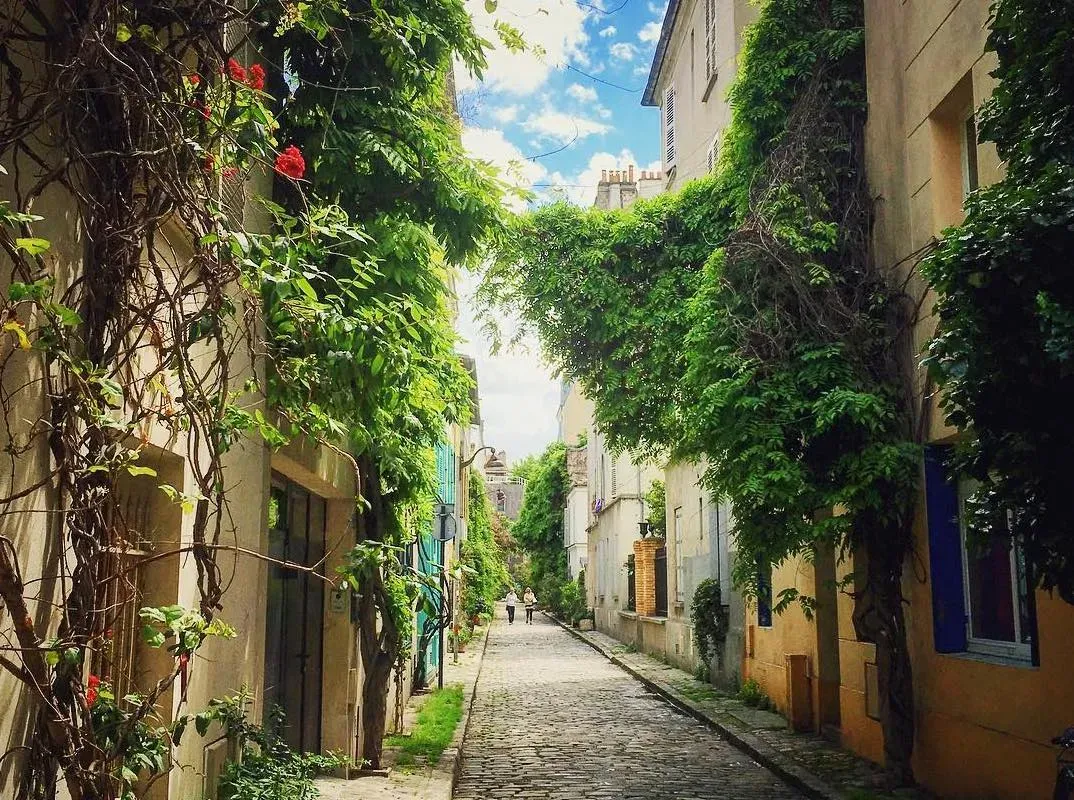
- Maximum 6 participants, led by two trainers: Tristan Sidem and Raphaël Lebas de Lacour. On site at the studio, 1 passage Dagorno, Paris 20.
- Accessibility
- Step-free ground floor with adapted access and toilet; a wet lab is also on the ground floor, in addition to the one in the basement (reached by stairs). For anyone unable to use the stairs, the whole day, wet steps included, can be held on the ground floor. Any request for adjustment is reviewed ahead of the course, with alternative arrangements where needed. Disability officer: T. Sidem — +33 6 44 18 87 24.
Maison Picturale is a training provider registered with the DRIEETS Île-de-France under number 11 75 74381 75. This registration does not constitute State accreditation.
Funding
& Certification
Registered training organisation (NDA). We assist you in putting together your employer-funded or other supported training application.
Registered organisation (NDA): 11 75 74381 75
Disability Referent: T. Sidem
Ready to discover the four processes?
Tell us when you are free: we set a date together and you leave with your own prints.