Ce site utilise des cookies d'analyse pour améliorer votre expérience. En savoir plus

Skip to main content
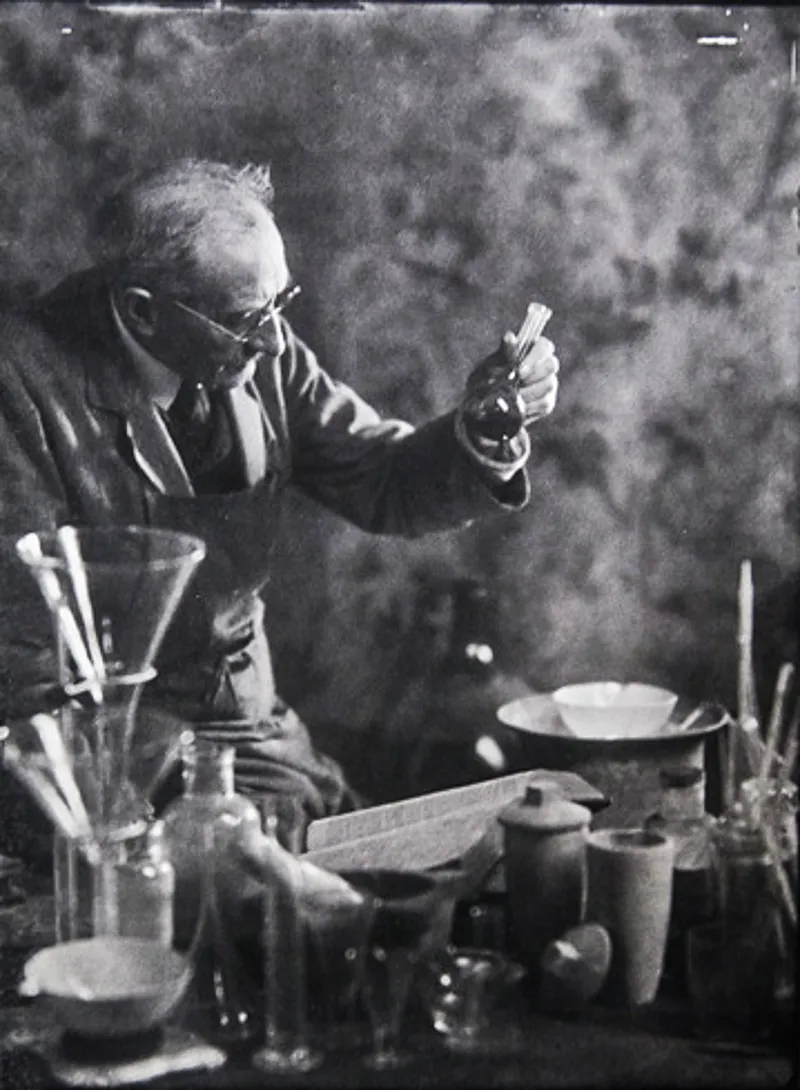
Théodore-Henri Fresson
Library

1865-1951 · French

Théodore-Henri Fresson

Théodore-Henri Fresson (1865-1951) is the French agronomist-engineer who invented the Charbon-Satin direct-development carbon paper, presented to the Société française de photographie in 1899. His pigment-based paper became the printing medium of choice for major pictorialists — Robert Demachy, Constant Puyo, Léonard Misonne, José Ortiz Echagüe — and his family workshop in Savigny-sur-Orge still practises the Fresson process today, five generations on.

Public domain since 2022 · CPI L.123-1

Held at

  • Société française de photographie (archives)
  • Bibliothèque nationale de France (Bulletin SFP)
  • Musée d'Orsay (tirages Fresson historiques de Demachy, Puyo, Plossu)
  • Atelier Fresson, Savigny-sur-Orge (transmission familiale active)

Reference writings

  • Communication à la Société française de photographie (Bulletin SFP, 1899)

Théodore-Henri Fresson, agronomist engineer by training and passionate amateur photographer, presented to the bureau of the Société française de photographie in 1899 a revolutionary photographic paper: a carbon-pigment paper that could be developed directly, without the transfer step required by earlier carbon processes. He called it Charbon-Satin and began manufacturing it in his workshop in Dreux with his wife Maria and his sons Edmond (1898-1964) and Pierre (1904-1983). The paper rapidly became the medium of choice for the leading pictorialists of the era — Robert Demachy and Constant Puyo in France, Léonard Misonne in Belgium, José Ortiz Echagüe in Spain — drawn to its dense pigmentary matter, exceptional permanence (the prints do not oxidize) and the painterly sculpting that the development by mechanical dissolution (sawdust or chamois leather depending on era and source) enables. The chemical recipe was kept as a family secret and passed down: in 1952, Pierre Fresson and his son Michel developed the quadrichromic color variant; the workshop moved from Dreux to Savigny-sur-Orge; and today, Michel Fresson and his great-grandson Jean-François Fresson — fifth-generation heir of the founder — continue to produce Fresson prints for museums, photographers and collectors worldwide. Théodore-Henri Fresson's patrimonial rights lapsed in France in 2022 (70 years after his death). At Maison Picturale, we do not produce Fresson prints — the secret recipe belongs to the family lineage — but our Aquaprint (gum bichromate reformulated by Vision Picturale without potassium dichromate) shares with the Charbon-Satin the most distinctive technical innovation of Théodore-Henri Fresson: direct development on the final paper, without the transfer step required by the historical Swan carbon process. The matrix differs (gum arabic vs gelatin) and the dissolution method differs (warm water vs mechanical stripping), but the family resemblance — pigmentary, direct, multi-layer-capable — places Aquaprint as the contemporary non-toxic cousin closest in spirit to Fresson's 1899 breakthrough.

Signature processes

The alternative processes practised by Théodore-Henri Fresson, printed today at Maison Picturale using Vision Picturale's non-toxic reformulated chemistry.

Essential works

A curated selection of public-domain works by Théodore-Henri Fresson, reinterpretable as contemporary prints by Maison Picturale's master printers. Each artwork page details the original process and its atelier equivalent.

Print after — systematic mention on the certificate of authenticity.

Commission a print after Théodore-Henri Fresson

Maison Picturale produces on commission contemporary prints after works by Théodore-Henri Fresson that have entered the public domain. Hand-printed by master printers Tristan Sidem and Raphaël Lebas de Lacour on 640 gsm cotton paper, signed and numbered in limited edition, with a certificate of authenticity explicitly mentioning the "after" nature of the reinterpretation.

Start a commission