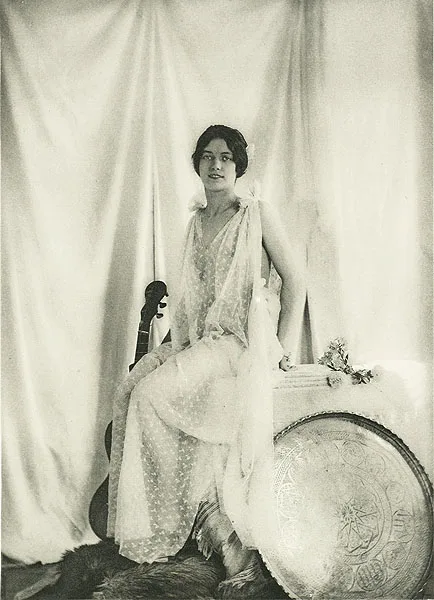
Constant Puyo
Library

1857-1933 · French

Constant Puyo

Constant Puyo (1857-1933) is the French pictorialist master, member of the Photo-Club de Paris from 1894 (founded by Maurice Bucquet alone in 1888) and its president from 1921 to 1926. A former artillery officer (École polytechnique, French Army, commandant rank, retired 1902) turned photographer, he developed a poetic gum bichromate and oil pigment practice and theorised the aesthetic of soft-focus portraiture.

Public domain since 2004 · CPI L.123-1

Held at

  • Musée d'Orsay, Paris
  • Bibliothèque nationale de France (Gallica)
  • Metropolitan Museum of Art, New York
  • George Eastman Museum, Rochester
  • Société française de photographie

Reference writings

  • Notes sur la photographie d'art (1896)
  • Le Procédé à la gomme bichromatée (1904)
  • Procédés d'art en photographie (1906, avec Robert Demachy)
  • Les Objectifs d'artiste (1906, avec J. Leclerc de Pulligny)

Émile Joachim Constant Puyo, known as Constant Puyo, trained at the École polytechnique and began his career as an artillery officer in the French Army, serving in the African campaigns (1881-1883) before retiring with the rank of commandant in 1902 to devote himself fully to photography. He joined the Photo-Club de Paris (founded by Maurice Bucquet alone in 1888) in 1894, becoming one of the leading figures of French pictorialism alongside Robert Demachy and Jean Leclerc de Pulligny, and was elected president of the club from 1921 to 1926. Made Chevalier de la Légion d'honneur in 1894, he authored four reference manuals — Notes sur la photographie d'art (1896), Le Procédé à la gomme bichromatée (1904), Les Procédés d'art en photographie (1906, co-written with Demachy) and Les Objectifs d'artiste (1906, with Leclerc de Pulligny) — theorising soft-focus aesthetics, the gum bichromate process and the oil pigment print (his other technical specialty). His subjects span pastoral landscapes, female portraits (Fantaisie en blanc, Woman with white parasol), and allegorical compositions (Été). Puyo's prints are held at the Musée d'Orsay (Paris), the Bibliothèque nationale de France (via Gallica), the Metropolitan Museum of Art, the George Eastman Museum, the Cincinnati Art Museum, the Rijksmuseum and the Musée Nicéphore Niépce. His patrimonial rights lapsed in France in 2004. At Maison Picturale, his works are reinterpreted as contemporary gum bichromate prints using Vision Picturale's reformulated non-toxic chemistry — the soft-focus pictorialist signature preserved without the historical dichromate.

Signature processes

The alternative processes practised by Constant Puyo, printed today at Maison Picturale using Vision Picturale's non-toxic reformulated chemistry.

Essential works

A curated selection of public-domain works by Constant Puyo, reinterpretable as contemporary prints by Maison Picturale's master printers. Each artwork page details the original process and its atelier equivalent.

Print after — systematic mention on the certificate of authenticity.

Woman with white parasol — Constant Puyo

1909 · Gum bichromate / pigment print

Woman with white parasol

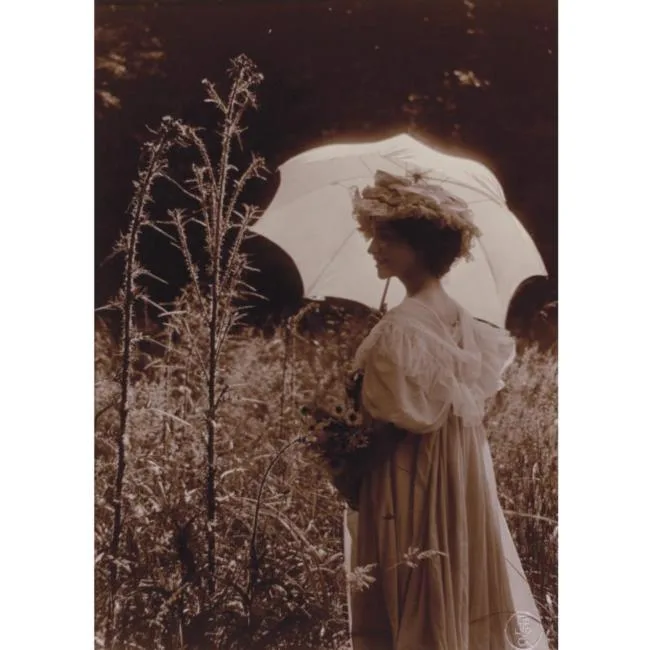
Woman with white parasol, 1909, is a late-period pictorialist gum bichromate (also referenced as a pigment print) by Constant Puyo (Émile Joachim Constant Puyo, 1857-1933), exemplifying the summer-light feminine portraiture that became his signature after he retired from the French artillery in 1902 with the rank of commandant. The image — a young woman shielded by a white parasol under high diffuse light — places Puyo in dialogue with the contemporary Impressionist painters of the same scene (Monet's parasoled women, Caillebotte's garden figures) but resolves the subject in photographic gum bichromate: the white parasol acts as a luminous reflector, dissolving the face into a soft-focus mask that the gum's brushable pigment converts into painterly mass. The work belongs to Puyo's mature decade (1900-1914), the period during which he co-signed Les Procédés d'art en photographie (1906) with Robert Demachy and Les Objectifs d'artiste (1906) with Jean Leclerc de Pulligny, formalising the soft-focus aesthetic and documenting the special pictorialist lenses they had designed for the painterly photographer. Puyo, made Chevalier de la Légion d'honneur in 1894 and president of the Photo-Club de Paris from 1921 to 1926, would withdraw to Morlaix in Brittany after 1914, ending his Paris-centred salon career. The print circulated in the public domain via private collections and a Sotheby's sale; comparable Puyo plates are held at the Metropolitan Museum of Art in the Stieglitz Collection (accession series 33.43.x) and at the Musée d'Orsay (PHO 1991 series). Maison Picturale reinterprets the parasol portrait as a gum bichromate print using the MP Aquaprint formula — Vision Picturale's reformulated non-toxic gum without dichromate — on 640 g/m² cotton paper, restoring the painterly summer luminosity of the 1909 original.

Original held at : Domaine public — collection privée (passée en vente Sotheby's)

Reference file source : Wikimedia Commons (Public Domain)

Eingeschlafen (Sommeil) — Constant Puyo

1897 · Photogravure

Eingeschlafen (Sommeil)

Eingeschlafen (Sommeil), 1897, is a reclining-nude photogravure by Constant Puyo reproduced in the German anthology Die Kunst der Photographie alongside plates by Heinrich Kühn and Hugo Henneberg — proof that Puyo's pictorialist language travelled well beyond the Photo-Club de Paris and entered the canon of the German-Austrian Kunstphotographie movement. The composition shows a sleeping female figure rendered in the soft-focus signature that Constant Puyo (Émile Joachim Constant Puyo, 1857-1933) theorised in his 1906 manual Les Procédés d'art en photographie, co-written with Robert Demachy, and in Les Objectifs d'artiste (1906) where he documented the special soft-focus lenses he and Pulligny had designed for the painterly photographer. Puyo trained at the École polytechnique, served as an artillery officer with the rank of commandant before retiring in 1902, and co-founded the pictorialist circle at the Photo-Club de Paris (1894, the year he was also made Chevalier de la Légion d'honneur) with Demachy. The plate belongs to his pre-1900 period, when nude and allegorical subjects allowed him to push gum bichromate and photogravure as painterly media rather than as reportage, in dialogue with the contemporary symbolist painting of Puvis de Chavannes and Maurice Denis. Maison Picturale reinterprets this image as a contemporary gum bichromate print using the MP Aquaprint formula — the non-toxic gum reformulation developed by Vision Picturale, which removes the historical potassium dichromate while preserving the painterly, brushable surface — printed on 640 g/m² cotton paper for a deep, painterly relief faithful to Puyo's original tonal mass. Prints belonging to this Puyo corpus circulate in the Stieglitz Collection at the Metropolitan Museum of Art (accession series 33.43.x), in the Musée d'Orsay holdings (PHO 1991 series), and at the Art Gallery of New South Wales.

Original held at : Die Kunst der Photographie

Reference file source : Wikimedia Commons (photogravure.com)

Portrait of Cléo de Mérode — Constant Puyo

c. 1900 · Gum bichromate print

Portrait of Cléo de Mérode

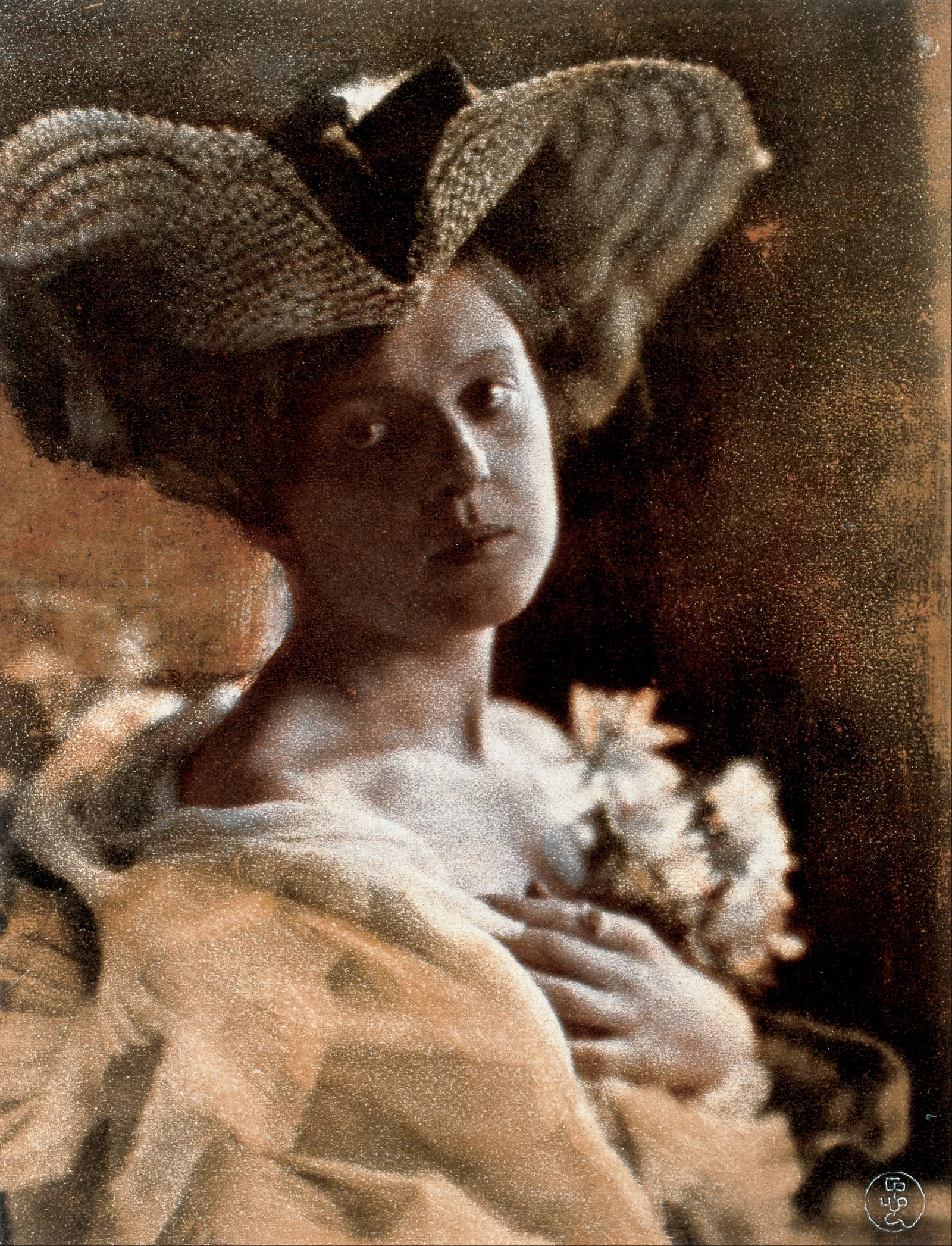
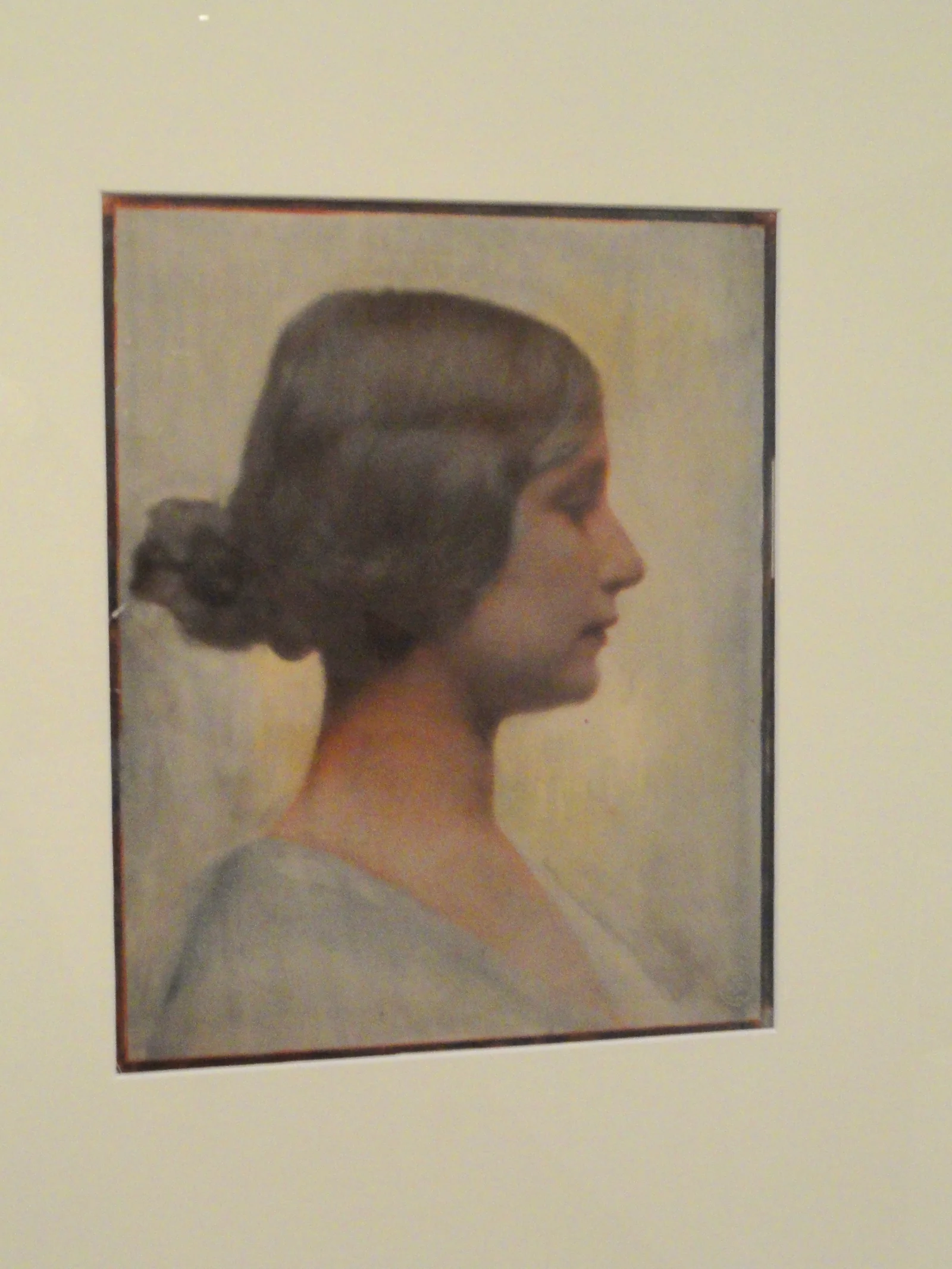
Portrait of Cléo de Mérode, circa 1900, is Constant Puyo's gum bichromate portrait of the Belle Époque dancer Cléo de Mérode — étoile of the Paris Opéra ballet, lover (so rumour had it) of King Léopold II of Belgium, and one of the most photographed icons of the fin de siècle, immortalised by Nadar, Reutlinger, and the entire carte-postale culture of 1900. Puyo, having retired from the École polytechnique and the French artillery (commandant rank) in 1902 to dedicate himself fully to the Photo-Club de Paris that he had joined in 1894 with Robert Demachy, treats Mérode not as a society document but as an Art Nouveau allegorical figure: the dancer's signature centre-parted hair and serene profile are dissolved in soft-focus gum bichromate so that the image reads as a painted reverie rather than as a press portrait. The work exemplifies Puyo's fascination with the Art Nouveau feminine — a thread that runs from Fantaisie en blanc (c. 1900) through Woman with white parasol (1909) and into his theoretical writings, notably Les Procédés d'art en photographie (1906, with Demachy) and Les Objectifs d'artiste (1906, with Jean Leclerc de Pulligny). The print is conserved at the Musée Nicéphore Niépce in Chalon-sur-Saône, the dedicated French photography museum founded in the city where Nicéphore Niépce produced View from the Window at Le Gras (1827), and parallel Puyo plates from this corpus are held in the Stieglitz Collection at the Metropolitan Museum of Art (33.43.x series) and the Musée d'Orsay (PHO 1991 series). Maison Picturale reinterprets the portrait as a gum bichromate print using the MP Aquaprint formula — Vision Picturale's reformulated non-toxic gum that removes the historical dichromate — on 640 g/m² cotton paper, preserving the painterly surface that gives Puyo's Mérode its Art Nouveau softness.

Original held at : Musée Nicéphore Niépce

Reference file source : Wikimedia Commons / Musée Nicéphore Niépce (Public Domain)

Sunlight and Shadow — Constant Puyo

1898 · Gum bichromate print

Sunlight and Shadow

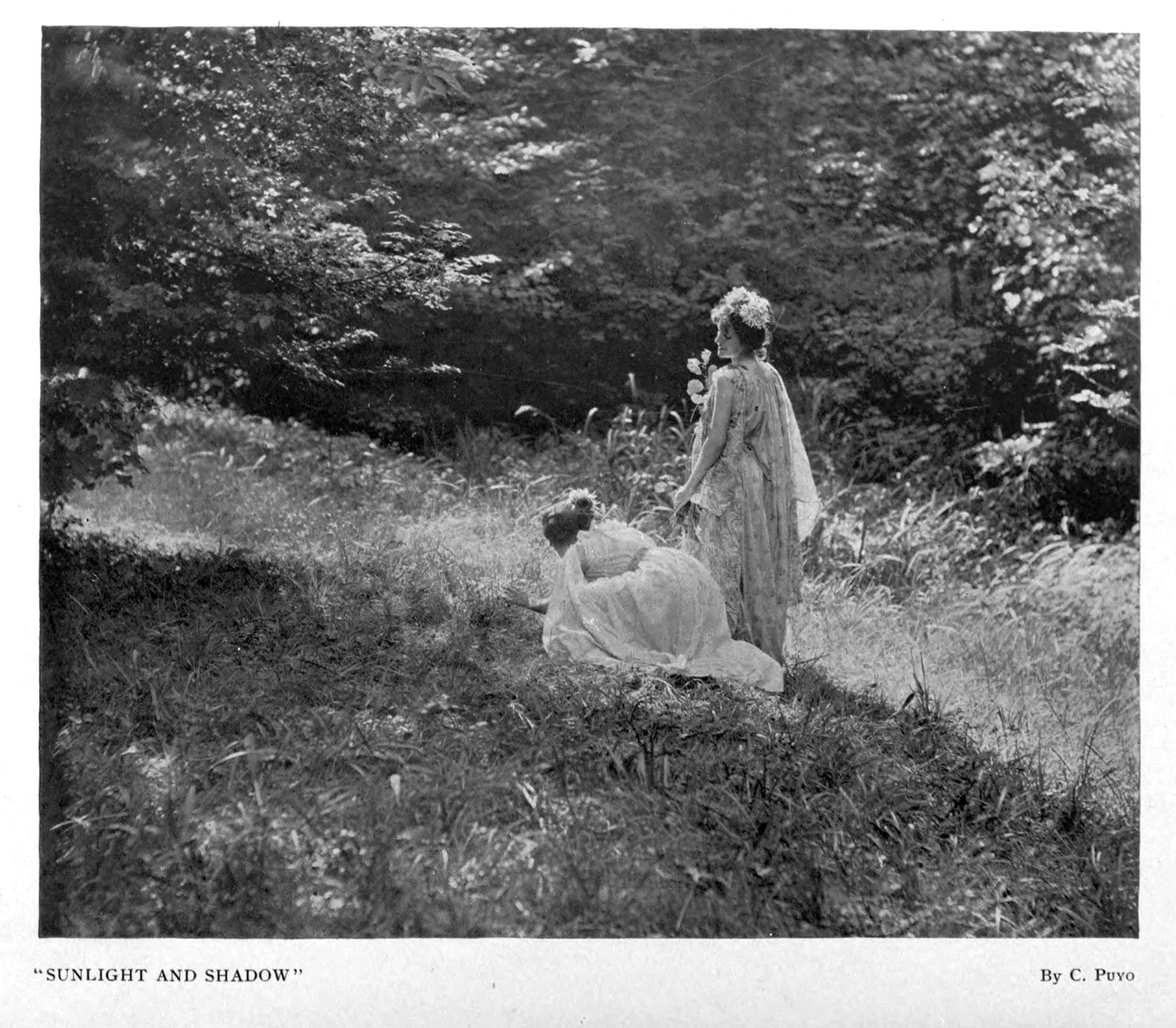
Sunlight and Shadow, 1898, is an outdoor contre-jour study by Constant Puyo published as a full plate in Henry P. Robinson and A. Horsley Hinton's volume In Nature's Image: Chapters on Pictorial Photography (1898) — a foundational anthology of the Anglo-American pictorialist movement, which by then already considered Puyo and Robert Demachy as the leading French masters of the new aesthetic. The image, a tonal essay on light filtering through a stand of trees, demonstrates the mastery of chiaroscuro that Puyo (1857-1933) would later theorise in Les Procédés d'art en photographie (1906, co-written with Demachy) and Les Objectifs d'artiste (1906, with Jean Leclerc de Pulligny). At the date of the photograph Puyo was still serving as an artillery officer in the French Army — he would only retire with the rank of commandant in 1902 — yet he had already been a member of the Photo-Club de Paris (founded 1888 by Maurice Bucquet, joined by Puyo in 1894) for four years and was an active contributor to its salons. The gum bichromate process Puyo used here lets the leaf canopy resolve into atmospheric tonal masses rather than sharp foliage, in line with his soft-focus doctrine. Maison Picturale reinterprets Sunlight and Shadow as a gum bichromate print using the MP Aquaprint formula — the reformulated non-toxic gum developed by Vision Picturale, free of potassium dichromate — printed on 640 g/m² cotton paper, restoring the deep contre-jour relief of Puyo's original tonal architecture. Comparable Puyo plates of this period are conserved at the Metropolitan Museum of Art (Stieglitz Collection 33.43.x) and the Musée d'Orsay (PHO 1991 series).

Original held at : Connue par la publication In Nature's Image: Chapters on Pictorial Photography (1898)

Reference file source : Wikimedia Commons (Public Domain)

Sous la lampe — Constant Puyo

1904 · Gum bichromate print

Sous la lampe

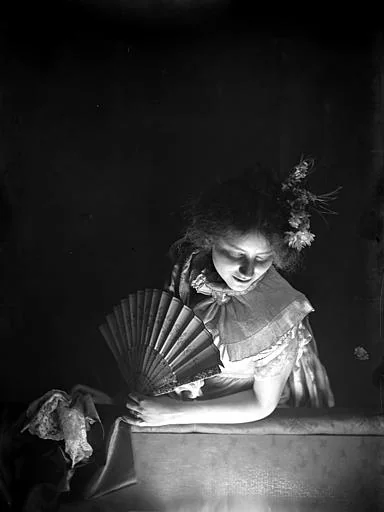
Sous la lampe, 1904, is an intimate interior scene by Constant Puyo published in La Revue de photographie (1904) — the year in which Puyo also published his treatise Le Procédé à la gomme bichromatée, formalising the gum process he and Robert Demachy had developed at the Photo-Club de Paris since 1894. The same year, the British chemist George E. H. Rawlins disclosed the oil pigment process (1904), and Puyo became one of the first French masters to adopt it as his second technical specialty alongside gum bichromate. Sous la lampe stages a figure under lamplight — a lighting study that would have been near-impossible to render with the high-contrast emulsions of the day, but which the brushable gum surface translates into smooth painterly mass. The composition recalls the chiaroscuro interiors of Vuillard and the lamp scenes of late nineteenth-century intimist painting. Puyo (1857-1933) had retired from the French Army (artillery, commandant rank) in 1902 and was at this date able to devote himself fully to photographic practice and theory; he would co-sign Les Procédés d'art en photographie with Demachy and Les Objectifs d'artiste with Jean Leclerc de Pulligny in 1906. Maison Picturale reinterprets Sous la lampe as a gum bichromate print using the MP Aquaprint formula — Vision Picturale's reformulated non-toxic gum without dichromate — on 640 g/m² cotton paper, preserving the tonal architecture of the lamplit interior. Puyo plates from this period circulate in the Metropolitan Museum of Art Stieglitz Collection (accession series 33.43.x) and the Musée d'Orsay holdings (PHO 1991 series).

Original held at : Connue par la publication La Revue de photographie (1904)

Reference file source : Wikimedia Commons (Public Domain)

The Reading Woman — Constant Puyo

c. 1890-1895 · Autotype (photomechanical print)

The Reading Woman

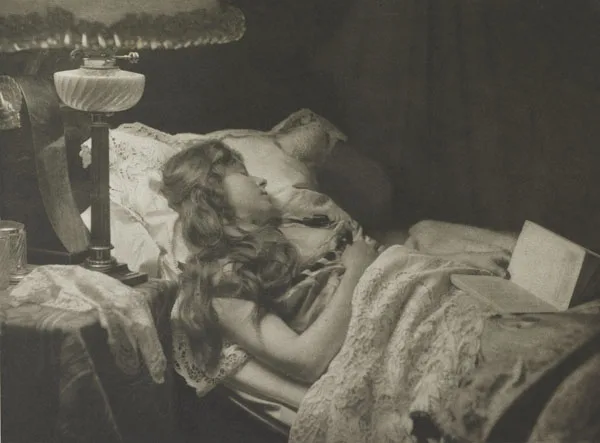
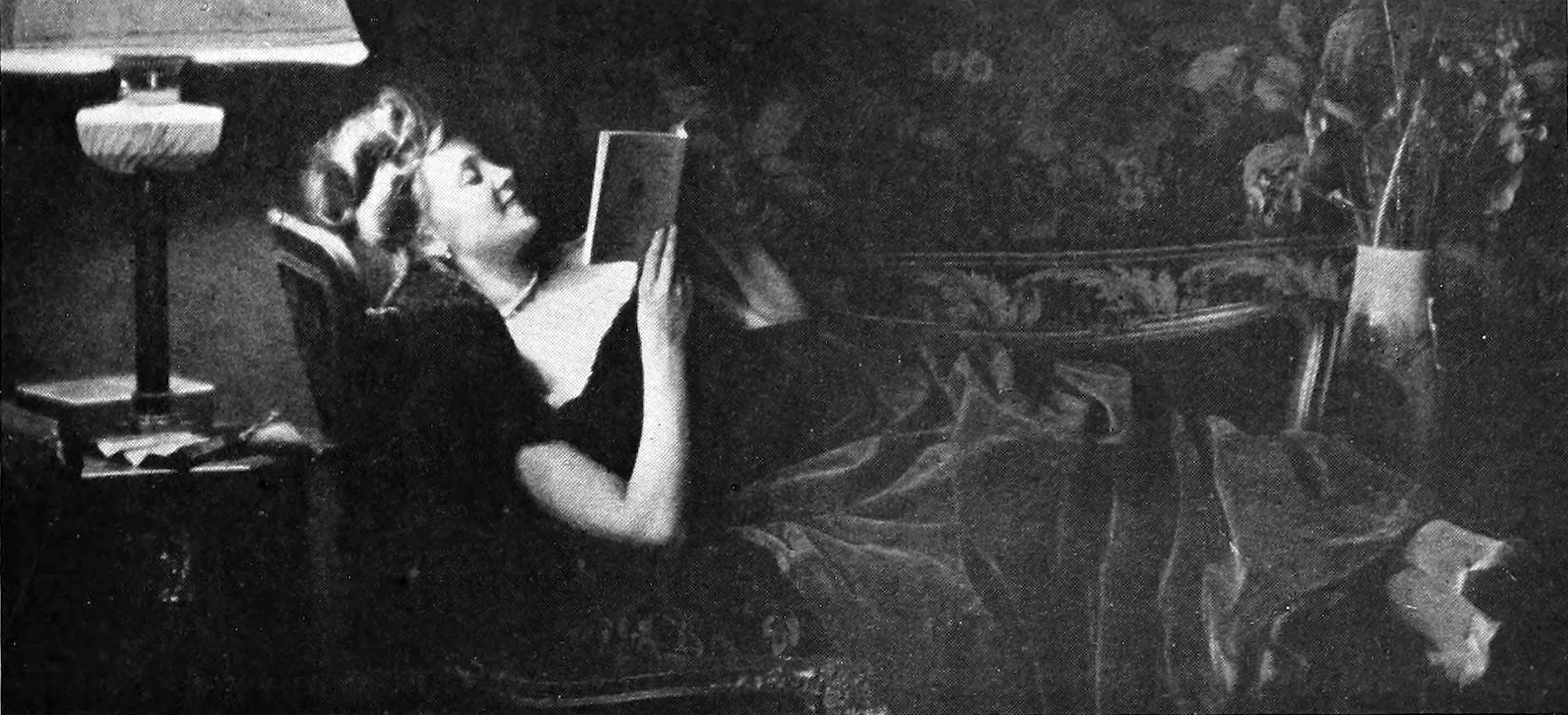
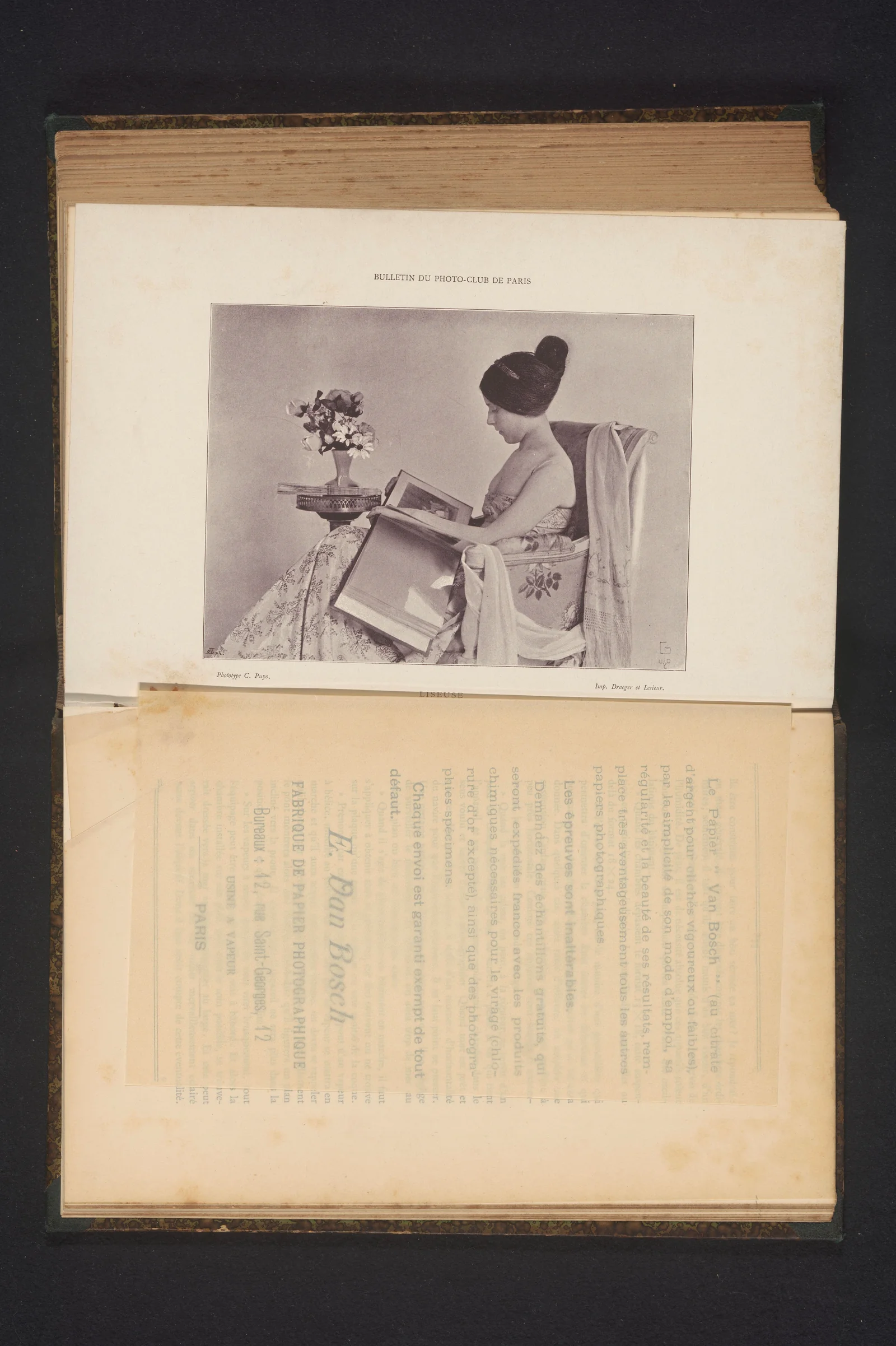
La Liseuse (The Reading Woman), circa 1890-1895, is one of Constant Puyo's earliest pictorialist subjects — a domestic interior in which a young woman is absorbed in her book — and bears a technical particularity: the surviving reproduction is an autotype (photomechanical print), not a gum bichromate, which signals that the image was diffused through the print culture of the 1890s rather than only through original photographic exhibition prints. The motif itself — the liseuse, the reading woman as Symbolist and Intimist topos — links Puyo to his painter contemporaries Édouard Vuillard, Pierre Bonnard, and Maurice Denis, and to the Nabis interior aesthetic that defined Parisian intimism around 1895. Puyo (Émile Joachim Constant Puyo, 1857-1933) was at this date still on active service as an artillery officer in the French Army (he would retire with the rank of commandant in 1902) but had already joined the Photo-Club de Paris in 1894, the year he was also made Chevalier de la Légion d'honneur. He had not yet co-authored Les Procédés d'art en photographie (1906, with Robert Demachy) nor Les Objectifs d'artiste (1906, with Jean Leclerc de Pulligny), so La Liseuse precedes his theoretical formalisation of pictorialism and represents the formative moment of his soft-focus poetics. The autotype is conserved at the Rijksmuseum in Amsterdam under accession number RP-F-2001-7-1107B-87 and is released under CC0; comparable Puyo prints from this period are held in the Stieglitz Collection at the Metropolitan Museum of Art (33.43.x series) and at the Musée d'Orsay (PHO 1991 series). Maison Picturale reinterprets La Liseuse as a contemporary gum bichromate print using the MP Aquaprint formula — Vision Picturale's reformulated non-toxic gum without potassium dichromate — printed on 640 g/m² cotton paper, restoring the painterly intimacy that the original autotype photomechanical reproduction could only suggest.

Original held at : Rijksmuseum, Amsterdam (RP-F-2001-7-1107B-87)

Reference file source : Wikimedia Commons / Rijksmuseum RP-F-2001-7-1107B-87 (CC0)

Montmartre — Constant Puyo

1904 · Gum bichromate print

Montmartre

Pictorialist view of Montmartre's slopes at the height of Puyo's mature period: soft-focus rendering of stairs and rooftops, the gum bichromate process used to dissolve hard architectural lines into atmospheric tonal masses. Reproduced in Wikipedia EN as one of the canonical Puyo images, often paired with the Gondolier à Venise as evidence of Puyo's twin mastery of urban and travel pictorialism.

Original held at : Domaine public — Wikipedia (à sourcer institutionnellement)

Reference file source : Wikimedia Commons

12 of 13 works

The documented corpus

The rest of Constant Puyo's public-domain corpus: plates kept in our editorial archives. Reproducible on request, without dedicated editorial study.

5 archived plates

Tree Study — Constant Puyo

1914

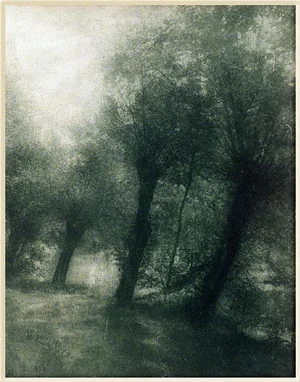
Tree Study

Pictorialist photographic print

Women in Veils — Constant Puyo

c. 1900

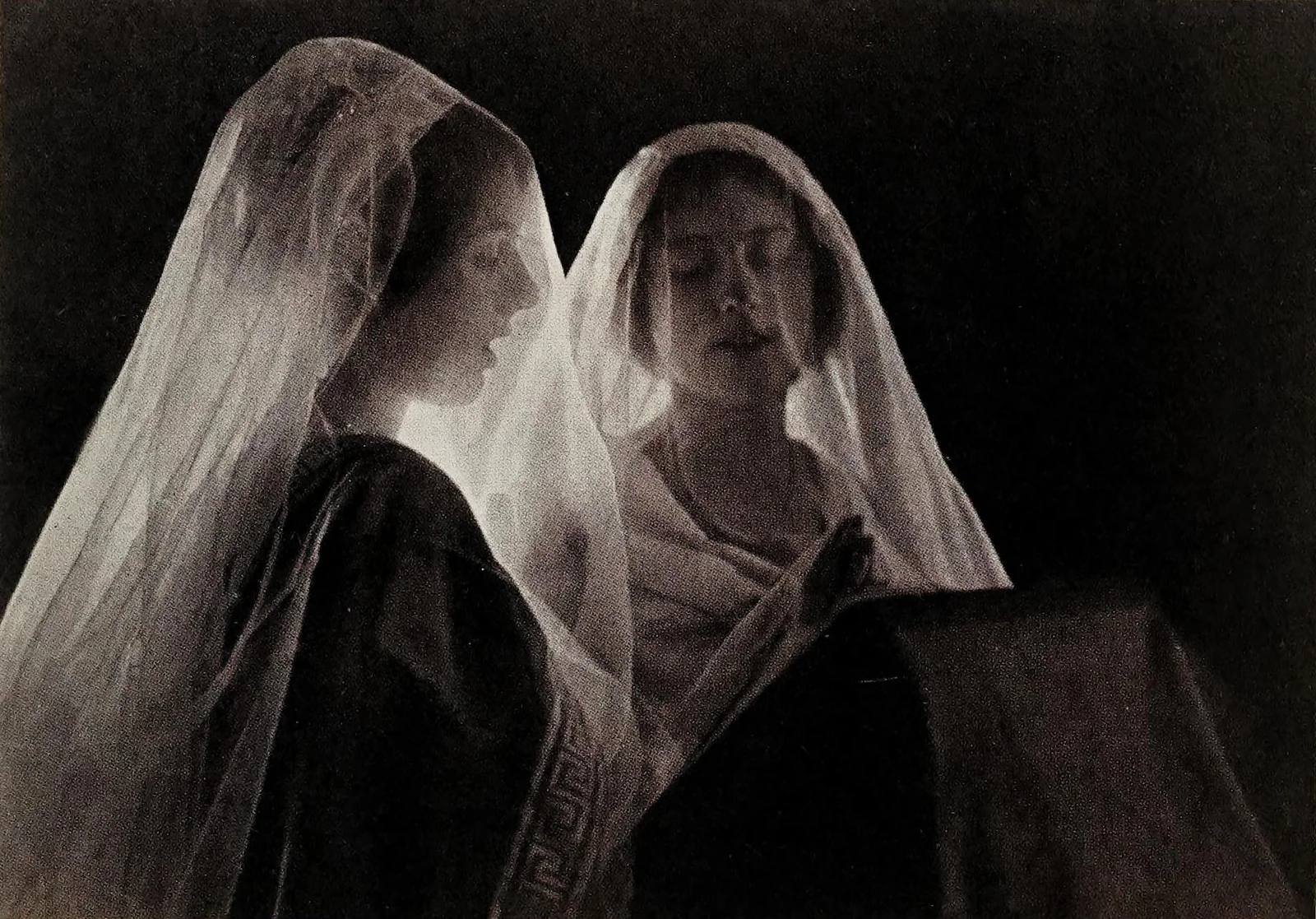
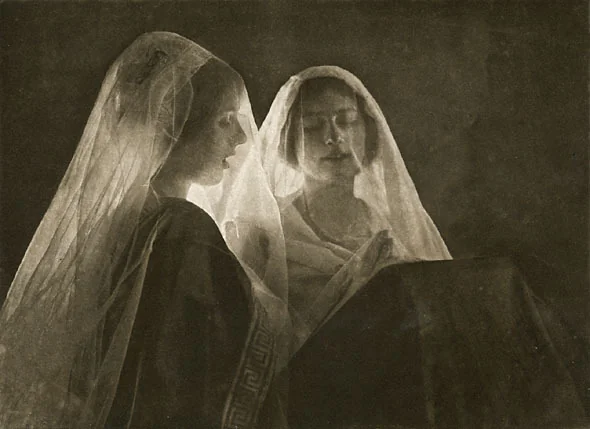
Women in Veils

Gum bichromate print

Au Jardin — Constant Puyo

1906

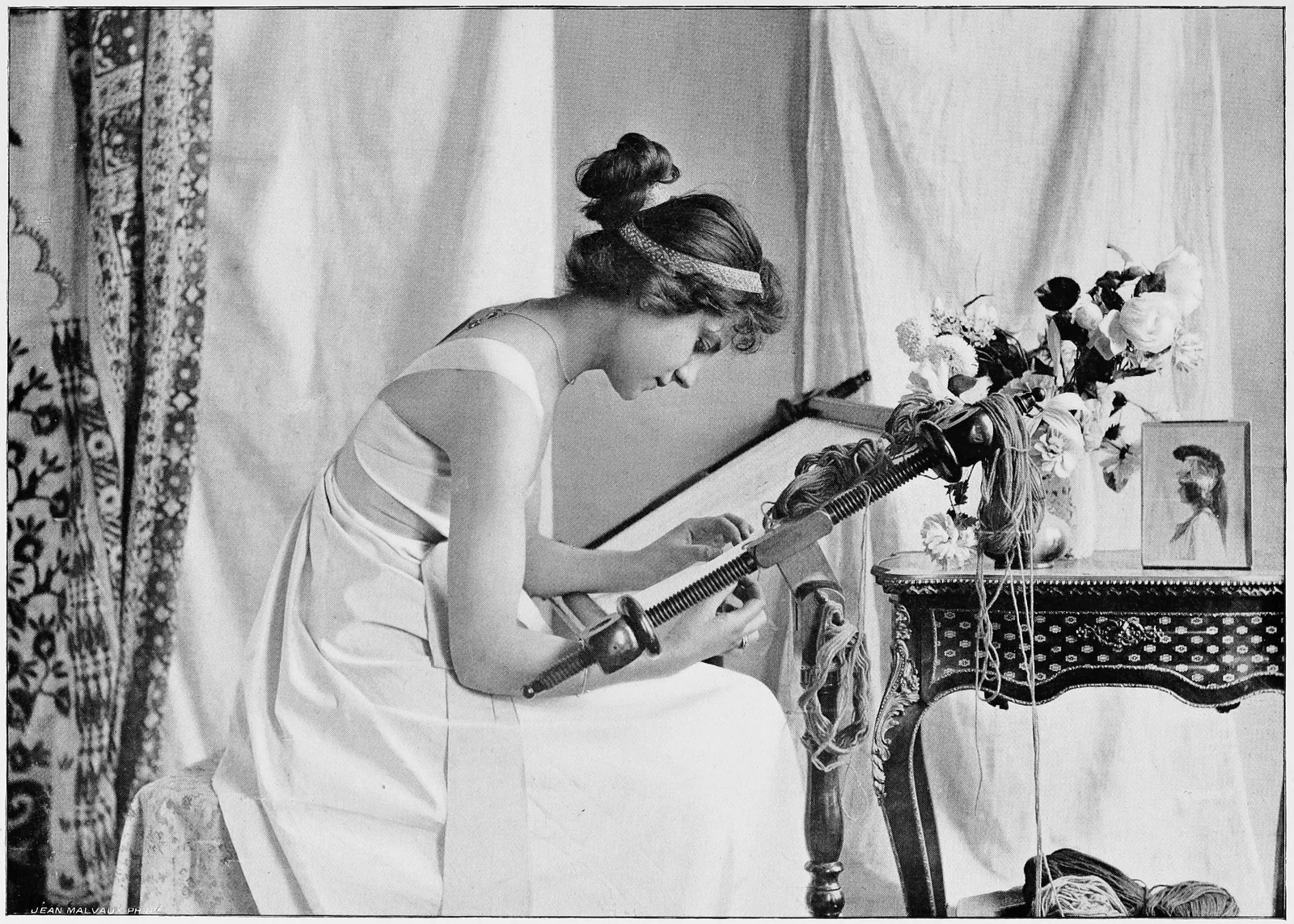
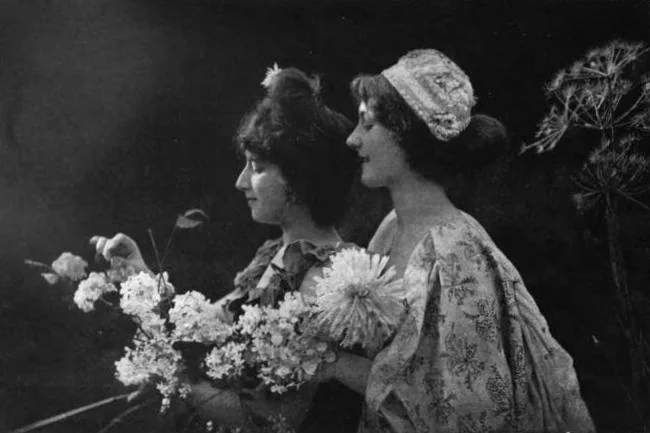
Au Jardin

Pictorialist photographic print

Mise en scène — Constant Puyo

c. 1900

Mise en scène

Gum bichromate print

La Pointe de Pen Marc'h — Constant Puyo

c. 1900

La Pointe de Pen Marc'h

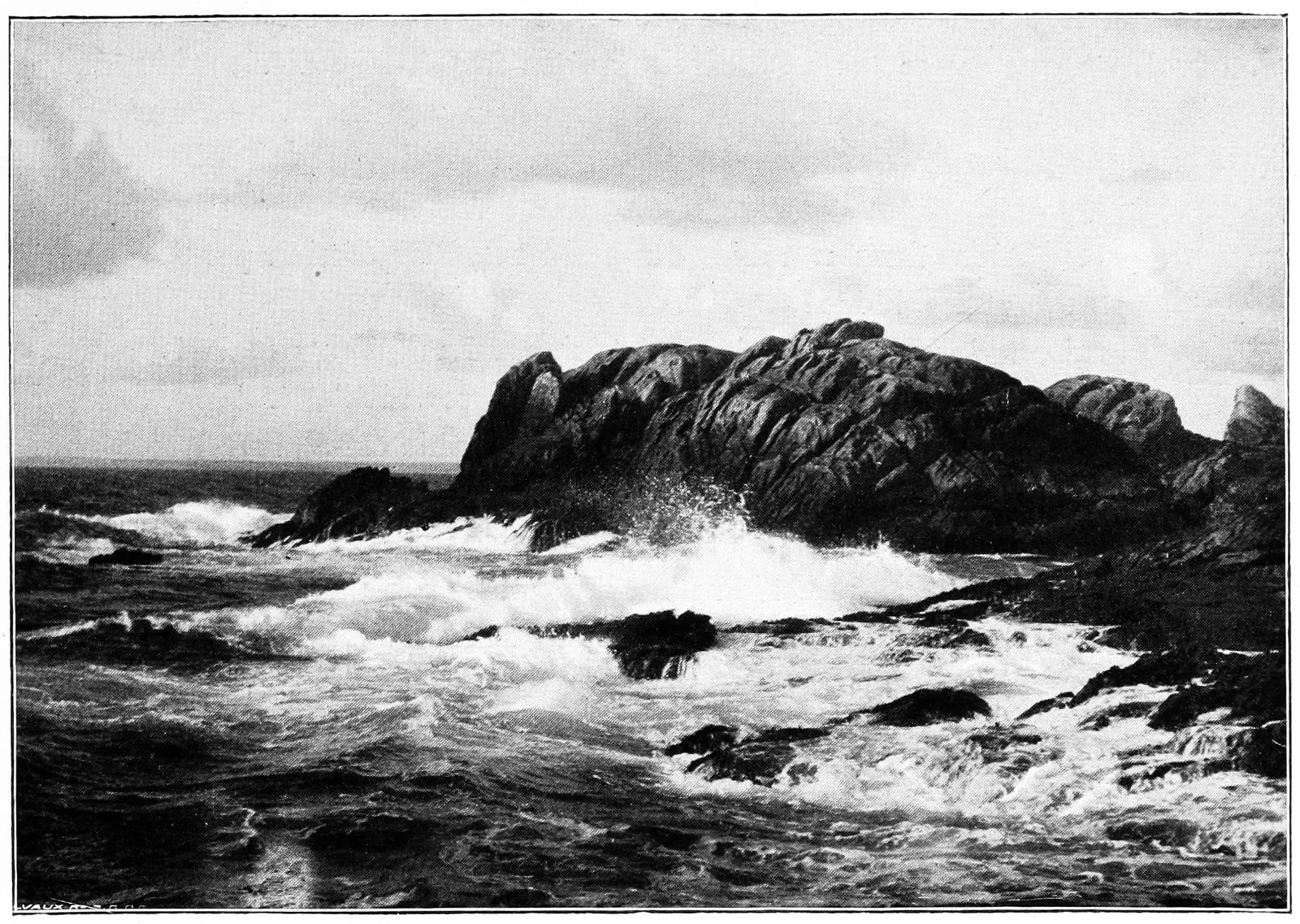
Gum bichromate print

Commission a print after Constant Puyo

Maison Picturale produces on commission contemporary prints after works by Constant Puyo that have entered the public domain. Hand-printed by master printers Tristan Sidem and Raphaël Lebas de Lacour on 640 gsm cotton paper, signed and numbered in limited edition, with a certificate of authenticity explicitly mentioning the "after" nature of the reinterpretation.

Start a commission